DbcultAccessing Vault...
6.2/10
Senior Film Conservator
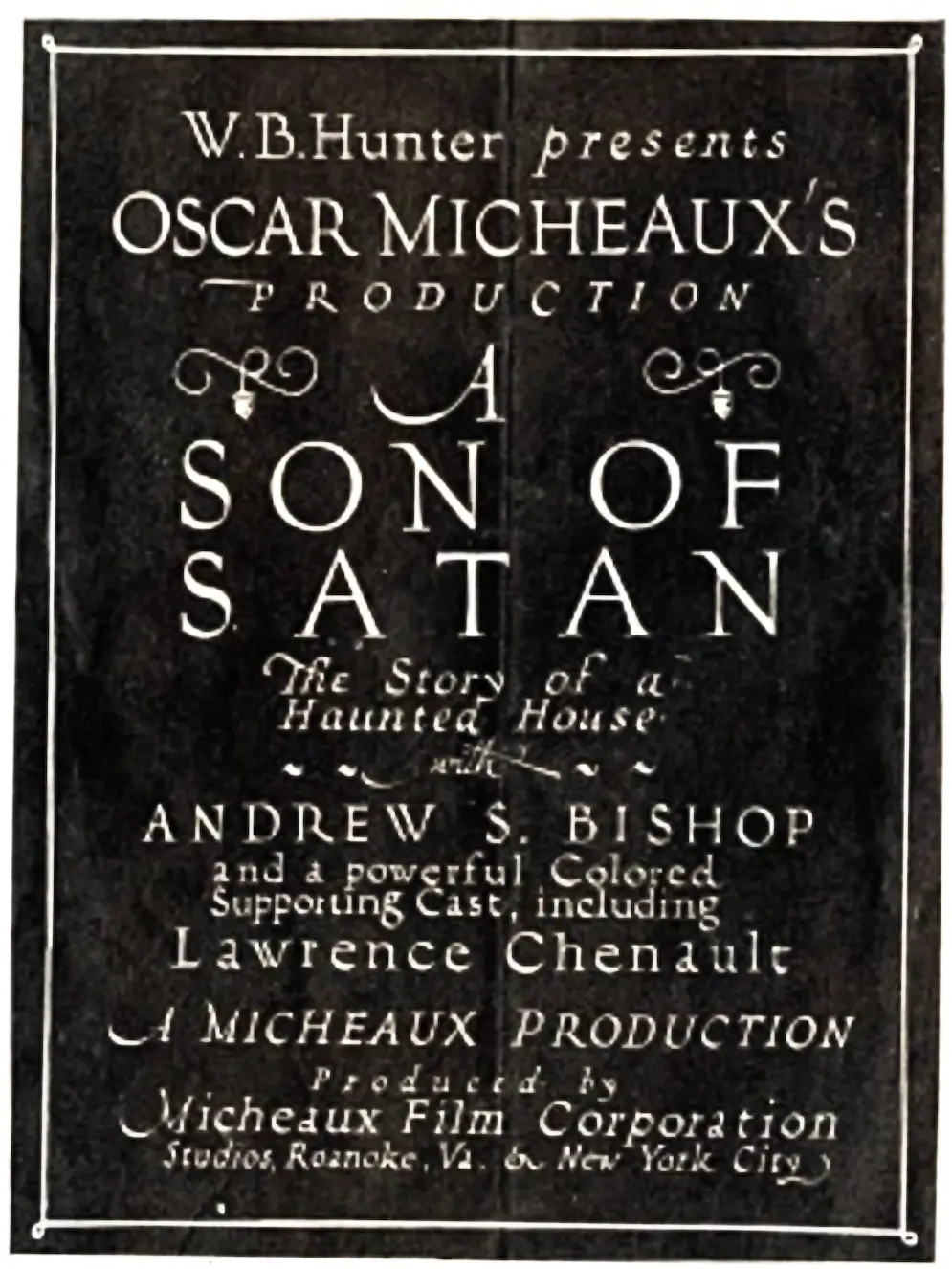
A definitive 6.2/10 rating for a film that redefined the boundaries of cult cinema. A Son of Satan remains a cornerstone of transgressive art.
To discuss the filmography of Oscar Micheaux is to engage with a radical act of cinematic reclamation. In the early 1920s, while Hollywood was busy codifying the grammar of the studio system, Micheaux was operating on the fringes, building a parallel industry from sheer willpower and a shoestring budget. A Son of Satan (1924) stands as one of his most intriguing, if misunderstood, artifacts—a film that dares to blend the macabre with the mundane, using the 'haunted house' trope as a stage for a much larger societal drama.
The premise is deceptively simple: a man accepts a bet to spend the night in a house with a dark reputation. In the hands of a lesser director, this might have been a mere retread of the spooky-house comedies prevalent in the era, such as Sunday Calm. However, Micheaux infuses the proceedings with a sense of existential weight. The protagonist isn't just fighting ghosts; he is battling the perception of his own masculinity and the weight of a community watching his every move. Unlike the more polished suspense found in Dead Men Tell No Tales, Micheaux’s tension is jagged, unpredictable, and deeply rooted in the physical reality of the locations he chose.
The narrative structure of A Son of Satan is notably non-linear in its emotional progression. It doesn't rely on the jump scares we associate with modern horror but rather on a slow-boiling dread. The house itself, captured with the limited lighting technology of the time, becomes a character of its own. It is a labyrinth of shadows where every creak of the floorboard feels like a judgment. This atmospheric density is a testament to Micheaux’s ability to turn technical limitations into aesthetic virtues, a skill also seen in the dramatic tension of The Faith Healer.
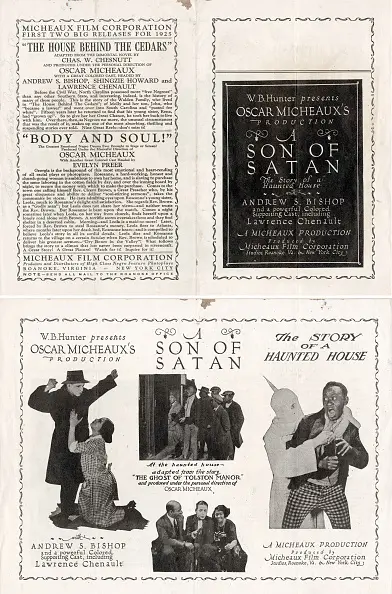
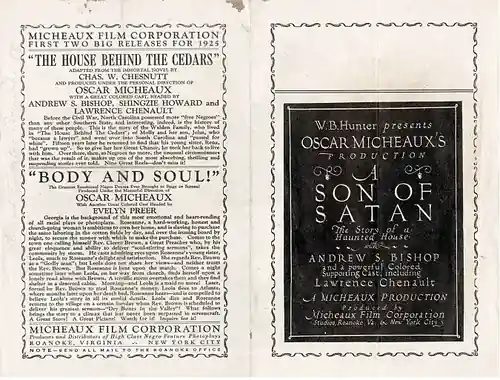
The cast list for A Son of Satan reads like a directory of the Harlem Renaissance’s most resilient talents. E.G. Tatum and F.E. Miller provide the emotional core, their performances eschewing the broad caricatures often forced upon Black actors in mainstream productions like The Janitor's Harem. Tatum, in particular, possesses a screen presence that is both vulnerable and defiant. His reactions to the 'haunting' are not merely comedic; they are deeply human, reflecting a man trying to maintain his dignity in an absurd situation.
We also see the inclusion of Josephine Baker in a very early, albeit minor, role. Even in these nascent stages of her career, Baker’s kinetic energy is palpable, hinting at the international icon she would soon become. The sheer scale of the ensemble—including Lawrence Chenault, Mildred Brown, and Monte Hawley—creates a sense of a living, breathing community. This isn't a story about a man in a vacuum; it’s a story about a man within a culture that is constantly negotiating its relationship with the supernatural and the scientific.
Micheaux was never one for subtle editing. His cuts are often jarring, his pacing erratic. Yet, there is a rhythm to A Son of Satan that mirrors the heartbeat of a nervous man. The film’s visual language is far more experimental than the straightforward narratives of Alarm Clock Andy or the melodramatic beats of Once to Every Woman. By utilizing deep focus and stark contrasts, Micheaux creates a visual landscape that feels almost expressionistic.
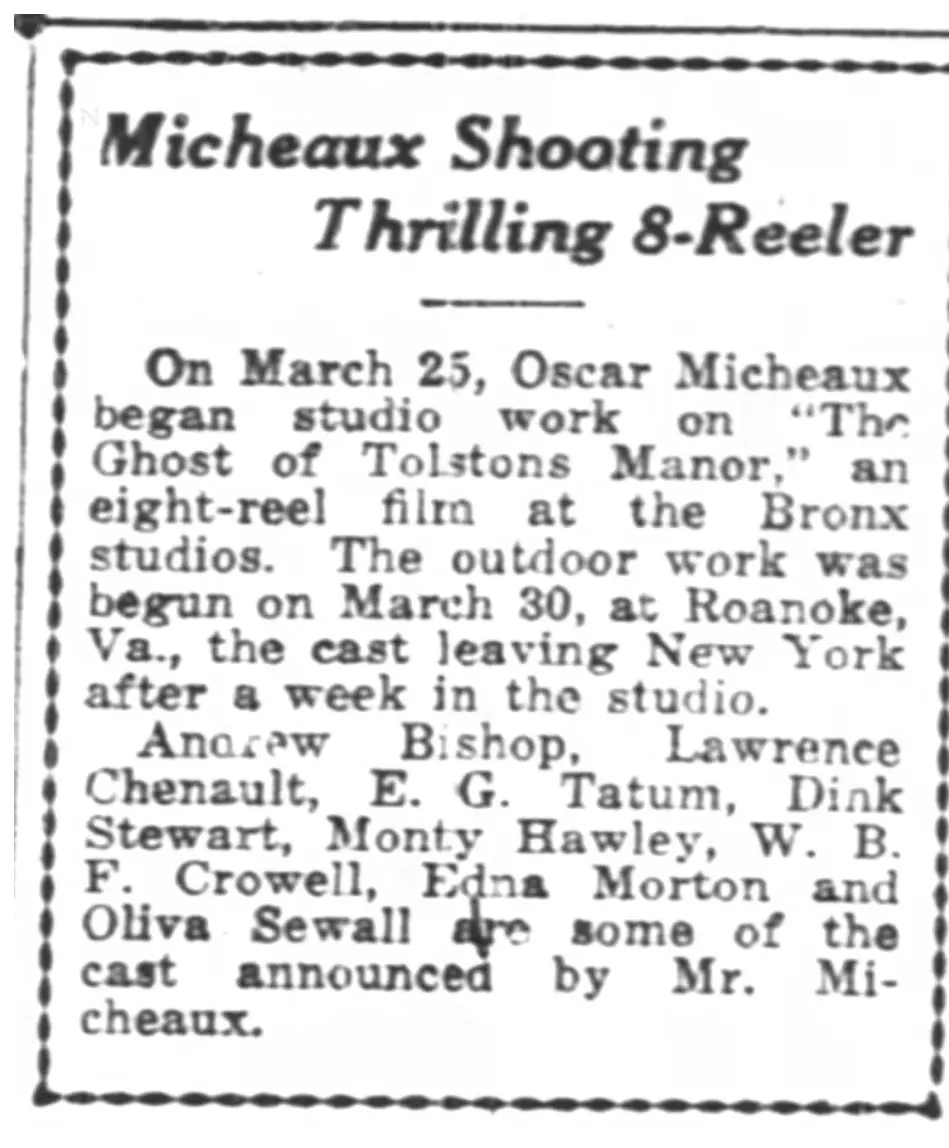
The 'Satan' of the title isn't necessarily a literal demon. In the context of 1924, the title was provocative, bordering on the scandalous. It suggests a lineage of trauma and the 'devils' that society creates. While contemporary European films like Ene i verden explored isolation through a lens of romanticism, Micheaux explores it through the lens of survival. The hauntings in the house are often revealed to be the machinations of other men—a poignant metaphor for the real-world conspiracies and systemic barriers that the Black community faced daily.
When placing A Son of Satan alongside its peers, one notices a distinct lack of the 'theatrical' stiffness found in works like My Official Wife. Micheaux’s actors move with a naturalism that was rare for the silent era. Even in the more heightened moments of terror, there is a grounding in reality. The film shares a certain gritty texture with Tempêtes, emphasizing the struggle against elements—be they natural or supernatural.
Furthermore, the film’s use of location shooting gives it a documentary-like quality that is entirely absent from the stylized sets of The Purple Lily. Micheaux’s camera captures the dust on the floor and the peeling wallpaper of the manor, making the 'haunting' feel tactile. It lacks the pastoral beauty of Den doode steden aan de Zuiderzee, opting instead for a claustrophobic, urban Gothic aesthetic that would later influence the noir movement.
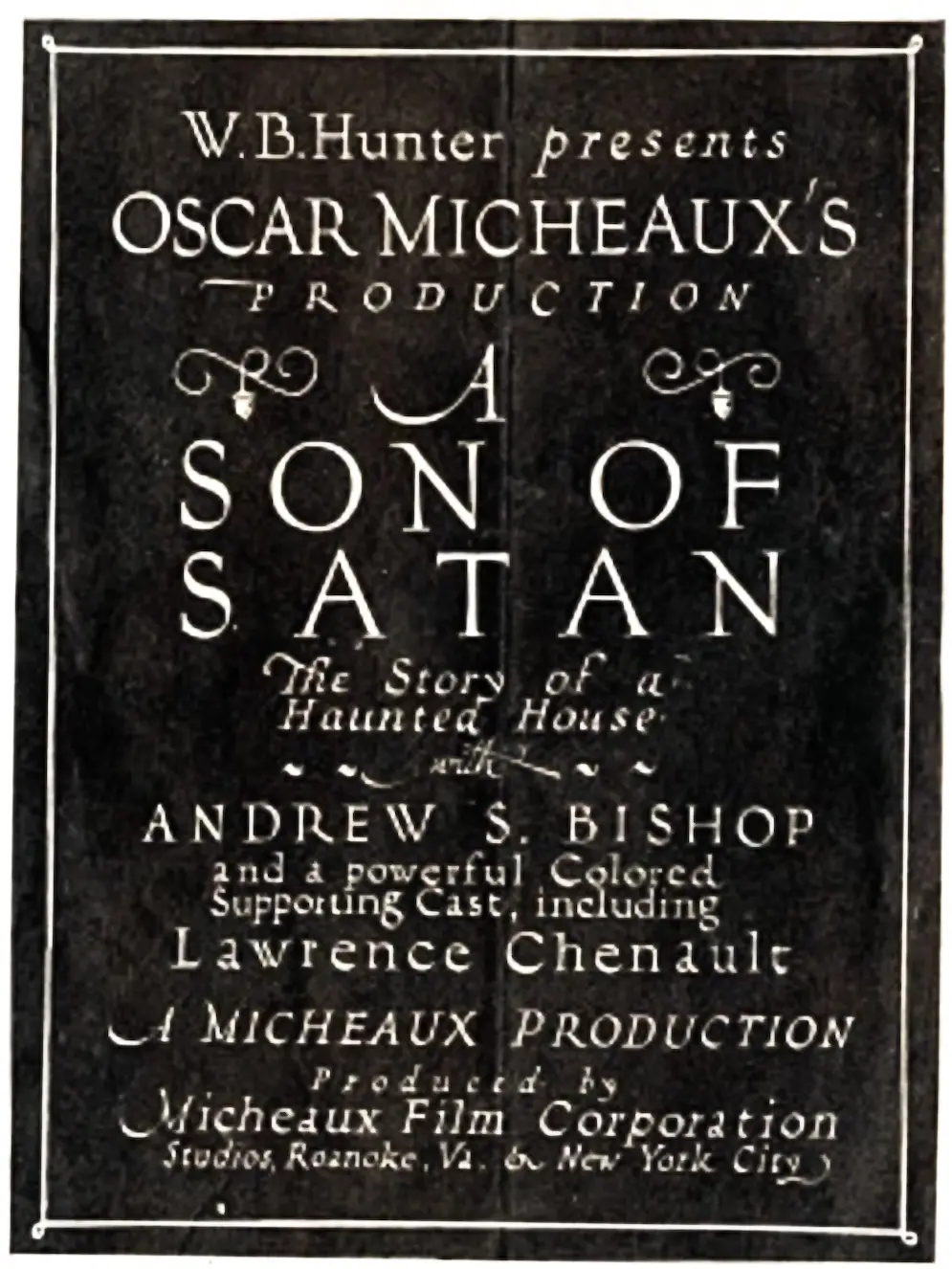
It is impossible to review A Son of Satan without acknowledging the censorship it faced. Micheaux was frequently at odds with state censorship boards, who found his depictions of 'vice' and his refusal to adhere to racial stereotypes dangerous. This film was no exception. By portraying a Black man as the protagonist of a horror narrative—rather than the 'frightened servant' trope—Micheaux was breaking a fundamental, unwritten rule of 1920s cinema. The film’s raw edges are a result of this friction; it is a work that was fought for, frame by frame.
In many ways, the film feels as fragmented and resilient as the history it represents. It lacks the smooth continuity of Jubilo, Jr., but it gains a tremendous amount of soul in its place. Every scene feels like an intervention in a medium that was largely hostile to its creator. The interplay between Mildred Smallwood and Arthur Cooper adds layers of domestic tension that complicate the central horror plot, suggesting that the 'haunted house' is merely an extension of the fraught relationships existing outside its walls.
Technically, the film is a fascinating study in resourcefulness. Micheaux did not have access to the high-end laboratories used for IV. Károly király koronázása. The film stock is grainy, the lighting is often harsh, and the intertitles are functional rather than decorative. Yet, this grit contributes to the film's power. It feels like a 'found' nightmare, a glimpse into a world that was never meant to be recorded. The performances of Andrew Bishop and Ida Anderson provide a gravitas that anchors the more fantastical elements of the plot, ensuring the stakes always feel personal.
The film’s exploration of 'the bet' also brings to mind the capricious nature of fate seen in Livets Omskiftelser. However, where the latter treats fate as a philosophical concept, Micheaux treats it as a social trap. The protagonist isn't just betting money; he's betting his place in the world. The resolution of the film, which I won't spoil, is typical of Micheaux—challenging the audience to look past the surface level of the 'spook' and see the human agency underneath.
Ultimately, A Son of Satan is a testament to the endurance of the creative spirit. It is a film that refuses to be categorized. Is it a horror? A comedy? A social drama? It is all of these and more. It is a snapshot of an artist at the height of his powers, operating with a freedom that few of his contemporaries could imagine. While it may not have the technical polish of Ferravilla nelle sue più caratteristiche interpretazioni, it possesses a cultural urgency that makes it infinitely more vital.
For the modern viewer, watching A Son of Satan is an exercise in cinematic archaeology. You have to look through the scratches on the film and the occasionally clunky transitions to see the genius of Oscar Micheaux. He wasn't just making movies; he was making history. He was proving that Black stories—in all their complexity, humor, and horror—deserved a place on the silver screen. This film is a loud, proud, and haunting reminder of that legacy. It is a work that vibrates with the energy of a thousand stories told in the dark, finally finding their way into the light of the projector.
IMDb —
1932
Community
Log in to comment.