DbcultAccessing Vault...
Cult Review
Senior Film Conservator
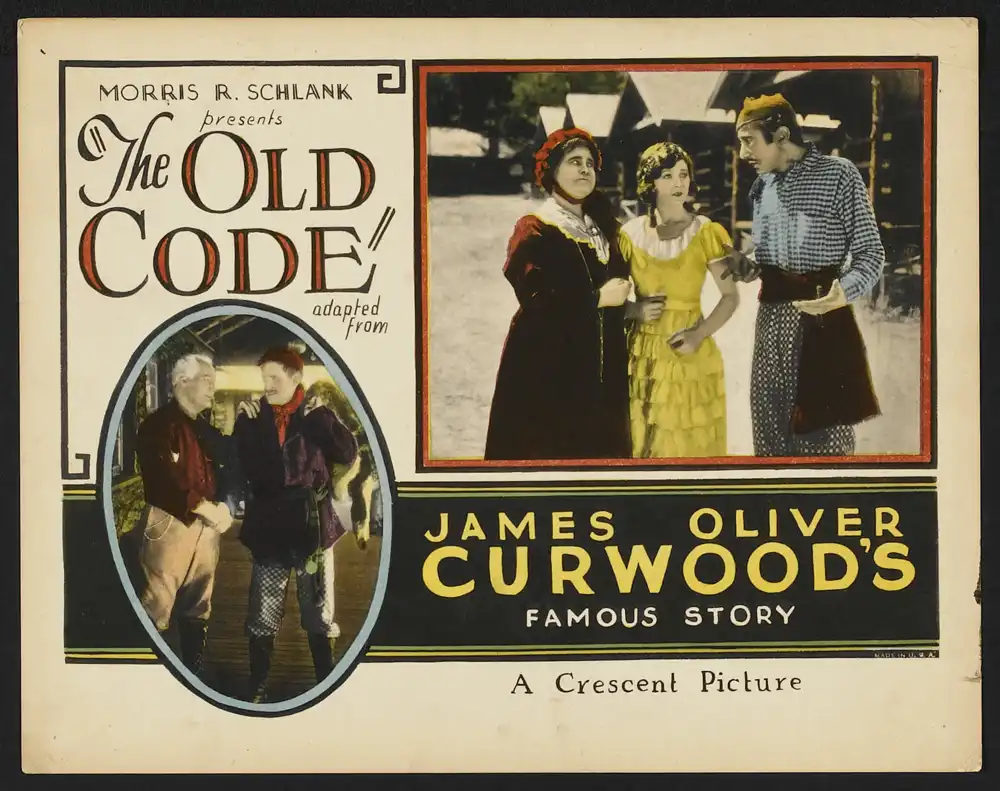
“The Old Code” is one of those old-timey flicks that, honestly, you probably don't need to chase down today unless you're really into digging through dusty film history or you have a soft spot for very straightforward love triangles set in the wilderness. If you’re a fan of early cinema where intentions are painted in broad strokes and emotions are big, you might find a certain charm here. But if you need anything resembling modern pacing or nuanced characters, you're going to feel like you're watching paint dry. ⏳
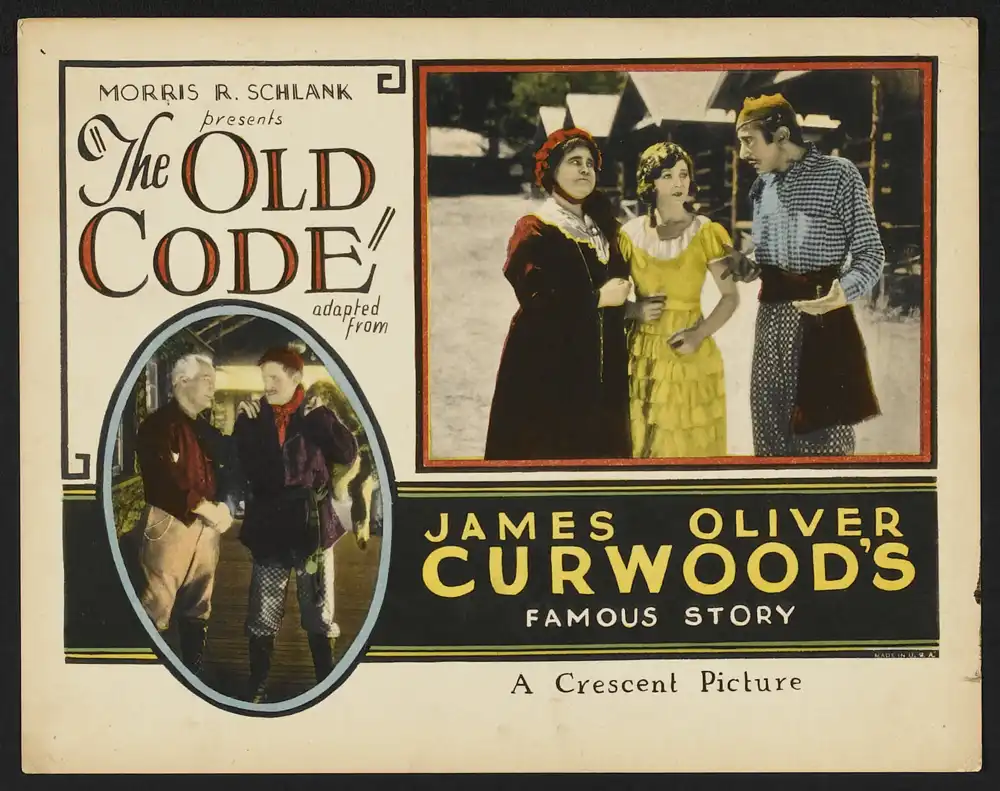
The film, penned by James Oliver Curwood and Everett C. Maxwell, drops us right into a Canadian frontier setting. Or at least, what they thought was a Canadian frontier. Lots of trees, you know.
Cliff Lyons plays Pierre, our main guy, and he’s pretty much the stoic trapper type. You know the kind. Always looking off into the distance, probably thinking about... furs? Or maybe just how cold it is. He just kinda exists for a lot of the runtime.
Neva Gerber plays the Indian girl, and her longing looks at Pierre are actually pretty good. You can feel her eyes just following him around. There's this one moment, she’s sitting by the fire, and Pierre isn't even looking at her, but her gaze is just locked. It’s a small thing, but it kinda sticks with you.
Her quiet heartbreak is probably the most memorable thing about it, honestly. You really root for her, even though you know how these old stories often go.
Then Marie shows up. Lillian Rich plays Marie, the orphan. She’s got that wide-eyed innocence thing going on. You can almost see the plot shift the moment Pierre spots her. His head snaps around a little too fast, a little too obvious.
It’s like the movie just *tells* you, “Okay, this is the new object of affection, folks!” Marie feels a bit like a plot device, frankly, just there to complicate things. Her motivations are never super clear beyond, well, being an orphan in need.
What’s interesting is how quickly the film sets up this whole love triangle. There’s not much preamble. One minute, it’s Pierre and the Indian girl’s unspoken thing, the next, Marie is there, and Pierre’s basically forgotten everyone else. 🤷♀️ The emotional whiplash is quite something.
J.P. McGowan, who also directed this, plays some other guy. I think his name was Jean? Maybe? He kinda bumbles around. He just sort of shows up when things need to be complicated a bit more, or when someone needs to look disapproving.
His mustache is quite something, though. Very bushy. 🥸 You spend more time admiring its volume than his acting.
The pacing is… deliberate. There are long stretches where not a whole lot happens besides people walking through trees or staring intensely at each other. One scene, Pierre is just chopping wood, and it goes on for a solid minute, maybe more.
You’re waiting for something, anything, to happen, and he just keeps chopping. It gives you time to really think about how cold it must be out there. And also, how good Pierre is at chopping wood, I guess.
The 'code' in the title, I guess, refers to some unwritten law of the wilderness or maybe just the unwritten rules of *who gets to marry whom*. It’s not really spelled out, which is kinda nice, but also leaves you guessing a little.
Like, what *is* the old code? Is it about loyalty? Is it about survival? The film just lets it hang there. Maybe it’s about how love just... happens, no matter what plans people make.
There's a particularly dramatic sequence near the end involving a waterfall. It feels like the biggest set piece of the whole thing. The danger feels a bit manufactured, honestly, like they needed a sudden burst of excitement.
But it does get the heart rate up for a second. It's almost out of place, how suddenly intense it gets compared to the rest of the film's quiet, yearning vibe. You kinda wonder where this energy was earlier.
Some of the acting, especially from the supporting cast, feels a bit... theatrical. Like they’re performing for the back row of a stage, not for a camera. Mary Gordon, I think, plays someone's mother, and her expressions are *massive*.
Every frown is a full-body experience. It’s charming in its own way, but you gotta be in the mood for it. It's not subtle, that's for sure.
The costumes are what you'd expect for a wilderness drama from that era. Lots of practical-looking fur hats and sturdy coats. Nothing too fancy. The 'sets'
IMDb 5.8
1927
Community
Log in to comment.