DbcultAccessing Vault...
Cult Review
Senior Film Conservator
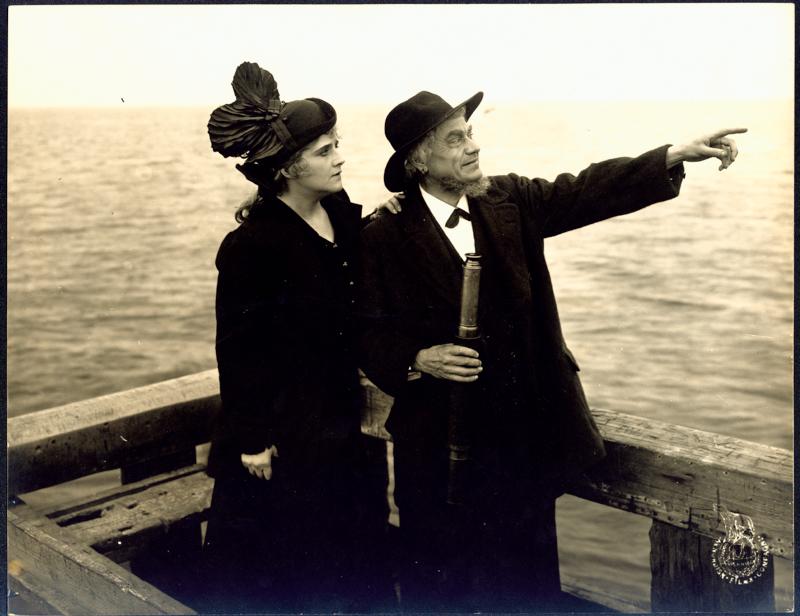
There's an undeniable allure to the silent era, a period when cinematic storytelling relied on raw emotion, striking visuals, and the sheer talent of its performers to convey narratives without the crutch of spoken dialogue. Among the myriad of forgotten gems, a film like Plimsolleren emerges from the archives as a testament to the profound artistry that flourished in the early 20th century. It’s a work that, even without a booming soundtrack or crisp dialogue, manages to resonate deeply, echoing concerns that remain remarkably pertinent today. This Danish production, helmed by the astute vision of C. Kruse, unfurls a gripping tale of human endurance, moral corruption, and the unyielding spirit of justice, all set against the unforgiving backdrop of a bustling, turn-of-the-century port.
From its opening frames, Plimsolleren immerses its audience in a world defined by the clang of metal, the creak of timber, and the constant churn of the sea. We are introduced to Lars Knudsen, a dockworker whose steadfast character earns him the affectionate moniker 'Plimsolleren' among his peers. Portrayed with an understated intensity by Charles Wilken, Lars is the embodiment of the working man: honest, diligent, and possessed of an unwavering moral compass. Wilken's performance is a masterclass in silent acting, his expressive eyes and subtle gestures communicating volumes where words would be superfluous. He anchors the film, drawing us into the heart of the maritime community, a place where camaraderie and hardship walk hand-in-hand. His presence is a steadying force, a beacon of integrity in a narrative increasingly shadowed by deceit.
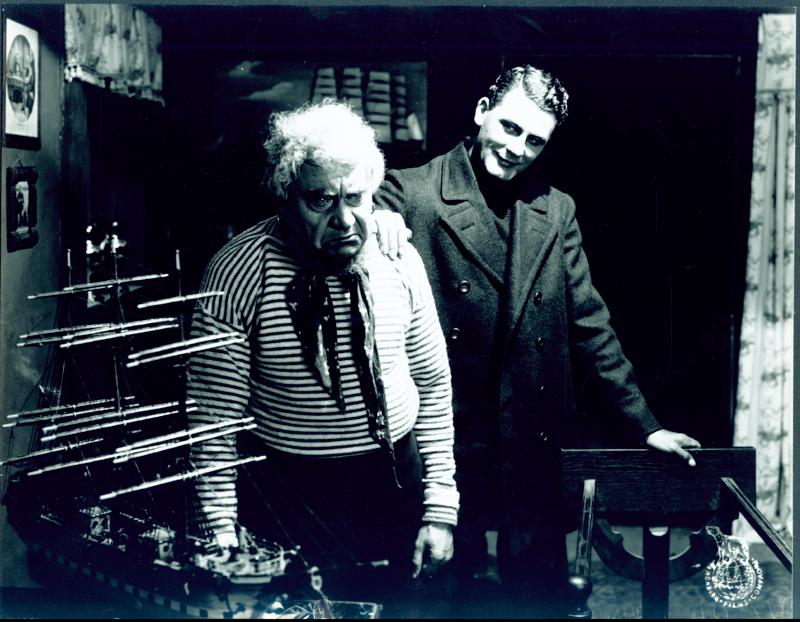
The narrative's central conflict crystallizes around the figure of Jørgen Bjerre, a shipping magnate whose avarice knows no bounds, brought to chilling life by Carl Lauritzen. Bjerre is not merely a villain; he is a force of nature, a capitalist monster whose pursuit of profit eclipses any concern for human life. Lauritzen imbues Bjerre with a cold, calculating menace, his every movement exuding an aura of ruthless authority. The film meticulously illustrates Bjerre's deliberate practice of overloading his aging cargo ships, a dangerous gamble that consistently places his crews in mortal peril. This isn't just a plot device; it's a stark social commentary on the industrial practices of the era, where human lives were often considered expendable in the relentless march of commerce.
The tragedy that befalls Lars's dear friend, a consequence of Bjerre's criminal negligence, serves as the catalyst for the film's dramatic unfolding. This pivotal moment transforms Lars from a passive observer of injustice into an active crusader. His grief is palpable, a silent scream that reverberates through the stark, black-and-white cinematography. It’s a classic narrative arc, perhaps, but handled with a sincerity and visual flair that elevates it beyond mere cliché. The stakes are immediately clear: Lars is not just seeking personal vengeance, but a broader justice for his community, for all those exploited by the powerful. This struggle for the common good gives the film its enduring resonance, positioning it alongside other socially conscious works of the era, such as Sperduti nel buio, which similarly delved into the stark realities of class struggle and urban poverty.
Into this turbulent world steps Ingrid Bjerre, the magnate's daughter, played with remarkable grace and inner strength by Else Frölich. Frölich masterfully portrays Ingrid's gradual awakening to her father's moral bankruptcy. Initially sheltered, perhaps even complicit through ignorance, Ingrid undergoes a profound transformation. Her burgeoning compassion and artistic spirit clash dramatically with the harsh realities of her father's business. Her journey from naive heiress to a woman of conviction is one of the film's most compelling threads. Frölich avoids the pitfalls of making Ingrid a mere damsel in distress; instead, she crafts a character who actively seeks truth and ultimately plays a crucial role in the fight for justice. Her performance introduces a much-needed layer of emotional complexity, showcasing the internal conflicts that can arise even within the privileged classes when confronted with undeniable moral failings. This echoes the nuanced female roles seen in films like The Honor of Mary Blake, where women often navigate complex ethical landscapes.
The romantic subplot between Lars and Ingrid is handled with a delicate touch, avoiding overt melodrama in favor of a more profound connection built on shared values and mutual respect. Their relationship is not one of instant, fiery passion, but a slow burn of understanding and alliance, forging a bond that transcends their disparate social standings. It's a testament to the screenplay by C. Kruse that this connection feels earned and believable, providing a potent emotional core to the broader struggle. Their developing affection serves as a symbol of hope, suggesting that integrity can bridge even the widest social divides.
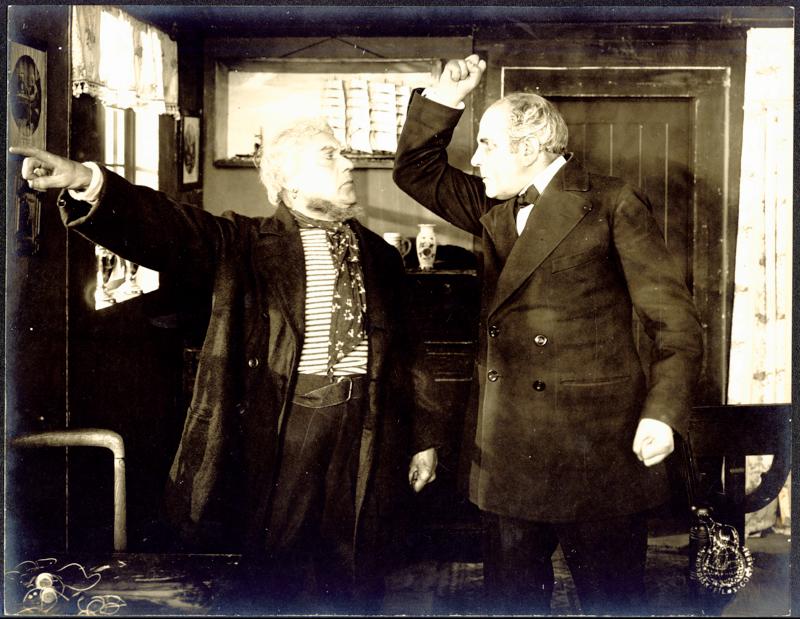
Adding another layer to the intricate web of relationships is Henrik Brandt, Ingrid's fiancé, brought to life by Rasmus Christiansen. Christiansen's portrayal of Brandt is subtle yet effective. Brandt is not outright evil, but rather a man compromised by ambition, caught between loyalty to Bjerre and his own nascent conscience. He represents the insidious nature of moral relativism, a character whose choices illuminate the pressures and temptations inherent in maintaining one's position within a corrupt system. His attempts to dissuade Ingrid from her path of truth highlight the internal conflicts that ripple through the story, making him a more complex figure than a simple antagonist. This kind of morally ambiguous character often provides crucial tension, much like the intricate betrayals explored in The Tangle, where personal ambitions drive difficult choices.
Herman Haalboom, as the stoic captain, delivers a performance that speaks volumes through his weary eyes and resigned demeanor. He embodies the silent suffering of those who witness injustice but feel powerless to act. His internal struggle, though rarely articulated, is a powerful undercurrent, adding to the film's emotional depth. The captain's eventual decision to align with Lars, even if subtly, marks a significant turning point, underscoring the film's theme that even the most entrenched systems can be challenged when individuals find the courage to speak out.
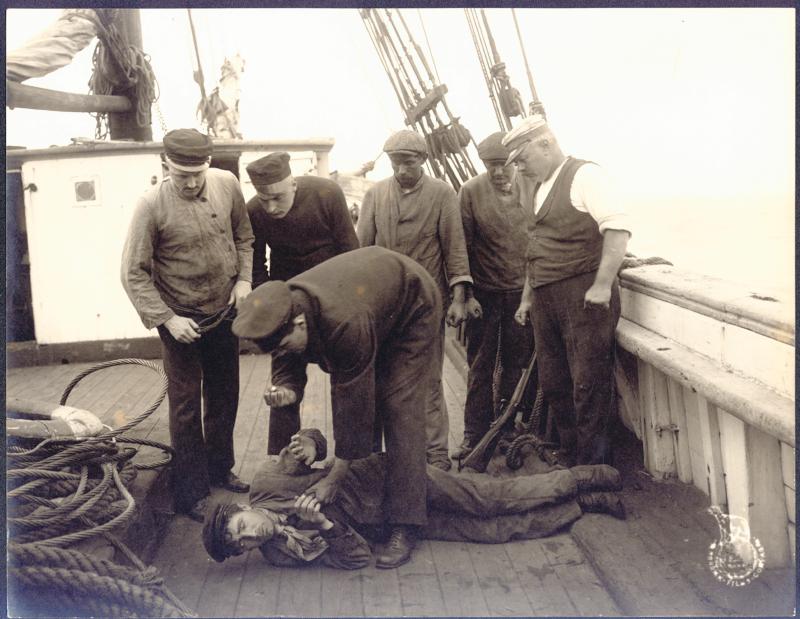
The cinematography in Plimsolleren is particularly noteworthy. The film utilizes stark contrasts of light and shadow, characteristic of the era, to underscore its thematic concerns. The grimy, dimly lit docks are juxtaposed with the opulent, yet morally dark, interiors of Bjerre's mansion. This visual dichotomy effectively emphasizes the class divide and the moral chasm separating the protagonists from the antagonists. The use of deep focus in certain scenes allows for a rich visual tapestry, drawing the viewer's eye to subtle details that enhance the narrative. The camera often lingers on the faces of the characters, allowing their nuanced expressions to convey the weight of their emotions, a technique that was crucial in silent film for establishing character depth.
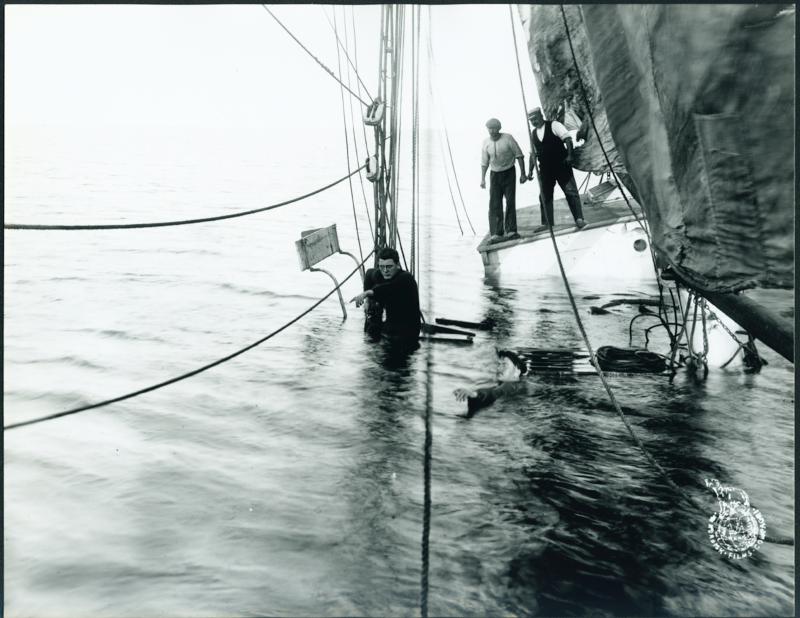
The direction by C. Kruse demonstrates a keen understanding of pacing and visual storytelling. The narrative unfolds with a measured intensity, building suspense gradually rather than relying on cheap thrills. Kruse masterfully orchestrates the crowd scenes on the docks, imbuing them with a sense of authentic chaos and communal spirit. The action sequences, particularly those involving the perilous sea voyages, are staged with a surprising degree of realism for the time, conveying the genuine danger faced by the sailors. The film's climax, a dramatic confrontation at Bjerre's annual banquet, is a tour de force of silent cinema, utilizing cross-cutting and heightened emotional performances to create an unforgettable moment of reckoning. The tension is almost unbearable, a testament to Kruse's ability to manipulate audience emotions without a single word being spoken.
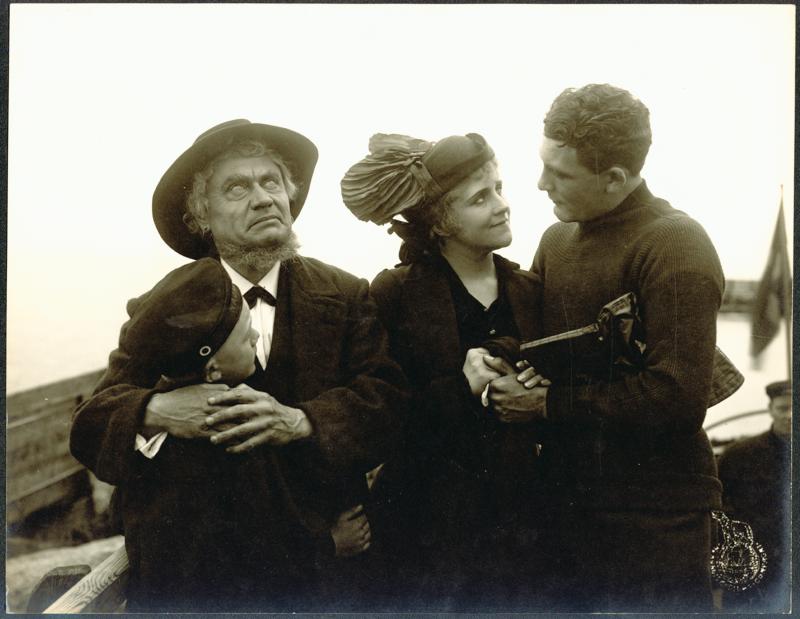
Thematic exploration in Plimsolleren is rich and multi-faceted. At its core, it's a powerful indictment of corporate greed and the exploitation of the working class. The film asks profound questions about accountability, the price of progress, and the moral responsibilities of those in power. It celebrates the virtues of integrity, courage, and the unwavering pursuit of justice, even in the face of overwhelming odds. The maritime setting is not merely a backdrop; it's a metaphor for the precariousness of life and the unpredictable currents of fate. The 'Plimsoll line' itself, a symbol of safety and load limits, becomes a powerful motif, representing the ethical boundaries that Bjerre so recklessly transgresses. This thematic depth positions it favorably against other socially critical films like The Straight Way, which similarly tackled issues of social injustice and redemption.
One could argue that some of the plot beats, particularly the dramatic reveal at the banquet, might feel familiar to modern audiences accustomed to a century of cinematic tropes. However, it’s crucial to view Plimsolleren within its historical context. What might seem conventional now was, in its time, a powerful and often innovative way to engage with pressing social issues. The film’s strength lies not in revolutionary narrative structure, but in its compelling execution, its deeply human characters, and its unflinching moral clarity. The performances, particularly from Wilken and Frölich, elevate the material beyond simple melodrama, imbuing it with a timeless emotional resonance.
The film's exploration of love and sacrifice also deserves commendation. The bond between Lars and Ingrid is not a frivolous romance but a partnership forged in adversity, a testament to their shared commitment to truth. Ingrid's willingness to betray her own father, to risk her social standing and personal safety for the sake of justice, marks her as a heroine of considerable moral fiber. This narrative choice avoids simplistic portrayals, instead offering a nuanced look at the complexities of familial loyalty versus ethical imperative. It speaks to a universal truth about the difficult choices individuals must sometimes make when confronted with profound moral dilemmas.
In comparing Plimsolleren to its contemporaries, one can see elements that resonate across national cinemas. The stark realism of the working-class environment might draw parallels to Italian neorealism before its time, while the dramatic intensity and moral uprightness of its protagonist could be likened to heroes in American social dramas. Yet, Plimsolleren retains a distinct Danish sensibility, a certain quiet dignity even amidst turmoil. It avoids sensationalism, preferring to let the weight of its characters' actions and the gravity of its themes speak for themselves. The film's pacing, though deliberate, never drags; instead, it allows moments to breathe, letting the emotional impact sink in. This measured approach is a hallmark of many European productions of the era, distinguishing them from the more frenetic pace sometimes found in American counterparts.
The film also serves as a valuable historical document, offering a glimpse into the industrial landscape and social dynamics of early 20th-century Denmark. The costumes, the sets, the portrayal of daily life on the docks – all contribute to a rich, immersive experience that transports the viewer back in time. It's a reminder that cinema, even in its nascent form, was capable of both profound entertainment and insightful social commentary. The attention to detail in creating this world, from the bustling port to the elegant, yet morally compromised, drawing rooms, is commendable. It grounds the fantastical elements of the melodrama in a believable reality, enhancing the film's overall impact.
Ultimately, Plimsolleren stands as a compelling example of silent cinema's enduring power. It's a film that speaks to the timeless struggle between right and wrong, between the individual and oppressive systems. The performances are captivating, the direction assured, and the themes resonate with an urgency that transcends the decades. It reminds us that stories of courage, integrity, and the fight for justice are universal, capable of moving audiences regardless of technological advancements. For anyone interested in the rich tapestry of early European cinema, or simply in a powerful human drama, Plimsolleren is a discovery well worth making. Its legacy is not just in its historical significance, but in its ability to still stir the soul and provoke thought, proving that some narratives, like the 'Plimsolleren' himself, are built to last.
IMDb —
1918
Community
Log in to comment.