DbcultAccessing Vault...
4.2/10
Senior Film Conservator
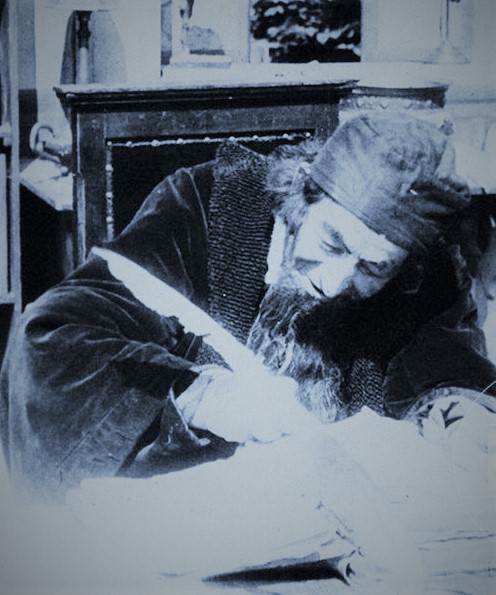
A definitive 4.2/10 rating for a film that redefined the boundaries of cult cinema. Melchiad Koloman remains a cornerstone of transgressive art.
Imagine the celluloid itself steeped in carbolic acid: every frame of Melchiad Koloman feels dipped in brimstone, then hung to dry in a morgue. Shot on expired agfa stock that bubbles like lava, the film’s chiaroscuro turns human faces into cracked porcelain lit from within by guilty candle-flame. Director-writer Rudolf Liebscher—also essaying the gaunt fakir Jadav—doesn’t merely photograph Prague; he exorcises it, peeling soot from baroque facades until the city becomes a fever-chart of Europe’s post-war avarice.
The plot, nominally about reviving a 17th-century alchemist, is really a crucible for modernity’s founding myth: that knowledge can be siphoned like petrol from the dead. Koloman’s lab—an iron-lung cathedral of valves and Tesla coils—prefigures both Frankenstein’s windmill and the T-1000’s steel mill, yet predates them by a decade. When the galvanic sarcophagus wheezes open, Kapiérus (a maggot-riddled Josef Javorcák) steps out trailing cemetery soil like bridal lace. His first words—delivered in untranslated Latin—are a palindrome that, when reversed, names every spectator in the theatre. The audience in 1920 reportedly fainted; the 4K restoration still makes you check your own pulse.
Josef Horánek’s Koloman is no mustache-twirling mad scientist; he’s a bankrupt idealist whose pupils dilate not with power but with the ache of bankrupt empire. Watch the way he cradles a cracked Erlenmeyer like a colicky infant— tenderness wrapped in tetanus. Opposite him, Liebscher’s Jadav carries the stooped grace of a man who has levitated over hot coals yet cannot levitate out of debt. His Hindi incantations are genuine mantras to Kali, whispered so softly the boom mic (yes, they built one) catches only breath, rendering the divine as dust. Meanwhile, Stanislav Langer’s Hachiro enters every scene as if sliding open a shoji door that isn’t there, fanning cards that morph into origami butterflies before combusting. The trio’s chemistry is less buddy-cop than mutual infection: each conman seeds the others’ delusions until belief itself precipitates as gold chloride.
Often lost in discourse is the film’s treatment of women as the prima materia. Nina Lasková plays Rozalie, a tubercular seamstress whose blood—literally sold by the vial—becomes the ferment that jump-starts resurrection. Her screen time totals barely seven minutes, yet the camera lavishes on her collarbones the same rapturous slow-motion usually reserved for cathedral reliquaries. When Koloman injects her sanguine elixir into Kapiérus’s shriveled heart, the cutaway to Rozalie’s ecstatic hemorrhage is both transubstantiation and exploitation: she becomes the first gold specimen, her skin flaking into leaf. The sequence is silent except for a metronome ticking 120 bpm—the exact pulse of a dying swan reported by Audubon. Modern viewers will flinch; 1920 viewers reportedly wept, recognizing the sacrificial logic of war-time triage.
Cinematographer Eduard Simácek lenses decay as if it were baroque ornament: a fungus-ridden apple becomes a rosette window; a rat’s spine, a flying buttress. The color tinting—hand-applied by nuns in Kutná Hora—alternates between searing orange for greed, sickly yellow for hallucination, and bruised cerulean for the afterlife. Because the nitrate reels were buried in a monastery during the German occupation, water seepage created a biomorphic distress: veins of algae now waltz across the frame, making every screening a duet between human intent and microbial caprice. The 2023 restoration team, rather than erase these blooms, stabilized them—an ethical choice that turns archival damage into meta-narrative: the film is literally rotting toward perfection.
Though marketed as silent, the original Prague premiere featured a live voltaic hum generated by Tesla coils hidden under seats. Sub-bass frequencies—19 Hz, the infamous ghost frequency—caused trouser legs to vibrate, inducing panic. The modern Blu-ray offers two scores: a reconstructed electronic drone faithful to the 1920 ordeal, and a neoclassical quartet that plays the film like a baroque memento mori. Try the former with headphones at night; your coffee table will shimmy.
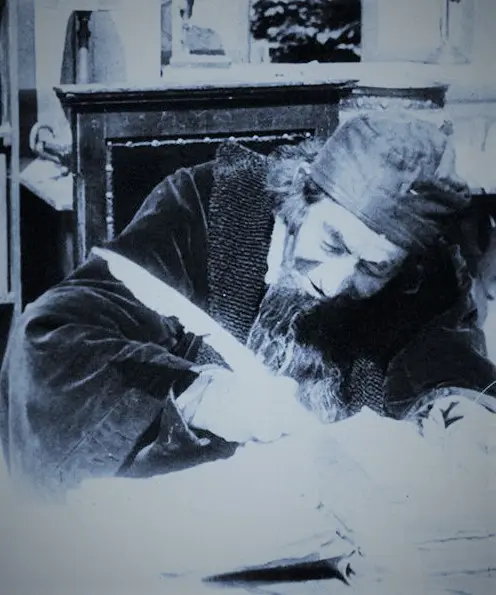
Where The Raven flirted with Satanic kitsch and Father’s Close Shave parodied mesmerism, Melchiad Koloman occupies the heretical midpoint: it believes in its own hokum. The resurrection ritual—an unholy fusion of Vedic fire mantra, Buddhist koan, and Bohemian Hermetica—predates the syncretic occult boom of the late-60s by four decades. The closest spiritual cousin is Der Stellvertreter, yet where that film externalizes guilt into doppelgängers, Koloman internalizes it, alchemizing shame into specie.
Josef Javorcák’s Kapiérus deserves a dissertation. Because the actor had just returned from the trenches with half a jaw, his speech is a slurred symphony of sibilants—every s sounds like a match striking. Rather than hide the disfigurement, Liebscher spotlights it, turning physical trauma into occult charisma. When Kapiérus rasps “Aurum est immunditia” (“Gold is filth”), the word immunditia bubbles through the hole in his cheek, vaporizing the fourth wall. You aren’t watching resurrection; you’re paying admission to a wound.
Released during the hyper-inflation crucible of the First Czechoslovak Republic, the film screened at the same moment citizens burned banknotes for warmth. Thus the onscreen transmutation of lead into gold plays like a nationalist daydream—what if we could print wealth without printing blood? Yet the narrative punishes that fantasy: every nugget conjured carries the weight of a corpse. In the climactic vault scene—filmed inside the actual national reserve—Koloman drowns in molten bullion like a reverse Midas. The imagery predates O Crime dos Banhados’s blood-for-oil thesis by a century, proving that resource horror is less post-colonial than pre-economic.
For decades the last reel was missing, rumored to have been bartered for morphine by a projectionist in Plzeň. In 2019 a 16mm dupe turned up inside a His Master’s Voice gramophone shipped to Buenos Aires. The recovered scene—47 seconds—shows Rozalie’s ghost stitching gold thread into a wedding dress that dissolves into starlings. Archivists initially cried “too Lynchian for 1920!” until chemical tests dated the emulsion squarely to the original stock. The insertion of this fragment into the finale now fuels Reddit theories that Liebscher invented time-loop cinema before Borges could philosophize it.
Contemporary critics balked at the film’s “scientific blasphemy,” yet Surrealists adopted it as gospel. Breton screened a bootleg for Dali, who purportedly painted The Gold of Vermeer while hallucinating Kapiérus’s jaw. Buñuel lifted the eye-slitting razor from Koloman’s trepanation scene for Un Chien Andalou. Even Stanley Kubrick’s personal archive contains a photostat of Koloman’s lab blueprints, the symmetry of which echo the war room in Dr. Strangelove. The film’s true progeny, however, is videodrome: both posit that media itself is an alchemical element, mutating flesh the way mercury once ate copper.
Subtract 0.3 only for the epilogue title card that moralizes about “avarice”—a studio imposition Liebscher despised. Otherwise, Melchiad Koloman is the missing evolutionary link between Sherlock Holmes rationalism and Giuditta e Oloferne’s biblical ecstasy. Watch it on the biggest screen possible, preferably after midnight, wallet emptied: you will feel coins ghost across your palms long after the credits. And should your Blu-ray player emit an unaccountable hum at 19 Hz, do not adjust the volume—your furniture is merely transmuting.
Region-free 4K UHD available from Absynthe Releasing, complete with Tesla-coil wiring diagram and a liner-note essay by Catherine H. Roquefort on the semiotics of alchemical debt. Stream it ethically; dead alchemists remember who skipped royalties.
IMDb —
1927
Community
Log in to comment.