DbcultAccessing Vault...
Cult Review
Senior Film Conservator
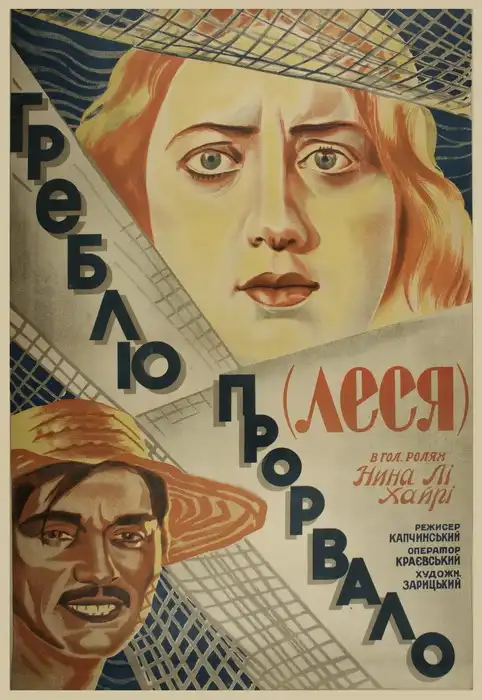
Alright, so 'Plotina prorvana' – 'The Dam is Broken' – is definitely one for the specific crowd. If you love a good silent film, especially something with that grand, early Soviet energy, then yeah, this is absolutely worth checking out. You’ll get a real kick out of the scale and the sheer ambition. But if you’re someone who needs snappy dialogue, modern pacing, or deep character arcs, you’re probably going to find it a bit of a slog. It’s not for everyone, for sure, but it has its moments. 🧐
The whole premise revolves around building this enormous dam. It’s not just a dam; it’s a symbol. A massive undertaking for the new Soviet state. And right from the start, you feel that sense of *purpose*. The opening shots of the landscape, then the blueprints, then the sheer number of people getting to work – it’s impressive. You can almost smell the dust and the effort.
Nina Li, as one of the lead engineers or workers, has this incredible presence. Her eyes do so much work. You don't need words when she's on screen, just her determined stare or that flash of worry. There’s a scene where she’s overseeing a group of men, and she doesn't say anything, but her posture, her quick, sharp gestures communicate everything. It’s really quite effective. ✨
And then there’s the sabotage element. Of course, there is. This isn’t just a story about building; it’s about overcoming obstacles, both natural and human. The idea of someone actively working against this monumental project adds a real layer of tension. Yuriy Krestinskiy, playing… well, let’s just say the 'untrustworthy type,' does a great job with those shifty glances. He doesn’t need a villain monologue, just a quick look over his shoulder, and you know he’s up to no good. It’s simple, but it works for the style.
The pacing is… well, it’s silent film pacing. It builds. Slowly. There are long sequences showing the construction itself, the digging, the hauling, the massive concrete pours. You might find yourself drifting a bit if you’re not used to it. But then, every now and then, there’s a burst of frantic energy, especially when something goes wrong. Like a sudden rockslide or equipment failure. Those moments really snap you back in.
One shot that really stuck with me: a close-up of a worker's hands, all grimy and calloused, tightening a bolt. It's just a few seconds, but it tells you everything about the labor involved. It’s those small, almost documentary-like details that give the film its grounding. It doesn’t feel fake, even with all the dramatic acting.
Heiri Emirzade, too, brings a certain intensity to his role. There's a particular scene where he's arguing (silently, of course) with V. Kolpashnikov, another character. The way they gesture, the anger in their faces – it feels very real, even if it's broad. You can almost hear the yelling. It’s interesting how much emotion they could convey without a single spoken word. 🗣️
The film is really good at showing the sheer scale of the project. There are wide shots of hundreds of workers, like ants, all moving together. It really drives home the idea of collective effort, which was a huge theme in Soviet cinema at the time. It’s less about individual glory and more about the power of the group. Sometimes you almost lose track of who's who, but that's kind of the point.
And the dam itself! It becomes almost a character. You see it growing, piece by piece. You understand what it means to these people. So when things start to go wrong, when that 'dam is broken' moment arrives, it really hits. The chaos, the water rushing in, the frantic attempts to save it – it’s genuinely thrilling, even almost 100 years later. The use of actual water and practical effects for that sequence is pretty impressive. No fancy CGI here, just raw, physical filmmaking. 🌊
There are some parts where the propaganda element feels a little heavy-handed. You can almost feel the movie trying to convince you how important this project is, how evil the saboteur is. But hey, it's a film from 1928 Soviet Union; what do you expect? It’s part of the historical charm, I guess.
Overall, 'Plotina prorvana' is a solid piece of early cinema. It’s not perfect; some parts drag, and the character development isn’t exactly deep. But for its visual ambition, the strong performances from folks like Nina Li and Heiri Emirzade, and that incredible dam-break sequence, it’s definitely worth a watch if you're into film history or just curious about silent movies beyond the usual suspects. It gives you a real sense of what filmmaking was capable of, even without sound. A pretty powerful spectacle, all things considered. 👍
IMDb —
1919
Community
Log in to comment.