DbcultAccessing Vault...
4/10
Senior Film Conservator
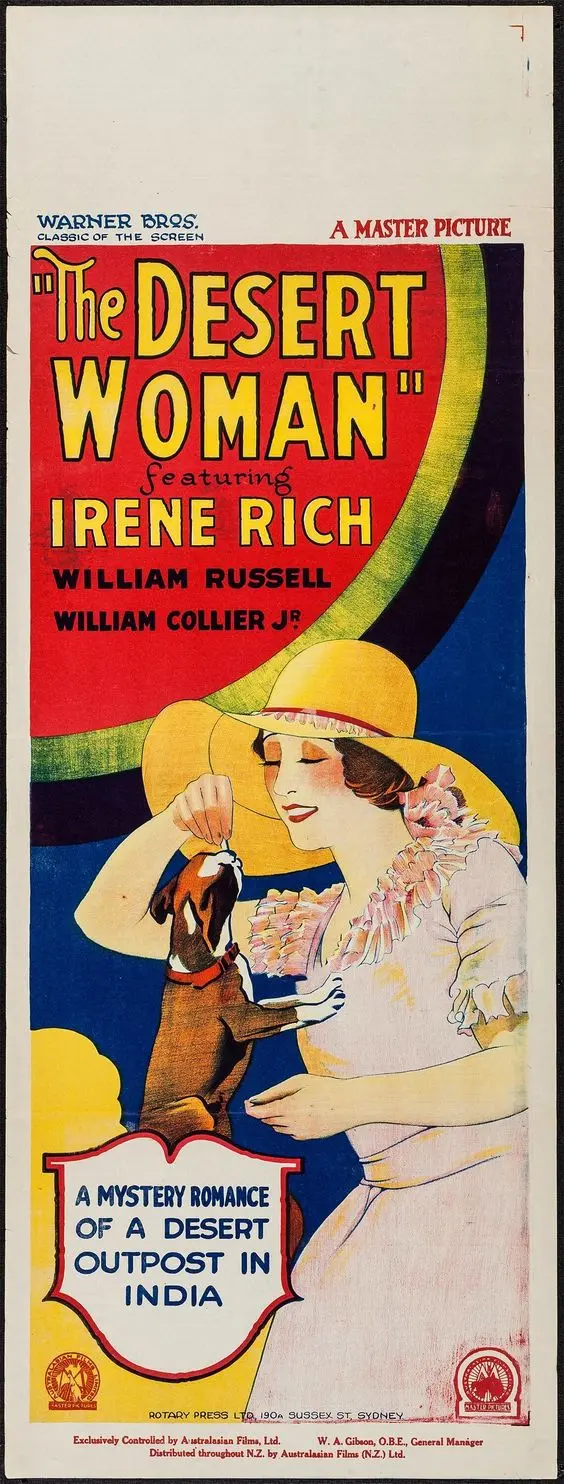
A definitive 4/10 rating for a film that redefined the boundaries of cult cinema. The Desired Woman remains a cornerstone of transgressive art.
Short answer: yes, but only if you have the patience for the deliberate, simmering pacing of late-period silent cinema. This film is specifically for those who enjoy psychological character studies and the historical evolution of the 'femme fatale' archetype, and it is certainly NOT for viewers who require high-octane action or modern dialogue-heavy narratives.
The Desired Woman (1927) stands as a fascinating artifact from the twilight of the silent era. It captures a moment when filmmakers were mastering the art of visual storytelling just before the 'talkies' arrived to change the grammar of cinema forever. Written by a young Darryl F. Zanuck, the film carries a certain grit that would later define his career as a studio mogul.
1) This film works because it utilizes its setting as a psychological pressure cooker, making the desert heat feel like an active participant in the characters' moral decay.
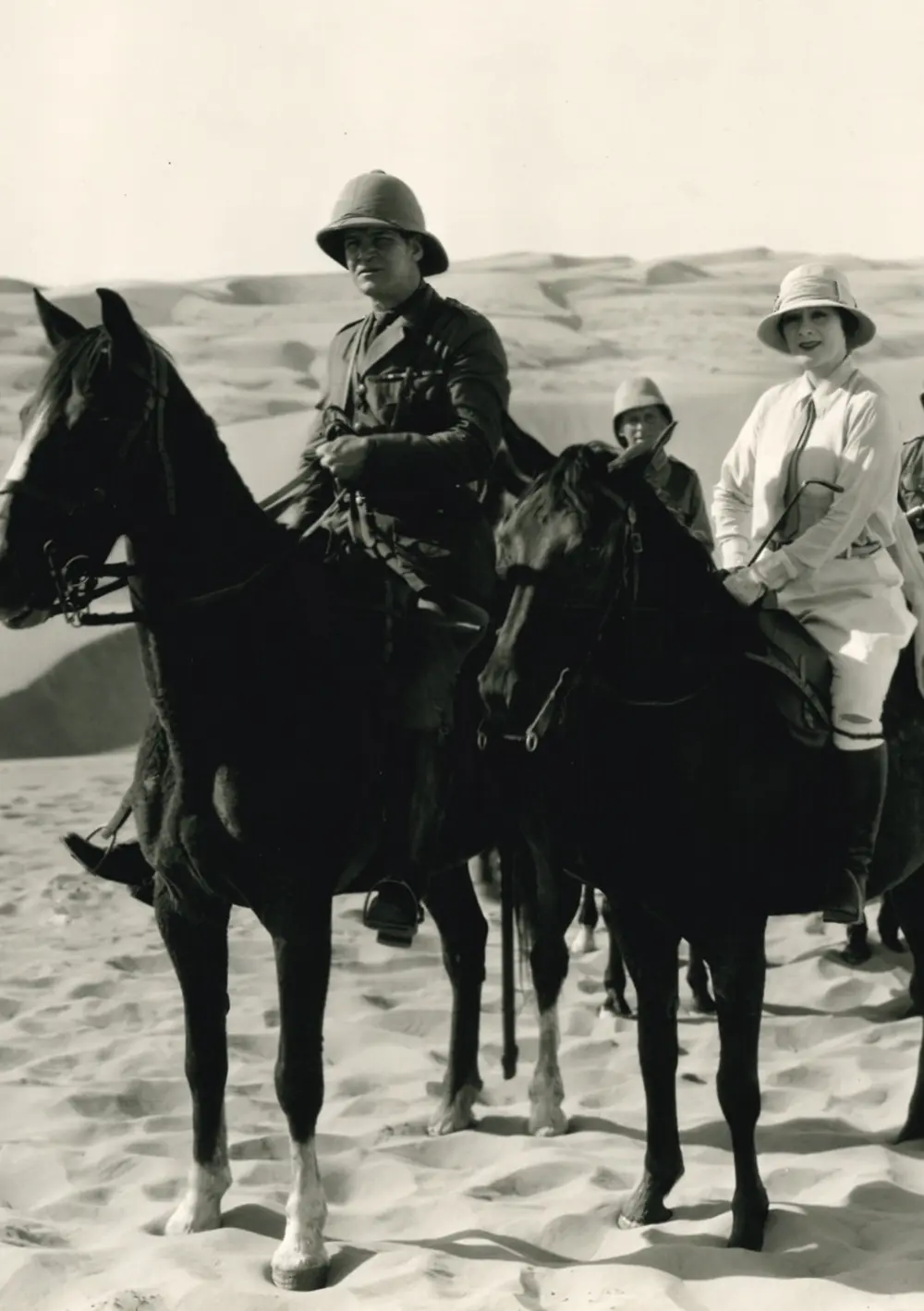
2) This film fails because it eventually leans too heavily on conventional Victorian-era moralizing in its final act, which undercuts the complexity of its middle chapters.
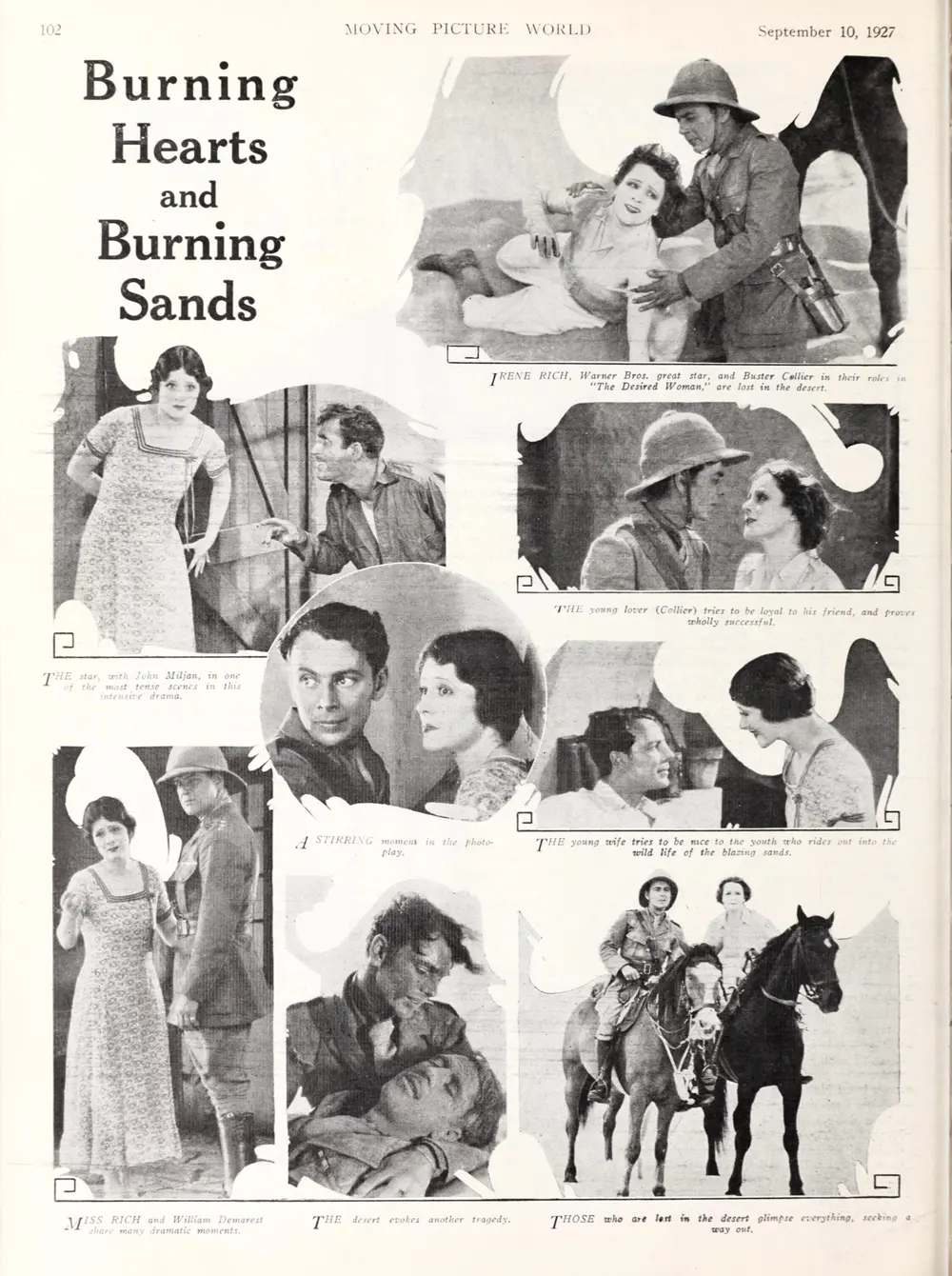
3) You should watch it if you want to see Irene Rich deliver a masterclass in silent expression, or if you are interested in how early Hollywood portrayed colonial military life.
The cinematography in The Desired Woman is far more sophisticated than one might expect from a 1927 production. The camera doesn't just observe the dunes; it lingers on them until the audience feels the claustrophobia of the open space. There is a specific shot early in the film where the horizon line seems to press down on the outpost, a visual metaphor for the psychological weight bearing down on the men. This creates a tone of impending doom that sustains the first half of the film.
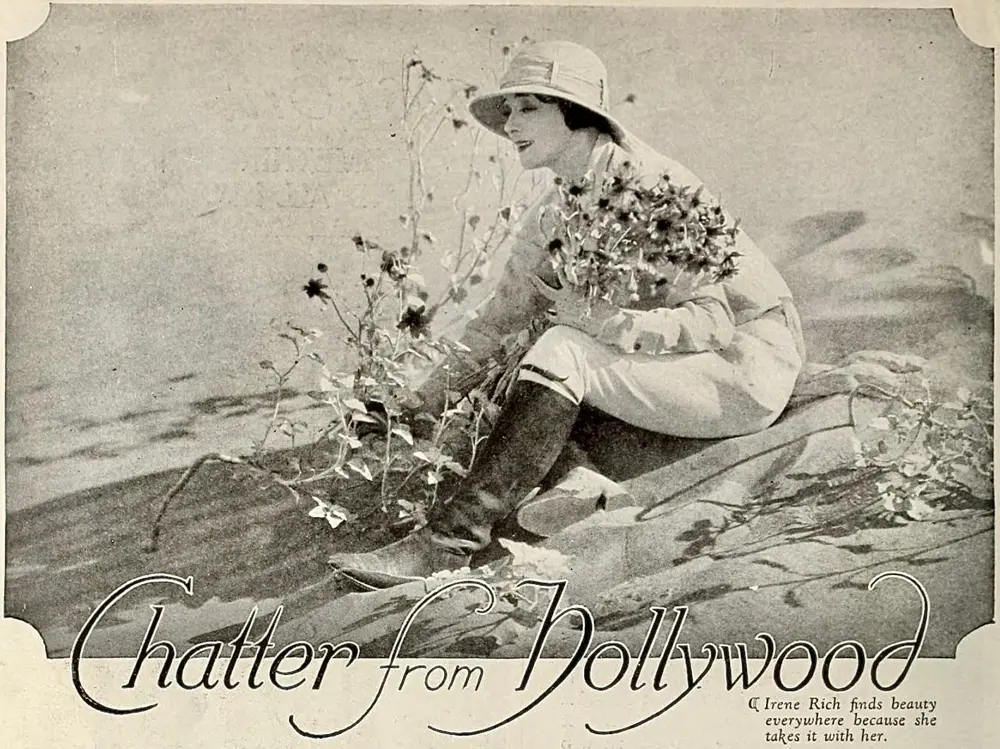
While some might find the pacing sluggish, it serves a purpose. The slow movement of the sun and the repetitive nature of military life are essential to understanding why Diana Maxwell's presence is so disruptive. Unlike the more frantic energy found in The Price of Pleasure, this film takes its time to let the resentment breathe. You can see the sweat on the brows of the actors, and for once, it doesn't feel like stage makeup; it feels like a genuine reaction to an environment that wants them gone.
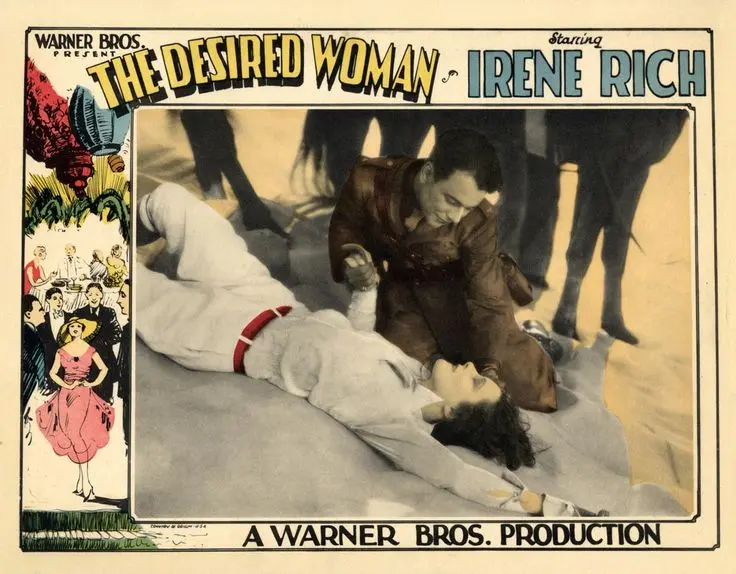
Irene Rich provides a performance that is remarkably restrained. In many films of this era, actresses were encouraged to use grand, sweeping gestures to convey emotion. Rich does the opposite. She uses her eyes to communicate a sense of weary awareness. She knows she is the source of the conflict, yet she is not a villain. She is a woman caught in a social structure that views her as property or a prize.
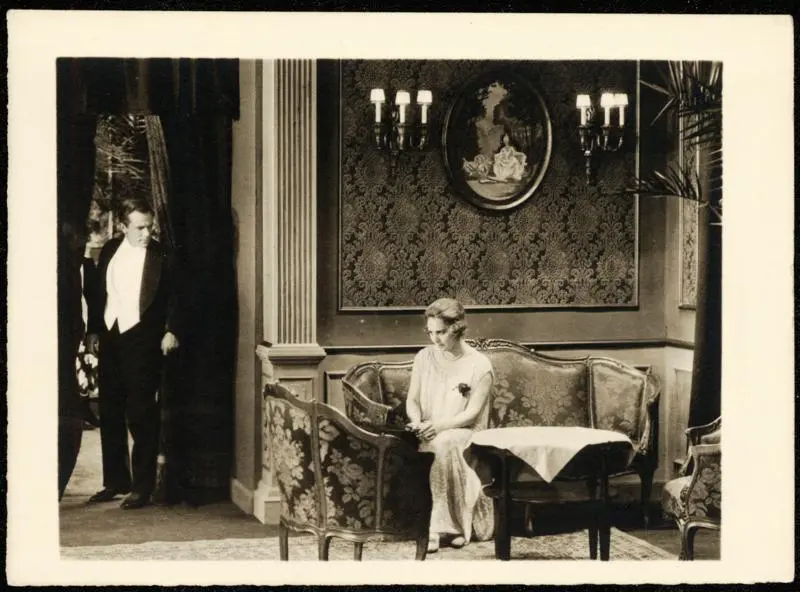
In one standout scene, Diana sits at a dinner table surrounded by officers. The camera captures the predatory way the men watch her, contrasted with her own hollow stare into her glass. It is a haunting moment of isolation. Compared to the more overt characterizations in Burnt Wings, Rich’s portrayal of Diana Maxwell is a study in quiet desperation. She doesn't have to scream to show she is drowning; she just has to sit still.
Darryl F. Zanuck and Anthony Coldeway’s script is surprisingly modern in its cynicism. They don't paint the British military as a bastion of pure heroism. Instead, they show it as a collection of bored, flawed men who are one bad day away from mutiny or madness. This level of honesty is refreshing. It lacks the sugary sentimentality found in many other 1920s dramas like A Modern Mother Goose.
The dialogue—delivered via intertitles—is punchy and direct. There is a lack of flowery prose, which fits the harsh environment. However, the script does stumble when it moves away from the desert. The transition to other locations feels like it loses some of the focused energy of the Sahara segments. The jealousy remains, but the environmental catalyst is gone, making the conflict feel more like a standard melodrama and less like a survival story.
Is The Desired Woman (1927) still relevant for modern audiences?
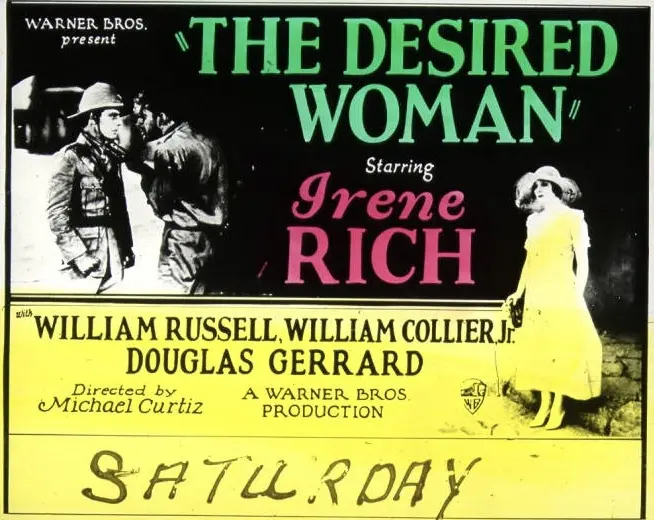
Yes, it is worth watching because it provides a rare, unvarnished look at the psychological effects of isolation and the destructive nature of the male gaze. While the technical aspects are nearly a century old, the core themes of jealousy and the objectification of women remain deeply resonant today. It serves as both a historical document and a compelling drama.
When placed alongside other films of the era, such as An Alien Enemy, The Desired Woman feels much more grounded in human psychology than in wartime propaganda. While An Alien Enemy relies on external threats to drive the plot, The Desired Woman finds its monsters within the hearts of its protagonists. This internal focus makes it a more enduring piece of art.
Furthermore, the film's exploration of a woman's role in a rigid hierarchy can be compared to White Eagle, though with a much darker, more claustrophobic tone. It avoids the adventurous escapism often associated with desert films, opting instead for a gritty realism that was ahead of its time. It is a film that respects the audience's intelligence, assuming they can handle a story where there are no clear heroes.
Pros:
Cons:
The Desired Woman is a haunting, sweat-soaked exploration of human frailty. It works. But it’s flawed. The shift from the Sahara to more conventional settings feels like a slight betrayal of the film's initial promise, yet the strength of the performances carries it through. It is a film that understands that the most dangerous thing in a desert isn't the heat or the lack of water; it's the person standing next to you.
"A rare silent film that prioritizes the internal over the external, making the silence feel loud with unsaid desires."
Ultimately, if you are looking for a film that explores the dark side of the human spirit with a sophisticated visual eye, this is a mandatory watch. It may not have the name recognition of some of its contemporaries, but its influence on the psychological thrillers that followed is undeniable. It is a stark reminder that even in the most desolate places on Earth, the human heart remains the most complex and dangerous landscape of all.

IMDb —
1921
Community
Log in to comment.