DbcultAccessing Vault...
Cult Review
Senior Film Conservator
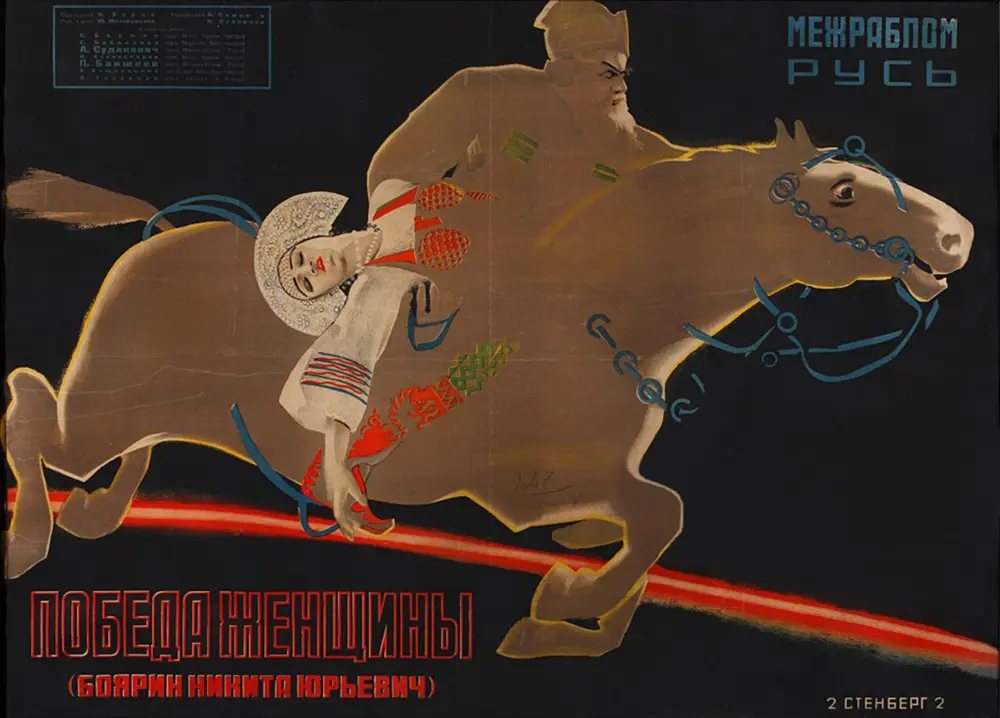
Is Pobeda zhenshchiny worth watching today? Short answer: yes, but with significant caveats that demand a specific kind of viewer. This film is a profound historical document, a window into a bygone era of Russian cinema and society, and for those attuned to its unique frequency, it offers a rich, if challenging, experience.
It is unequivocally for the dedicated cinephile, the history enthusiast, and anyone with a deep appreciation for the foundational works of silent cinema. It is emphatically not for the casual viewer seeking modern pacing, high-octane drama, or easily digestible narratives. Prepare for a journey, not a sprint.
Stepping into the world of Pobeda zhenshchiny is akin to opening a meticulously preserved antique book. Its pages, though faded, tell a story rich in texture and historical detail. The film, emerging from the nascent years of Soviet cinema, offers a unique perspective on a period often romanticized or simplified: the reign of Peter the Great and the complex, often brutal, transition of Russia into a European power.
At its core, the film attempts to capture the essence of boyar life, a world of intricate customs, rigid social structures, and underlying tensions. It's a historical drama that prioritizes atmosphere and cultural immersion over rapid plot progression, demanding patience but rewarding it with an unparalleled sense of authenticity.
The most striking aspect of Pobeda zhenshchiny is its commitment to portraying a specific historical moment with a palpable sense of gravity. The film is less about a conventional storyline and more about creating a living tableau of Peter I's Russia. The 'victory of a woman' implied by the title isn't a grand, cinematic triumph, but rather a subtle assertion of self within a system designed to suppress individuality.
The screenplay, attributed to Nikolai Leskov and Nathan Zarkhi, clearly draws from a deep well of cultural understanding. Leskov, known for his intricate portrayals of Russian life, lends a literary weight to the film's observational style. This isn't a film that spoon-feeds its audience; it expects engagement, a willingness to interpret the unspoken narratives conveyed through gesture, costume, and setting.
The production design, though limited by the technology of its time, is remarkably effective. The sets, whether depicting the opulent yet restrictive interiors of a boyar manor or the more austere public spaces, feel lived-in and authentic. Every piece of furniture, every tapestry, every prop seems carefully chosen to transport the viewer to the 17th-century Russian court.
One particularly compelling aspect is the depiction of the customs themselves. From the elaborate dress codes to the rigid social etiquette, the film meticulously reconstructs a world where every action, every glance, held significant meaning. It’s a fascinating, almost anthropological, study that transcends mere storytelling.
The performances in Pobeda zhenshchiny are, as expected for the era, largely theatrical and expansive. Silent film acting relied heavily on exaggerated facial expressions and stylized body language to convey emotion and intent without dialogue. Yet, within these conventions, certain actors manage to carve out memorable portrayals.
Vasili Toporkov, a name that would later become synonymous with Stanislavski's Moscow Art Theatre, brings a gravitas to his role, even in these early stages of his career. His presence, often stern and imposing, perfectly encapsulates the patriarchal authority of the boyar class. Anel Sudakevich, likely portraying the titular 'woman,' conveys a quiet strength and inner turmoil through subtle shifts in posture and gaze, hinting at a depth beneath the surface of societal expectation.
The ensemble cast, including Yelizaveta Naydonova and Pyotr Baksheyev, contributes to the rich tapestry of characters. Their interactions, though dialogue-free, paint a vivid picture of the power dynamics and social anxieties of the time. It’s a testament to their skill that even without spoken words, the audience can discern alliances, rivalries, and unspoken desires.
One could argue that the acting style, while period-appropriate, might feel alienating to contemporary viewers. It requires a different kind of engagement, an active interpretation of visual cues. However, for those willing to lean in, there’s a raw honesty in these performances that feels less about 'acting' and more about embodying a historical archetype. It's a challenging watch, but rewarding.
The directorial choices, likely influenced by the collaborative nature of early Soviet filmmaking, prioritize clarity and composition. Nathan Zarkhi, primarily a writer here, still contributes to the overall narrative structure, but the visual direction is key. The camera often remains static, framing scenes like classical paintings, allowing the audience to absorb the intricate details of the sets and costumes.
This static approach, while perhaps slow by modern standards, serves a distinct purpose. It forces the viewer to observe, to linger on faces and details, to piece together the narrative from visual information alone. There are few rapid cuts or dynamic camera movements; instead, the power lies in the sustained gaze, the carefully composed tableau.
Cinematographically, the film showcases the burgeoning artistry of its era. The use of lighting, though basic, is employed to create mood and emphasize key figures. Shadows often loom, reflecting the oppressive nature of the boyar environment, while moments of light might highlight a character's fleeting hope or defiance. The black and white palette, far from being a limitation, enhances the film's stark beauty, giving it a timeless, almost mythic quality.
Consider, for instance, a scene depicting a formal boyar feast. The camera holds on the long table, laden with period-appropriate dishes, the guests arranged in a rigid hierarchy. This isn't just a visual; it's a statement about power, tradition, and the individual's place within it. It’s a far cry from the dynamic realism of later films, but no less impactful in its own way.
The pacing of Pobeda zhenshchiny is its most divisive element. It is undeniably slow, deliberate to the point of being meditative. This isn't a film designed for instant gratification; it requires patience and a willingness to immerse oneself in its rhythm. For some, this will be an insurmountable barrier, but for others, it will be its greatest strength.
The tone is largely serious, almost somber, reflecting the weighty historical context. There are moments of quiet drama, but humor is largely absent, replaced by a focus on the solemnity of tradition and the gravity of social expectations. This seriousness, however, never devolves into melodrama, maintaining a certain dignified realism throughout.
The historical authenticity is truly where the film shines. Based on Leskov's work, it delves into the minutiae of boyar life, from the architecture to the clothing, the social customs to the political undercurrents of Peter I's reforms. It feels less like a fictionalized account and more like a carefully reconstructed historical document. This level of detail elevates it beyond mere entertainment, transforming it into a valuable cultural artifact.
While many might dismiss early silent films as mere relics, 'Pobeda zhenshchiny' proves that profound human drama, steeped in historical veracity, transcends technological limitations, even if it demands a conscious effort from the modern viewer.
Comparing it to other early European films, such as Der Berg des Schicksals or even the more fantastical The Devil's Circus, Pobeda zhenshchiny stands out for its grounded realism and ethnographic focus. It prioritizes the cultural landscape over grand spectacle, a choice that makes it both challenging and uniquely rewarding.
Yes, Pobeda zhenshchiny is absolutely worth watching today, but with a significant caveat. It is not a film for everyone. It requires a specific mindset and appreciation for early cinema and historical studies.
If you are a student of Russian history, particularly the Petrine era, this film offers an invaluable visual resource. Its meticulous recreation of boyar customs and environments is unparalleled for its time.
For silent film enthusiasts, it’s a fascinating example of early Soviet cinematic storytelling. It demonstrates how complex themes could be explored without spoken dialogue, relying on visual narrative and strong performances.
However, if you typically prefer fast-paced action, clear-cut narratives, or modern cinematic language, you will likely find it a struggle. Its slow rhythm and reliance on visual interpretation can be demanding.
It's a time capsule. A demanding one, but incredibly rich for those willing to engage with it on its own terms. It holds up. Barely. But its historical and cultural value is undeniable, making it a crucial piece of cinematic heritage.
Pobeda zhenshchiny is not an easy film to recommend broadly, but it is an essential one for a specific audience. It serves as a meticulously crafted time capsule, offering a rare and profound glimpse into the intricate world of boyar life during Peter I's transformative reign. Its value lies less in its ability to entertain in a conventional sense and more in its capacity to educate, to immerse, and to challenge preconceived notions of cinematic storytelling.
For those with the patience and the academic or historical interest, it is a deeply rewarding experience, a testament to the power of early cinema to convey complex social narratives without the crutch of sound. It's a film that demands effort, but in return, it offers a window into a part of history rarely seen with such authentic detail. Approach it with an open mind and a historian's curiosity, and you will find its 'victory' to be a quiet, yet profound, triumph.
IMDb 6.2
1927
Community
Log in to comment.