DbcultAccessing Vault...
5.9/10
Senior Film Conservator
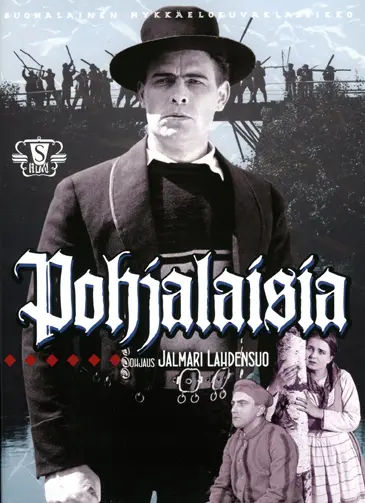
A definitive 5.9/10 rating for a film that redefined the boundaries of cult cinema. Pohjalaisia remains a cornerstone of transgressive art.
Artturi Järviluoma and Anton Kangas’s Pohjalaisia is not merely a film—it’s a seismic cultural artifact, a tremor in the earth of early 20th-century Finnish cinema. Released during a period when the nation was still grappling with the aftershocks of civil war and imperial dominance, the film channels the raw, unfiltered pulse of rural upheaval. The title, translating to 'The Pohjala People' (Pohjala being a mythical northern land), evokes a landscape both literal and symbolic, where the soil is as fertile with conflict as it is with crops.
The narrative unfolds in a series of vignettes, each more visceral than the last. Hemmo Airamo and Lauri Rautala, the film’s twin pillars, embody the duality of resistance: Airamo’s character, a stoic shepherd with a poet’s soul, contrasts sharply with Rautala’s fiery miller, whose revolutionary zeal borders on self-destruction. The script, penned by Järviluoma and Kangas, avoids didacticism; instead, it weaves the rebellion into the daily grind of plowing fields and mending fences. When the peasants gather in moonlit barns, their dialogues are not fiery proclamations but low, urgent murmurs—a reminder that revolutions are born in whispers.
Shot in a stark, almost brutalist visual style, the film’s black-and-white palette accentuates the dichotomy between light and shadow. The camera lingers on sun-scorched furrows and calloused hands, transforming the mundane into the monumental. A standout sequence—a procession of peasants marching through a blizzard, their breath visible as spectral ghosts—rivals the haunting imagery of *Heart of Gold*. The use of natural sound, particularly the howling wind and the staccato of hooves, immerses the viewer in a soundscape as oppressive as the feudal hierarchy.
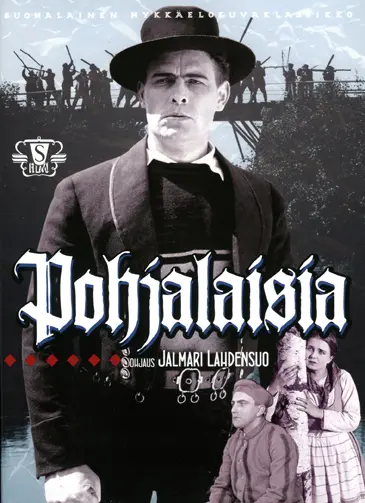
Iivari Tuomisto’s portrayal of the conflicted patriarch is a masterclass in restraint. His character’s evolution from reluctant leader to tragic martyr is etched not in grand gestures but in micro-expressions—a flicker of fear as he signs a manifest, the tremor of his voice when addressing his children. The ensemble, including Kyösti Salomaa as the cynical blacksmith and Mimmi Lähteenoja as the widow whose farm becomes a rallying point, elevate the film beyond its historical framework. Their interactions are charged with subtext; a glance exchanged over a shared cup of rye bread says more about solidarity than hours of exposition.
Pohjalaisia is a film that defies easy classification. It is part history lesson, part allegory, and part elegy. The filmmakers’ refusal to sanitize the rebellion’s outcome—its leaders hanged, its ideals buried under snow—echoes the nihilism of *Wild Waves and Angry Woman* but with a distinctly Finnish stoicism. Yet, there’s a strange beauty in this bleakness. The final shot of a lone farmer plowing a field where a gallows once stood is a testament to endurance, a visual metaphor for collective memory.
Placing Pohjalaisia alongside its contemporaries reveals its unique position in the cinematic canon. Unlike the romantic idealism of *Youth to Youth* or the slapstick of *Once a Plumber*, this film is unflinching in its portrayal of systemic injustice. It shares DNA with *The Forbidden Room* in its non-linear storytelling, yet its emotional core is more accessible. For scholars of rebellion films, it stands shoulder-to-shoulder with La moglie di Claudio in its exploration of power dynamics, though its rural setting offers a counterpoint to the urban tensions in that film.
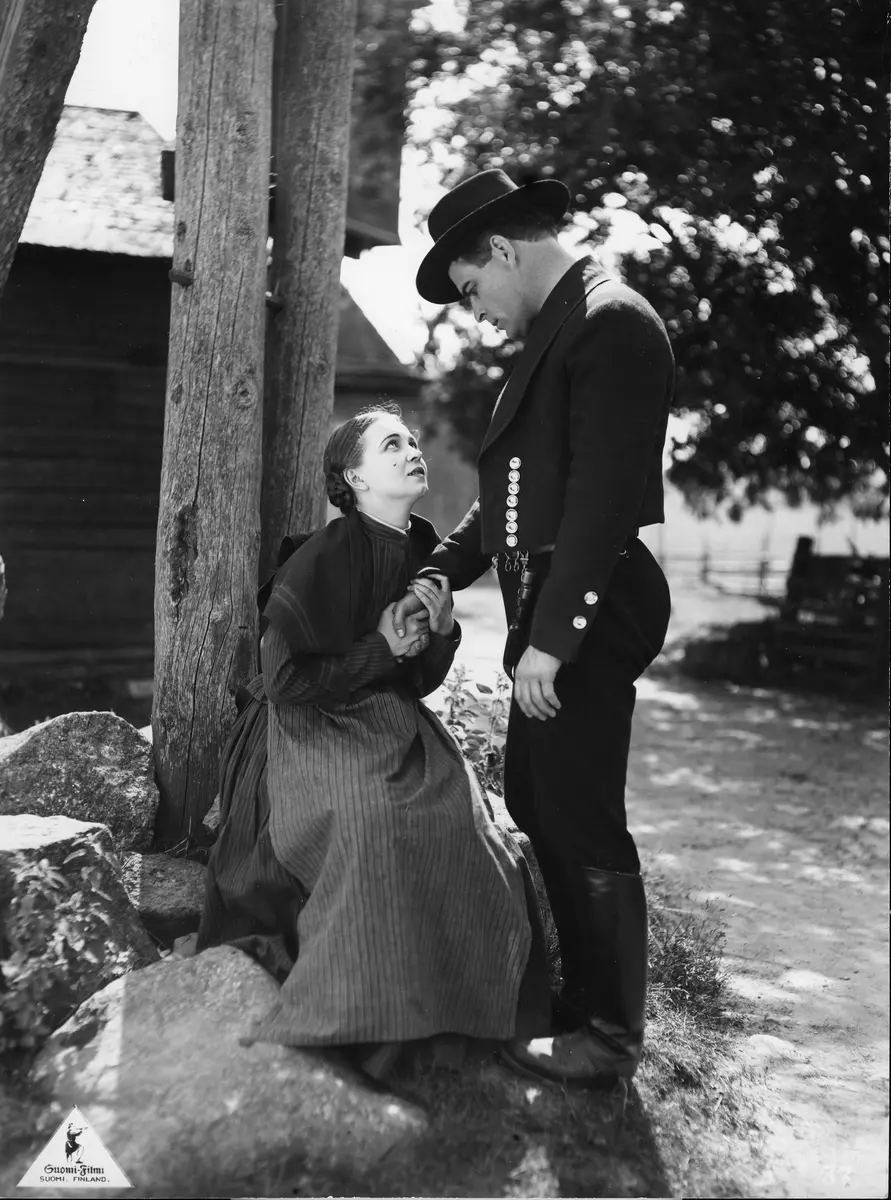
The film’s technical achievements are remarkable, given the era’s constraints. The editing, though rudimentary by today’s standards, is purposeful—jump cuts between scenes of violence and quiet domesticity heighten the dissonance. The use of intertitles is sparse, trusting the audience to infer subtext from context. However, the lack of close-ups on certain key characters—a missed opportunity to deepen emotional investment—is a minor flaw. The soundtrack, a blend of folk tunes and eerie silences, is both asset and liability; while it enhances the film’s rustic authenticity, it risks alienating modern viewers accustomed to orchestral grandeur.
Decades after its release, Pohjalaisia remains a provocative mirror held up to contemporary struggles. Its themes of class disparity and collective action resonate in an age of renewed social activism. The film’s unromanticized view of revolution—a blend of courage, cowardice, and futility—feels eerily prescient in today’s fragmented political landscape. For educators, it serves as a gateway to discussions on historiography and media’s role in shaping public memory.
In a cinematic landscape often dominated by spectacle, Pohjalaisia is a quiet storm. Its power lies not in showy set pieces or melodrama but in its unyielding commitment to truth. For those willing to engage with its austere beauty, the film offers a profound meditation on the cost of defiance and the fragile hope it ignites. It is not a film to be watched; it is a film to be felt, a visceral reminder that history is written by those who dare to dig in the soil of their own oppression.
Explore related works: Youth to Youth, Heart of Gold, Wild Waves and Angry Woman.
IMDb —
1919
Community
Log in to comment.