DbcultAccessing Vault...
Cult Review
Senior Film Conservator
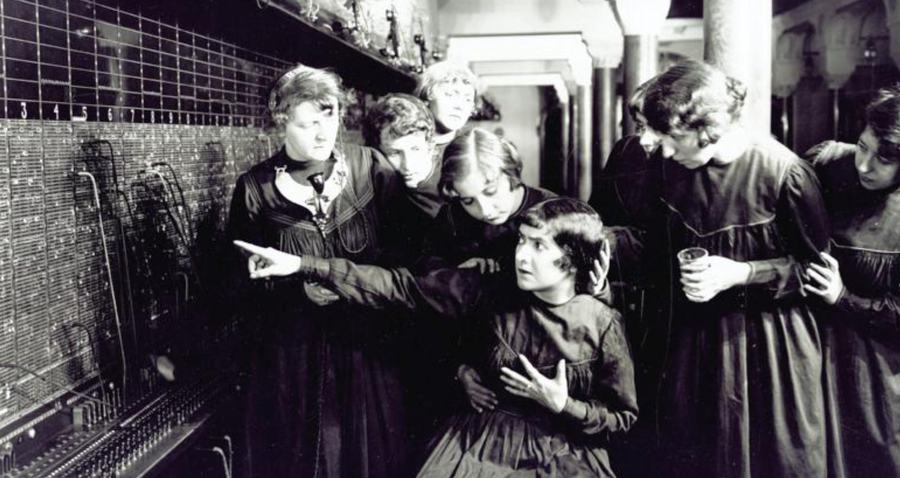
Stepping back into the nascent days of cinematic storytelling often feels like peering through a sepia-toned veil, a journey into a world where narrative conventions were still being forged and the very language of film was in its infancy. Eduard Schnedler-Sørensen’s 1911 Danish production, Telefondamen (The Telephone Lady), stands as a fascinating artifact from this pivotal era, not merely as a historical curiosity but as a surprisingly robust piece of dramatic tension that demonstrates the burgeoning sophistication of early European cinema. Far from being a mere technical exercise, this film, with its intricate plot and compelling central performance, manages to weave a suspenseful tale that holds up remarkably well, a testament to its foundational narrative strength and the potent simplicity of its premise.
The film plunges us into the world of Helga, portrayed with understated intensity by Karen Caspersen, a telephone operator whose daily grind of connecting calls becomes the unlikely crucible for a thrilling drama. Caspersen, a figure of quiet determination, imbues Helga with an intelligence that transcends the limitations of silent acting, conveying a deep inner life through subtle glances and restrained gestures. Her Helga is not merely a passive observer; she is an active participant in the unfolding narrative, a pivot around which the entire plot revolves. This characterization is crucial, elevating the film beyond a simple melodrama into a more engaging exploration of agency and moral courage.
The genius of Schnedler-Sørensen's conception lies in its ingenious use of the telephone exchange itself as a nexus of information and intrigue. In an era before widespread personal communication, the telephone operator was a gatekeeper, a silent witness to countless private conversations. Telefondamen capitalizes on this unique vantage point, crafting a scenario where Helga inadvertently becomes privy to fragments of a sinister plot. Mr. Bang (Frederik Jacobsen), an industrialist whose veneer of respectability barely conceals his avarice, conspires with the unscrupulous solicitor Mr. Brandt (Oscar Nielsen) to defraud the gentle, ailing Mr. Holm (Peter Jørgensen) and frame his unsuspecting nephew, Erik (Alf Blütecher). Jacobsen's portrayal of Bang is a masterclass in early cinematic villainy, his expressions shifting from geniality to thinly veiled menace with chilling effectiveness. The way the film slowly reveals the depth of Bang’s perfidy, piece by agonizing piece through Helga’s eavesdropping, builds a palpable sense of dread.
The narrative, credited to Schnedler-Sørensen himself, is surprisingly intricate for its time, demonstrating a keen understanding of suspense building. It avoids the simplistic good-versus-evil dichotomy often found in contemporaneous works, instead presenting a more nuanced conflict where the protagonist's power is derived not from physical strength or social standing, but from her intellectual acuity and ethical fortitude. This places Telefondamen in interesting company with films that explore the vulnerabilities of the innocent and the machinations of the corrupt. One might draw thematic parallels to the struggles depicted in The Soul Market, which often delved into the exploitation of the vulnerable, or the intricate web of deception found in Bought, both films grappling with societal pressures and moral compromise. However, Telefondamen distinguishes itself by placing the power of intervention squarely in the hands of an everyday working woman, a refreshing departure from the damsel-in-distress trope.
The technical execution of Telefondamen, while undoubtedly constrained by the technology of 1911, is remarkably effective. Schnedler-Sørensen, as director, makes judicious use of the limited cinematic language available. The staging of scenes, particularly within the bustling telephone exchange, is meticulously choreographed. The repetitive, almost hypnotic movements of the operators, plugging and unplugging connections, create a visual rhythm that underscores Helga's isolated position amidst a hive of activity. Close-ups, though sparse by modern standards, are employed with precision to highlight key emotional beats or crucial pieces of information, drawing the audience's attention to the subtle facial expressions of the actors, particularly Caspersen as Helga and Jacobsen as the insidious Bang.
The film's pacing is another strong suit. It allows the plot to unfold organically, building tension through implication rather than overt spectacle. The lack of intertitles for every conversation forces the audience to rely on visual cues, a practice that, while demanding, ultimately enhances the immersive quality of the viewing experience. We are, in a sense, forced to become eavesdroppers alongside Helga, piecing together the narrative from fragmented gestures and the dramatic irony of our privileged perspective. This approach sets it apart from more overtly theatrical silent films like Tillie's Punctured Romance, which relied heavily on broad comedy and exaggerated physical performance. Telefondamen opts for a more subdued, psychologically driven drama.
The supporting cast, featuring talents like Charles Willumsen, Frederik Buch, Betzy Kofoed, Marius Egeskov, and Hans Dynesen, contribute significantly to the film's rich texture. While their roles might be less central, their presence fleshes out the world of Telefondamen, providing a believable backdrop for the central drama. Oscar Nielsen’s portrayal of Mr. Brandt, the conniving solicitor, is particularly noteworthy. He projects an aura of smarmy self-interest, a perfect foil to Jacobsen’s more overtly powerful villain. Alf Blütecher, as the innocent Erik, effectively conveys the character's naivety and vulnerability, making his impending doom all the more poignant and Helga's efforts to save him all the more urgent. His performance provides the emotional anchor that grounds the high-stakes financial intrigue in a relatable human drama.
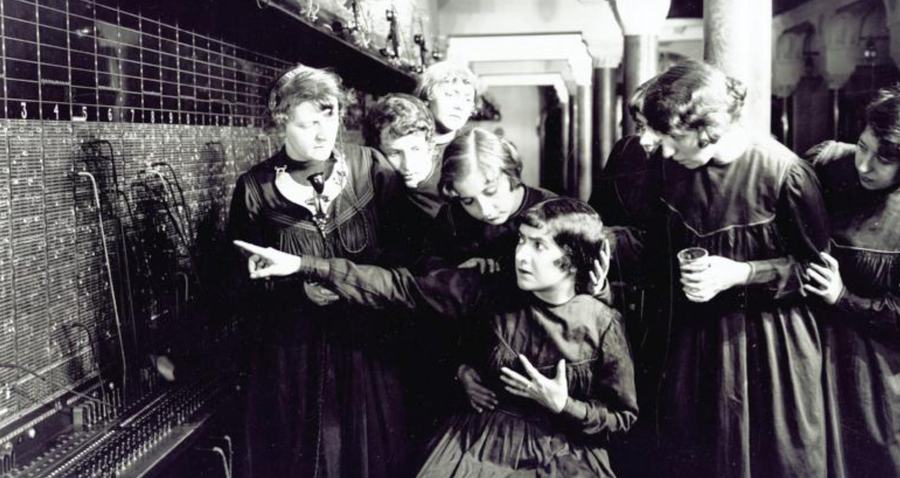
The exploration of justice and retribution, while a common theme in early cinema, is handled with a particular nuance here. Unlike the more direct and often violent pursuit of vengeance seen in films like Vendetta, Helga’s quest for justice is intellectual and strategic. Her weapon is information, her battlefield the intricate network of wires and human connections. This makes her victory all the more satisfying, a triumph of wit over brute force and corruption. The film subtly critiques the power structures of its time, where wealth and influence could easily overwhelm truth, and highlights the potential for an ordinary individual to disrupt such imbalances.
Beyond its thrilling plot, Telefondamen resonates with several enduring themes. It’s a powerful exploration of the moral quandaries faced by individuals caught between professional obligation and ethical imperative. Helga's decision to actively intervene, rather than remain a silent witness, speaks volumes about the film's progressive outlook on female agency. In a world where women's roles were often circumscribed, Helga emerges as a proactive heroine, using her unique position to effect change. This portrayal offers a stark contrast to some of the more conventional female roles of the period, which often emphasized domesticity or romantic helplessness. One could even argue that her intelligence and resourcefulness prefigure the kind of sharp-witted female protagonists that would become more common in later decades, a testament to the film's forward-thinking character development.
The film also subtly touches upon the isolating nature of modern life, even amidst technological advancements designed to connect people. Helga, despite being at the center of a communication hub, initially operates in a world of disconnected voices. Her journey is one of transforming these disembodied voices into a coherent narrative, making the abstract concrete, and ultimately, personal. This theme of connection and disconnection, of knowing and unknowing, remains profoundly relevant. The telephone itself, a marvel of its age, becomes a character in its own right – a tool for both deception and deliverance.
Comparing it to other films of its era, Telefondamen holds its own with remarkable poise. While it lacks the grand historical sweep of something like Mothers of France or the psychological intensity of Kreutzer Sonata, it carves out its own niche through its clever utilization of a contemporary setting and a relatable, albeit extraordinary, protagonist. It is a film that understands the power of a well-crafted mystery, even without the benefit of spoken dialogue or complex camera movements. The reliance on strong visual storytelling and compelling performances is its bedrock.
From a technical standpoint, the restoration and preservation of films like Telefondamen are crucial. They offer invaluable insights into the evolution of cinematic grammar. We see early attempts at cross-cutting to build suspense, the use of depth in mise-en-scène, and the nascent understanding of how to guide the viewer's eye within the frame. The blocking of actors, particularly in scenes involving multiple characters, demonstrates a sophisticated awareness of visual storytelling, ensuring that key actions and reactions are clearly communicated despite the absence of sound. The film doesn’t merely document a story; it actively crafts it through visual means, pushing the boundaries of what was possible with the technology of the day.
The film's ending, without revealing spoilers, delivers a satisfying resolution that feels earned. Helga’s ingenuity is rewarded, and justice, in its silent, cinematic form, prevails. It reinforces the idea that vigilance and courage, even in seemingly ordinary lives, can lead to profound outcomes. This sense of agency, particularly for a female character in an early 20th-century film, is a powerful statement and an aspect that contributes significantly to its enduring appeal. It's a far cry from the more fatalistic narratives sometimes seen in the period, offering a more optimistic perspective on individual impact.
In conclusion, Telefondamen is far more than a historical footnote. It is a compelling drama, a testament to the ingenuity of early filmmakers, and a vibrant example of how a simple premise can be elevated through thoughtful execution and strong performances. Eduard Schnedler-Sørensen, with his vision and the dedicated work of his cast and crew, crafted a film that not only entertained its contemporary audiences but continues to engage and impress modern viewers. It reminds us that the fundamental elements of compelling storytelling – character, conflict, and resolution – have remained constant, even as the medium itself has undergone radical transformations. For anyone interested in the foundational narratives of cinema, or simply in a well-told tale of quiet heroism, Telefondamen rings true. It stands as a silent sentinel, a reminder of the foundational brilliance that paved the way for all that followed, a captivating whisper from the past that still holds our attention today.
IMDb 6.7
1921
Community
Log in to comment.