DbcultAccessing Vault...
Cult Review
Senior Film Conservator
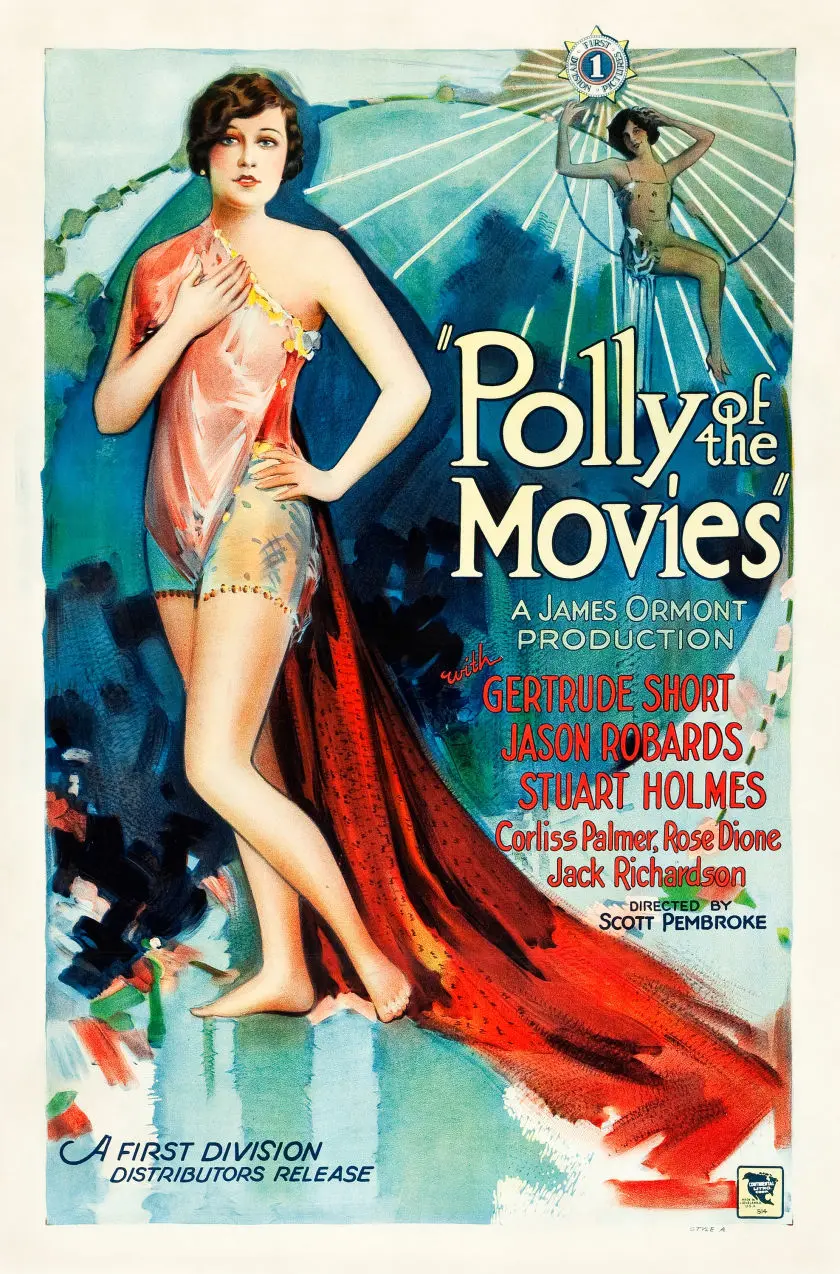
Is Polly of the Movies worth watching today? Short answer: yes, but with a crucial caveat. This 1927 silent film offers a fascinating, if occasionally creaky, window into early Hollywood, appealing strongly to silent film aficionados and those curious about the industry's formative years. However, its narrative simplicity and the inherent demands of the silent format mean it won't resonate with every modern viewer.
This film works because it captures a tangible sense of its era, delivering a surprisingly engaging performance from its lead, Gertrude Short, and providing a compelling, if somewhat predictable, rags-to-riches narrative. This film fails because its pacing can feel sluggish by contemporary standards, its villain is painted with overly broad strokes, and some of the melodrama veers into unintentional comedy for modern audiences. You should watch it if you appreciate cinematic history, enjoy classic underdog stories, or seek to understand the foundational storytelling techniques of the silent screen.
Polly of the Movies, directed by George Dromgold, plunges us directly into the bustling, often chaotic world of 1920s Hollywood, a setting that feels both glamorous and gritty. The film’s depiction of the film lot, teeming with extras and crew, offers a rare, almost documentary-like peek into the mechanics of early filmmaking. It’s a world built on dreams, but also on relentless hard work and the constant threat of anonymity.
The script, penned by George Dromgold, Jean Plannette, and Arthur Hoerl, manages to craft a narrative that, while archetypal, feels grounded in the specific anxieties and aspirations of the era. Polly’s journey from uncredited background player to burgeoning star is not just a personal triumph; it’s a symbolic representation of the industry's own rapid ascent.
What truly elevates this aspect is the film’s commitment to showing the contrast between the on-screen illusion and the off-screen struggle. One particular sequence, where Polly is seen enduring long hours and meager pay, stands in stark opposition to the glossy magazine images of stars, offering an unconventional, almost cynical observation on the industry's facade. This duality is perhaps the film's most enduring strength, providing a texture often missing in more overtly romanticized portrayals of the period.
The performances in Polly of the Movies are, as expected for the silent era, often expressive and physically dynamic. Yet, within these conventions, certain actors manage to carve out memorable, nuanced portrayals. Gertrude Short, as Polly, is undoubtedly the film’s beating heart.
Short imbues Polly with an infectious optimism that never feels saccharine. Her wide, hopeful eyes and earnest gestures convey a genuine innocence that makes her an instantly sympathetic protagonist. There’s a particular scene where Polly, having just been framed, sits alone, her shoulders slumped, her face a mask of bewildered despair; it’s a moment of quiet pathos that transcends the era’s often exaggerated acting style.
Jason Robards Sr., playing the discerning director, provides a solid, authoritative counterpoint. His performance is less about overt emotion and more about conveying steadfast conviction. He projects a paternalistic wisdom that makes his belief in Polly entirely credible, a crucial anchor for the plot’s dramatic turns.
Conversely, Corliss Palmer as the jealous starlet, while effective in her villainy, leans heavily into the melodramatic. Her sneering expressions and theatrical gestures, while typical for the time, lack the subtle menace that might have made her a truly formidable antagonist. She is a cartoonish foil, a necessary plot device rather than a fully realized character. This stark contrast in performance styles is a fascinating study in silent film acting conventions, revealing both their limitations and their unique strengths.
George Dromgold’s direction, while not revolutionary, is competent and often effective in maintaining narrative clarity and emotional impact. The film utilizes classic silent film techniques adeptly, relying on clear intertitles to convey dialogue and exposition, and employing close-ups to emphasize character reactions and emotional beats. There’s a particular shot of Polly’s face, tear-streaked yet resolute, that perfectly encapsulates her spirit, a testament to Dromgold’s understanding of visual storytelling.
The cinematography, though uncredited, serves the story well, capturing the period's aesthetic with a keen eye. The lighting often shifts to reflect mood, from the bright, aspirational glow of the film set to the darker, more conspiratorial shadows surrounding the villainess. Pacing, a common challenge for silent films, is handled with varying degrees of success. Some sequences, particularly those establishing Polly’s early struggles, feel drawn out, demanding a certain patience from the modern viewer.
However, the film picks up considerable momentum during the dramatic climax, where the tension builds through rapid cuts and heightened emotional displays. The tone oscillates between lighthearted romance and earnest melodrama, a balance that, while occasionally uneven, ultimately contributes to its charm. It’s a film that understands its genre, even if it doesn't always push its boundaries, reminding us of the foundational grammar of cinematic language that was still being invented.
At its core, Polly of the Movies is an archetypal Cinderella story, a narrative that has captivated audiences for centuries. While some might dismiss its predictable trajectory as simplistic, its enduring appeal lies in its exploration of universal themes: ambition, perseverance, jealousy, and the triumph of virtue. The film doesn't reinvent the wheel, but it polishes it with a genuine earnestness that is hard to resist.
The conflict, driven by the jealous starlet’s machinations, serves as a clear, easily digestible antagonist. This straightforward approach allows the audience to fully invest in Polly’s journey without getting bogged down in moral ambiguity. The resolution, while convenient, delivers the satisfying catharsis expected from such a tale, leaving the viewer with a sense of justice served and dreams realized.
However, one could argue that the film misses an opportunity to delve deeper into the psychological toll of Hollywood’s unforgiving environment. The villain’s motivations are never truly explored beyond simple envy, which feels like a missed chance for a more complex character study. This is a debatable opinion, as the film might have intended to keep the narrative light and focused on Polly's unwavering spirit, but a touch more nuance could have elevated it further.
Perhaps the film's most potent, if unintentional, commentary lies in its depiction of the ephemeral nature of silent film stardom itself, a poignant foreshadowing of the industry's imminent seismic shift. Watching these characters strive for fame in a medium that was about to be irrevocably altered by sound adds a layer of bittersweet irony to Polly's triumph. It's a subtle, almost accidental, meta-narrative that resonates deeply today. The film, in its own way, is a historical document of an art form on the cusp of profound change.
Yes, Polly of the Movies is absolutely worth watching today, especially for specific audiences. It offers a charming, if somewhat dated, look at early Hollywood. It's a valuable piece of cinematic history. The film provides insight into silent film storytelling. Its lead performance is genuinely engaging. However, be prepared for a slower pace. The melodrama can feel exaggerated. It's a commitment, but a rewarding one for the right viewer.
Polly of the Movies is more than just a relic; it’s a charming, if imperfect, piece of cinematic history that still holds a surprising amount of heart. It works. But it’s flawed. While it won't redefine your understanding of film, it offers a delightful, accessible entry point into the silent era, particularly for those intrigued by the nascent glamour and cutthroat ambitions of early Hollywood. It’s a film that asks for your patience but rewards it with a genuine smile and a tangible connection to a bygone era. For those willing to make the journey, Polly’s story still shines, a testament to the enduring power of simple, heartfelt storytelling in a time when the movies were truly magic. Compare its earnestness to later, more cynical portrayals of the industry, such as aspects seen in The Teaser, and you'll appreciate its unique charm.
IMDb 6.3
1929
Community
Log in to comment.