DbcultAccessing Vault...
Cult Review
Senior Film Conservator
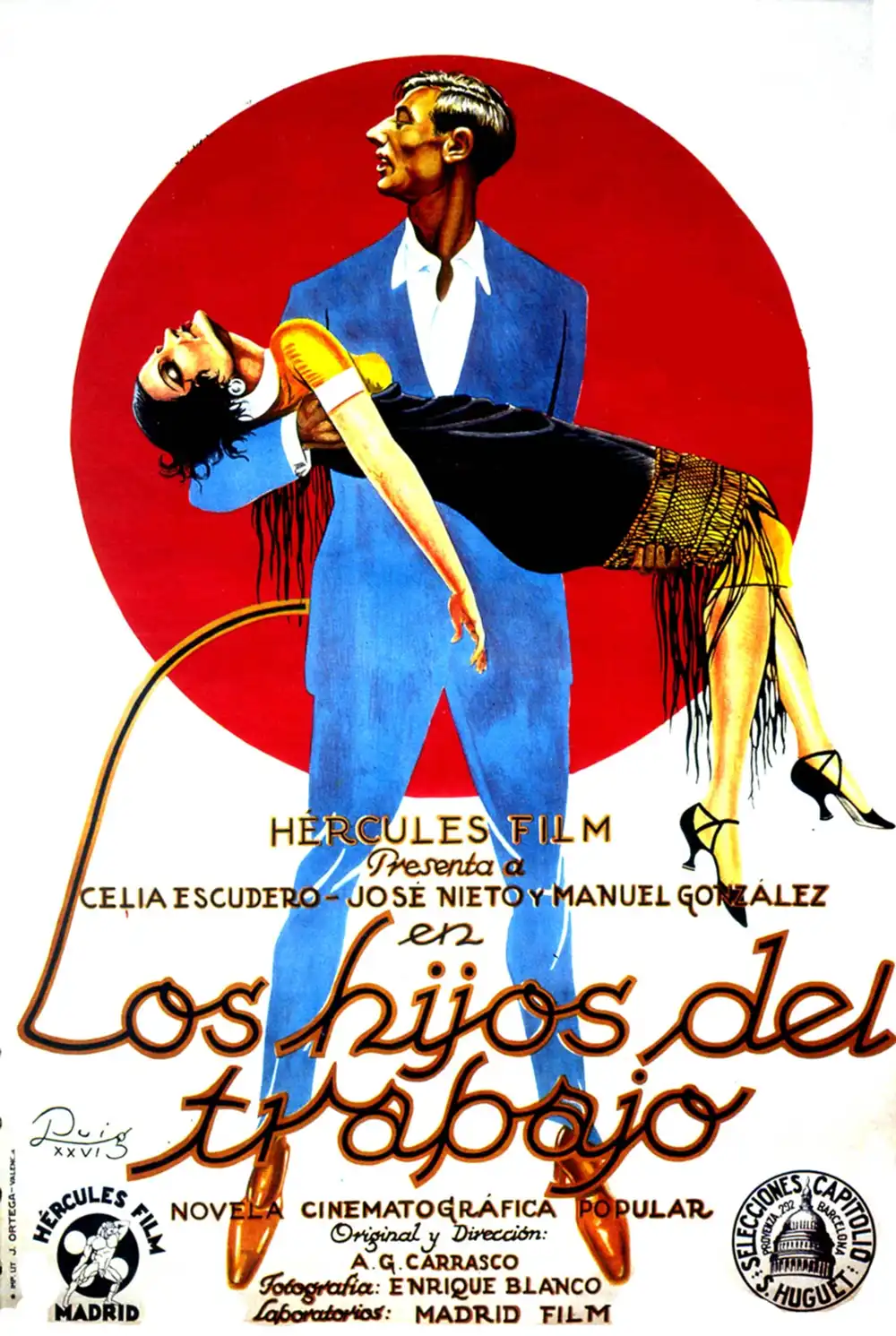
If you are coming to Los hijos del trabajo expecting the visual pyrotechnics of German Expressionism or the frantic montage of Soviet cinema, you are going to be disappointed. This 1927 Spanish silent film, directed by Eduardo García Maroto and Carlos Fernández Cuenca, is a much more pedestrian affair. However, for those interested in the evolution of Spanish social realism or the specific textures of 1920s Madrid, it remains a fascinating, if occasionally plodding, artifact. It is worth watching today primarily as a historical document; it’s for the viewer who enjoys digging through archives rather than someone looking for a gripping narrative thrill.
The film relies heavily on Antonio Gil Varela, known as 'Varillas,' who brings a certain gravity to the screen that keeps the more melodramatic elements from floating away into absurdity. Unlike many silent actors of the era who leaned into wild-eyed pantomime, Varillas has a way of holding his shoulders that communicates exhaustion better than any title card could. There is a specific scene in a dimly lit tavern where he simply stares at a glass of wine; the camera lingers just a few seconds too long, but in that pause, you see the genuine weariness of a character who feels trapped by his economic status.
The supporting cast is a mixed bag. Celia Escudero provides the necessary emotional high notes, though her performance feels more rooted in the stage traditions of the time. You can almost see her waiting for her cues in the wider shots. Faustino Bretaño and José María Jimeno fill out the world of the workshop and the street, providing a sense of community that feels authentic, even when the plot points—involving debt and family honor—feel recycled from 19th-century theater.
Visually, the film is at its best when it leaves the studio sets and captures the reality of the Spanish streets. There is a ruggedness to the outdoor photography that contrasts sharply with the flat, often over-lit interior scenes. The directors clearly had an eye for the 'costumbrista' style—the depiction of local customs and everyday life. Notice the way the light hits the cobblestones in the early morning sequences; there is a silvery, metallic quality to the cinematography that evokes the coldness of a working-day dawn.
One detail that only someone who sits through the full runtime will notice is the recurring use of hands. The camera frequently punches in for close-ups of calloused hands handling tools, counting meager coins, or gripping a table in frustration. It is a simple visual motif, but it effectively reinforces the film's title. These are, quite literally, the children of labor, defined by what their hands can produce or what they are denied.
The pacing is where Los hijos del trabajo struggles most. By 1927, cinema was becoming increasingly sophisticated in its editing, but this film often feels stuck in a 1915 rhythm. Scenes tend to play out in long, static master shots with very few cutaways to vary the energy. When the film does attempt a more dynamic sequence—such as a confrontation in the workplace—the editing feels jerky and hesitant, as if the filmmakers weren't quite sure how to build tension through cutting.
If you’ve seen more energetic silent films like Protéa, the lack of forward momentum here will be noticeable. There are stretches in the middle of the second act where the plot circles the same emotional drain for ten minutes too long. We understand the protagonist is in despair; we don't necessarily need three separate scenes of him walking dejectedly past the same stone wall to prove it.
It is interesting to compare this to other films of the period. While something like The Tents of Allah was selling exoticism and adventure to Western audiences, Los hijos del trabajo was looking inward. It wasn't trying to be an international blockbuster; it was trying to speak to a Spanish audience about their own lives. In that sense, it feels more honest than the high-concept dramas of the time, even if it is less 'entertaining' in the traditional sense.
The film also lacks the supernatural or mystery elements found in earlier works like La secta de los misteriosos. It is firmly rooted in the dirt. The 'villains' aren't masked masterminds; they are usually just men with slightly more money and significantly less conscience. This groundedness is its greatest strength, but also its commercial weakness—it lacks a hook beyond its earnestness.
Is it a masterpiece? No. The dialogue on the title cards is often heavy-handed, and the resolution of the central conflict feels a bit too tidy given the grim realism of the setup. However, there is a sincerity to the filmmaking that is hard to dismiss. The directors, particularly Eduardo García Maroto (who would go on to have a long, fascinating career in Spanish cinema), clearly cared about the people they were filming.
Los hijos del trabajo is a film for the patient viewer. It’s for someone who appreciates the way a hat is tilted or the way a crowd moves through a plaza in a city that no longer exists. It’s a quiet, working-class drama that doesn't scream for your attention, but if you give it the time, it rewards you with a very specific, very tangible sense of place and time. Just don't expect it to move at anything faster than a weary stroll.

IMDb 6.1
1932
Community
Log in to comment.