DbcultAccessing Vault...
Cult Review
Senior Film Conservator
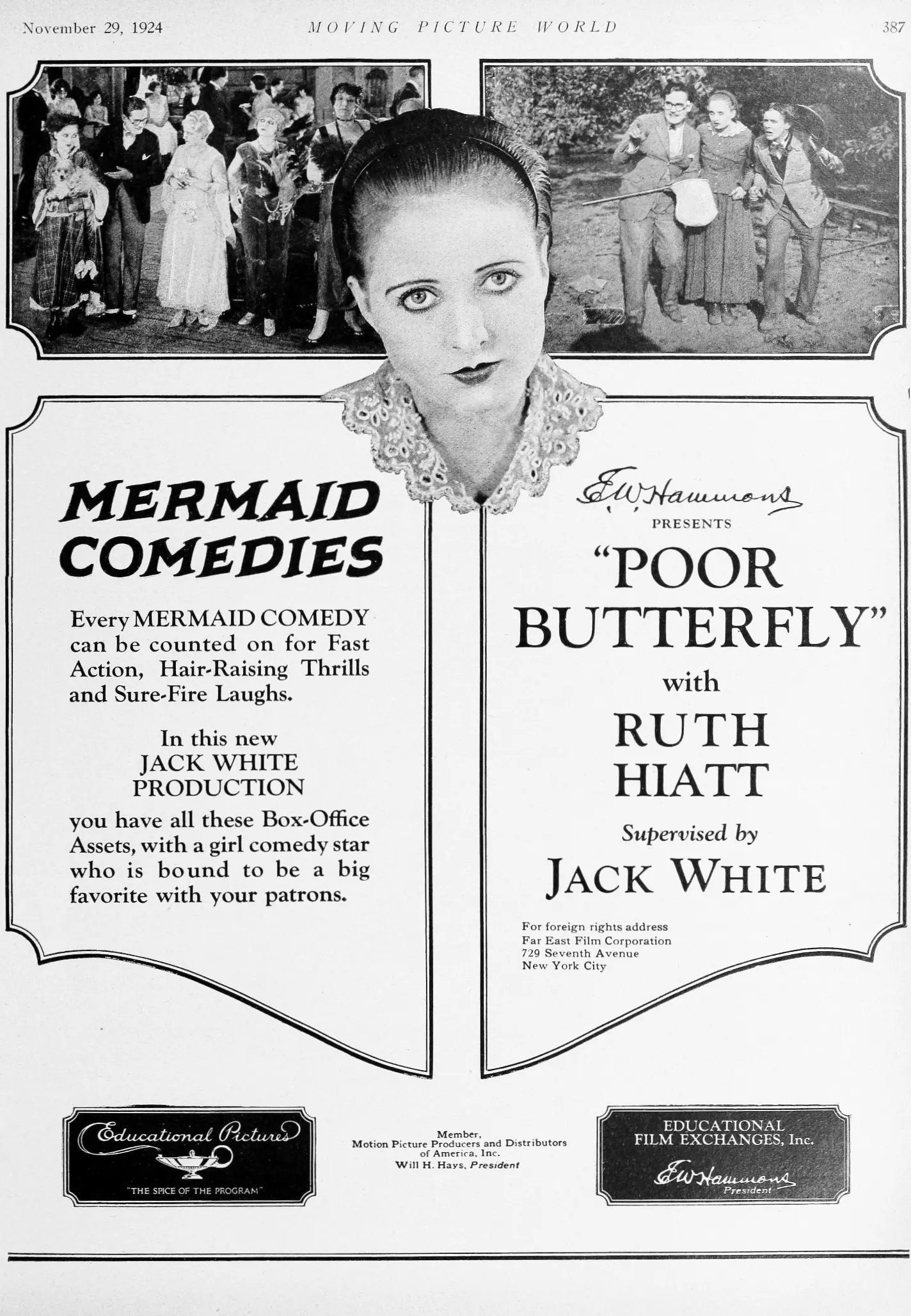
Ah, the silent era! A time when storytelling relied on exaggerated gestures, evocative intertitles, and the sheer charisma of its stars. And then, every so often, a film flutters into view from the archives, a forgotten gem that reminds us of the sheer inventive spirit of early cinema. Such is the case with Poor Butterfly (1924), a whimsical, often uproarious, jaunt that takes a meticulous academic and plunks him unceremoniously into the heart of rural pandemonium. It's a testament to the era's ability to extract genuine humor and heart from the simplest of premises.
At its core, this cinematic caper introduces us to a character type that, even a century later, remains ripe for comedic exploration: the obsessive intellectual. Our protagonist, a wealthy 'bugologist' (let's imagine him as Professor Phileas Finch, though the film's intertitles might have offered a different moniker, lost to time or memory), embodies the quintessential absent-minded professor archetype. His world is one of specimen jars, Latin classifications, and the delicate dance of antennae. He lives in a bubble of academic pursuit, largely detached from the messy realities of everyday life. Jack Ackroyd, with his expressive face and knack for physical comedy, perfectly encapsulates this scholarly detachment, setting the stage for the glorious unraveling that is to come. His portrayal is a masterclass in silent comedic timing, evoking both sympathy and uproarious laughter as his carefully constructed world begins to fray.
The catalyst for this delightful disruption? A butterfly. Not just any butterfly, mind you, but a specimen so rare, so exquisitely unique, that it becomes an almost mythical object of desire for our entomologist. The film cleverly uses this pursuit as a metaphor for the human tendency towards obsession, for the lengths one will go to capture beauty or knowledge. This isn't just about collecting; it's about the chase, the thrill of the hunt, and the unexpected detours it forces upon us. The very title, 'Poor Butterfly,' hints at a certain pathos, perhaps for the creature itself, or perhaps for the human caught in its wake.
The pursuit of this elusive lepidopteran leads Professor Finch far from his urban sanctuary, into the sprawling, unkempt embrace of a country farm. This geographical shift is where the film truly blossoms into its comedic potential. The contrast between the professor's buttoned-up, intellectual world and the earthy, chaotic rhythms of farm life provides an endless wellspring of gags and misunderstandings. Suddenly, his meticulous approach to life, his scientific precision, is utterly useless. He's a fish out of water, a square peg in a round hole, and the humor derives from his increasingly desperate attempts to navigate this alien landscape while still clinging to his singular objective.
The farm itself is populated by a vibrant array of characters who, through their interactions with the bewildered professor, highlight his eccentricities while also revealing their own homespun wisdom. Peggy O'Neil, often remembered for her dramatic roles, brings a surprising lightness and charm to her character here, likely the farm's resident ingenue or a spirited country lass who finds herself both amused and perplexed by the city slicker. Her performance adds a touch of romantic possibility or at least a grounding human element amidst the chaos. Otto Fries, a stalwart of silent comedy, undoubtedly plays a gruff farmer or a bumbling rural antagonist, providing ample opportunities for physical comedy and exasperated reactions to the professor's antics. The ensemble, including Jack Lloyd, William Dyer, Jay Belasco, Ruth Hiatt, and Louise Carver, each contribute to the tapestry of rural life, creating a believable, if exaggerated, backdrop for the professor’s misadventures.
The 'trouble' the professor finds himself in is multi-layered. It's not just the physical comedy of slipping in mud or getting entangled with farm animals, though these elements are certainly present and executed with delightful precision. It's also the social awkwardness, the misunderstanding of rural customs, and the sheer inability to communicate his high-minded scientific goals to people whose concerns are far more immediate and practical. Imagine a man trying to explain the finer points of entomological taxonomy to a farmer worried about a broken fence or a runaway pig. The film thrives on these hilarious clashes of worldview. The predicaments escalate from minor annoyances to outright farcical situations, perhaps involving mistaken identities, accidental destruction, or even the unwitting thwarting of local schemes, all while the professor remains singularly focused on his winged quarry.
In terms of silent film craft, Poor Butterfly is a commendable example of effective visual storytelling. The direction, though uncredited in the provided information, skillfully balances the broader slapstick with more nuanced character moments. Cinematography of the era, while lacking the sophisticated camera movements of later decades, excels in clear compositions that convey action and emotion. The use of intertitles is crucial, providing necessary exposition and delivering punchlines with succinct wit, a hallmark of well-crafted silent comedies. The pacing is likely brisk, a necessity for keeping audiences engaged without dialogue, ensuring that one comedic set-piece flows seamlessly into the next, building momentum towards the professor’s eventual, perhaps reluctant, integration or escape from the farm.
Comparing it to other films of its time, Poor Butterfly finds its niche among the lighter, more character-driven comedies. While it might not possess the grand spectacle of a film like The Queen of Sheba or the intense drama of The Sea Wolf, its charm lies in its relatability and its gentle satire of academic pomposity. It shares a thematic kinship with other 'fish out of water' narratives prevalent in cinema, perhaps even echoing the spirit of films like Dodging a Million, where characters find themselves in unfamiliar, challenging circumstances, often with comedic results. The way the film handles its protagonist's journey from a world of sterile order to one of vibrant, unpredictable life offers a refreshing perspective, distinguishing it from more straightforward romantic dramas or action-adventure tales.
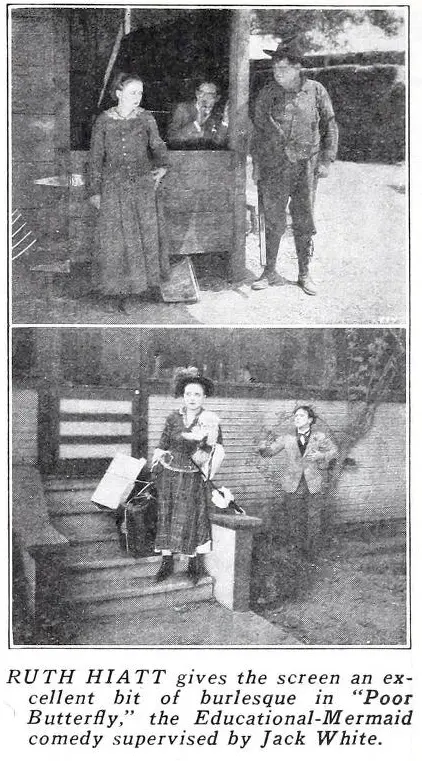
The performances are key to its success. Jack Ackroyd's portrayal of the bugologist is undoubtedly the anchor. His ability to convey both intellectual superiority and utter bewilderment through facial expressions and body language is a testament to the art of silent acting. He doesn't just play a character; he embodies a state of mind, a man utterly consumed by his passion yet totally unprepared for the consequences. Peggy O'Neil, often known for her dramatic roles in films like The Old Nest, brings a different facet to her talent here, likely a more spirited and perhaps even mischievous presence that acts as a foil to Ackroyd's academic stiffness. Otto Fries, a dependable comedic presence, would have provided solid support, ensuring the ensemble worked cohesively to amplify the humor. The interplay between these diverse personalities is what gives the film its enduring sparkle.
Beyond the laughs, there's a subtle underlying commentary on the divide between urban intellectualism and rural practicality. The film doesn't necessarily ridicule one over the other but rather highlights the amusing friction that arises when these two worlds collide. It suggests that perhaps true understanding, or at least a richer experience of life, comes from stepping outside one's comfort zone and embracing the unexpected. This thematic depth elevates Poor Butterfly beyond mere slapstick, imbuing it with a warmth and a gentle message that resonates even today. While we might not be chasing rare butterflies, we've all, at some point, found ourselves in situations where our carefully laid plans unravel, and we're forced to adapt to a world far different from our own.
The film’s historical significance also cannot be overstated. Released in 1924, it sits firmly within the golden age of silent cinema, showcasing the techniques and narrative styles that captivated audiences before the advent of sound. It provides a fascinating snapshot of popular entertainment, demonstrating how filmmakers of the era used visual gags, character archetypes, and carefully crafted scenarios to tell compelling stories without a single spoken word. Its survival and rediscovery offer a valuable window into the comedic sensibilities of the 1920s, a decade often romanticized but rarely fully appreciated for its cinematic output beyond the most iconic titles.
What makes Poor Butterfly particularly engaging is its commitment to its central premise. It doesn't shy away from fully exploring the comedic potential of a distinguished bugologist utterly out of his element. The film is a delightful exploration of how a singular, seemingly innocuous pursuit can lead to a cascade of unforeseen events, forcing a character to grow, adapt, and perhaps even find a touch of romance or friendship in the most unlikely of places. It's a reminder that sometimes, the greatest adventures begin with the smallest flutter of wings.
The cast, under the guidance of its uncredited director, delivers performances that are both broad enough for the silent screen and nuanced enough to create genuine, memorable characters. Louise Carver, for instance, a veteran character actress, likely brings a formidable presence to a supporting role, perhaps as a no-nonsense farm matriarch or a formidable local. Her experience in countless films, including dramatic turns and comedic relief, would have added considerable weight to the ensemble. Jay Belasco and Ruth Hiatt, too, contribute to the vibrant tapestry of supporting characters, each adding their unique flavor to the rural setting. The collaborative effort of these actors is what truly brings the farm to life, making it a dynamic, reactive environment for our scholarly protagonist.
One can easily imagine the audiences of 1924 roaring with laughter as Professor Finch inadvertently causes havoc, perhaps mistaking a cow for a particularly large, hairy specimen, or attempting to net a chicken with his delicate butterfly catcher. The humor is universal: the clash of cultures, the intellectual versus the practical, the absurd lengths to which passion can drive us. This timeless quality is what allows Poor Butterfly to transcend its century-old origins and still offer genuine amusement to modern viewers, provided they approach it with an open mind and an appreciation for the unique artistry of silent cinema.
The film serves as an excellent companion piece for those interested in the diverse landscape of 1920s cinema. While some contemporary films might have delved into more serious social commentary, like the quiet introspection of The Old Nest, or the suspenseful thrills of Under Suspicion (1923), Poor Butterfly carves out its own space with its lighthearted, escapist narrative. It’s a delightful reminder that cinema, even in its nascent stages, was already adept at offering a wide spectrum of experiences, from grand epics to intimate character studies, and, as in this case, charmingly chaotic comedies.
Ultimately, Poor Butterfly is more than just a relic of the past; it's a vibrant piece of cinematic history that proves the enduring power of a well-told story, regardless of whether it's accompanied by sound. It's a film that invites us to laugh at ourselves, at our obsessions, and at the delightful unpredictability of life. Its charm is undeniable, and its subtle message of embracing the unforeseen makes it a surprisingly resonant viewing experience. For aficionados of silent film, or anyone looking for a dose of classic, good-natured humor, this journey with a bugologist and his butterfly is an absolute treat worth seeking out.
IMDb —
1917
Community
Log in to comment.