DbcultAccessing Vault...
Cult Review
Senior Film Conservator
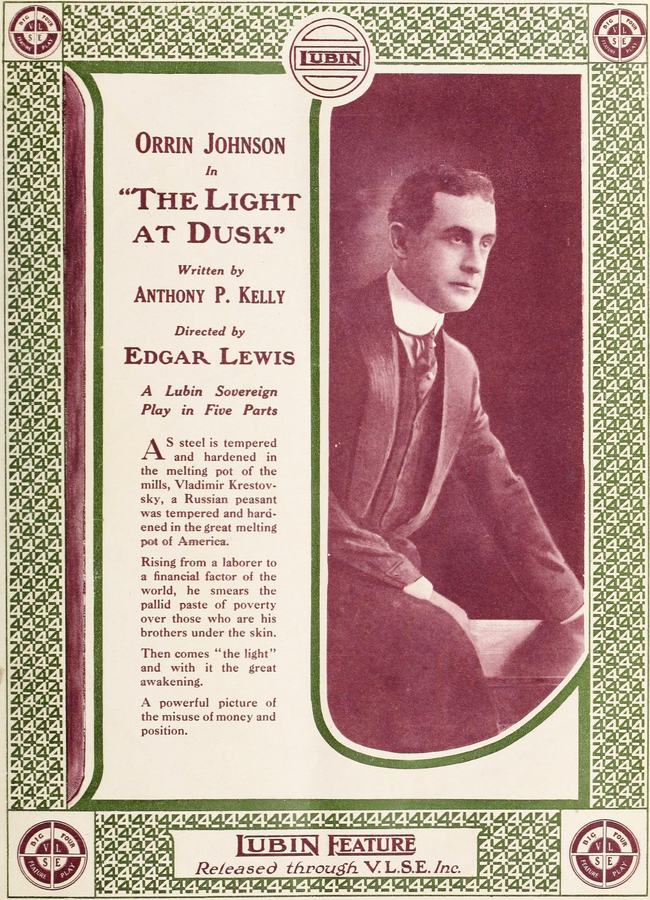
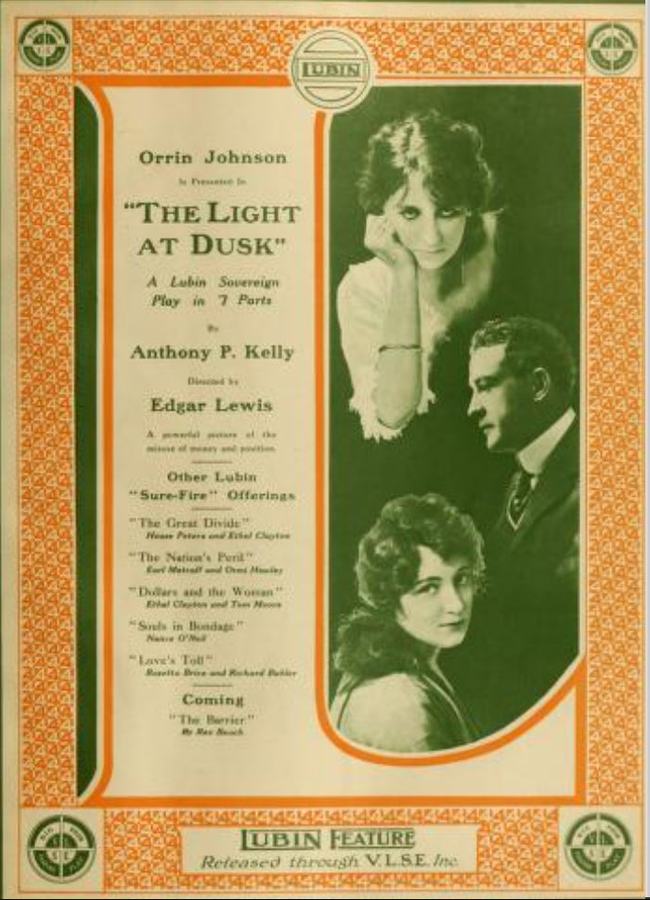
In the annals of cinematic history, certain narratives emerge not merely as stories, but as potent allegories, reflecting the moral quandaries and societal shifts of their time. The Light at Dusk, a compelling drama, stands as one such profound artifact, a sprawling epic that traverses continents, class divides, and the very depths of the human conscience. It’s a film that dares to ask what true wealth entails, whether material accumulation can ever truly compensate for spiritual impoverishment, and if redemption, once forsaken, can ever be reclaimed. This is not just a tale of rags-to-riches, but a searing examination of the soul’s journey through the crucible of ambition and the eventual dawning of empathy.
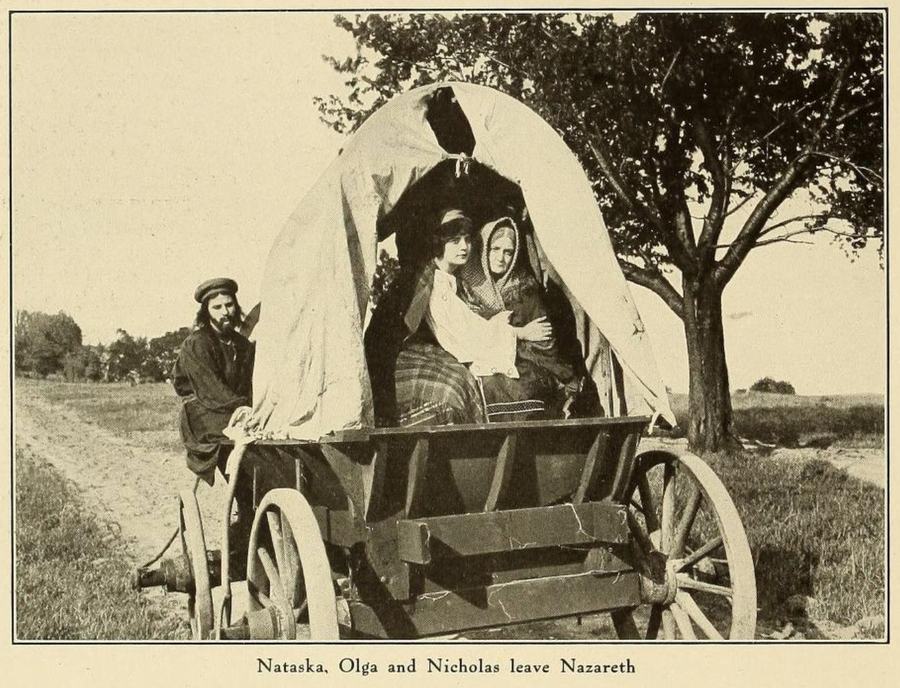
The narrative commences in the rustic heartland of Russia, introducing us to Vladimir Krestovsky, a man imbued with an almost mythic vigor—both physically robust and intellectually astute. His world, however, feels too small, too circumscribed for his expansive aspirations. The siren song of America, a land synonymous with boundless opportunity and the promise of self-reinvention, proves irresistible. With a wrenching farewell, he severs ties with his wife, Nataska, and their infant daughter, Olga, embarking on a transatlantic voyage towards an uncertain but undeniably ambitious future. This initial act of abandonment, though driven by a potent desire for upward mobility, lays the foundational stone for the moral edifice that will later crumble under the weight of his conscience. It’s a classic immigrant tale, yet one tinged with a tragic premonition, highlighting the immense personal sacrifices often demanded by the pursuit of the American Dream.
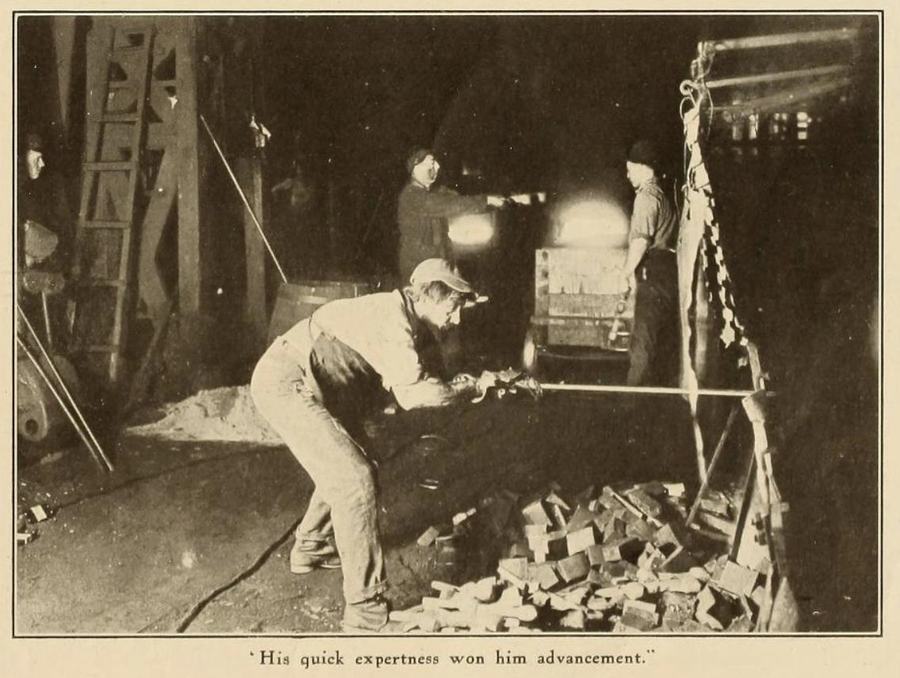
Upon arrival in Pittsburgh, the industrial heartland, Vladimir plunges into the inferno of the steel mills. His remarkable prowess, both physical and mental, quickly distinguishes him. He doesn't merely survive; he thrives. The arduous labor, the smoke-choked air, the relentless grind—all become stepping stones. Krestovsky, in a symbolic shedding of his past identity, truncates his name to the more formidable and Americanized 'Krest.' This new moniker signifies not just assimilation, but a deliberate distancing from his origins, from the simple peasant life, and, crucially, from the familial bonds he left behind. His ascent is nothing short of meteoric. From a mere laborer, he transforms into one of the world's preeminent financial titans, a figure of immense power and influence. Yet, this ascent is shadowed by a profound moral transgression: he commits bigamy, marrying into the echelons of American high society, cementing his new identity and seemingly obliterating any trace of his former life. This act is not merely a legal offense; it is a spiritual one, a profound betrayal of the woman and child who patiently await his return across an ocean of silence.
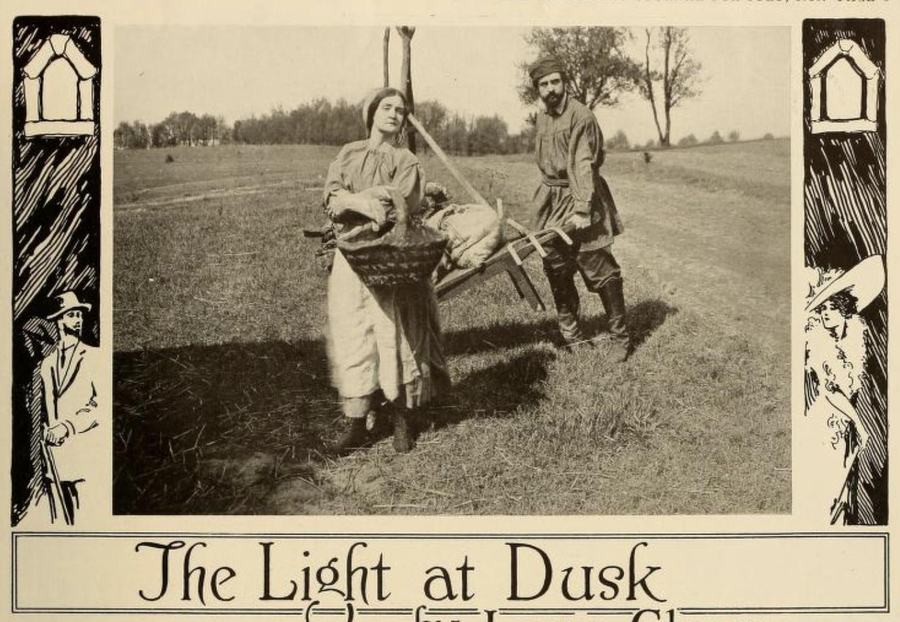
While Krest builds his empire on the far side of the world, oblivious to the passage of time and the lives he left in suspended animation, his daughter Olga blossoms into womanhood in Russia. Her life, a stark contrast to her father's opulent existence, is one of simple agrarian rhythms. She finds love with Nicholas, a kindly young Russian peasant, their union a picture of unassuming grace and mutual affection. The irony is palpable: Krest's progeny, living a life he deliberately abandoned, embodies the very virtues of humility and connection that he has systematically discarded. Destiny, with its intricate and often cruel weaving, eventually pulls Olga and Nicholas across the ocean, mirroring Vladimir's initial journey. They arrive in America, seeking their own version of opportunity, and, in a twist of dramatic poetic justice, secure work in one of Krest’s vast, impersonal mills in Pittsburgh. Unbeknownst to them, they are cogs in the very machine built by their estranged patriarch, their lives now inextricably linked by the very industrial complex that defines Krest’s immense, yet increasingly hollow, success. They settle with Nataska, Krest's first wife, in a squalid tenement house—a stark symbol of the human cost borne by those who fuel the industrial engine.
The harsh realities of their new life quickly take their toll. Olga gives birth to a baby, adding another fragile life to their already precarious existence. In her weakened post-natal state, she is forced to return to the grueling labor of the mill. One day, a catastrophic accident leaves her severely injured, teetering on the brink of death. Nicholas, beside himself with grief and despair, watches over her, acutely aware that her demise would inevitably seal the fate of their infant child. It’s a moment of profound human vulnerability, a raw depiction of the systemic negligence and brutal conditions faced by the working class. A compassionate neighbor, a fellow peasant hardened by similar struggles, urges Nicholas to appeal to the "Big Boss"—Krest himself. This desperate plea sets Nicholas on a path towards a confrontation with the very man whose life of luxury is predicated on the suffering of people like himself and his family.
Meanwhile, Krest's gilded cage has begun to feel less like a sanctuary and more like a prison. The death of his American wife serves as a powerful catalyst, shattering the carefully constructed façade of his new life. As he sits by her bedside, his mind, unbidden, drifts back to the "Street of Forgotten Days," to the poignant farewell he bid Nataska so many years ago. The voice of conscience, long suppressed beneath layers of ambition and material gain, begins to prey upon him with an insistent, disquieting rhythm. In a desperate attempt to seek diversion, or perhaps, absolution, he turns to art, acquiring the original of Hoffman's renowned painting, Christ and the Rich Young Man. This particular choice is pregnant with symbolic significance, a subconscious acknowledgement of his own moral dilemma. The painting, once hung in his opulent home, becomes a silent mirror, reflecting the burgeoning turmoil within his soul.
As Krest studies the face of Christ in the painting, a profound sense of recognition stirs within him, a puzzling familiarity he cannot quite place. Outside, a storm begins to gather, its atmospheric turbulence mirroring the tempest raging in Krest's heart. Then, a figure appears on a distant hill, silhouetted against the ominous sky—the Stranger. Slowly, peacefully, this enigmatic visitor descends and enters Krest's lavish abode. To Krest's startled, questioning gaze, the Stranger replies with an almost ethereal calm, stating his purpose: to reveal the error of Krest's ways. This encounter transcends mere reality; it is a profound, almost mystical intervention, a direct challenge to Krest’s entrenched worldview.
The Stranger, acting as a spiritual guide, transports Krest to the grim reality of the tenement houses, forcing him to confront the squalid living conditions of the very people whose labor fuels his immense fortune. It is a harrowing descent into the underbelly of his empire, a stark contrast to his own insulated existence. The vision culminates in the home of Nicholas and Olga, where Krest is shown a devastating tableau: Olga and the baby, both seemingly lifeless in their bed. This moment is a brutal, visceral shock, a direct confrontation with the ultimate consequences of his detached avarice. The Stranger then leads Krest back to his mansion, the journey itself a symbolic return from the depths of human suffering to the heights of material excess. Upon re-entering his home, Krest is struck by the Stranger's demeanor, his appearance, which bears an uncanny resemblance to the figure of Christ in his newly acquired painting. His subconscious mind, now fully awakened, compels him to voice a profound recognition, a sense of having known this figure in the distant past.
The Stranger, indeed revealed to be Christ himself, confirms Krest's nascent realization, asking if he cannot recall a time, centuries ago, in Jerusalem. The scene then dissolves into a vivid flashback, transporting the audience to biblical times. Here, Krest is revealed as the reincarnation of the Rich Young Man, the very individual whom Christ, centuries ago, had famously urged to “go, sell all that thou hast, and give to the poor, and thou shalt have treasure in heaven: and come and follow me.” The flashback poignantly depicts the Rich Young Man's inability to relinquish his immense wealth, his sorrowful departure from Christ and the beggars, choosing temporal riches over spiritual liberation. This narrative device, the concept of reincarnation, adds an extraordinary layer of spiritual depth to the film, suggesting that Krest’s current moral predicament is not an isolated incident but a recurring karmic challenge, a second chance to heed a lesson once ignored.
Returning to Krest's library, Christ addresses the now penitent industrialist. He acknowledges Krest's past failure to heed his counsel but urges him to listen now, to understand that perhaps the original commandment was misinterpreted. Christ clarifies that he did not mean for Krest to divest himself of every possession, but rather to utilize his surplus wealth, that which he did not actually need, for the benefit of his fellow human beings. This reinterpretation is crucial; it’s a nuanced message that doesn't condemn wealth outright but advocates for its responsible and compassionate stewardship. It's a call for social justice rooted in spiritual empathy, a powerful message for a society grappling with the burgeoning inequalities of the industrial age. With a solemn sign of the cross, the Stranger—Christ—disappears, leaving Krest profoundly altered, his spiritual landscape irrevocably reshaped.
As Christ vanishes, the storm outside breaks with a sudden fury, and Krest awakens with a jolt, the boundary between dream and reality momentarily blurred. He crosses to the windows, intent on shutting them against the tempest. Simultaneously, Nicholas, drenched by the relentless rain, has arrived at Krest's imposing home, a desperate figure framed against the violent weather. The butler, ever the guardian of Krest's insulated world, refuses him admittance, emblematic of the impenetrable barriers between classes. As Krest peers out, he catches sight of Nicholas, whose striking resemblance to the Christ figure from his dream staggers him. The sight forces a profound question: was it all a dream, a hallucination, or a divine visitation? He watches Nicholas disappear back into the storm, a fleeting image of despair. The realization dawns, however, that this is no phantom, but a real human being, suffering and in dire need. Krest, transformed by his vision, calls out to the butler, bidding him to bring Nicholas back, an act that marks the definitive shift from detached magnate to compassionate human being.
Krest questions Nicholas, his queries no longer dismissive but genuinely concerned. He expresses a fervent desire to witness the true conditions of his workers, a stark departure from his previous ignorance. With Nicholas as his guide, Krest embarks on a journey back to the tenements, a pilgrimage of atonement. Along the way, he secures a doctor to attend to Olga, still unaware of the profound familial connection he is inadvertently re-establishing. The journey itself is symbolic—a descent from the heights of privilege to the depths of poverty, a re-engagement with the human element he had so ruthlessly exploited. Arriving at the squalid dwelling, the doctor and Nicholas rush to Olga’s bedside. To Krest's immense relief, she is still alive, her flickering life a beacon of hope, with a chance of recovery. The vision of her death was, mercifully, a powerful, albeit harrowing, lesson, not a prophecy.
The squalor of the living quarters, the stark poverty, strikes Krest with renewed force. His eyes, once blind to such realities, are now opened. Determined to investigate further, to truly comprehend the extent of his past negligence, he steps into the kitchen. There, fate, or perhaps divine orchestration, delivers its ultimate revelation. He comes face to face with Nataska, his first wife, the woman he abandoned decades ago. The moment is charged with an almost unbearable emotional weight. Without a single spoken word, a testament to the depth of unspoken history and profound recognition, Nataska crosses to his side. Krest takes her into his arms, a silent, powerful embrace that signifies not just a reunion, but a profound spiritual rebirth. This is the promised “rejuvenation of Vladimir Krestovsky,” a transformation from a soulless industrialist to a man reconnected with his humanity, his family, and his forgotten past. The light, at dusk, has finally broken through the shadows.
The Light at Dusk is a multi-layered tapestry woven with threads of ambition, betrayal, suffering, and ultimately, redemption. It’s a powerful critique of unbridled capitalism and the dehumanizing effects of industrialization, themes particularly resonant during the era of its creation. The film masterfully employs symbolism, from the painting of Christ and the Rich Young Man serving as a direct moral mirror, to the gathering storm reflecting Krest’s internal turmoil, and the very title itself—“The Light at Dusk”—suggesting that even at the twilight of one’s moral existence, a new dawn of understanding and grace is possible. The concept of reincarnation, a bold narrative choice for its time, elevates the story from a simple morality play to a grand spiritual allegory, suggesting a cosmic reckoning for human actions across lifetimes.
The performances, particularly that of Robert Frazer as Krest, would have been crucial in conveying such profound internal struggles in a silent film. The shift from ruthless ambition to tormented introspection, and finally to empathetic transformation, relies heavily on nuanced facial expressions and body language. The casting of Hedda Kuszewski as Nataska and Evelyn Terrill as Olga would have had to evoke the quiet dignity and suffering of the working class, providing a poignant contrast to Krest’s former opulence. Anthony Paul Kelly’s screenplay, with its intricate plot points and profound spiritual undertones, crafts a narrative that is both deeply personal and universally resonant.
While the film shares thematic echoes with other narratives of wealth and moral awakening, such as the more comedic but still wealth-centric Brewster's Millions, its unique blend of industrial drama, spiritual allegory, and explicit reincarnation narrative sets it apart. It’s a more somber, more existentially charged exploration of the burdens of wealth and the imperative of social responsibility. Unlike films that simply depict the struggle of the working class, The Light at Dusk directly implicates the capitalist figure, forcing him into a reckoning that is both personal and spiritual. It delves into the profound question of what it means to be truly human, and whether true happiness can ever be found without compassion for one’s fellow beings. Its powerful message of empathy, stewardship, and the enduring strength of familial bonds continues to resonate, making it a timeless cinematic testament to the transformative power of conscience.
In an era of rapid industrial expansion and burgeoning social inequalities, The Light at Dusk served as a poignant cinematic sermon, urging viewers to reflect on the moral implications of their own pursuits. It reminds us that the pursuit of personal gain, when divorced from human empathy, can lead to a spiritual desolation far more profound than any material poverty. Ultimately, the film champions the idea that true enlightenment, the “light at dusk,” arrives when one confronts their past, embraces their responsibilities, and reclaims the fundamental human connections that define our very existence. It's a powerful and unforgettable journey into the heart of a man and the soul of an era.
IMDb 6.3
1918
Community
Log in to comment.