DbcultAccessing Vault...
Cult Review
Senior Film Conservator
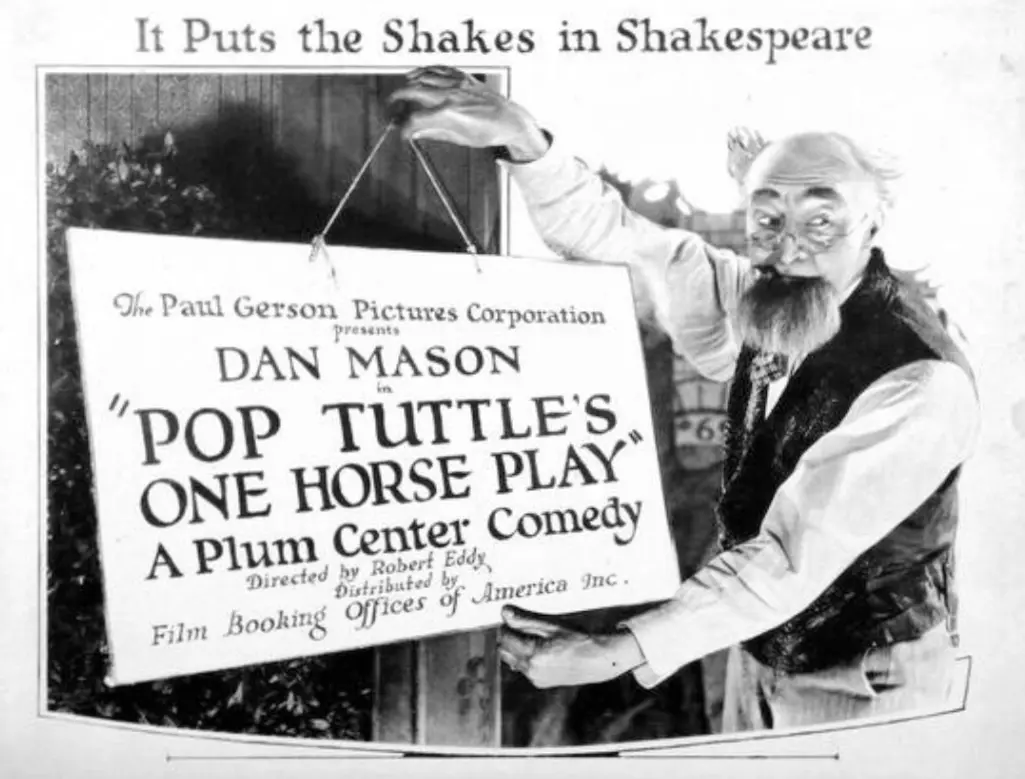
To witness Pop Tuttle's One Horse Play is to step into a bygone era of entertainment where the boundaries between the performer and the spectator were as thin as the greasepaint applied in a drafty backstage corner. Set within the idiosyncratic microcosm of Plum Center, the film presents a fascinative study of cultural aspiration. Pop Tuttle, played with an infectious, grizzled enthusiasm by Dan Mason, is not merely a producer; he is the custodian of the village's collective imagination. His Tuttle Opery House serves as a secular cathedral where the high art of the Elizabethan era meets the calloused hands of the agrarian worker. Unlike the polished urbanities found in Shirley Kaye, this production thrives on its very lack of sophistication.
The choice of repertoire—the star-crossed yearning of Romeo and Juliet and the Machiavellian darkness of Richard III—is a stroke of comedic and thematic genius by writer Al Giebler. There is something inherently subversive about watching a 'one horse' outfit tackle the linguistic complexities of Shakespeare. It mirrors the thematic depth seen in international works like Egyenlöség, where class structures and cultural expectations are placed under a microscope. Pop’s insistence on these heavyweights of the Western canon, despite the obvious limitations of his venue and cast, speaks to a universal human desire to reach for the sublime, even when one’s feet are firmly planted in the mud of a village square.
Dan Mason’s performance is the centrifugal force that prevents the film from spinning into mere caricature. He imbues Pop Tuttle with a sense of dignity that belies the absurdity of his situation. Mason understands that to the residents of Plum Center, the Opery House is not a joke; it is a window into a world of passion and history that they would otherwise never glimpse. His portrayal offers a stark contrast to the more polished, perhaps less sincere characters one might encounter in a film like The Life of the Party. Where others might find only humor in the missed cues and threadbare costumes, Mason finds the pathos of the dreamer.
Wilna Wilde, as the leading lady of this makeshift troupe, provides a necessary layer of ethereal grace. Her presence on the Tuttle stage is an anachronism—a flash of silken elegance amidst the rough-hewn timber of the playhouse. The chemistry between the seasoned, pragmatic Pop and the aspirational Wilde creates a narrative tension that propels the story forward. It reminds one of the delicate character balances found in Molly Go Get 'Em, where individual drive meets social constraint. Wilde’s Juliet is not just a character; she is a symbol of the beauty that can be found in the most unlikely of places.
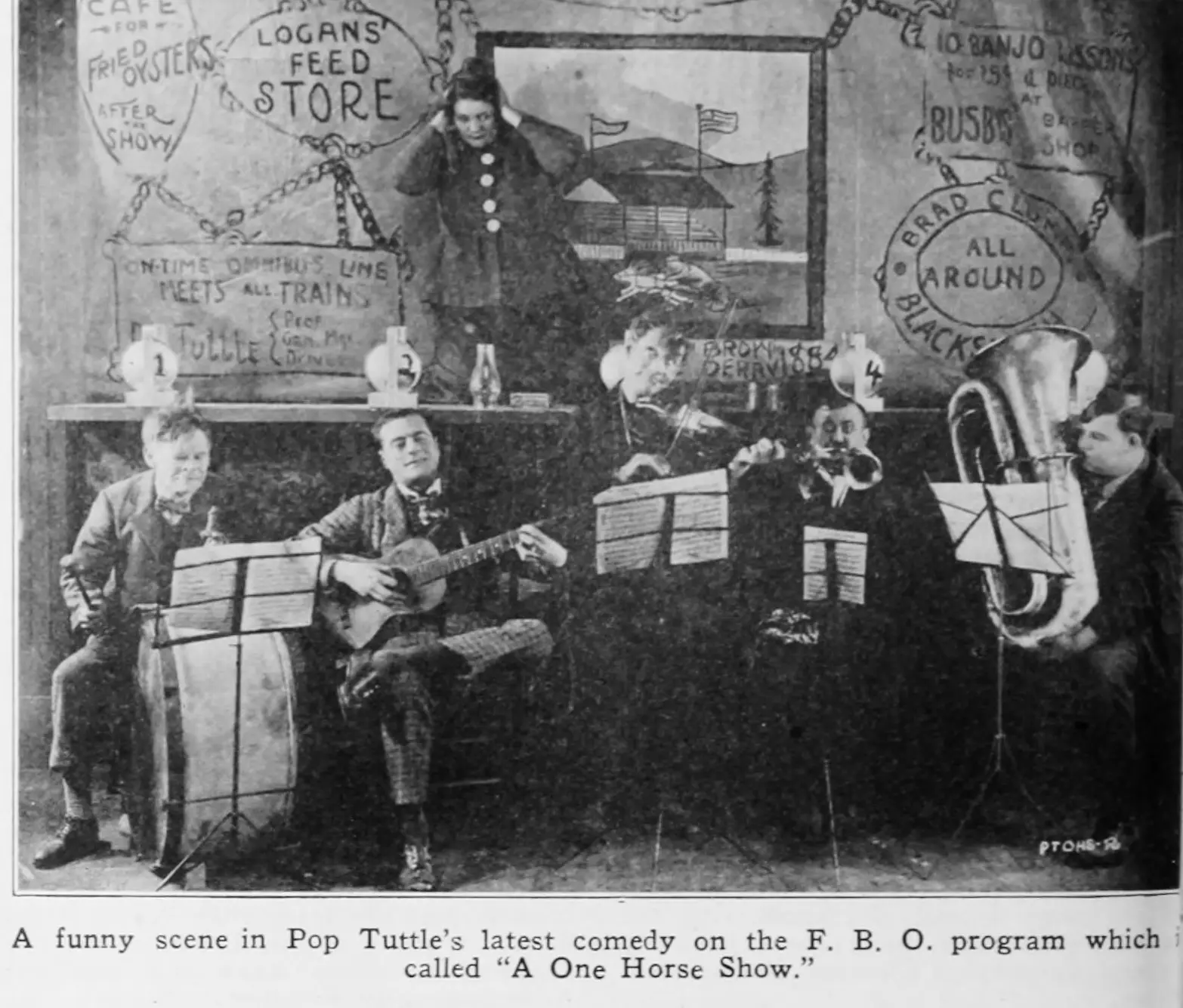
Visually, the film captures the textures of rural life with a surprising degree of nuance. The cinematography lingers on the imperfections: the peeling posters, the flickering footlights, and the expectant faces of the audience. This is not the grand cinematic landscape of King Spruce, nor is it the desolate, haunting atmosphere of Ghost City. Instead, it is a cramped, intimate space that forces the viewer into a state of empathy. The 'One Horse' moniker is both a literal description of the production's scale and a metaphorical nod to its singular, stubborn focus.
The staging of Richard III, in particular, is a highlight of meta-theatrical commentary. To see the hunchbacked king stalking across a stage that likely smells of hay and old leather is to witness the true power of performance. It strips away the artifice of the high-budget theater and leaves only the raw interaction between the actor and the word. This stripped-back approach to storytelling is reminiscent of the emotional honesty found in Ashes of Embers, where the core of the drama is never obscured by unnecessary flourish.
Al Giebler’s script is a masterclass in situational irony. He manages to poke fun at the pretensions of the small-town elite while simultaneously celebrating their cultural hunger. The dialogue (conveyed through intertitles that crackle with wit) avoids the leaden exposition often found in lesser silent comedies like Baffled Ambrose. Instead, Giebler trusts the audience to understand the inherent comedy of the situation. The pacing is brisk, mirroring the frantic energy of a backstage environment where everything that can go wrong, inevitably does.
One cannot help but compare the thematic resonance of Giebler’s work here with the more somber tones of Hazel Kirke. While both deal with the complexities of community and the weight of tradition, Pop Tuttle's One Horse Play chooses the path of levity to reach its truth. It suggests that while life may be a tragedy when viewed in close-up, it is undeniably a comedy in the long shot of a village square. This philosophical underpinning elevates the film from a simple 'rube' comedy to a significant piece of social commentary.
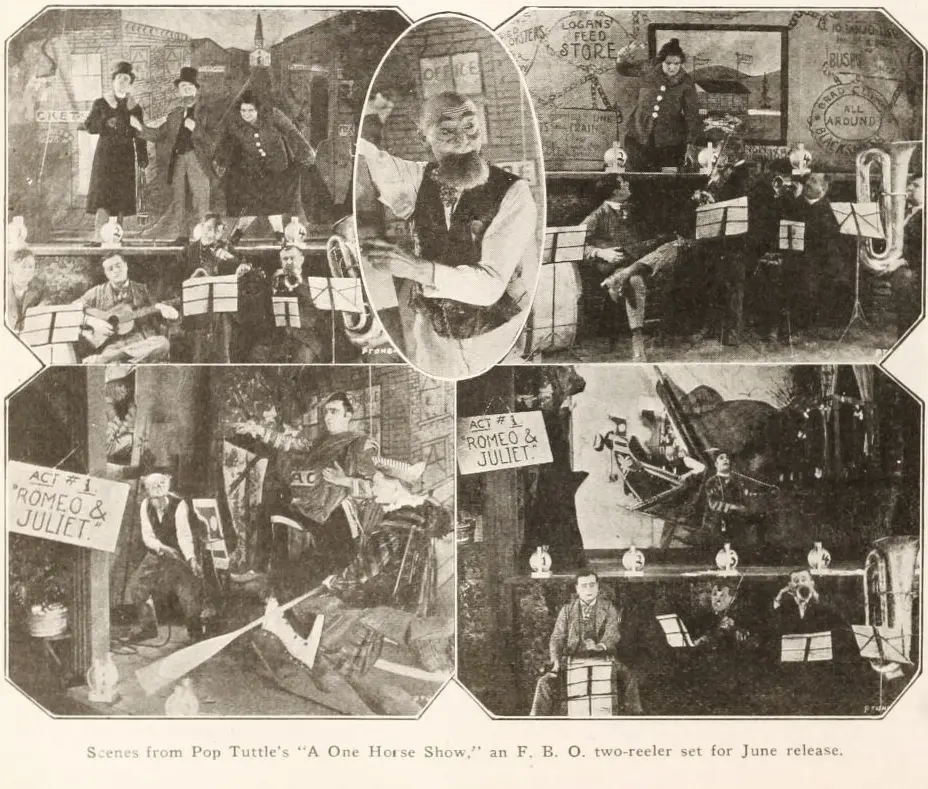
When examining the film alongside its contemporaries, its unique flavor becomes even more apparent. While Yamata explores the clash of cultures on a much larger, more exotic scale, Pop Tuttle focuses on the internal cultural clash of a single nation trying to define its own identity. It lacks the overt moralizing of The Seventh Sin or the melodramatic intensity of One Touch of Sin. Instead, it offers a slice of life that is as refreshing as it is insightful.
The film also shares a certain DNA with Speedy Meade in its depiction of the American 'can-do' spirit, albeit in a much more localized and less heroic fashion. Pop Tuttle is a hero of the mundane, a man whose battles are fought against broken pulleys and missing props rather than outlaws or nature. This grounding in reality is what makes the comedic moments land with such precision. Even in the more slapstick-oriented sequences, there is a sense of physical stakes that is often missing from films like Life Savers.
As the final curtain falls—likely with a stutter and a cloud of dust—on Pop’s production, the viewer is left with a profound sense of the importance of these small-scale endeavors. Pop Tuttle's One Horse Play is a testament to the fact that art does not require a gilded hall to be meaningful. It only requires a storyteller with enough audacity to believe that a horse-drawn town deserves a taste of the immortal. This film is a vibrant, essential piece of cinematic history that captures the heart of the American theatrical tradition.
In conclusion, if one seeks a film that balances humor with a genuine affection for its characters, look no further. It is as charming as Jó éjt, Muki! but with a distinctly New World sensibility. Pop Tuttle reminds us that we are all, in some way, putting on a 'one horse play' of our own, trying to find the poetry in the everyday and the Shakespeare in the sawdust. It is a work of enduring relevance, a comedic jewel that continues to shine long after the lights of Plum Center have dimmed.
IMDb —
1935
Community
Log in to comment.