DbcultAccessing Vault...
Cult Review
Senior Film Conservator
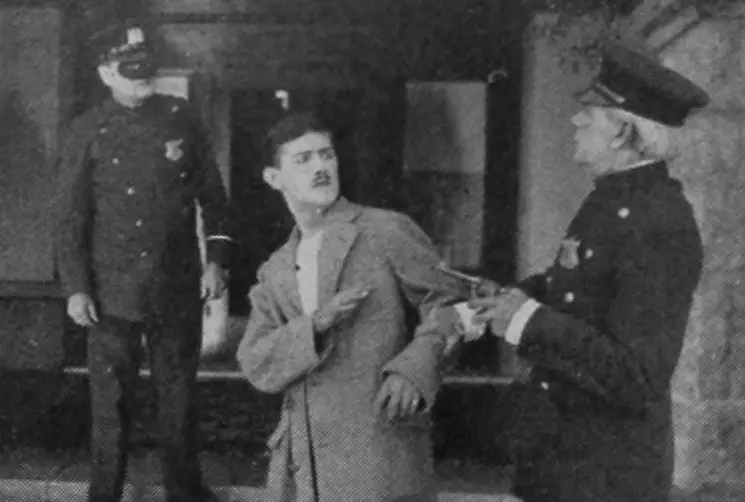
Step back in time, dear readers, to an era where laughter was a universal language, spoken through exaggerated gestures, clever sight gags, and the inimitable charm of silent film stars. Today, we're diving deep into a veritable gem from that golden age: 'Position Wanted'. This isn't just another relic from the past; it's a vibrant, kinetic testament to the comedic genius of Charley Chase, a performer whose nuanced blend of physical comedy and relatable everyman appeal often gets overshadowed by the more boisterous antics of his contemporaries. Yet, in films like this, Chase carves out a niche that is uniquely his own, inviting us into a world where even the most mundane of pursuits—like finding a job—can spiral into an exquisite ballet of absurdity.
The premise is deceptively simple, a hallmark of many great silent comedies. Our protagonist, Charley, finds himself in that most unenviable of predicaments: unemployed. But here's the twist, and it's a crucial one for understanding Chase’s comedic persona: Charley isn't exactly burning with ambition. His job search is less a fervent quest and more a leisurely stroll, punctuated by distractions and a palpable disinclination for actual labor. This foundational character trait immediately sets him apart from the frantic, often desperate protagonists of other silent shorts. Instead of a man against the world, Charley is a man gently nudging against the world, hoping it won't push back too hard. This subtle defiance of societal expectations, delivered with Chase's signature bewildered charm, is the engine that drives the film's initial comedic momentum.
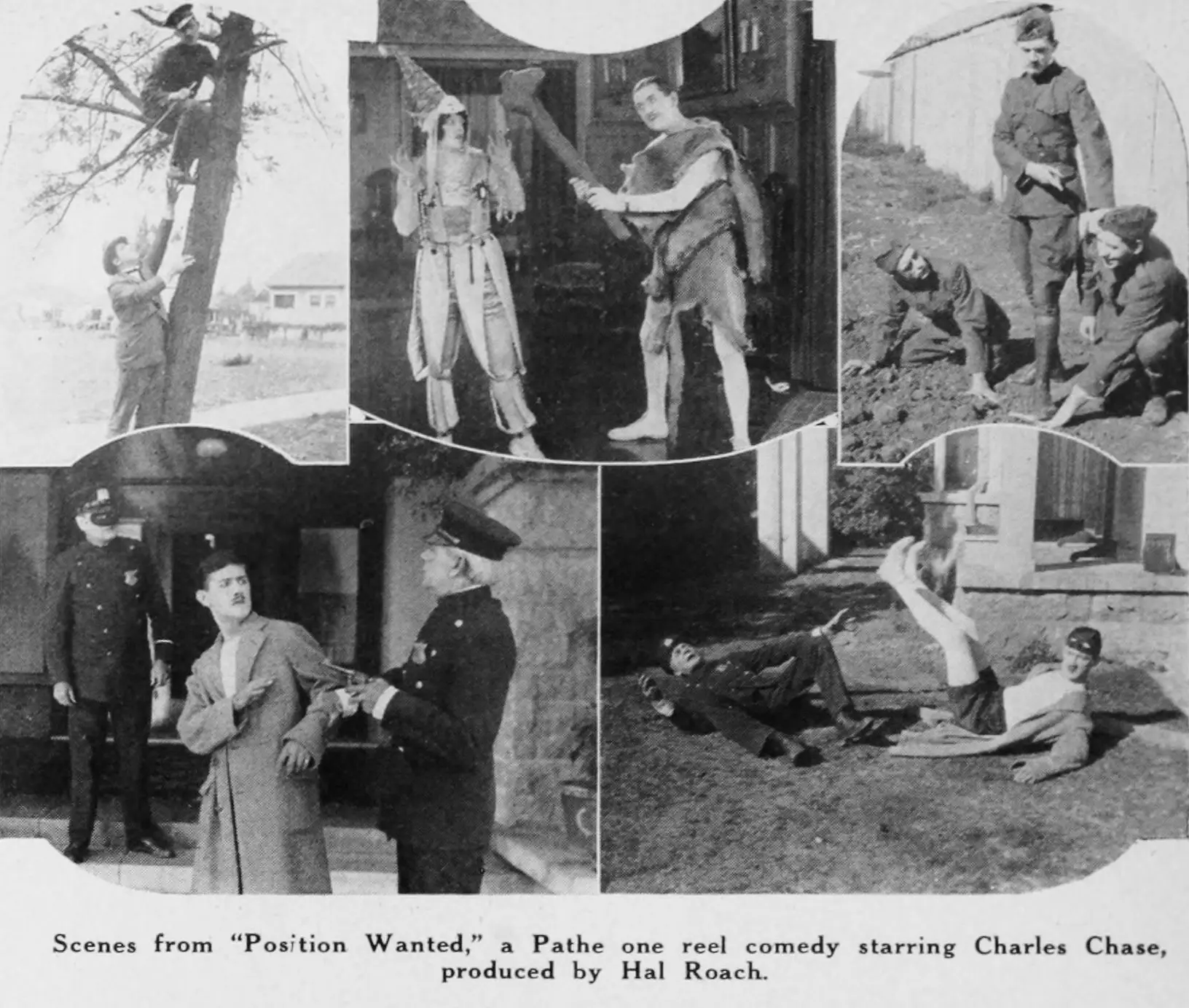
The narrative truly ignites when Charley, through a series of delightfully improbable circumstances, finds himself embroiled in the chaos of a masquerade ball. The masquerade, a classic comedic device, serves as the perfect canvas for Chase's particular brand of humor. It's a world where identities are fluid, appearances are deceiving, and the potential for hilarious misunderstandings is practically limitless. Dressed in a costume that feels as much a part of him as his own skin – that is to say, slightly askew and prone to causing trouble – Charley navigates this glittering, disorienting labyrinth. The film masterfully builds its comedic tension, each interaction, each mistaken glance, adding another layer to the intricate tapestry of errors.
What makes the masquerade sequence so compelling is its escalating sense of delightful anarchy. Charley, ever the reluctant participant, is drawn deeper and deeper into the fray, not by his own volition, but by the gravitational pull of circumstance. He becomes entangled in a romantic imbroglio, mistaken for another, and suddenly finds himself dodging angry suitors and bewildered damsels. Noah Young, a frequent collaborator with Chase, plays a formidable, often exasperated foil, his towering presence and gruff demeanor providing a wonderful contrast to Chase's more diminutive, bewildered persona. Blanche Mehaffey, as the object of confused affection, brings a delightful vivacity, her reactions to Charley's accidental advances adding another layer of comedic richness.
Charley Chase's comedic genius lies in his ability to portray a character who is simultaneously ordinary and extraordinary. He’s not the grandiose daredevil of a Keaton or the sentimental tramp of a Chaplin. Instead, Chase embodies the relatable anxieties and minor indignities of everyday life, then amplifies them to uproarious effect. His humor is often derived from his character's attempts to maintain dignity in increasingly undignified situations, a polite smile plastered on his face even as the world crumbles around him. In 'Position Wanted', this is evident in his earnest, if clumsy, efforts to extricate himself from the masquerade's web of deceit, only to dig himself deeper. His nuanced reactions, a blend of surprise, mild panic, and a desperate attempt at composure, are what elevate the physical gags beyond mere slapstick.
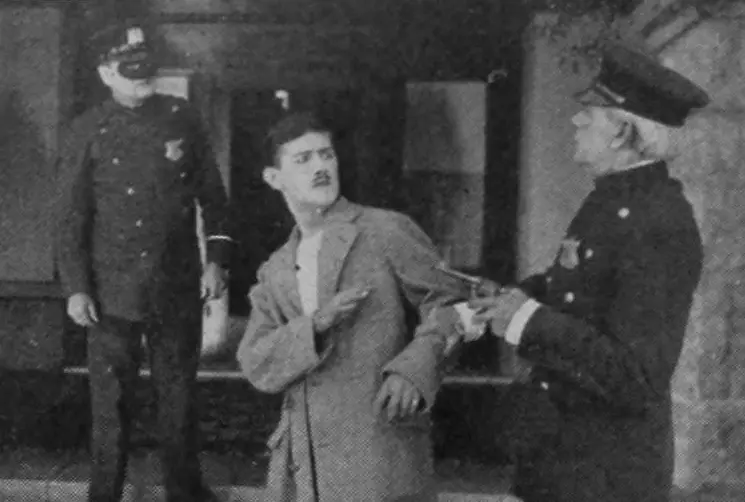
The direction, though uncredited, displays a keen understanding of comedic pacing and visual storytelling. Each gag is allowed to breathe, building to a satisfying punchline without feeling rushed or overwrought. The camera work, while typical for the era, is effective in capturing the spatial dynamics of the masquerade, allowing the audience to fully appreciate the intricate choreography of Charley's blunders. The editing is crisp, ensuring that the comedic beats land with precision, a crucial element in silent film where timing is paramount. The interplay between the characters is less about dialogue and more about reaction shots, body language, and the rapid-fire exchange of confused glances, a masterclass in non-verbal communication.
When we consider 'Position Wanted' within the broader tapestry of silent cinema, its brilliance truly shines. The theme of mistaken identity, for instance, is a timeless comedic trope, one that can be seen in various forms across the silent era. While not a direct comparison, one might find a distant echo of the elaborate setups and unexpected turns in films like Sleepy Sam, the Sleuth, where a character's true intentions are obscured, leading to comical revelations. However, Charley Chase's execution is distinct; his character’s passivity in the face of escalating chaos creates a unique brand of humor.
The physical comedy, while not as overtly acrobatic as Buster Keaton's, shares a similar precision and a meticulous understanding of cause and effect. Chase's movements are deliberate, even when portraying clumsiness, showcasing a performer in complete control of his craft. The escalating sense of peril and the sheer energy of the chase sequences at the ball might even bring to mind the frenetic pace of films like Double Speed or the general 'thrills' promised by a title like Thrills, though Chase's mayhem is often more character-driven and less purely spectacle-oriented. His comedic 'terror' is internal, a delightful panic that plays out across his expressive face.
Furthermore, the film's playful commentary on societal expectations – the pressure to find a 'position' versus the allure of leisure – resonates even today. While films like Damaged Goods or The Price of Her Soul delve into more dramatic and moralistic critiques of society, 'Position Wanted' offers a lighter, more satirical touch. It suggests that perhaps the greatest troubles arise not from a lack of ambition, but from the very act of trying to conform to a world that seems determined to make fools of us all.
Beyond the immediate hilarity, 'Position Wanted' offers a subtle exploration of identity and self-perception. Charley's initial reluctance to find work could be seen as a quiet rebellion against the relentless march of industrial society. His foray into the masquerade, where he is forced to adopt a false identity, forces him to confront different versions of himself, albeit comically. This playful subversion of expectations, where the man who wants nothing more than to be left alone ends up at the center of a very public spectacle, is a testament to the intelligent writing that underpins the physical comedy.
The film's enduring appeal also lies in its universal themes. Who hasn't felt the pressure to conform, to find their 'place' in the world? And who hasn't, at some point, wished to simply escape the demands of daily life? Charley's journey, though exaggerated for comedic effect, taps into these very human experiences. It’s a gentle reminder that sometimes, the most profound insights come wrapped in the most uproarious laughter. The visual gags, while brilliant, are never gratuitous; they always serve the character and the narrative, propelling the plot forward with a delightful momentum.
The interaction between Charley, Noah Young, and Blanche Mehaffey forms a classic comedic triangle. Young's character, often a figure of authority or an imposing rival, is consistently outwitted or frustrated by Charley's unwitting actions. This dynamic is a staple of silent comedy, where the 'little guy' (or in Chase's case, the 'average guy') inadvertently triumphs over the more powerful or aggressive figure. Mehaffey, as the romantic interest, often finds herself caught between these two forces, her reactions ranging from flirtatious amusement to exasperated confusion, providing a vital anchor for the audience's emotional investment in the escalating farce.
In conclusion, 'Position Wanted' is far more than a simple silent comedy short. It is a masterclass in character-driven humor, a testament to Charley Chase's unique comedic voice, and a delightful exploration of human nature's more whimsical side. It reminds us that sometimes, the greatest adventures begin when we least expect them, often when we're trying our hardest to avoid them. The film's charm is timeless, its humor universal, and its message – that life has a funny way of finding you, even when you're not actively looking – resonates with an enduring clarity. So, if you're seeking a dose of genuine, unadulterated cinematic joy, look no further than this delightful escapade. It offers a rare glimpse into the effortless artistry of a bygone era, proving that sometimes, the most profound laughter comes from the most unexpected places.
The legacy of films like 'Position Wanted' is crucial for understanding the evolution of comedy. It showcases the sophisticated storytelling that existed even without spoken dialogue, relying instead on visual cues, character expressions, and meticulously choreographed action. It's a testament to the ingenuity of early filmmakers and performers who had to invent the language of cinema as they went along. Chase, with his effortless grace and understated charm, stands as a pivotal figure in this narrative, bridging the gap between broad slapstick and more nuanced comedic performances. The film is a vibrant, living piece of cinematic history, inviting new generations to discover the pure, unadulterated joy of silent laughter.
The final moments of the film, without giving too much away, provide a satisfying, if chaotic, resolution that perfectly encapsulates Charley's journey. He doesn't necessarily find the 'position' he was ostensibly looking for, but he certainly finds himself in a position he never anticipated. This delightful unpredictability is the film's greatest strength, leaving the audience with a smile and a renewed appreciation for the accidental beauty of life's many detours. It’s a film that doesn't just make you laugh; it makes you appreciate the artistry behind the laughter, the subtle nuances that elevate a simple plot into a truly memorable cinematic experience.
IMDb 7.5
1930
Community
Log in to comment.