DbcultAccessing Vault...
Cult Review
Senior Film Conservator
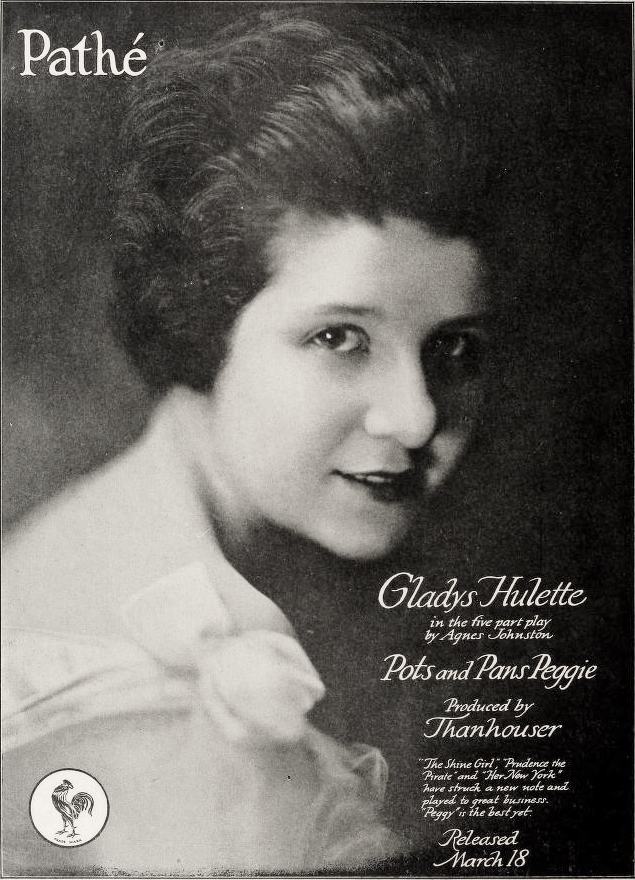
If the silent era were a vast echoing pantry, most filmmakers reached for the sugar of spectacle; Johnston grabs the scouring brick, scraping morality’s burnt crust until the metal gleams with uncomfortable truth.
Wayne Arey’s Peggy never once pirouettes for the camera; instead she inhabits space like someone who has calculated the exact weight of every glance. Watch her shoulders in the scullery scene where the frame is split: left side stacked with unwashed terrines, right side a mirror where Eleanor practices a coquettish smile. Arey lets Peggy’s breathing sync with the dripping faucet until the moment she pivots, wipes suds on her hem, and becomes the axis on which the plot quietly pirouettes.
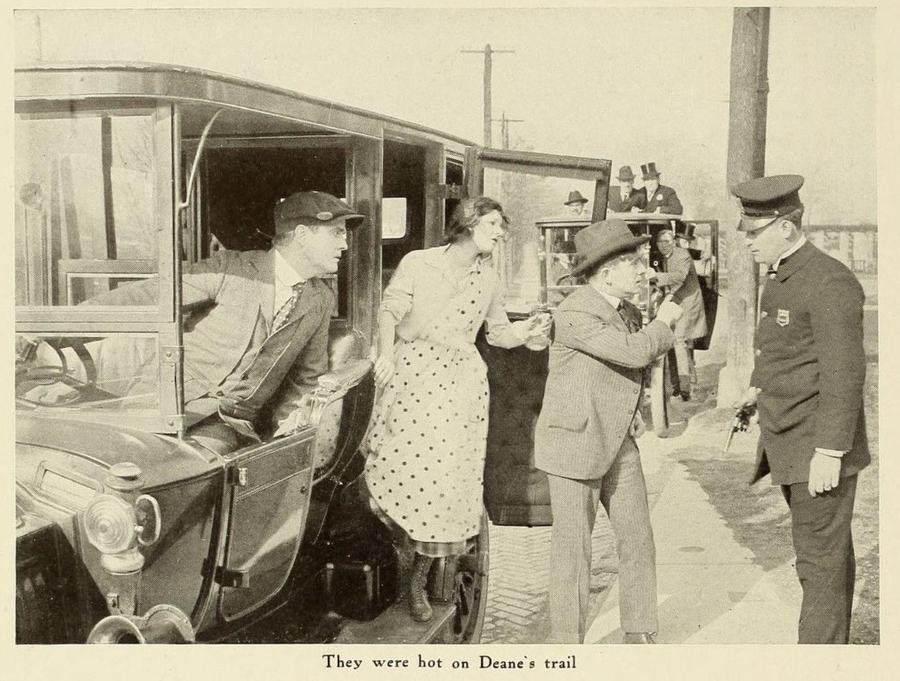
George Marlo’s turn as Theodore could have been fop cliché; instead he gives us privilege as prison, every tailored lapel a bar. His eyes—half-lidded, liquor-dulled—flicker with the arithmetic of a man who realizes too late that charm is a currency whose rate has crashed. When he whispers “I’m in over my head,” the line is muffled by a towel Peggy hands him, a mundane act that feels like absolution dipped in carbolic acid.
Grace Henderson’s Mrs. Stuyvesant prowls the drawing-room like a duchess who suspects the wallpaper of eavesdropping. She delivers the film’s most lacerating moment without words: a close-up where she registers the smell of her own daughter’s heartbreak—sniff, pause, imperceptible recoil—then commands a footman to “change the flowers; the lilies have learned too much.”
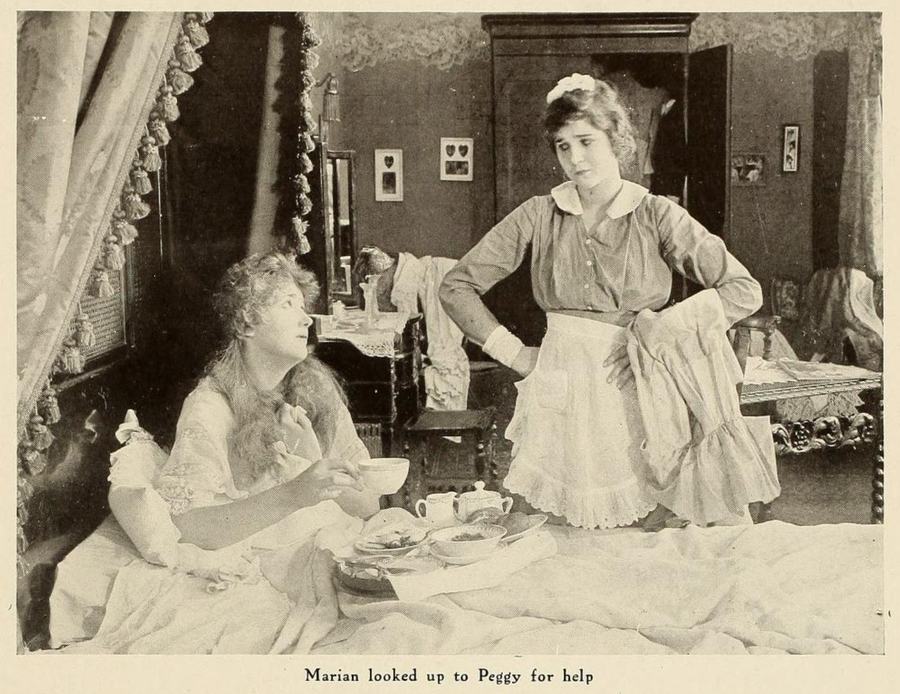
Helen Badgley’s little Elsie, Peggy’s youngest charge, functions as the film’s moral Geiger counter. She appears only three times yet transmutes the narrative each instance: first clutching a cracked porcelain pig that mirrors Theodore’s fractured conscience; second silhouetted against a window as spies pass coded notes beneath it, her paper doll accidentally catching one; finally wandering the docks at dawn, found by Peggy who, in scooping her up, drops the dossier into the harbor—an act of sabotage disguised as maternal reflex.
Johnston’s screenplay, often dismissed in trade papers as “program fodder,” is in fact a chiaroscuro of class resentment. Note how every object of opulence—pearl opera glasses, mahogany letterbox, kid gloves—returns later soiled or broken. The gloves reappear balled inside a coffee can; the opera glasses cracked by Elsie’s teeth; the letterbox set alight to provide Peggy light while forging safe-conduct papers. The film argues that wealth is not stolen but composted into something fertile for the dispossessed.
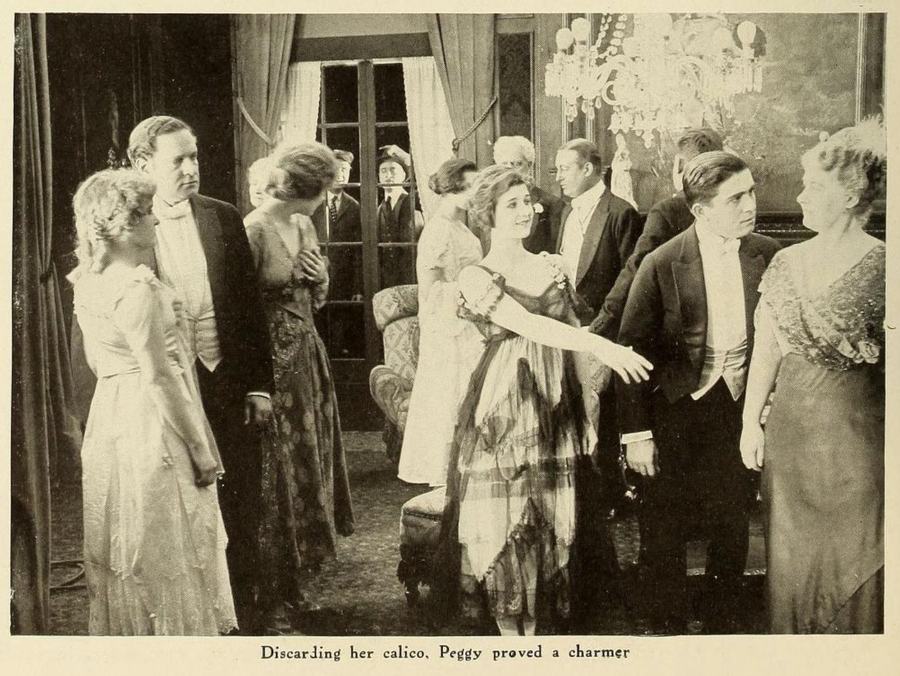
Director William Parke Jr. stages spatial tension like a pickpocket caressing your pocket before the lift. In the ballroom sequence, the camera begins static amid swirling waltzers, then dollies—almost imperceptibly—until we realize we’re now eavesdropping from behind a spy’s newspaper. The waltz melody continues, but its rhythm is out of sync with the edit, creating a queasy pre-echo of danger.
Clarine Seymour’s flirtatious cameo as the spies’ courier deserves cinephile cult status. She enters astride a bicycle built for two, pedaled by a man we never see again, and exits via laundry chute, silk bloomers ballooning like surrender flag. The gag lasts seven seconds yet reframes the entire espionage subplot as bedroom farce gone septic.
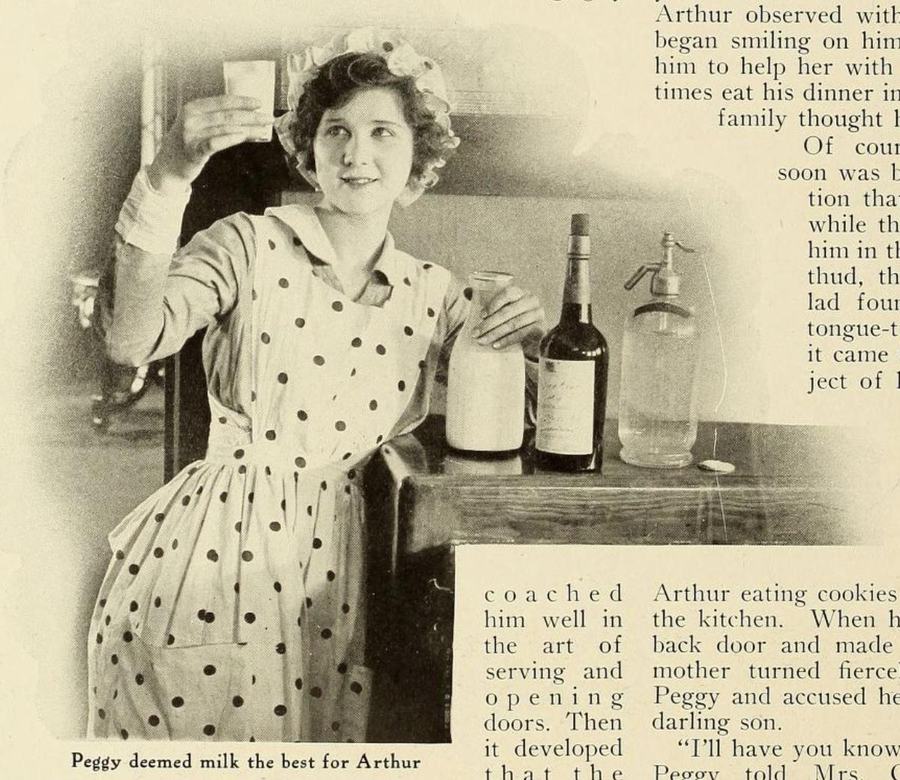
Compare this to The Power of Evil, where corruption drips from cathedral rafters; here venality wafts up from scullery drains, more pungent because it smells of beef stock and bleach. Or weigh against Molly Entangled’s flapper-chains; Peggy’s chains are cast iron, blackened by cook-fire, yet she lifts them like kettlebells, forging muscle memory for revolt.
Gladys Hulette’s nameless secretary, who keeps ledgers of the Stuyvesant china, utters the film’s thesis: “Chips pay for cracks the same way the poor pay for the rich’s mistakes—quietly, but the debt accrues interest.” The line is spoken to a kitchen cat, because who else would listen?
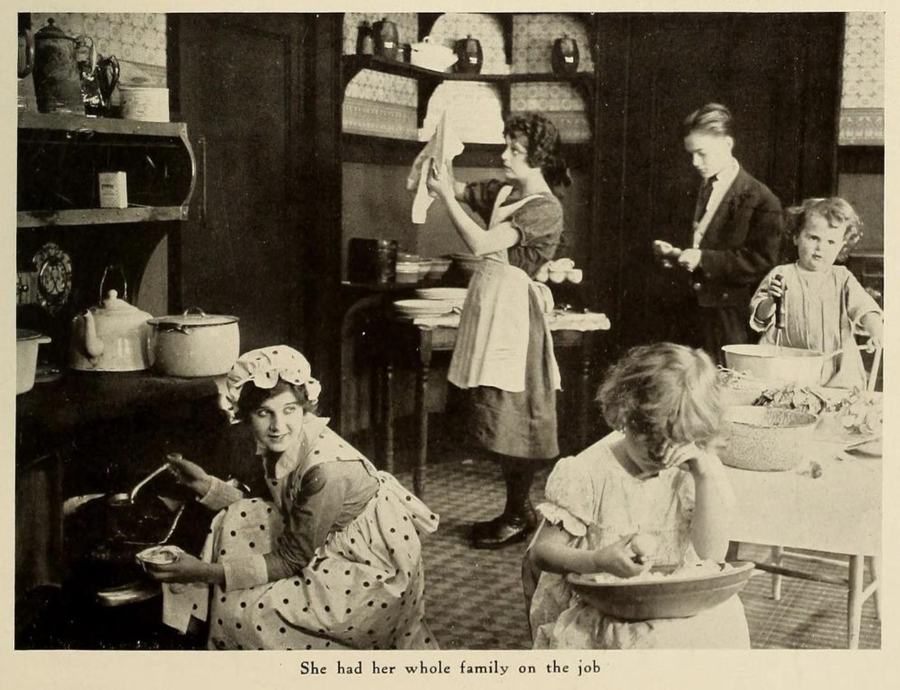
Technically, the print survives in 35mm at Library of Congress, yet most available editions derive from a 16mm Kodascope riddled with emulsion boils. Even so, the chemistry flickers alive: the yellow of a telegram becomes sulphur; the Prussian of a naval uniform bruises into sea-blue rot. A shame we lack the original amber tinting, but the loss feels thematically apt—Peggy’s world was always sapped of its promised gold.
Ernest Howard’s score, reconstructed by Ben Model for a 2018 MoMA retrospective, interpolates “The Stein Song” with ragtime dissonance, so when Peggy finally slams that gate, the unresolved chord leaves audiences gasping as though the seats themselves have tilted.
Viewers hunting proto-feminist iconography will exult in Peggy’s refusal of matrimony: she exits not on a man’s arm but with siblings orbiting her like iron filings magnetized. Yet the film refuses hagiography. Her hands, glimpsed in close-up while counting coins, bear eczema from lye; her parting smirk carries the exhaustion of someone who knows tomorrow’s pots will still need scouring, only now she owns the soap.
Detractors cite melodramatic coincidences—Elsie’s paper-doll intercept, the locket/dossier swap—but melodrama is the vernacular of the marginalized; their lives hinge on such coincidences because systems of power script randomness as destiny. Johnston weaponizes the trope, bends it until it whistles like kettle steam, signalling revolt rather than resignation.
In the current renaissance of restored silents—Stolen Goods, The Ransom—Pots-and-Pans Peggy demands elevation alongside them, not for antique charm but for prophetic bite. Its vision of domestic labor as covert operations prefigures today’s gig-economy invisibility; its spy ring of polished grifters feels plucked from contemporary lobbying firms.
So revisit Peggy not as relic but as reconnaissance. Let her clanging pots become Morse code across the century, pinging our conscience: every clean surface hides a fingerprint, every polished narrative a scullery untold. The film ends; the echo doesn’t. Somewhere a kettle, removed from flame, keeps whistling—higher, thinner, inescapable.
IMDb —
1930
Community
Log in to comment.