DbcultAccessing Vault...
Cult Review
Senior Film Conservator
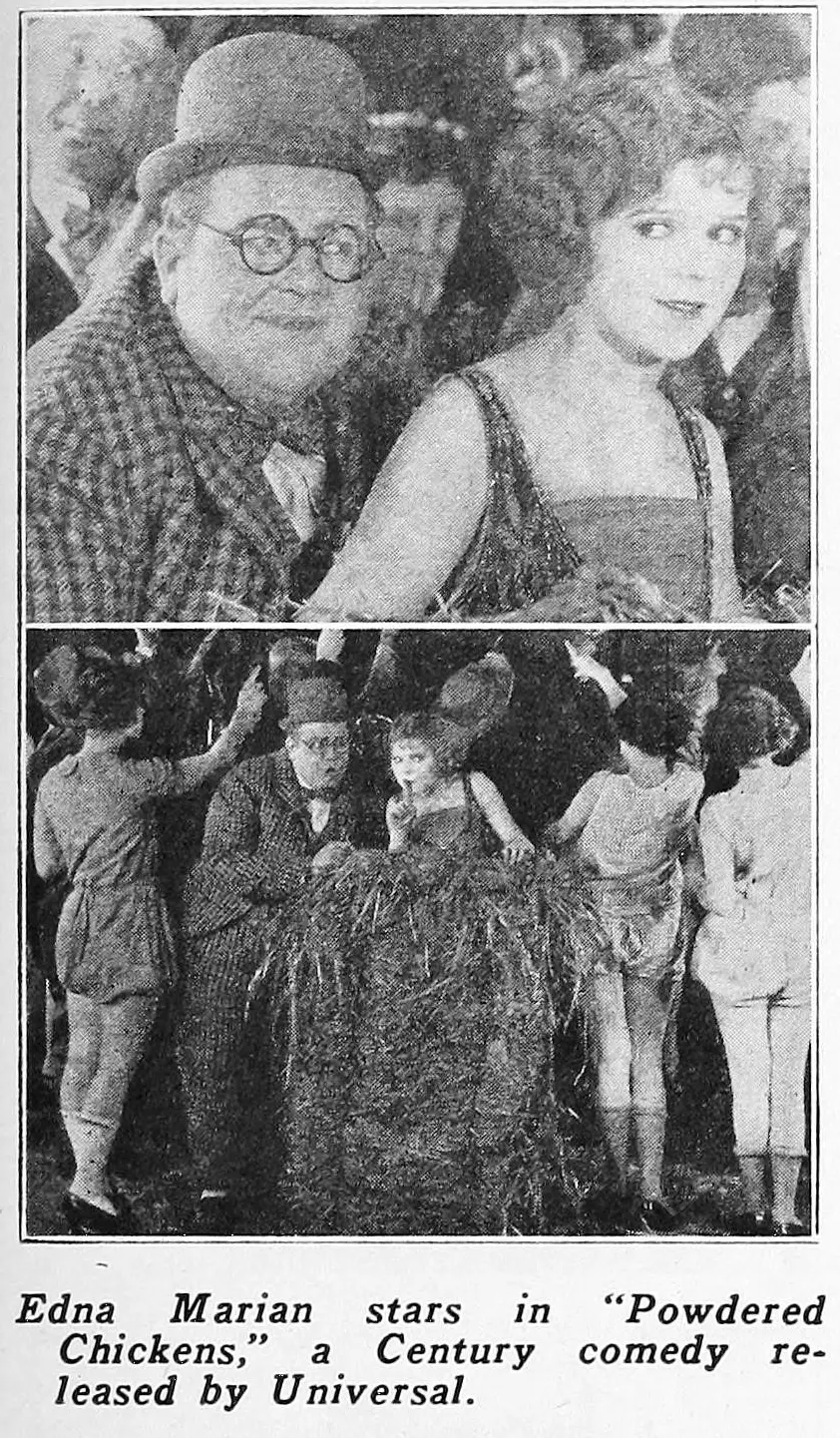
Is Powdered Chickens a lost treasure of the silent era? Short answer: No, it is a loud, messy curiosity that mostly serves as a footnote in Hilliard Karr’s career.
This film is strictly for those who find historical value in the evolution of the 'mad scientist' trope and rural slapstick; it is absolutely not for anyone who expects the sophisticated visual storytelling of a Keaton or Chaplin production.
This film works because Hilliard Karr’s physical presence creates a natural gravitational pull for the surrounding chaos, making the farm setting feel lived-in and volatile.
This film fails because the central conflict relies on a mean-spirited prank that lacks comedic payoff until the final seconds, leaving the middle act feeling like a series of missed opportunities.
You should watch it if you are a historian of silent-era short subjects or a fan of early 20th-century rural stereotypes and want to see how the 'City Chap' archetype was used as a villainous catalyst.
Powdered Chickens is a film that exists on the fringes of the 1920s comedy boom. Directed by Edward Ludwig, who would later find more prestige in dramas, this short film is a raw, almost primitive example of the 'explosive' comedy. The premise is thin: a father wants more eggs, a city guy wants a laugh, and the chickens want to survive. It’s a simple setup that mirrors the era’s fascination with the clash between traditional farm life and the perceived recklessness of urban modernization.
Unlike the more nuanced Day Dreams, which used failure as a poetic device, Powdered Chickens uses failure as a fuse. The father’s formula represents the naive hope of the rural worker. He isn't trying to change the world; he just wants his hens to lay. When the 'city chap' enters the frame, he represents a cynical, destructive force. He doesn't just mock the farmer; he weaponizes the farmer's own ambition. It’s a dark undercurrent that the film tries to mask with broad gestures and panicked expressions.
Hilliard Karr was often cast for his size, following in the footsteps of Roscoe 'Fatty' Arbuckle. However, Karr lacks Arbuckle’s uncanny grace. In Powdered Chickens, Karr’s performance is heavy—literally and figuratively. He moves with a deliberate slowness that works well for a frustrated father but slows the film's overall momentum. There is a specific scene where he examines the 'powder' with a magnifying glass, and his facial contortions are meant to convey scientific intensity. It doesn't quite land. It feels like a performer waiting for the next cue rather than a character inhabited by an idea.
Edna Marion, as the daughter, is given little to do other than look concerned and provide a romantic foil for the city chap. Her performance is standard for the time, though she lacks the comedic spark found in the leading ladies of Ladies Must Live. She is the bridge between the two men, and while she plays the part with earnestness, the script treats her as a secondary prop to the eventual explosion.
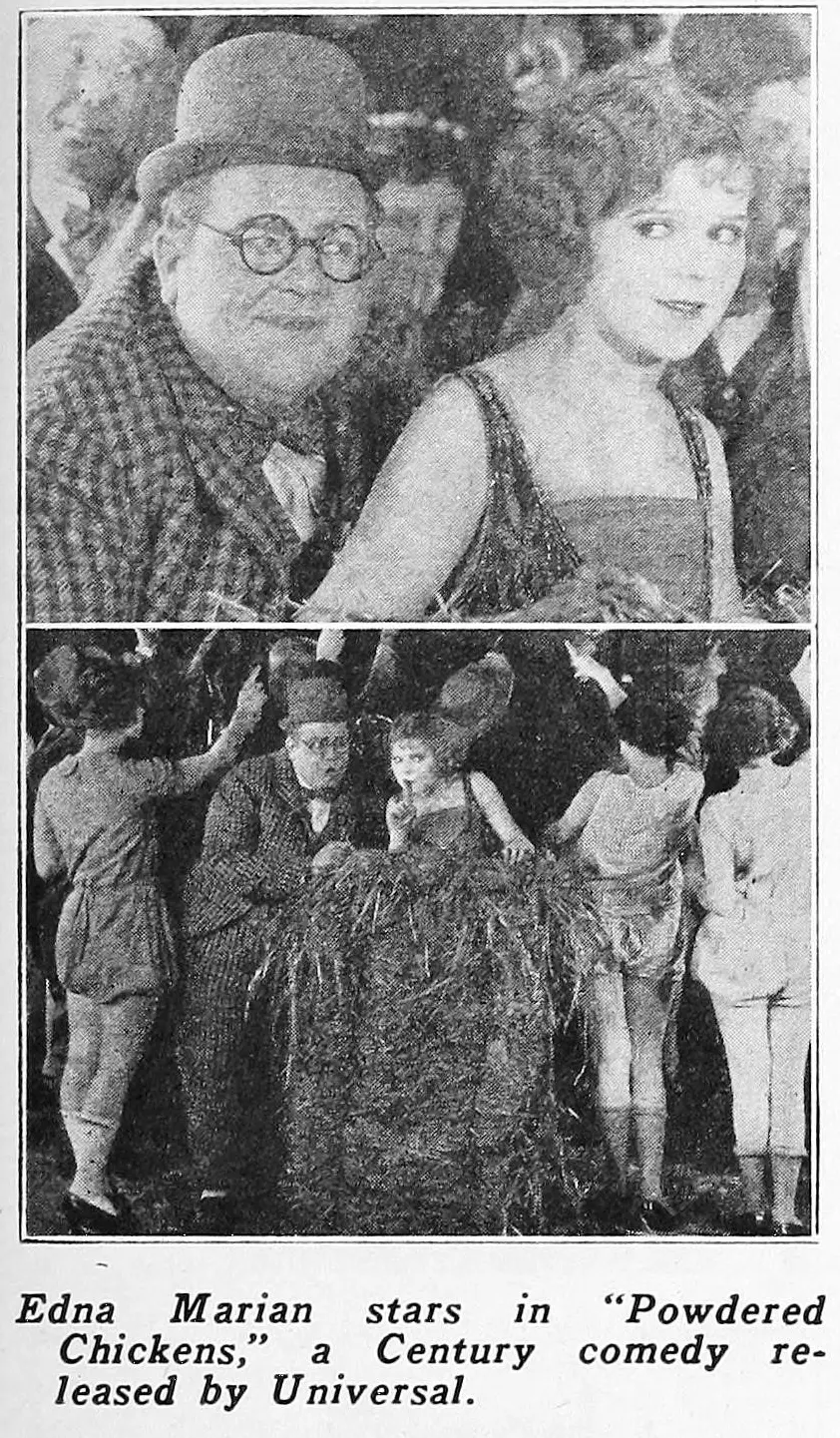
The film’s entire identity is tied to its final five minutes. The substitution of the laying powder for T.N.T. is the kind of logic-defying plot point that defined early slapstick. Why would a city visitor have high-grade explosives in his pocket? The film doesn't care, and neither should we. It’s a means to an end. The resulting 'chicken explosion' is a technical marvel of its time, likely involving a lot of clever editing and perhaps a few unfortunate feather pillows.
It works. But it’s flawed. The pacing leading up to the blast is agonizingly slow. We spend far too much time watching the city chap flirt and the father tinker. In a film titled Powdered Chickens, you expect the chickens or the powder to be the stars. Instead, they are the punchline to a very long, very dry joke. If you compare this to the relentless energy of Yankee Doodle in Berlin, the difference in directorial confidence is staggering.
If you are looking for a laugh-out-loud comedy that transcends time, the answer is a firm no. Powdered Chickens is a period piece that has aged more like milk than wine. However, if you are interested in the technical side of 1920s filmmaking—specifically how they handled pyrotechnics and animal stunts—there is plenty to analyze here. It is a film that shows the transition of comedy from simple 'chase' sequences to more 'gadget-based' humor.
The film is a fascinating look at the 'City vs. Country' trope that dominated the box office in the 1920s. The 'City Chap' is portrayed as a dangerous, meddling influence, a theme that resonates through other films of the era like The Ancient Highway. It reflects a societal anxiety about the loss of rural innocence. In this film, that innocence isn't just lost; it's blown to smithereens.
Pros:
1. Genuine historical curiosity involving Hilliard Karr.
2. Interesting use of practical, on-set explosives for 1924.
3. A clear, if dated, example of the 'city slicker' antagonist.
Cons:
1. Pacing that feels much longer than the actual runtime.
2. A lack of genuine chemistry between the leads.
3. The comedic 'payoff' takes too long to arrive.
When placed alongside other 1924 releases, Powdered Chickens feels like a B-movie. It lacks the atmospheric tension of The Tiger Woman or the stylistic experimentation of Daughter of the Night. It is a meat-and-potatoes comedy that relies on a single gag. Even Speed Wild, which operated on a similar budget, manages to create more engagement through its titular speed than Ludwig does with his chickens.
There’s a certain charm to the film’s simplicity, much like Wisp o' the Woods, but charm only carries a film so far when the jokes are telegraphed ten minutes in advance. The 'mad scientist' angle is better handled in What's His Name, where the absurdity feels more grounded in character. Here, the absurdity feels like a desperate attempt to fill time.
Powdered Chickens is a loud, feathers-everywhere mess. It’s a film that knows exactly what it wants to do—blow things up—but has no idea how to make the journey there interesting. Hilliard Karr is a mountain of a man with the comic timing of a metronome, but even he can't save a script that is thinner than a hen's eggshell. It’s a relic, a curiosity, and a warning to anyone who thinks mixing science and city folk is a good idea. Watch it for the history, but don't expect to laugh until the smoke clears.
IMDb 5.7
1929
Community
Log in to comment.