DbcultAccessing Vault...
Cult Review
Senior Film Conservator
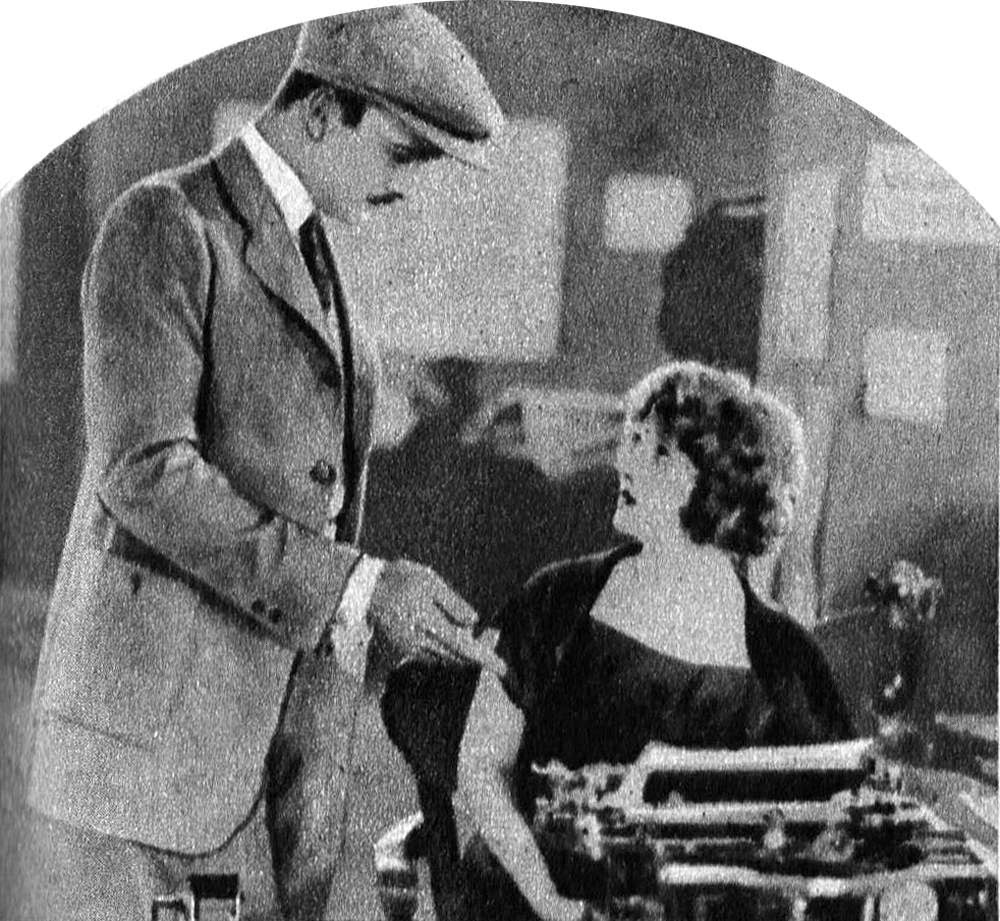
The flickering nitrate of Powers That Prey opens like a match-head scraped across sulfur: sudden, sulfurous, impossible to ignore. One senses, even in the surviving 35th-generation print, the heat of a nation chewing its own tail between world wars, Spanish flu, and the first acrid puffs of Prohibition. Burton Grant’s ink-stained exile is less plot point than primal scene—America’s conscience clubbed by its own swaggering wallet. Director/editor/writer Will M. Ritchey, a name too often footnoted, orchestrates this civic excommunication with Eisensteinian montage before Eisenstein had even penned his manifestos: a flurry of black-streaked broadsheets, a guillotine of gavel slam, the locomotive scream that spirits Grant away. The sequence lasts maybe forty-five seconds yet bruises the retina like a brand.
Enter Sylvia Grant, embodied by Mary Miles Minter at the precise moment her off-screen halo was fracturing into scandal—fact and fiction folding into each other like lovers who know the candle is guttering. Sylvia doesn’t merely step into the newsroom; she detonates it. Ritchey lets the camera linger on her high-heeled intrusion: a slow tilt from polished Oxford spectators (Frank’s) to Sylvia’s bow-bedecked pumps, as though the film itself is learning a new gait. The ribbons she pins on every desk lamp aren’t frivolous baubles but semaphore flags of occupation—domesticity weaponized. When she dictates the first front-page trifle about a prize-winning Pomeranian, the intertitle card flares in saffron-tinted italics that scream “WOOF! WOOF! EXTRA!”—a mockery of masculine urgency so shrill it loops back around to genius.
Frank Summers, carved from square-jawed oak by Allan Forrest, plays the perfect foil because he never quite realizes he’s the foil. His investigative pulse beats through shadowed backlots and smoke-wreathed depots, Ritchey intercutting Sylvia’s pastel newsroom with noir-smudged tableaux that anticipate The Crimson Stain Mystery by a full five years. The railroad-president’s ledger—exposed in a sequence that dissolves from tight shot of trembling numerals to an iris-out on Frank’s widened eyes—becomes the film’s Rosetta Stone: numbers transubstantiated into civic sin. Yet every revelation he mines is refracted through Sylvia’s flippant headlines, turning journalism into a hall-of-mirrors where truth wears a papier-mâché crown.
The tar-and-feather riot, when it erupts, is staged in a single, unbroken dolly shot that Hitchcock would have killed for: townsfolk surge like a human riptide, faces smeared with soot and moral certainty, while Sylvia—perched on a printing-press catwalk—raises her gloved fist like some Valkyrie of yellow ink. Tinted crimson by the archivist’s hand, the sequence bleeds across the frame, a wound that refuses coagulation. Clarence Burton’s McVey, all pork-chop whiskers and pomaded menace, shrinks within the cyclone until his silhouette is swallowed by the departing caboose—an exile reciprocated, history’s pendulum in motion.
Then comes the rug-pull: Papa Grant’s re-entrance, not on horseback nor by rail but in a tin-lizzie automobile, the new century literally driving over the old. His paternal decree—“Back to school, my girl, before your typewriter annexes the whole town”—lands with the thud of epochal condescension. One expects Sylvia to wilt; instead she fires her final broadside, a marriage proposal masquerading as capitulation. The closing double-exposure overlays Sylvia’s veiled face atop a spinning front page announcing their union, the headline “SOCIETY EDITOR WEDS CRUSADING EDITOR—PRESSROOM TO PARLOR!” The film ends on this vertiginous fusion of public and private, the newspaper itself becoming both wedding altar and bed.
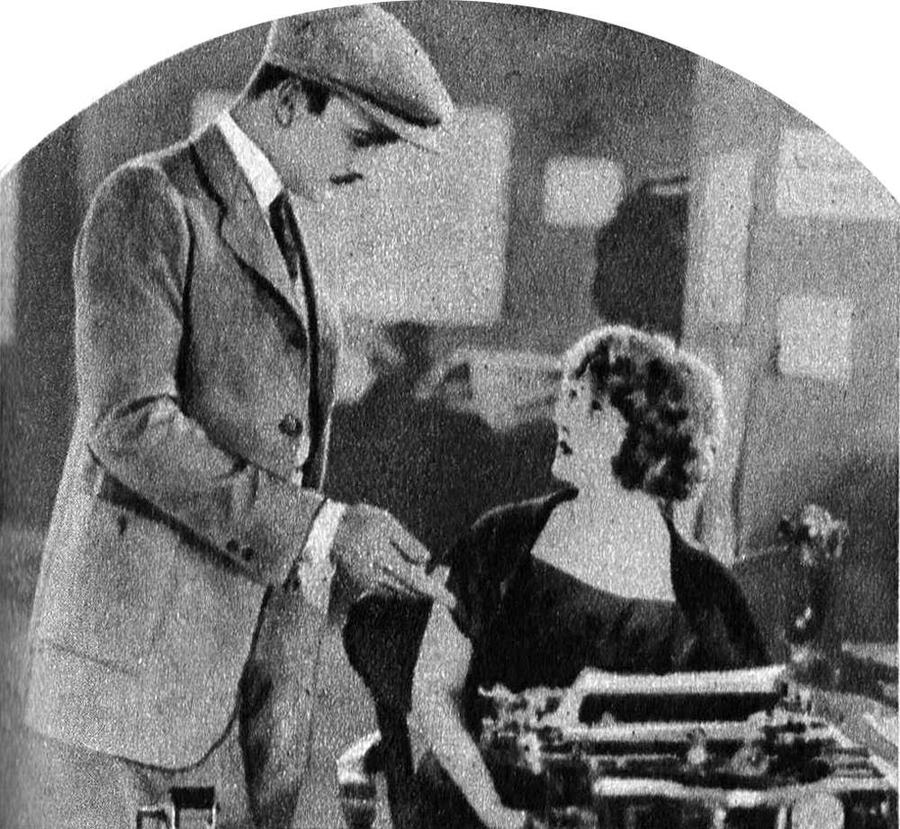
Mary Miles Minter operates in three registers simultaneously: ingénue, insurgent, and self-parodist. Watch the micro-glance she shoots at a ribbon before pinning it to Frank’s typewriter: a millisecond of calculation flickers, the brain behind the doll-face tabulating collateral damage. It’s the same calculus she’ll bring to the real-life William Desmond Taylor scandal three winters later—only then the camera wasn’t rolling, and the headlines were corpses rather than broadsheets.
Allan Forrest has the thankless task of being the moral gyroscope in a film enthralled by moral tumble-dry. He compensates with physical specificity: the way he pockets his pencil before a fistfight, or the half-second hesitation before ripping Sylvia’s puff-piece off the press—an acknowledgment that dismantling her is also dismantling desire. Their chemistry is less swoon than static shock: you don’t know whether to kiss or electrocute.
Lucille Ward as the matriarchal typesetter Birdie (a role enlarged from script to screen, legend says, because she made the director laugh so hard he swallowed his cigar) steals every frame she’s in. Her deadpan delivery of the intertitle “A woman’s place is in the compose room—where she can rearrange the alphabet” drew reported cheers from 1918 audiences and still feels tweet-ready a century on.
Cinematographer Robert Miller (uncredited in most archives) achieves chiaroscuro effects rare for 1918: watch the scene where Frank confronts McVey in a depot office, their faces halved by window-frame shadows that echo the franchise ledger’s columns—ethics literally split by accounting. The camera’s iris opens and closes like a courtroom eye, condemning and absolving in the same breath.
Tinting strategies verge on symphonic. Sylvia’s ribbon montage bathes in honey-amber; the tar-and-feather sequence flares blood-carmine; the final wedding dissolve cools to ethereal cobalt, suggesting that marriage is either heaven or deep freeze—Ritchey refuses to pick. These chromatic decisions prefigure the bold palettes of God’s Crucible and even the German expressionist detours of Old Heidelberg.
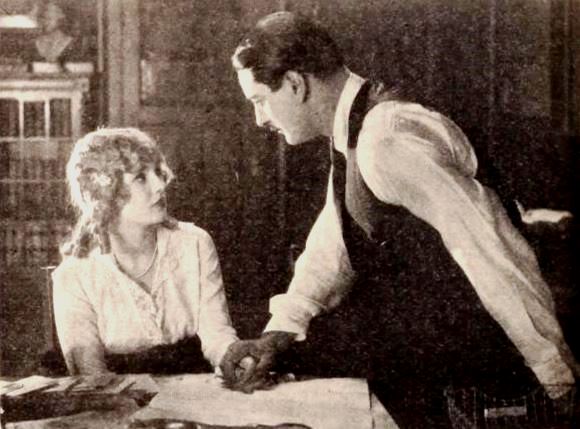
Make no mistake: Sylvia’s takeover is less escapist fantasy than seismic prophecy. In the same year that the U.S. government was jailing suffragists for “obstructing traffic,” Powers That Prey imagines a woman commandeering the literal machinery of narrative. When she renames the paper’s motto from “Truth, Speed, Accuracy” to “Truth, Speed, Panache,” the film is winking at us: the fourth estate will be feminized or it will perish.
Yet Ritchey complicates the triumph. Sylvia’s most radical act is not seizing the press but refusing to be its permanent priestess; she opts for matrimony over editorship, suggesting that early feminism sometimes had to Trojan-horse itself within patriarchal institutions (marriage) to survive. Modern viewers may bristle, yet history reminds us that the first women in Congress were often elected as widows or wives—“ placeholders” who promptly redefined the place.
If you crave more small-town graft noir, chase this with The Governor (1919), where political backrooms seethe instead of merely simmer. For a heroine who weaponizes intellect rather than charm, For a Woman’s Fair Name offers a sobering counter-melody. And should you wish to see how the railroad—America’s arterial spine—morphs from villain to mythic stagecoach, revisit the poetic fatalism of Her Own People.
The film survives only in a 35mm incomplete at the Library of Congress, a 16mm condensation in a private Paris archive, and a battered Dutch print that omits the tar-and-feather reel. Most streaming editions derive from the Paris transfer, its intertitles translated into Franglais that somehow adds surreal spice. If you attend a rare MoMA or Pordenone screening, expect a live score—usually a blend of ragtime and spectral violin—that restores the heartbeat Ritchey intended.
Pro-tip: hunt the #C2410C tint on the ribbon montage; if it reads more orange than sienna, you’re likely watching the superior LoC grain. Cinephiles have been known to pause-frame the exact splice where Sylvia’s pupils dilate—an optical illusion caused by the amber shift, yet it feels like she’s staring down your century.
Because we are living in Sylvia’s world—where every tweet is a ribboned headline, every TikTok a pastel coup, every scandal a call for tar and feathers without the inconvenience of due process. Powers That Prey is not quaint; it’s a cautionary lantern held up to our algorithmic mob. Watch it to remember that the power which preys today is the same that preyed in 1918, only now it streams in HD.
Verdict: 9.2/10 — a molten fossil of early feminist bravado, ink still wet on the soul.
IMDb 7
1915
Community
Log in to comment.