DbcultAccessing Vault...
Cult Review
Senior Film Conservator
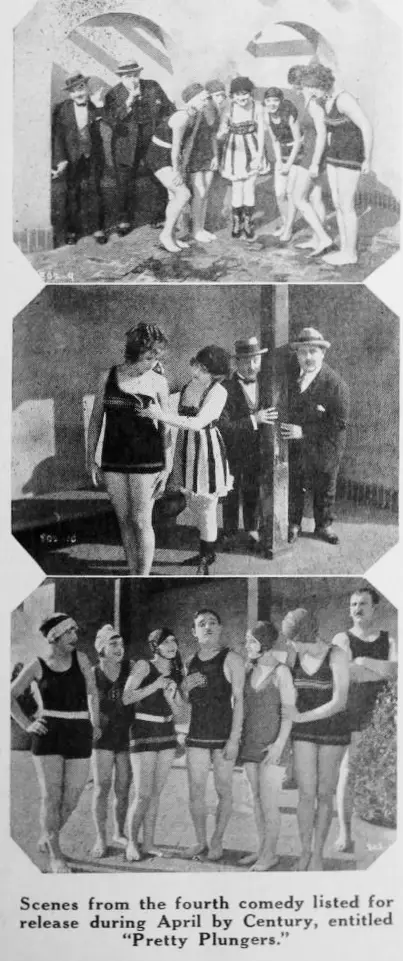
The silent era of cinema, often dismissed as a mere precursor to the 'talkies,' frequently reveals a sophisticated understanding of kinetic geometry and spatial humor that modern digital effects struggle to replicate. Pretty Plungers, directed by the prolific Leslie Goodwins, stands as a testament to this lost art of physical storytelling. It is a film that breathes through its movement, finding a rhythmic pulse in the desperate strides of its protagonists and the fluid grace of its environment.
At the heart of the narrative lies a primal competition. Al Alt and Hilliard Karr portray the archetypal 'everymen'—characters whose lack of physical prowess is compensated for by an inexhaustible, if misplaced, romantic tenacity. Their pursuit of Bartine (Bartine Burkett) is not merely a plot point; it is the engine of the film's structural integrity. Unlike the more somber explorations of desire found in The White Sister, where love is a heavy, spiritual burden, 'Pretty Plungers' treats affection as a catalyst for centrifugal chaos.
Goodwins utilizes the frame with a precision that suggests a deep understanding of the audience's eye. The chase sequences are choreographed with a balletic intensity, where every trip, stumble, and near-miss contributes to a larger visual symphony. The transition from the streets to the swimming pool marks a pivotal shift in the film’s physics. On land, the movements are jagged and percussive; in the water, they become undulating and unpredictable. This shift in medium mirrors the protagonists' loss of control as they enter the domain of Big Bill (William Blaisdell).
The introduction of Big Bill serves as a masterstroke of comedic tension. Blaisdell’s presence is imposing, a wall of muscle and professional competence that stands in stark contrast to the flailing limbs of Al and Hilliard. In the silent era, the 'swimming instructor' was often used as a symbol of peak physical health and social desirability—a theme also touched upon in various ways in The Heart of Youth. Here, however, the instructor is not a mentor but a gatekeeper, a 'hated rival' who occupies the space the protagonists so desperately crave.
Director Leslie Goodwins, who would later find success in the 'Mexican Spitfire' series, demonstrates an early mastery of the 'slow burn' gag. He allows the frustration of the suitors to simmer, building through a series of aquatic mishaps that escalate from simple splashes to full-scale submersion. The presence of the Century Follies Girls adds a layer of aesthetic charm and period-specific spectacle, grounding the film in the vaudevillian traditions of the early 20th century.
The film’s brilliance lies in its ability to communicate complex social dynamics through the most basic of elements: water and motion. While The Spitfire deals with maritime themes through a more adventurous lens, 'Pretty Plungers' focuses on the domesticity of the public pool, transforming it into a microcosm of societal struggle. The 'plunger' of the title is both a literal reference to the act of diving and a metaphorical nod to the protagonists' willingness to dive headlong into situations for which they are woefully unprepared.
Noel M. Smith’s writing provides a skeletal framework that allows the performers to improvise within the gags. The dialogue cards are sparse, reflecting a confidence in the visual medium. The humor is visceral, relying on the audience's innate understanding of gravitational humiliation. When Al and Hilliard encounter the 'hated rival,' the film doesn't need words to explain the power shift; the camera's positioning—often looking up at Big Bill and down at the struggling suitors—does all the heavy lifting.
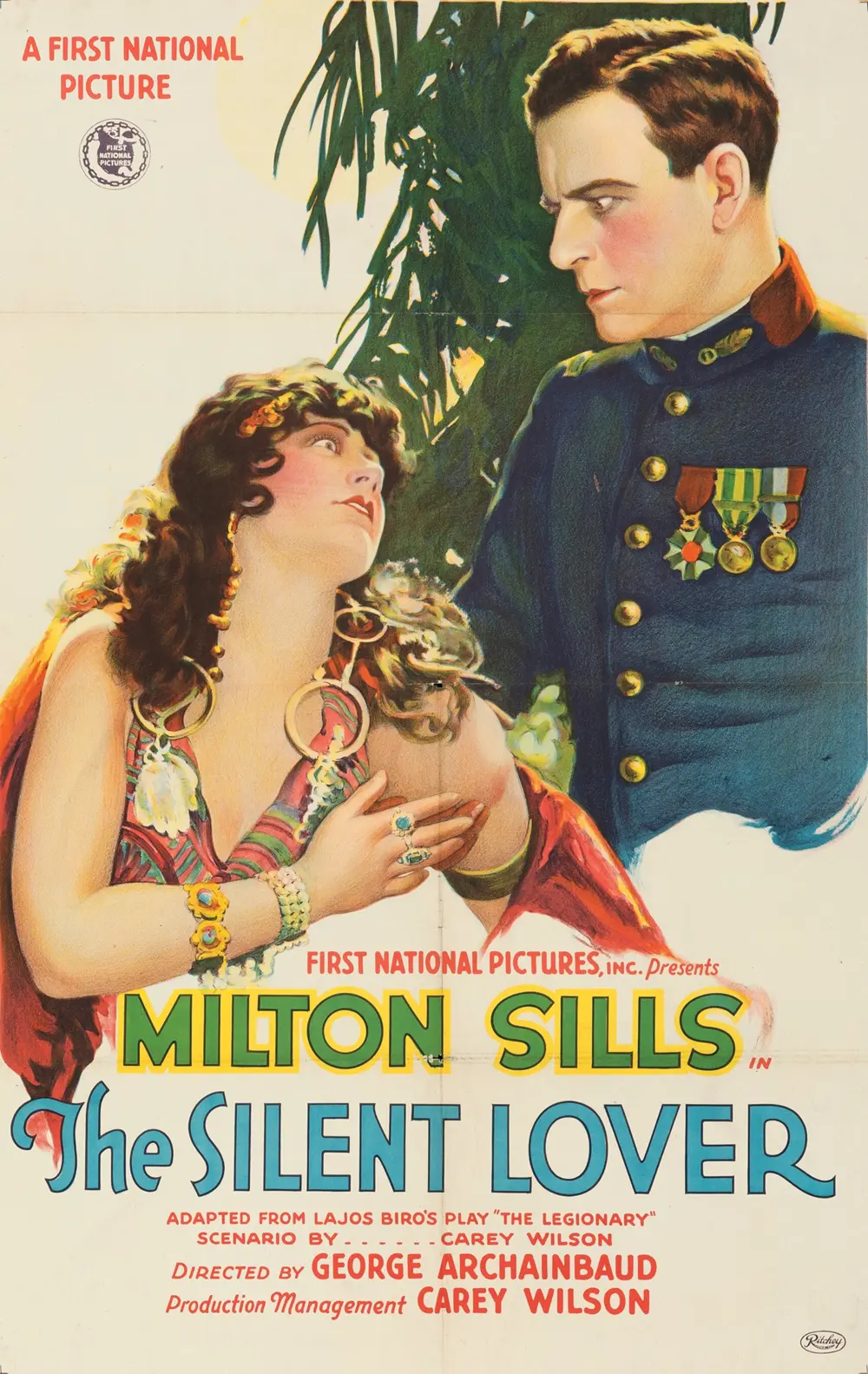
To truly appreciate the levity of 'Pretty Plungers,' one must contrast it with the heavier cinematic offerings of the time. While Marooned Hearts explores the isolation of the human condition, Goodwins' film suggests that even in our most isolated moments of failure, there is a communal hilarity. The film shares a certain kinetic DNA with The High Horse, particularly in its depiction of bruised egos and the pursuit of status. However, 'Pretty Plungers' distinguishes itself through its hydro-dynamic setting, which offers a unique set of physical challenges that terrestrial comedies simply cannot replicate.
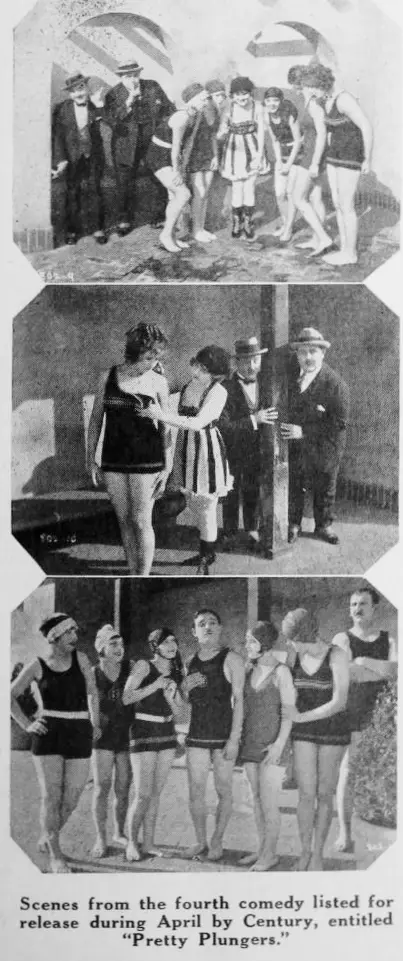
The cinematography, though limited by the technology of the 1920s, captures the shimmering surface of the water with a clarity that highlights the contrast between the pristine environment and the messy human interactions occurring within it. There is a sequence involving a multi-tiered diving board that functions as a vertical map of the film’s hierarchy: the higher the suitor climbs, the further and more ignominiously they fall. It is a perfect visual distillation of the 'up or down' struggle seen in films like Up or Down?.
Bartine Burkett is the unsung hero of this production. In many silent comedies, the female lead is reduced to a static prize, but Burkett’s Bartine is an active participant in the chaos. She is the 'merry' in the chase, her expressions flickering between amusement and feigned innocence. Her performance ensures that the film never feels like a mean-spirited bullying of the protagonists, but rather a consensual game of romantic tag. Her presence provides a necessary lightness that balances the aggressive physicality of Big Bill and the clumsy desperation of Al and Hilliard.
In the broader context of silent cinema, 'Pretty Plungers' might be seen as a minor work, yet it contains the DNA of the great comedies that would follow. The influence of the 'Follies' aesthetic—emphasizing beauty, synchronicity, and costume—is evident in the staging of the Century Follies Girls, who act as a rhythmic chorus to the main action. This blend of 'high' stage spectacle and 'low' slapstick humor is what makes the era so fascinating to modern scholars.
Leslie Goodwins’ direction is remarkably modern in its pacing. He avoids the static, stage-bound feel of earlier silent shorts, opting instead for a dynamic camera that follows the action into the very splashing heart of the pool. The editing, likely handled with a tactile sense of timing, emphasizes the 'reaction' shot—a crucial component of silent comedy that allows the audience to connect with the characters' internal frustrations. This is a far cry from the more experimental, almost avant-garde approach found in international works like Kärlek och hypnotism or the gritty realism of Die Jagd nach dem Tode.
Instead, 'Pretty Plungers' embraces a populist aesthetic that values immediate emotional impact over intellectual distance. It is a film designed to be 'felt'—the cold shock of the water, the sting of rejection, the adrenaline of the chase. The writing by Noel M. Smith ensures that the stakes, while seemingly trivial, feel monumental to the characters involved. This commitment to the 'now' is what gives the film its enduring charm.
As we look back at 'Pretty Plungers,' we see more than just a relic of a bygone era. We see a masterclass in visual communication. It reminds us that cinema, at its most fundamental level, is about the movement of bodies in space. Whether it’s the pursuit of a lover or the evasion of a rival, these themes are universal and timeless. The film’s ability to evoke laughter through the simple juxtaposition of a small man, a large man, and a swimming pool is a testament to the purity of its comedic vision.
While it may lack the epic scale of The Eleventh Hour or the soul-searching depth of Pieces of Silver: A Story of Hearts and Souls, 'Pretty Plungers' succeeds because it knows exactly what it is: a vibrant, irreverent, and technically proficient slice of life. It invites us to dive in, the water’s fine, and the comedy is timeless. In the end, Al and Hilliard may not win the girl, but they win our enduring sympathy, proving that in the world of silent comedy, the chase is always more important than the catch.
Final Grade: A sparkling example of aquatic slapstick that remains as refreshing as a dip in a 1920s lido. A must-watch for aficionados of the Century Follies era and anyone who appreciates the art of the well-timed splash.
IMDb —
1923
Community
Log in to comment.