DbcultAccessing Vault...
Cult Review
Senior Film Conservator
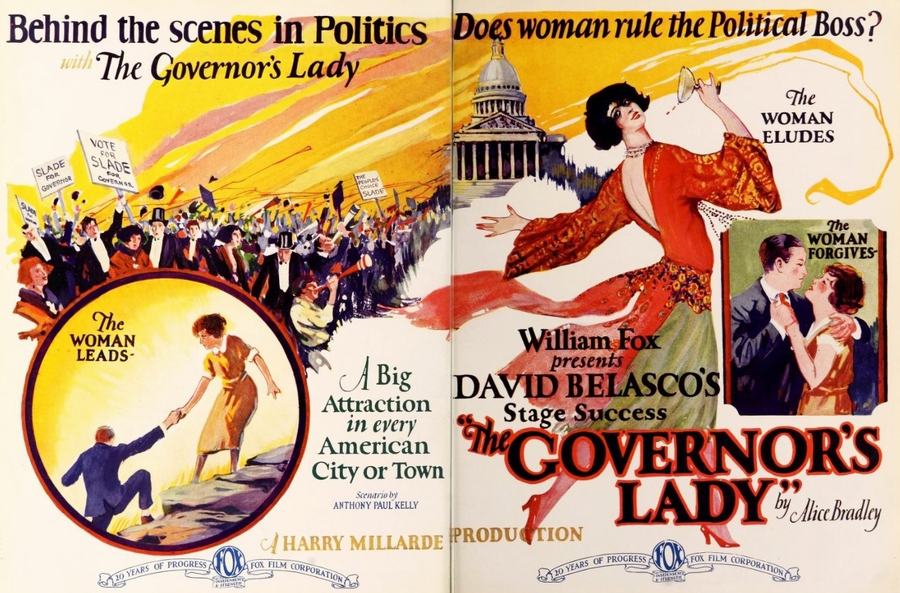
Robert T. Haines inhabits the role of Daniel Slade with a gravitas that feels almost prophetic, his eyes conveying the weight of a man who has mined both coal and capital. The film opens with a stark tableau of the Appalachian pits, the darkness of the earth juxtaposed against the bright future promised by the flickering lanterns of progress. This visual metaphor, rendered in stark chiaroscuro, sets the tone for a narrative that oscillates between the grit of labor and the glitter of political ambition.
Slade’s transformation from miner to mogul is not merely a plot device; it is an exploration of the American Dream’s double‑edged sword. The screenplay, penned by Alice Bradley and Anthony Paul Kelly, treats his ascent with a measured reverence, allowing the audience to feel the intoxicating rush of success while also sensing the corrosive undercurrents that accompany it. The film’s pacing, deliberately unhurried, mirrors the slow, deliberate accumulation of wealth—each investment a brick in the edifice of his eventual governorship.
Jane Grey’s portrayal of Mary is a study in contrast. She is at once earthy and dignified, her demeanor a reminder of the life Slade has left behind. Her awkwardness in high‑society gatherings—spilling tea, mispronouncing aristocratic names—serves as a narrative catalyst, exposing the fragility of Slade’s newly forged public persona. Grey’s performance is punctuated by subtle gestures: a lingering glance at a cracked porcelain cup, a hesitant smile that betrays both embarrassment and defiant authenticity.
Enter Katherine Strickland, embodied by Anna Luther, whose poise is the antithesis of Mary’s rustic charm. As the daughter of a powerful senator, Katherine wields social capital with the same deftness Slade uses his financial acumen. Her entrance is accompanied by a sweeping orchestral cue—a rarity in silent cinema—signaling the seductive power of political alliances. The chemistry between Luther and Haines crackles with a tension that feels less like romance and more like a strategic partnership, underscoring the transactional nature of their liaison.
The film’s structure adheres to a classic three‑act paradigm, yet it subverts expectations through its treatment of class mobility. Unlike contemporaneous melodramas such as Dodge Your Debts, which glorify upward mobility without scrutinizing its personal cost, The Governor's Lady interrogates the emotional toll exacted by ambition. The juxtaposition of Slade’s public triumphs with his private disarray creates a compelling dialectic between duty and desire.
Cinematographer Leslie Austin employs a chiaroscuro palette that accentuates the film’s moral ambiguities. The governor’s office is bathed in a cool sea‑blue wash (#0E7490), evoking a sense of institutional coldness, while domestic scenes are suffused with a warm, oppressive amber (#C2410C) that mirrors Mary’s lingering presence. The absence of synchronized sound is compensated by a meticulously crafted intertitle design—each title framed in yellow (#EAB308) against a black backdrop, echoing the film’s thematic dichotomies.
Frazer Coulter, as the scheming Senator Strickland, delivers a performance that oscillates between paternal concern and Machiavellian calculation. His interactions with Haines are layered, suggesting a mentorship that is as much about grooming a political heir as it is about consolidating power. Meanwhile, Leslie Austin’s supporting role as Slade’s confidant provides a grounding voice of reason, often delivering the film’s most poignant intertitles about integrity and the perils of compromise.
When placed alongside The Magnificent Brute, which glorifies muscular heroism, The Governor's Lady opts for a more cerebral conflict. Its focus on political maneuvering and marital fidelity offers a nuanced counterpoint to the era’s prevalent action‑driven narratives. The film also anticipates later explorations of political drama, foreshadowing the thematic concerns of 1930s talkies like Mr. Smith Goes to Washington.
Production design merits particular commendation. The governor’s mansion is rendered with an opulent attention to detail—marble columns, gilded banisters, and expansive windows that frame a cityscape rendered in miniature. In stark contrast, the miner’s cottage is constructed with weathered timber and sparse furnishings, reinforcing the visual dichotomy between Slade’s origins and his aspirations.
Mary’s character arc, while seemingly secondary, is imbued with a quiet agency. Her eventual acceptance of Slade’s return is not a passive capitulation but an active reclamation of her place within the marriage. This nuanced portrayal aligns the film with early feminist narratives, predating the more overtly progressive works of the late 1920s.
Though largely forgotten in mainstream retrospectives, The Governor's Lady offers a prescient commentary on the intersection of personal morality and public service—a discourse that resonates amid today’s political climate. Its exploration of the cost of social mobility, the fragility of identity, and the enduring power of authentic love renders it a valuable artifact for scholars and cinephiles alike.
In sum, the film stands as a masterclass in silent storytelling, where visual composition, intertitle poetry, and nuanced performances coalesce into a compelling portrait of ambition’s double‑edged sword. For those seeking a film that marries historical context with timeless human dilemmas, The Governor's Lady is an indispensable watch.
IMDb —
1930
Community
Log in to comment.