DbcultAccessing Vault...
6.6/10
Senior Film Conservator
A definitive 6.6/10 rating for a film that redefined the boundaries of cult cinema. Prima Vera remains a cornerstone of transgressive art.
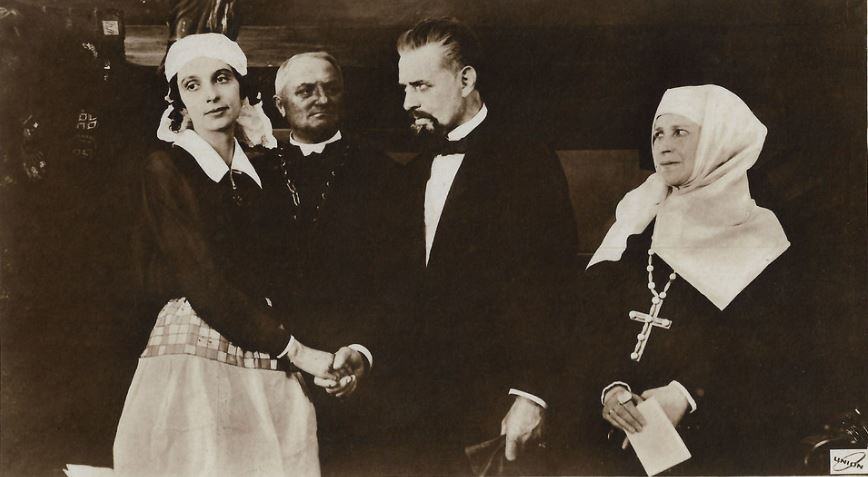
Within the hallowed halls of early 20th-century cinema, few adaptations carry the weight of melancholy as effectively as Prima Vera (1917). This German production, a sophisticated reimagining of the 'Lady of the Camellias' narrative, serves as a testament to the era's ability to translate high literature into a visual dialect that remains potent over a century later. The film does not merely recount a story; it captures a certain zeitgeist of romantic fatalism that was prevalent during the twilight of the European empires. Unlike the more overtly spiritualized themes found in Thais (1917), Prima Vera leans into the secular tragedy of social stratification and the biological fragility of its protagonist.
Erna Morena, an actress of profound emotional range, inhabits the role of the tragic heroine with a grace that avoids the histrionics often associated with the silent era. Her performance is a masterclass in the economy of gesture. Every tilt of the head, every lingering gaze toward a wilting flower, communicates a depth of interiority that dialogue would only serve to dilute. In an era where cinema was still grappling with its identity as an independent art form, Morena’s presence anchored the film in a reality that felt both mythic and painfully human.
The narrative architecture of Prima Vera is built upon the tension between the private heart and the public facade. Harry Liedtke, playing the devoted suitor, provides a robust counterpoint to Morena’s fragility. His performance captures the reckless idealism of youth, a theme also explored in Richard the Brazen, though here the stakes are far more morbid. The chemistry between the leads is palpable, even through the flickering grain of a 1917 master, suggesting a modern sensibility regarding screen intimacy that was quite advanced for its time.
"The film functions as a mirror to the societal hypocrisies of the Belle Époque, where love is a currency and reputation is the only gold standard that matters."
Wilhelm Diegelmann’s portrayal of the elder Duval introduces the cold, calculating logic of the patriarchy. He represents the wall against which the waves of passion must break. This dynamic of the 'family honor' vs. 'individual happiness' is a recurring motif in the cinema of this period, seen through different lenses in works like The Family Cupboard or the moralistic overtones of A Modern Magdalen. However, Prima Vera distinguishes itself by refusing to fully vilify the antagonist, instead framing him as a victim of the very social structures he seeks to uphold.
The cinematography in Prima Vera is nothing short of revolutionary for 1917. The use of shadows and light—what would later be codified as chiaroscuro in the German Expressionist movement—is utilized here to externalize the protagonist’s internal decay. The opulent sets, dripping with the excess of the Parisian demimonde, feel increasingly claustrophobic as the film progresses. This sense of impending doom is comparable to the maritime tension found in The Port of Doom, though the 'shipwreck' here is one of the soul rather than a vessel.
Hans Brennert’s screenplay (based on Dumas) manages to condense a sprawling novel into a series of visual vignettes that maintain the emotional momentum. The pacing is deliberate, allowing the audience to sit with the characters in their moments of quiet desperation. This is a far cry from the more action-oriented narratives of the time, such as Ultus, the Man from the Dead. Prima Vera is a film of pauses and sighs, a precursor to the slow cinema movements of the later century.
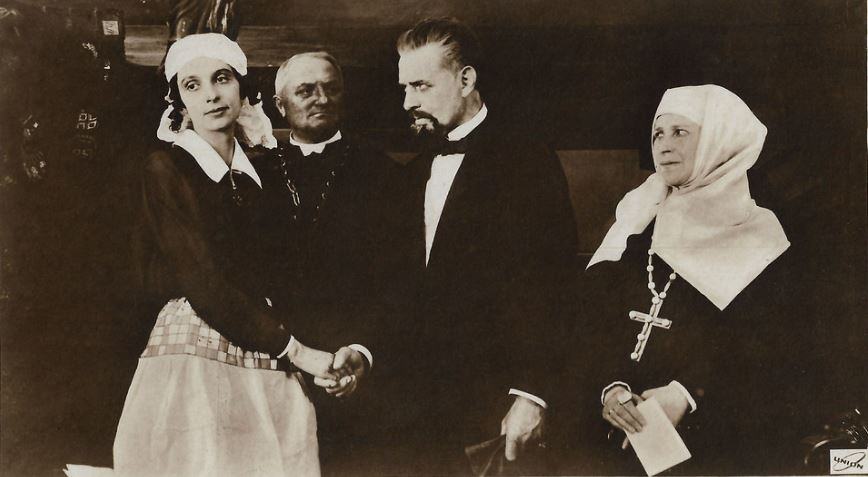
The 'fallen woman' trope is a cornerstone of silent cinema, often used to moralize or to titillate. Yet, Prima Vera treats its subject with a rare dignity. It shares a certain DNA with Syndens datter and Each Pearl a Tear, where the female protagonist's suffering is linked to her economic and social dependency. In Prima Vera, the camellia is not just a flower but a symbol of the protagonist’s own transience—beautiful, expensive, and destined to wither.
The film also touches upon the themes of greed and class struggle, though more subtly than in The Curse of Greed or The Miner's Daughter. Here, the 'greed' is the social capital of a respectable name, which the heroine must sacrifice her life to protect. The tragedy is that her redemption is only possible through her absence; she can only be 'pure' once she is no longer a threat to the established order.
Released in the midst of the First World War, Prima Vera offered audiences an escape into a world of romanticized suffering, a stark contrast to the industrial-scale slaughter occurring on the fronts. It represents the height of the 'Autorenfilm' (Author's film) movement in Germany, where the focus shifted toward literary prestige and artistic merit. When compared to other contemporary works like The Reclamation or Bettina Loved a Soldier, Prima Vera stands out for its stylistic cohesion and its refusal to provide a simplistic happy ending.
Even the more whimsical films of the era, such as Little Mary Sunshine, seem like they belong to a different universe entirely. Prima Vera is steeped in the European tradition of the 'Tragic Muse.' It also avoids the experimental oddities of Uma Transformista Original, opting instead for a classical, almost operatic grandeur. The silence of the film is its greatest asset; it creates a vacuum that the viewer fills with their own empathy, much like the eerie stillness in Silence of the Dead.
To watch Prima Vera today is to engage with a ghost. It is a flickering remnant of a world that was already disappearing when the film was made. The collaboration between Morena, Liedtke, and the writers Brennert and Dumas fils creates a synergy that transcends the limitations of early 20th-century technology. The film remains a vital piece of cinematic history, not just as an adaptation, but as a standalone work of art that captures the agonizing beauty of a life lived in the shadow of its own end.
Ultimately, Prima Vera is a study in the persistence of the human spirit amidst the cruelty of convention. It reminds us that while the fashions and the film stock may age, the fundamental ache of unfulfilled love and the nobility of sacrifice are timeless. It is a somber, beautiful, and essential viewing for anyone who wishes to understand the roots of cinematic melodrama and the enduring power of the silent image.
IMDb —
1921
Community
Log in to comment.