DbcultAccessing Vault...
Cult Review
Senior Film Conservator
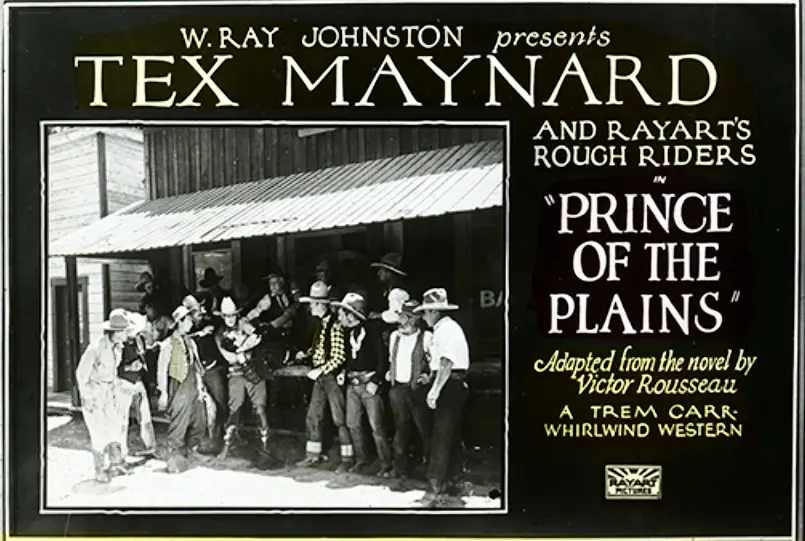
Is Prince of the Plains a lost masterpiece of the Western genre? Short answer: No, it is a functional, athletic B-movie that serves as a vehicle for its star's physical prowess. This film is for the Saturday Matinee completionist and those who appreciate the physical grace of Kermit Maynard; it is absolutely not for anyone seeking the psychological depth of a modern revisionist Western.
1) This film works because Kermit Maynard’s genuine athleticism provides a level of realism in the action sequences that his more famous brother, Ken, often lacked. 2) This film fails because the narrative structure is paper-thin, relying on recycled tropes that were already tired by 1936. 3) You should watch it if you want to see the DNA of the modern stunt-man-as-actor archetype in its earliest form.
In the 1930s, the Western was the bread and butter of Poverty Row studios like Ambassador Pictures. While high-budget efforts like The Untamed were beginning to explore more complex character arcs, Prince of the Plains remains firmly rooted in the tradition of the 'action-first' programmer. Kermit Maynard was a world-champion rodeo performer, and it shows in every frame. Unlike many actors who needed a double for even a simple trot, Maynard moves with a fluid, terrifying speed.
There is a specific moment early in the second act where Maynard dismounts a moving horse to tackle a villain. It isn't just a stunt; it is a display of kinetic energy that modern CGI cannot replicate. It works. But it’s flawed. The camera work, restricted by a microscopic budget, often fails to capture the full scope of these maneuvers. Yet, Maynard’s presence keeps the screen alive even when the dialogue feels like it was written on a napkin during a lunch break.
Writers Victor Rousseau and Arthur Hoerl were veterans of the quick-turnaround industry. Their script for Prince of the Plains doesn't aim for the stars; it aims for the 56-minute mark. The plot, involving a murdered father and a stolen ranch, is the 'Hello World' of Western screenwriting. It is predictable, yes, but there is a certain comfort in its rigidity. When compared to the more experimental narrative of The Wild Olive, this film feels remarkably straightforward.
The dialogue is punchy, if a bit utilitarian. Walter Shumway, playing the villainous lead, delivers his lines with a sneer that belongs in a silent-era melodrama. It is a performance of broad strokes. For instance, when the conspiracy is finally revealed in the sheriff's office, the exposition is dumped with the subtlety of a landslide. It’s not elegant, but in the context of 1936, it got the job done for an audience that just wanted to see a horse race.
The cinematography in Prince of the Plains is a masterclass in 'making do.' You can see the edges of the frame where the production ran out of money. The lighting is often flat, especially in the interior ranch scenes, which lack the atmospheric depth seen in films like The Silent Lie. However, the outdoor photography is surprisingly crisp. The choice of locations provides a natural grandeur that the script lacks.
The pacing is relentless. At under an hour, there is no room for filler. Every scene either leads to a fistfight or a chase. This is a double-edged sword. While it prevents the audience from getting bored, it also prevents us from caring about Betty Caldwell’s character. She is there to be rescued and to provide a reason for the protagonist to stay in town. It’s a trope that was already aging poorly, even when compared to the slightly more nuanced female roles in The Way of a Girl.
Yes, Prince of the Plains is worth watching if you are a student of film history or a Western enthusiast. It represents a specific moment in cinema where the 'B-movie' was becoming a sophisticated machine of efficiency. It is a lean, mean, action-oriented piece of entertainment that doesn't overstay its welcome. If you are looking for a deep emotional journey, look elsewhere. If you want to see a man jump off a cliff onto a horse, you’ve come to the right place.
Pros:
Cons:
Prince of the Plains is a blue-collar movie. It doesn't pretend to be art. It is a workhorse of a film, designed to entertain a 1936 audience for fifty minutes before the main feature. While it lacks the prestige of The Merchant of Venice, it possesses a raw, unpretentious energy. Kermit Maynard was a star of the saddle, and this film is his pulpit. It’s clunky. It’s dusty. But in its best moments, it captures the mythic speed of the American West better than many of its contemporaries. It isn't essential viewing, but for those who love the genre, it's a fascinating artifact of a bygone era of filmmaking.
"A film that thrives on the dust of the trail and the speed of the chase, proving that sometimes, a good horse is more important than a good script."
IMDb 6.5
1930
Community
Log in to comment.