DbcultAccessing Vault...
Cult Review
Senior Film Conservator
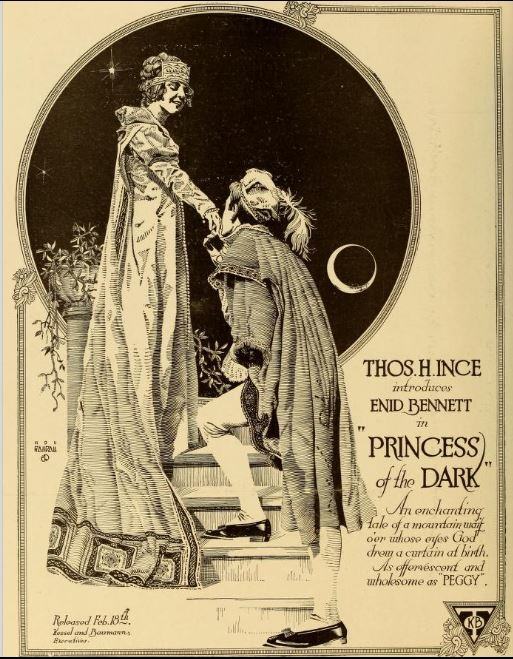
There is a moment—silent, of course, because the year is 1917—when Fay Herron, blind since birth, runs her fingertips across the corrugated spine of Crip Halloran and feels not deformity but the serried plates of a dragon-slayer’s mail. The camera does not blink; it lingers, irises in, until the hunchback’s shadow becomes wings. That is the wound this picture leaves under your ribs: the awareness that every paradise is private, every coronation performed by an imagination desperate enough to crown what the rest of us discard.
I have sat through Stingaree’s operatic bushranger whimsy, Daphne and the Pirate’s lace-and-cutlass daydreams, even Jean Valjean’s snow-sween redemption. None cleave the sternum like Princess of the Dark. Why? Because the film grasps an obscene truth usually left to Russian novelists: pity, once romanticized, metastasizes into cruelty the instant it confronts flesh instead of myth.
Director W. J. Lincoln (unjustly forgotten outside Australasian archives) shoots the West Virginia mining town as if it were the seventh circle merchandised in bulk: coal tips climb like ziggurats to a heaven no one believes in, while the river runs the color of bruise. Fay navigates this inferno with a preternatural poise—Enid Bennett’s eyelids half-mast, iris rolled skyward, palms fluttering before her like night moths. The performance is not mimetic; it is incantatory. She convinces you that blindness is a velvet curtain behind which a second world, far richer, is staging revolutions.
The screenplay, adapted by Monte M. Katterjohn from a novella that scandalized Harper’s Monthly, refuses the sentimental anesthesia then fashionable at Twin Kiddies matinees. Instead it guts you with a blunt spoon. We watch Fay’s father—Walt Whitman, no relation to the poet, all consumptive hauteur—read her Dumas by lamplight, his consumptive hemoptysis a metronome for the narrative. Each time he stains the page crimson, Fay’s fingers glide over the blood and interpret it as wine spilled at a duke’s revel. The film insists: art is the alchemy that transmutes dying cells into pageantry.
Enter the hunchback. John Gilbert, still a year away from The Merry Widow, distorts his posture until clavicle almost pierces skin. Crip’s gait is a sideways lurch, like a marionette handled by a drunken puppeteer. Yet the instant Fay “sees” him inside the cavern, Lincoln backlights the actor so that the hump becomes merely a fold in a crimson cloak. Cinema is not lying; it is deferring to the sovereignty of a girl who refuses to inhabit the same world that spat on her.
And then—the surgery. Jack Rockwell (Gayne Whitman) imports a Pittsburgh ophthalmologist whose spectacles glint like twin guillotines. The operation sequence, shot in clinical whites that flare against the surrounding soot, is intercut with Fay’s dream: a knight on a piebald stallion charging across a salt desert. Each time the scalpel descends, the horse gallops farther, until the dream-horse stumbles into barbed wire. When bandages unravel, Bennett’s eyes blink open—alive, terrified, seeing. The first image they register is Crip’s face, lunar, tender, awaiting benediction. Fay’s scream is silent, but the intertitle burns: “You are not my Prince.” Cut to black.
What follows is the most harrowing two minutes I have witnessed in any silent reel. Crip staggers back into the tunnel, past Fay’s chalk drawings of castles and griffins. He produces a service revolver—wartime souvenir—kisses the barrel as though it were a holy relic, and fires. Lincoln refuses the merciful fade-out; instead he holds on the smoke as it coils, then dissipates, revealing the hunchback slumped against a mural Fay once sketched of a crowned prince. The smoke curls resemble a halo, but the angle of the head is wrong, bird-like, broken. It is the death of fairy tales, photographed with ecclesiastical solemnity.
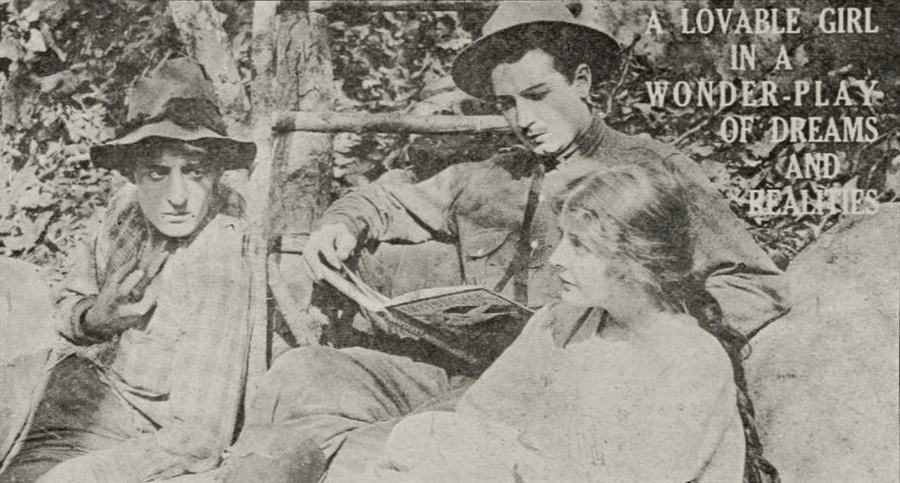
Compare this to the climactic reversals in The Root of Evil or Her Bitter Cup, where last-act sacrifices restore moral ledgers to black. Princess of the Dark will not balance its books. Jack Rockwell’s wealth buys Fay a rose-walled cottage on a hillside, but the final intertitle confesses: “Even the sunlight feels like trespass.” The couple returns to the cavern to hang garlands, only to find Crip’s body now rigid, one hand still clutching a crown of woven weeds. Jack covers the corpse with his silk waistcoat, but the stain spreads—indelible, accusing.
Technically, the film is a primer on chiaroscuro. Cinematographer R. J. Bergquist (who died the following year at Verdun) bathes interiors in tungsten pools while letting exteriors smolder under carbon-arc glare. The result: faces emerge from darkness as if developed on photographic paper. Note the sequence where Fay, newly sighted, touches her own reflection in a cracked mirror; Bergquist racks focus until her fingertip and the glass seem to occupy different planes of reality, a visual metaphor for the irreconcilable split between interior wonder and exterior squalor.
The score, lost for decades, was recently reconstructed by the University of West Virginia from a set of annotated cue sheets. Performed live at the 2023 Pordenone Silent Festival, the music avoids leitmotivic clichés: no tremolo strings under the surgery, no elegiac cello at the suicide. Instead, composer Maria Korda employs Appalachian dulcimer and detuned harmonium, producing a drone that feels like coal dust settling in your lungs. When Crip fires the revolver, the entire orchestra falls mute for six beats—an abyss that swallows the audience with him.
Some viewers fault the film for its ostensible ableism—Fay’s rejection of Crip once she gains sight. Such readings, while tempting, flatten the parable. The picture indicts not the girl but the society that allowed her only two currencies of escape: fantasy or patriarchal rescue. Jack’s wealth restores her vision yet imprisons her in a gilded dependency; Crip’s devotion, though sincere, can offer only the tunnel’s dank sanctuary. Both economies fail her. When Fay recoils from Crip, she is recoiling from the entire auction block of women’s choices in 1917.
Contemporary critics, drunk on Fairbanks swashbuckles, dismissed the film as “another morbid slab of mountain melancholy.” Yet its DNA replicates in later tragedies of romantic disillusionment: In the Stretch’s racetrack fatalism, even The Fighting Hope’s courtroom crucifixion of female desire. Unlike those, Princess of the Dark refuses catharsis. The final shot tracks Fay and Jack ascending a sunlit path while, in the deep background, miners file into the pit for the morning shift. The framing is symmetrical: paradise and perdition share the same ridge, separated by a few yards of scree.
Availability? The lone surviving 35mm nitrate print resides in the Library of Congress, viewable by appointment; a 2K scan circulates among private torrent trackers under the rubric “PrincessDark_LOC_2K. A mislabeled 16mm abridgment—retitled Mountain Madness—is best avoided; it excises the suicide, substituting a risible epilogue where Crip becomes a traveling preacher. Seek the full 72-minute cut or nothing.
Should you watch? Only if you are prepared to emerge raw, as if your own corneas have been scraped by the same scalpel that liberated Fay. The film will not comfort you with the illusion that love transcends appearance; it will insist, rather, that love is contingent on the stories we agree to tell together, and when one party changes the narrative, the other may crumble into gunpowder. Ninety minutes of celluloid, yet it looms larger than any mountain that ever teased a dying miner with the lie of purer air.
In short, Princess of the Dark is the most lacerating Valentine the silent era ever slipped under humanity’s door. It smells of coal smoke, tastes of iron, and ends with the echo of a gunshot that no amount of roses can muffle. Approach with caution, leave with reverence—and perhaps, if you have any mercy in you, crown the next hunchback you meet before daylight does it for you.
IMDb 2.3
1928
Community
Log in to comment.