DbcultAccessing Vault...
Cult Review
Senior Film Conservator
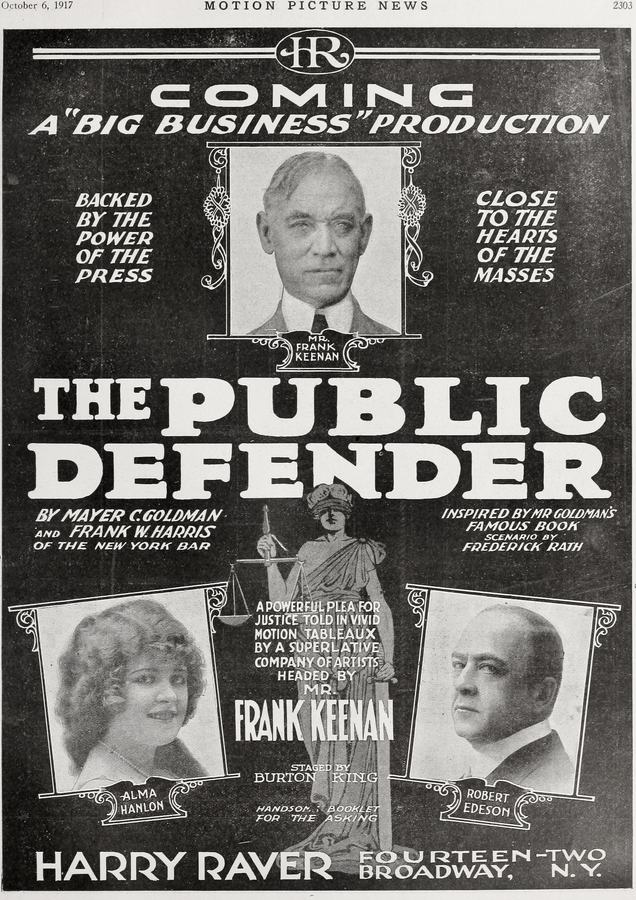
Stepping back into the nascent days of cinematic storytelling, one encounters "Public Defender" (1917), a film that, despite its vintage, resonates with an enduring power, laying bare the foundational anxieties of justice, class, and the precariousness of truth within the legal system. This silent era drama, a compelling artifact from a bygone epoch, transcends mere historical curiosity, offering a poignant reflection on themes that remain acutely relevant even a century later. It's a testament to the potency of early narrative filmmaking, demonstrating how even without spoken dialogue, a story can grip, provoke, and illuminate the human condition with remarkable clarity and emotional depth.
At its core, "Public Defender" unfurls a narrative steeped in the chilling reality of a wrongful accusation, a scenario that, regrettably, continues to plague legal systems worldwide. The film introduces us to Leslie Morrison, a bank president whose moral compass has long since shattered, leading him down the treacherous path of embezzlement. His desperate attempt to mask his financial malfeasance by meticulously framing an innocent subordinate, David Moulton, is a masterclass in calculated villainy. Morrison’s cunning manipulation of ledgers, designed to paint Moulton as the architect of the bank's woes, establishes a palpable sense of dread from the outset. This initial act of betrayal sets the stage for a drama where the scales of justice are not merely imbalanced but actively tilted against the vulnerable.
The narrative, however, takes an unexpected, almost gothic turn with Morrison's sudden, fatal plunge into an elevator shaft. This twist, while removing the primary antagonist, paradoxically complicates Moulton's predicament. His presence at the scene, coupled with the doctored evidence, transforms him from a mere scapegoat into the prime suspect in a murder he did not commit. The film masterfully exploits this dramatic irony, plunging Moulton into a Kafkaesque nightmare where circumstantial evidence and the absence of a robust defense conspire to seal his fate. The ensuing trial, presided over by District Attorney Robert Murdock, becomes a stark portrayal of a system where truth can be obscured by perception, and where the lack of financial resources can dictate one's destiny. Moulton, unable to afford a competent legal advocate, is swiftly convicted, his life summarily condemned to the electric chair.
It is at this nadir of despair that the film introduces its moral and narrative fulcrum: Mary Reed, a stenographer whose unwavering devotion to Moulton propels her into a desperate quest for justice. Her appeal to Arthur Nelson, the freshly appointed public defender, marks a pivotal moment, not just for the protagonist, but for the burgeoning concept of state-provided legal aid itself. Nelson, embodying the nascent ideals of equitable legal representation, embarks on a meticulous investigation, sifting through the layers of deceit and misfortune. The tension builds to an almost unbearable crescendo as Nelson's discoveries unfold on the very eve of Moulton's scheduled execution. The eleventh-hour rescue, a cinematic trope that remains potent, delivers a powerful emotional catharsis, culminating in a retrial where Nelson's tenacious advocacy ultimately unveils the truth, securing Moulton's exoneration. The film, in this arc, becomes more than a simple crime drama; it transforms into a powerful argument for systemic legal reform and the inherent dignity of every individual's right to a fair defense.
The ensemble of "Public Defender" serves to populate this moral landscape with distinct archetypes, each contributing to the film's thematic resonance. David Moulton, portrayed with a tragic vulnerability by Harry Kingsley, is the quintessential innocent man caught in the gears of an indifferent system. His quiet dignity in the face of overwhelming odds elicits profound empathy from the audience. He is not a man of grand speeches or dramatic gestures, but rather a symbol of the common person's susceptibility to injustice when power and circumstance align against them. Kingsley's performance, relying heavily on pantomime and facial expressions characteristic of the silent era, effectively conveys Moulton's despair, hope, and ultimate relief without uttering a single word.
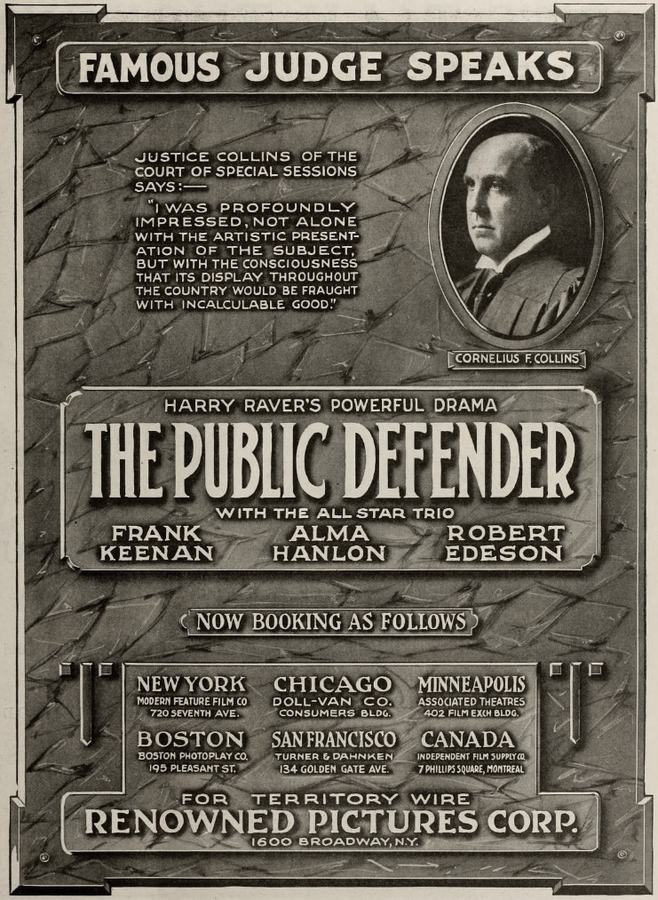
Mary Reed, the steadfast stenographer, is arguably the film's emotional heart. Her unwavering faith in Moulton, her tenacious pursuit of help, and her refusal to succumb to despair elevate her beyond a mere romantic interest. She is an agent of change, a testament to the power of individual conviction in the face of systemic inertia. Her character provides the crucial impetus for the plot's resolution, serving as a powerful counterpoint to the bureaucratic indifference that initially condemns Moulton. Alma Hanlon, likely portraying Mary Reed, would have imbued her with the kind of earnest, expressive emoting that defined leading ladies of the period.
Arthur Nelson, the titular public defender, emerges as the film's moral hero. His character embodies the progressive ideals of early 20th-century legal reform. He is not motivated by personal gain or glory, but by a profound commitment to justice and the principle that every individual, regardless of their financial standing, deserves a fair defense. Nelson's methodical investigation and his unwavering resolve in the face of skepticism make him a compelling figure, representing the nascent hope for a more equitable legal system. The film, through Nelson, champions the idea that the state has a responsibility to protect its citizens from wrongful conviction, a revolutionary concept for its time.
The antagonists, Leslie Morrison and District Attorney Robert Murdock, are drawn with broad strokes, yet serve their purpose effectively. Morrison, the corrupt bank president, is the embodiment of unchecked greed and moral decay. His casual cruelty in framing Moulton underscores the film's critique of wealth and power. Murdock, while not inherently evil, represents the rigidity and potential for error within the prosecutorial system. His conviction of Moulton, though seemingly based on evidence, highlights the dangers of tunnel vision and the absence of a vigorous defense to challenge assumptions. John St. Polis and Robert Edeson, among others listed in the cast, would have contributed to these characterizations, lending gravitas or villainy as required.
"Public Defender" is a thematic treasure trove, exploring multifaceted concepts that continue to fuel societal discourse. Foremost among these is the stark contrast between justice and injustice. The film meticulously illustrates how easily an innocent life can be shattered when the machinery of the law, designed to protect, instead becomes an instrument of oppression due to systemic flaws or individual malfeasance. Moulton's initial conviction is a chilling reminder that truth alone is often insufficient; it requires advocacy, resources, and an unbiased process to prevail.
Closely intertwined with this is the theme of class disparity within the legal system. Moulton's inability to afford a "competent defense" is explicitly stated as a reason for his initial conviction. This highlights a critical social commentary, suggesting that justice is not blind but often influenced by one's economic standing. The very existence of the "public defender" role, then, becomes a revolutionary concept within the narrative, positing that access to legal representation should be a right, not a privilege reserved for the wealthy. This progressive viewpoint, embedded within a 1917 film, speaks volumes about the early awareness of social inequalities and the burgeoning efforts to address them.
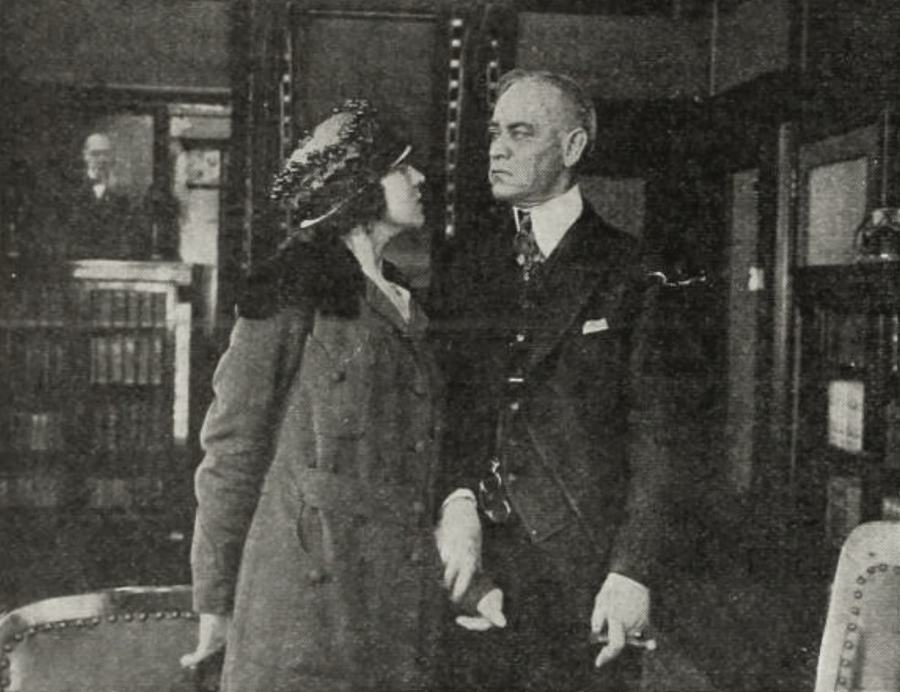
The precariousness of truth is another central theme. The film demonstrates how easily facts can be distorted, evidence manipulated, and perceptions swayed, leading to devastating consequences. Morrison's altered books and the circumstantial nature of his death create a web of deceit that nearly costs Moulton his life. Nelson's role, therefore, is not merely to defend, but to unearth and re-establish the objective truth, peeling back layers of fabrication and misinterpretation. This quest for truth, often a solitary and arduous journey, forms the narrative backbone of many compelling legal dramas.
Furthermore, "Public Defender" subtly explores the concept of heroism, not in the grand, swashbuckling sense, but in the quiet, diligent pursuit of justice. Mary Reed's unwavering loyalty and Nelson's methodical dedication are acts of heroism in their own right, demonstrating that courage often manifests as perseverance and moral fortitude. They represent the optimistic belief that individuals can, and must, challenge systemic injustices to uphold the integrity of society.
As a product of the silent era, "Public Defender" relies on a distinct cinematic language to convey its intricate plot and emotional depth. The absence of spoken dialogue necessitates a heightened reliance on visual storytelling: expressive acting, dramatic intertitles, and carefully composed cinematography. The actors, including Harry Kingsley and Alma Hanlon, would have utilized exaggerated facial expressions and body language to communicate internal states, a stylistic hallmark of the period. This form of performance, often perceived as melodramatic by modern audiences, was essential for conveying nuances without sound.
Intertitles, serving as both dialogue and narration, play a crucial role in advancing the plot and explaining complex legal procedures. They bridge the gaps in visual storytelling, providing essential context and character thoughts. The pacing of silent films often differed from contemporary cinema, with scenes sometimes holding longer to allow for emotional absorption or to convey information visually before an intertitle appeared. The film's ability to build suspense, particularly leading up to the execution, speaks volumes about the early filmmakers' understanding of dramatic timing and visual rhythm, even in the absence of a synchronized soundtrack. The use of close-ups to emphasize emotional reactions or crucial pieces of evidence would have been deployed strategically, drawing the audience into the characters' inner worlds and the intricacies of the legal investigation.
Considering the technical limitations of 1917, the film's production values would have focused on clear staging, effective lighting to create mood, and functional set design to establish the various locales—the bank, the courtroom, the prison cell. These elements, while perhaps rudimentary by today's standards, were instrumental in creating a believable world for the audience to immerse themselves in. The craft of Frank W. Harris, Mayer C. Goldman, and Fred Rath, as writers, would have been paramount in constructing a coherent and engaging narrative that could be effectively translated into visual terms. Their ability to weave a complex legal drama into the constraints of silent film is commendable.
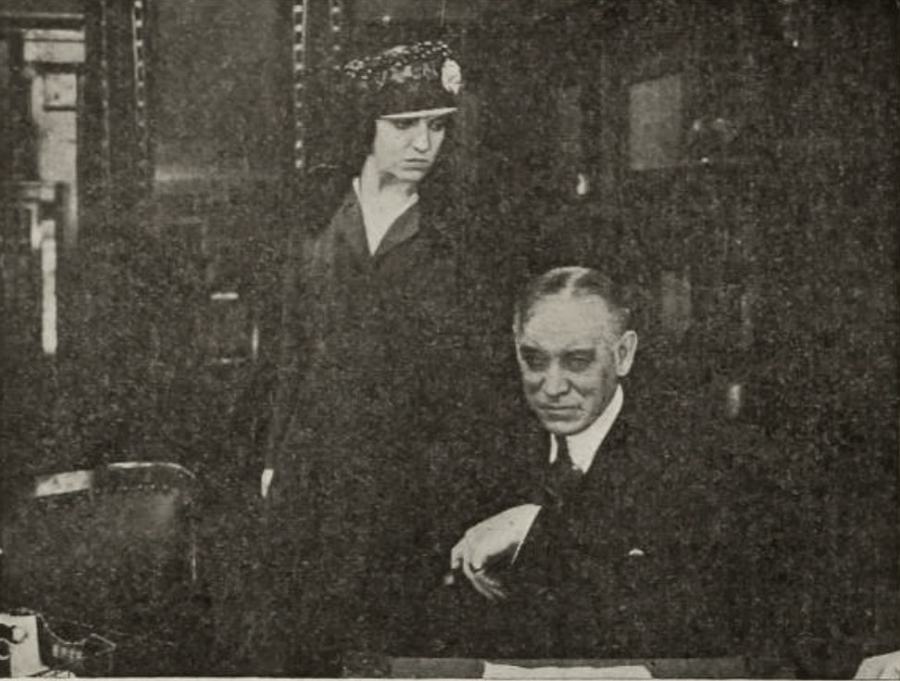
"Public Defender" arrived at a fascinating juncture in American history and cinematic development. The early 20th century was a period of significant social reform, with movements advocating for workers' rights, women's suffrage, and indeed, legal aid for the indigent. The establishment of public defender offices was a relatively new concept, and the film, therefore, served as both a reflection of these burgeoning progressive ideals and perhaps even a form of public education, highlighting the necessity and value of such institutions. It predates the more formalized legal dramas that would emerge in the sound era, yet it lays crucial groundwork for the genre, establishing tropes and narrative structures that would be refined over decades.
In terms of its cinematic lineage, "Public Defender" can be seen as an early progenitor of the courtroom drama and the "wrongfully accused" subgenre. While direct comparisons to other films from the provided list might be challenging given their diverse subjects, one can draw thematic parallels. For instance, the struggle against systemic injustice or personal vendetta seen in films like Vendetta (1914) or the personal sacrifice for a loved one in Her Silent Sacrifice resonate with Mary Reed's unwavering efforts. The narrative's focus on a public servant fighting for justice might also find a distant echo in the political undertones of The Reform Candidate, where individuals strive to uphold ideals against formidable opposition. Even films like Der Andere, exploring themes of identity and legal complications, hint at the nascent interest in the psychological and societal implications of legal proceedings.
The film's depiction of a man's life hanging by a thread, rescued at the eleventh hour, would become a staple of thrillers and dramas for decades to come. It taps into a primal fear of helplessness against an overwhelming system and the universal hope for a champion. This narrative formula, while perhaps less sophisticated than later iterations, was remarkably effective in generating suspense and emotional investment from its audience. It showcased the power of cinema not just to entertain, but to engage with serious social issues and advocate for change.
The enduring legacy of "Public Defender" lies not just in its historical significance as an early legal drama, but in its persistent relevance to contemporary discussions about justice, equity, and the role of legal institutions. While cinematic techniques have evolved dramatically since 1917, the core themes explored in this silent film remain as pertinent as ever. The specter of wrongful conviction, the challenges faced by the indigent in securing adequate legal representation, and the tireless work of public defenders continue to be subjects of critical importance and ongoing debate.
Modern audiences, accustomed to high-budget productions and sophisticated narrative complexities, might initially find the stylistic conventions of "Public Defender" a quaint curiosity. However, a deeper engagement reveals a surprisingly potent and emotionally resonant story. It reminds us that the fundamental human struggles—the fight for truth, the yearning for fairness, and the courage to stand against injustice—are timeless. The film serves as a valuable historical document, offering a glimpse into the social concerns and artistic expressions of its era, while simultaneously providing a mirror to our own persistent challenges. It invites viewers to reflect on how far legal systems have come, and perhaps more importantly, how far they still need to go to truly embody the ideals of justice for all.
In conclusion, "Public Defender" stands as a remarkably prescient and powerful piece of early cinema. Its narrative, though simple in its execution by today's standards, is rich in thematic depth and emotional impact. It champions the nascent concept of public defense, critiques social inequities, and ultimately celebrates the triumph of truth and perseverance. For enthusiasts of film history, legal dramas, or anyone interested in the evolution of social commentary through art, this film offers a compelling and insightful journey into the heart of an enduring human struggle. It is a cinematic reminder that even in the earliest days of the medium, film possessed the profound capacity to provoke thought, stir emotions, and advocate for a more just world.
IMDb 5.9
1932
Community
Log in to comment.