DbcultAccessing Vault...
Cult Review
Senior Film Conservator
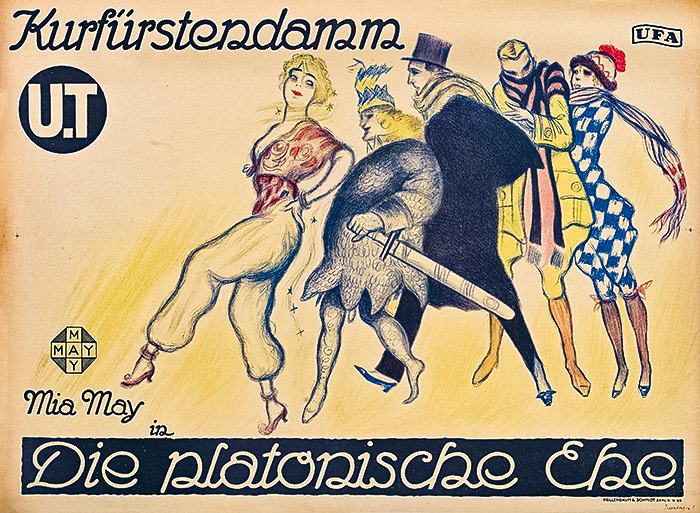
In the pantheon of early German cinema, few figures loom as large or as multifaceted as Joe May. While his later excursions into the 'Sittenfilm' and grand adventures often garner more academic scrutiny, Die platonische Ehe (1919) remains a remarkably nuanced exploration of the intersection between pecuniary necessity and the mercurial nature of human desire. This is not merely a tale of a 'marriage of convenience'; it is a sophisticated autopsy of the social masks we wear and the terrifying vulnerability required to remove them.
The film opens on a world where status is a hollow shell, sustained only by the fading echoes of ancestral glory. The nobleman at the center of this drama—played with a fascinatingly brittle elegance—is a man whose identity is entirely contingent upon a lifestyle he can no longer afford. His decision to marry for money is framed not as a moral failing, but as a survivalist reflex. In this regard, the film mirrors the thematic weight of A Modern Magdalen, where social survival often dictates the most intimate of choices.
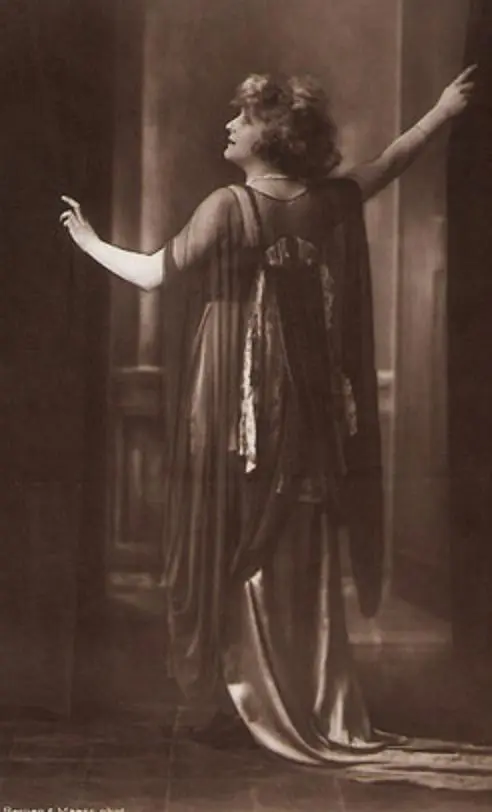
The 'ugly' bride, played by the luminous Mia May, is perhaps the film's most radical element. In the silent era, 'ugliness' was often conveyed through heavy-handed makeup or exaggerated features, yet here, it is treated more as a social perception—a lack of the sybaritic polish expected in the Count's inner circles. Mia May delivers a performance of incredible restraint, allowing her character's internal brilliance to slowly permeate the screen, making the Count’s eventual realization feel earned rather than forced. It is a far more sophisticated take on artifice than the literal transformations found in The Waxen Doll.
Joe May’s direction utilizes the physical space of the manor to emphasize the distance between the couple. The 'platonic' nature of the marriage is reflected in the wide shots and the cold, cavernous rooms that dwarf the protagonists. There is a palpable sense of isolation that recalls the investigative atmosphere of Curiosity, as if the characters are strangers investigating the empty vessel of their own shared life. The cinematography, though restricted by the technology of 1919, manages to capture the flickering shadows of the Count’s conscience as he begins to see past the ledger and into the soul of his wife.
The supporting cast, featuring stalwarts like Hermann Picha and Ferry Sikla, adds a layer of levity and social commentary that prevents the film from descending into pure melodrama. Their presence reminds the audience that this marriage is a public performance, a piece of social theater staged for the benefit of creditors and gossips. This theatricality is a recurring motif in the works of writers Ruth Goetz and Richard Hutter, who consistently challenged the bourgeois sensibilities of their time.
As the narrative progresses, the film shifts its focus from the Count’s financial salvation to his psychological awakening. The moment he 'falls' for his wife is not a sudden lightning bolt but a slow, agonizing erosion of his own ego. He begins to see her not as an ugly obstacle to his freedom, but as the only authentic person in his artificial world. This transformation is handled with more grace than the somewhat abrupt character shifts in Jubilo. Here, the change is rooted in shared silence and intellectual kinship.
However, the film’s most compelling turn occurs when the wife decides to put him to the test. She is no passive recipient of his affection; she is a woman who understands the transactional nature of their beginning and demands a love that has been purified by trial. This 'test' is a masterclass in tension, as she purposefully creates obstacles to his devotion, forcing him to choose between his old life and his new heart. It echoes the high-stakes emotional gambling seen in The Queen of Hearts, yet with a more intimate, domestic focus.
When comparing Die platonische Ehe to contemporary works like A Woman's Daring, one notices a distinct difference in how female agency is portrayed. While many films of the era relied on the 'vamp' or the 'damsel,' Mia May’s character occupies a middle ground of intellectual sovereignty. She is the architect of her own fate, much like the protagonists in Patria nueva, though her battlefield is the drawing room rather than the political arena.
The film also avoids the sentimental pitfalls of The Littlest Rebel or the swashbuckling distractions of Captain Kidd, Jr.. Instead, it maintains a claustrophobic focus on the internal lives of its two leads. This intensity is reminiscent of the Russian psychological dramas like U kamina, where the hearth becomes a site of both warmth and incineration. The writers—May, Hutter, and Goetz—understand that the most significant battles are those fought within the confines of a 'platonic' agreement.
What remains so striking about this film over a century later is its refusal to offer easy answers. Does the Count truly love her, or does he love the security she provides? Does she forgive him for his initial shallow cruelty, or does she merely accept it as the price of her own happiness? The film’s ambiguity is its greatest strength. It acknowledges that all relationships, even the most romantic, are built on a foundation of compromise and mutual utility. It shares this cynical yet hopeful DNA with Gambler's Gold, where the value of a person is constantly being weighed and measured.
In terms of visual storytelling, Joe May’s use of lighting to denote character shifts is exemplary. As the Count moves toward emotional honesty, the lighting becomes softer, more diffused, shedding the harsh, high-contrast shadows of his earlier, debt-ridden life. This visual evolution is as crucial as the dialogue (conveyed through intertitles) in telling the story of his redemption. It is a technique that would be refined in later years, but here it feels raw and revolutionary, much like the thematic explorations in The Kaiser's Shadow.
Die platonische Ehe is a vital piece of cinema history that transcends its era. It is a film that demands to be watched with a keen eye for subtext. It challenges the viewer to look beyond the 'ugly' surface—both of the characters and of the silent medium itself—to find the profound human truths beneath. While it may lack the exoticism of Under the Crescent or the folk-melodrama of Gypsy Love, it possesses a moral gravity that is rare for its time.
In the end, the film is a testament to the power of the 'test.' By forcing the Count to prove his love, the bride elevates their marriage from a business transaction to a spiritual union. It is a reminder that the greatest of these virtues is indeed love, but only when that love has been forged in the fires of honesty and trial, a sentiment echoed in the thematic resonance of The Greatest of These. Joe May has crafted not just a film, but a timeless meditation on the cost of intimacy and the value of the soul over the purse.
For those who seek to understand the evolution of psychological realism in film, Die platonische Ehe is an essential entry. It is a work of high lexical diversity in its visual language, a narrative that refuses to be simplified, and a performance showcase for Mia May that remains unparalleled in its quiet power. It is, quite simply, a masterpiece of the silent era that continues to speak volumes to the modern heart.

IMDb 6
1936
Community
Log in to comment.