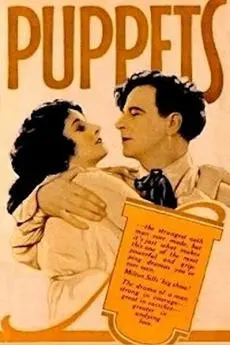
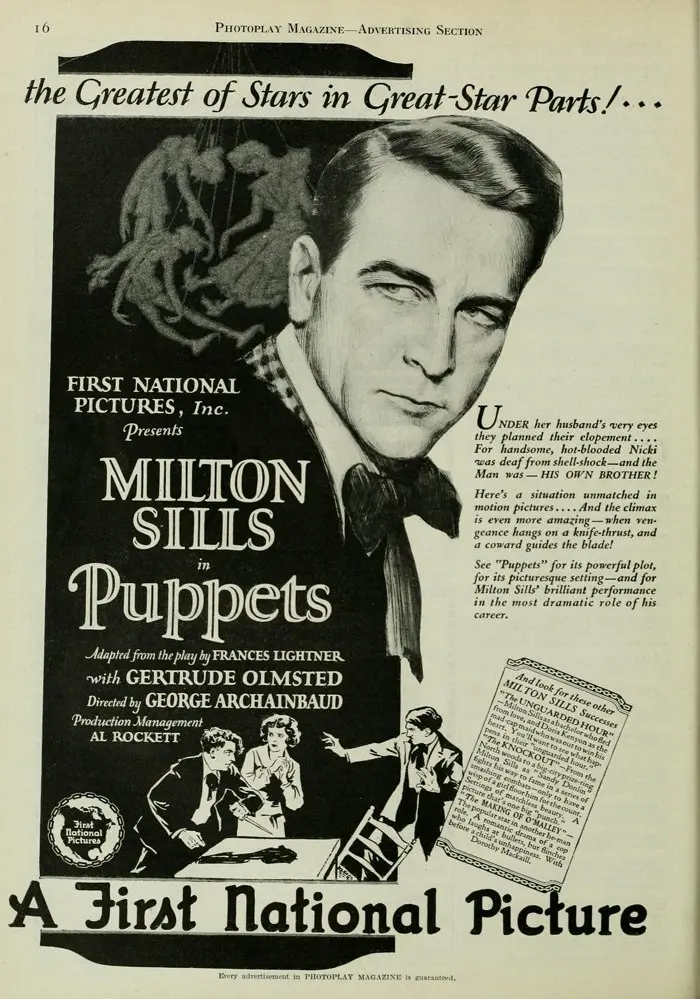
Is 'Puppets' a film worth unearthing from the silent era's vast archives today? Short answer: yes, but with significant caveats. This melodrama is an essential watch for enthusiasts of early 20th-century cinema, particularly those fascinated by the emotional depth possible without spoken dialogue, and anyone eager to witness Milton Sills’ understated power. However, it will likely test the patience of viewers accustomed to modern pacing and those who find silent film conventions difficult to engage with.
This is a film crafted for those who appreciate the nuanced artistry of silent acting, the visual storytelling prowess required before sound, and narratives that grapple with the often-overlooked psychological scars of war. It is decidedly not for viewers seeking rapid-fire plots, unambiguous character motivations, or a straightforward happy ending. Its charm lies in its quiet contemplation, its dramatic silences.
Direct Answer Block
This film works because... it leverages the inherent strengths of silent cinema to convey deep emotional trauma, particularly through Milton Sills' commanding yet vulnerable performance and the powerful visual metaphor of a puppeteer losing his hearing.
This film fails because... some of its melodramatic beats feel overly simplistic by today's standards, and the pacing, while deliberate, occasionally verges on sluggish, particularly in its expositional sequences.
You should watch it if... you are a student of silent film, a fan of Milton Sills, or someone interested in how early cinema tackled the human cost of war beyond the battlefield, focusing on personal, internal struggles.
A Silent Symphony of Heartbreak
“Puppets” emerges from an era where cinema was still finding its voice, literally and figuratively. Released in 1924, it arrives at a fascinating juncture in film history, showcasing the sophisticated visual storytelling that characterized the silent period before the inevitable transition to talkies. The film, directed with a keen eye for human drama, attempts to weave a complex tapestry of love, loss, and betrayal against the somber backdrop of a post-WWI world.
At its core, “Puppets” is a tragedy of perception and communication. Nicki, a beloved puppeteer, returns from the Great War not with medals, but with profound deafness. This isn't merely a physical ailment; it's a narrative device that isolates him, turning his once vibrant, audient world into a silent, alien landscape. His art, which once depended on the precise timing of sound and movement, becomes a cruel reminder of what he has lost.
The plot, as straightforward as it seems, gains layers through the silent film medium. Nicki discovers his sweetheart, Angela, is engaged to Bruno, his former wardrobe master. This revelation is delivered not through dialogue, but through a series of heartbreaking glances, missed cues, and the painful visual evidence of an engagement ring. The absence of sound forces the audience to lean in, to read every flicker of emotion on the actors' faces, making Nicki's isolation palpable.
The screenwriters, Frances Lightner, Don Bartlett, and John F. Goodrich, craft a narrative that, while occasionally leaning into the melodramatic excesses common to the period, still manages to evoke genuine pathos. They understand that a silent film about a deaf character requires an even greater reliance on visual cues, and for the most part, they succeed in making Nicki's struggle comprehensible and deeply felt.
The true genius of ‘Puppets’ isn’t its plot, but its daring exploration of disability as a barrier to love and understanding in a world still grappling with the unseen wounds of war.
Scene from Puppets
Cinematic perspective: Exploring the visual vocabulary of Puppets (1926) through its definitive frames.
Performances That Speak Volumes
Milton Sills, as Nicki, carries the film with a gravitas that few actors of his era could command. Sills, known for his strong, often stoic presence, finds a different register here. His performance is a masterclass in understated emotion, particularly crucial for a character who cannot hear. We see the pain in his eyes, the subtle tremor in his hands, the way his body language shifts from hopeful anticipation to crushing despair upon realizing Angela's new commitment.
Consider the scene where Nicki first encounters Angela and Bruno together after his return. Sills doesn't overact; instead, his face registers a slow dawning of incomprehension, then a profound hurt, as he pieces together the visual evidence of their closeness. It’s a moment that could easily descend into histrionics but is instead handled with a quiet dignity that resonates deeply. His portrayal grounds the film, preventing it from floating away into pure melodrama.
Gertrude Olmstead as Angela, while given less to work with in terms of internal conflict, portrays her character with a blend of youthful innocence and conflicted loyalty. Her expressions convey a woman caught between past affection and present commitment. Her interactions with Sills are particularly strong, showcasing a believable chemistry even amidst the dramatic tension. She’s not just a love interest; she’s a woman navigating difficult choices in a world that offers few easy answers.
Lucien Prival, as the opportunistic Bruno, embodies the film's antagonist with a sneering charm. Prival understands the assignment perfectly: to be the foil, the man who capitalizes on another's misfortune. His performance is less nuanced than Sills', but effective in creating a clear sense of menace and betrayal. Bruno’s actions, while perhaps a bit one-dimensional, serve their purpose in heightening the emotional stakes. He is the immediate, tangible threat to Nicki's happiness.
The Visual Language of Loss
The cinematography in “Puppets” plays a pivotal role in conveying Nicki's internal state and the film's overarching themes. The use of close-ups on Sills’ face is particularly effective, allowing the audience to intimately witness his reactions to a world he can no longer hear. These moments are where the film truly shines, transforming Nicki’s deafness from a plot point into a lived experience for the viewer.
Lighting is also employed with considerable skill. Scenes depicting Nicki's isolation often feature stark contrasts, with shadows emphasizing his loneliness even in crowded rooms. Conversely, flashbacks or moments of hopeful fantasy might be bathed in softer, more romantic light, creating a visual distinction between his painful reality and his yearning for what was lost. The visual aesthetic is a character in itself, constantly reinforcing the narrative.
A particularly striking visual motif involves Nicki's puppets. Before the war, they are lively, expressive extensions of himself. After his deafness, they become almost mocking, silent figures that he can manipulate but no longer truly connect with through sound. There's a powerful scene where he attempts to perform, and his frustration with the lack of auditory feedback is conveyed purely through his agitated movements and the bewildered expressions of his audience. It's a brutal, simple sentence: The silence is deafening.
Scene from Puppets
Cinematic perspective: Exploring the visual vocabulary of Puppets (1926) through its definitive frames.
The film also makes clever use of intertitles, not just to convey dialogue, but to punctuate emotional beats and provide crucial exposition. Unlike some silent films where intertitles can feel intrusive, here they are integrated thoughtfully, acting almost like a Greek chorus, guiding the audience through Nicki's silent anguish. This careful balance between visual storytelling and textual augmentation is a hallmark of well-crafted silent cinema.
Pacing and Emotional Resonance
The pacing of “Puppets” is deliberate, a characteristic often found in silent films. It takes its time to establish characters and situations, allowing scenes to breathe and emotions to slowly unfold. While this can be a strength, fostering a deeper connection with the characters, it can also be a point of contention for modern viewers accustomed to quicker narrative propulsion.
There are moments, particularly in the initial setup of Nicki's return and the gradual reveal of Angela's engagement, where the film feels a touch languid. However, this slow burn ultimately serves to heighten the impact of the dramatic confrontations. When the emotional payoffs arrive, they feel earned, rather than rushed. The long takes on Sills’ face, while contributing to the slower pace, are essential for conveying the depth of his internal suffering.
The tone of the film is undeniably melancholic, tinged with a persistent sense of injustice and loss. It’s a somber reflection on the unseen casualties of war, a theme explored in other films of the era like After the War. However, “Puppets” manages to avoid pure despair by introducing elements of hope and the enduring power of human connection, even if those connections are strained and tested to their limits. There’s a resilience in Nicki that, despite his circumstances, prevents the film from becoming utterly bleak.
One could argue that the film’s reliance on classic melodrama occasionally undermines its more profound themes. The character of Bruno, for instance, is painted with broad strokes of villainy, which can feel a little simplistic when compared to the nuanced portrayal of Nicki. This binary approach to good and evil is a common silent film trope, but it occasionally detracts from the film's potential for greater psychological complexity. It works. But it’s flawed.
Is This Film Worth Watching?
Absolutely, for the right audience. 'Puppets' offers a window into the narrative artistry of the silent era. It demonstrates how powerful storytelling can be without spoken dialogue. Milton Sills delivers a standout performance that alone justifies a viewing. The film's exploration of deafness and post-war trauma is ahead of its time. It’s a compelling historical artifact and a moving drama.
Key Takeaways
Best for: Silent film aficionados, fans of Milton Sills, and those interested in early cinematic treatments of disability and post-war trauma.
Not for: Viewers who struggle with slow pacing, overt melodrama, or the conventions of silent cinema.
Standout element: Milton Sills' deeply empathetic and restrained performance as Nicki, conveying profound loss and isolation without uttering a single word.
Biggest flaw: Some supporting characters are underdeveloped, and certain plot points lean too heavily into predictable melodramatic tropes, detracting from the film's more subtle emotional strengths.
Pros and Cons
Pros:
Exceptional central performance by Milton Sills.
Innovative visual storytelling to convey deafness.
Thought-provoking exploration of post-war trauma and love.
Strong sense of period atmosphere and emotional authenticity.
A compelling argument for the power of silent cinema.
Cons:
Pacing can be slow, requiring patience from modern audiences.
Some supporting characters lack depth and feel like archetypes.
Relies on certain melodramatic conventions that may feel dated.
The resolution might not satisfy all contemporary tastes.
Verdict
“Puppets” is more than just a historical curiosity; it's a testament to the enduring power of silent cinema to tell deeply human stories. While its pacing and some of its dramatic conventions may require a degree of adjustment for contemporary viewers, its core emotional truth remains remarkably potent. Milton Sills’ performance is a masterclass in non-verbal communication, transforming a potentially one-note character into a figure of profound pathos. It’s a film that asks you to listen with your eyes, to feel with your heart, and in doing so, it delivers a surprisingly resonant experience. It is a significant work that deserves rediscovery, not just by historians, but by anyone seeking a powerful, if quiet, drama.