DbcultAccessing Vault...
Cult Review
Senior Film Conservator
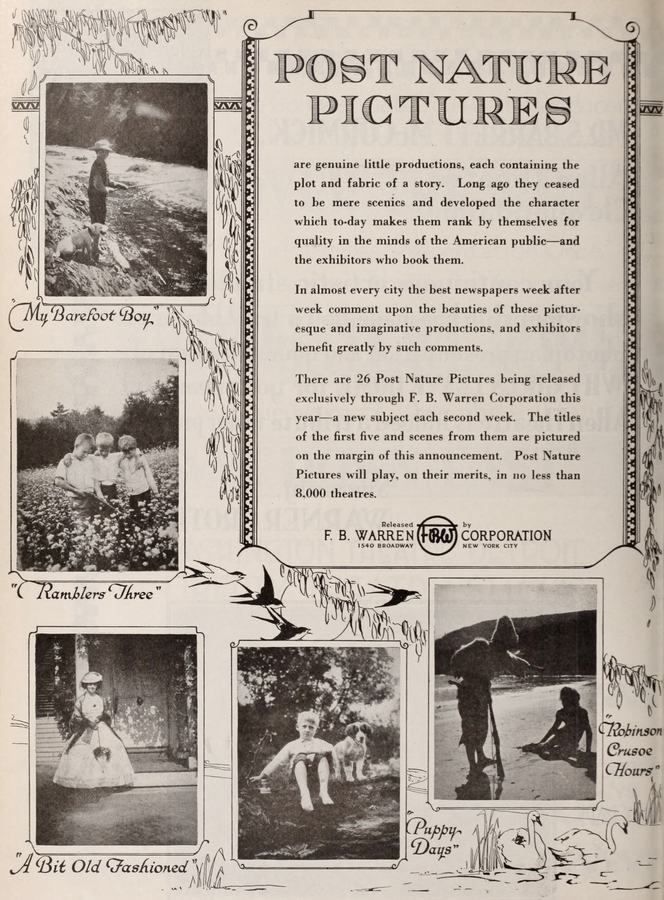
The first time we see Nico’s sneakers slap against the cracked esplanade, the camera hovers so low that the asphalt’s shimmer feels geothermal. Heat ghosts rise; distant gulls yawp; a single speck of tarmac clings to the lens like a black comet. In that sliver of a moment, Puppy Days announces its intent: to kneel at child height, to sniff the world the way a mutt does—nose first, questions later.
Director Alba Rey-Casanova, previously known for her gallery-installation shorts, here graduates to feature form without surrendering her found-object intimacy. She shoots on salvaged 16-mm stock, lets the emulsion bruise, and then scans it at 4K so every scar of celluloid glimmers like a firefly trapped under glass. The result feels halfway between home movie and myth, the exact liminal space where childhood is lived.
There are no heists, no cackling villains, no third-act race against time—only the hush of tide retreating and the squeak of a rubber duck that Nico and Lupo chase down a drainage canal. The screenplay, co-written by Rey-Casanova and poet-librarian Mateo Segade, trusts the associative logic of memory. One scene pirouettes into the next via match-cuts of sensation: the whistle of a kettle becomes the kettle of a distant train; the purple stain of popsicle juice on Nico’s T-shirt rhymes with the bruise-blue dusk that swallows the final act.
This is storytelling that understands the grammar of feeling more than the syntax of plot. Compare it, for instance, to the picaresque swagger of The New Adventures of J. Rufus Wallingford—a film that also ambles, but does so with a cigar-chomping grin. Puppy Days ambles with a skinned knee and a sniffly nose, and it’s all the more radical for that.
Child-non-actor Leo Branco plays Nico with the unselfconscious slouch of someone who has never seen a camera. His laughter is too loud, his silences bottomless. When he finally confronts the possibility of Lupo’s mortality, the tears don’t arrive on cue; instead, the boy’s pupils dilate like sinkholes, and the scene cuts away—a rejection of melodrama that hits harder than any sobfest.
Lupo, meanwhile, is played by three rescue dogs who share a single ragged ear and a tail that never quite straightens. The editorial stitching is invisible; onscreen, we meet one continuous soul, aging in real time through the subtle shift of gait, the clouding of the muzzle, the way the dog’s eyebrows—yes, dogs have them—start to gray. Rey-Casanova lingers on these details with the same reverence Ingmar Bergman once reserved for human faces.
Supporting adults drift at the periphery: a mother (Elena Ríu) whose smiles arrive half a second too late, a fisherman grandpa who dispenses wisdom through the scent of brine on his wrists. No one gets a backstory monologue; we piece together their private griefs from the way they hold grocery bags or stare at an unplugged vacuum cleaner.
Composer Sara Ní Bhraonáin fashions a soundscape out of detuned music boxes and the creak of a swing set. She records the seaside foghorn at 3 a.m., stretches the waveform until it resembles whale song, then threads it beneath scenes of midday play. The effect is subliminal: you sense an elegy even when the visuals frolic.
Contrast this with the orchestral bombast of The World and Its Woman, whose violins insist on every emotion. Puppy Days prefers the mute eloquence of ambient hiss, as though the universe itself were trying to remember a lullaby it forgot.
The palette is sun-scorched but never saccharine. Cinematographer Joakim Kjellsson bleaches the highlights until skin tones verge on tangerine, then drowns the shadows in sea-blue bruise. The yellow of an ice-cream wrapper is so saturated it seems to vibrate off the screen, a visual yelp against the encroaching night. You taste the salt on your lips, feel the sand rasp inside your socks.
Rey-Casanova’s real subject is impermanence, that slow-motion devastation disguised as daily life. The film’s title is ironic: these are not merely the halcyon “puppy days” of frolic, but also the chrysalis of adult knowledge. Every game of fetch carries the seed of the day when the arm will throw the ball farther than the legs can chase.
This theme reverberates through other silent-era meditations on childhood, from Victor Sjöström’s Ingeborg Holm to the expressionist guilt of ...der Übel größtes aber ist die Schuld. Yet where those films externalize fate through social machinery, Puppy Days internalizes it in the synapses of a boy who learns that love means opening your hand.
The film begins and ends on the same stretch of boardwalk, yet the repetition is not circular but spiral. The opening shot shows Nico running toward the camera; the closing shot shows him walking away, leash slack, dog absent. The geometry is subtle: we have advanced one coil in the helix of time. Nothing has returned; everything has progressed.
Cinephiles will detect a whisper of I my kak liudi in the way mundane objects become emotional grenades. The sagging sofa in Nico’s living room functions like the cracked family photograph in that Soviet miniature: a silent witness to entropy.
Meanwhile, fans of Green Eyes will note a shared obsession with the liminal hour between dusk and nightfall. Rey-Casanova even sneaks in a direct homage: a green sparkler waved by a background kid, its emerald flare reflected in the wet sand—a fleeting echo of the 1918 melodrama’s chromatic signature.
For all its rapturous texture, Puppy Days occasionally fetishizes the wistful. A seven-minute sequence of Lupo dozing while cicadas drone tests even the most patient viewer. One could argue that such elongation is the point—that childhood summers dilate interminably until they snap—but formal rigor can flirt with self-indulgence.
Additionally, the film’s gender lens is narrow. Mothers worry; fathers are absent or inert. In 2024, that imbalance feels retrograde, especially when compared to the complex paternal agony of Sins of the Parents. Rey-Casanova had room to interrogate the adult world with the same microscopic empathy she lavishes on Nico, yet she averts her gaze.
Great cinema often teaches us new ways to say goodbye. Puppy Days invents its own vernacular: the scrape of claws on painted wood, the sudden hush when the ocean inhales between waves, the way a boy’s shoulders square when he realizes responsibility is not a burden but a privilege. The film will wreck you, not with tragedy, but with the gentle recognition that every joy carries an expiration date stamped in invisible ink.
Seek it out on the largest screen you can find, preferably in a repurposed seaside kiosk that smells of popcorn and brine. Sit on the aisle so you can feel the draft every time the exit door sighs open, reminding you that outside, some dog, somewhere, is waiting for a walk that will outlast the twilight.
IMDb 5.8
1932
Community
Log in to comment.