DbcultAccessing Vault...
Cult Review
Senior Film Conservator
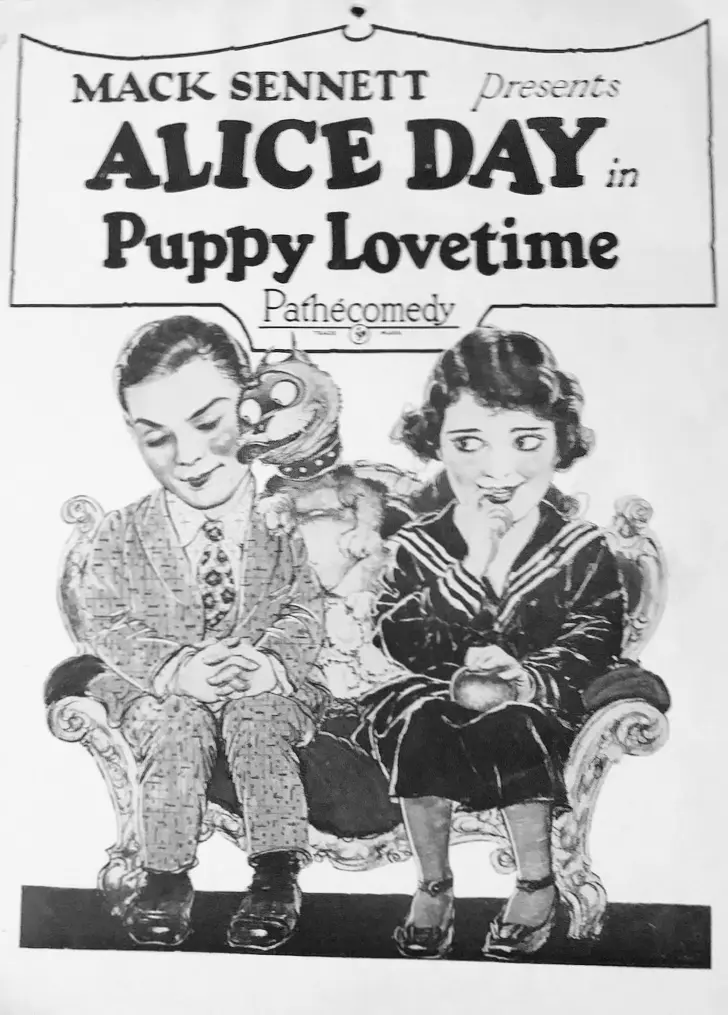
Is ‘Puppy Lovetime’ worth watching today? Short answer: yes, but with significant caveats that demand a specific viewer. This film is an intriguing time capsule for cinephiles and historians keen on early romantic comedies, yet it will likely test the patience of modern audiences accustomed to faster pacing and more nuanced character development.
It’s a peculiar artifact, a gentle whisper from a bygone era that, while not without its charms, asks us to adjust our expectations considerably. ‘Puppy Lovetime’ is best suited for those with a genuine interest in the evolution of narrative film and the social mores it reflected. It is decidedly NOT for viewers seeking high-octane drama, complex psychological studies, or a relentlessly progressive worldview.
This film works because of its unpretentious charm and Alice Day's genuinely sympathetic performance, which anchors the emotional core.
This film fails because of its simplistic character motivations, a plot that often meanders, and a resolution that feels more like resignation than genuine romantic triumph.
You should watch it if you are a devoted student of early Hollywood, curious about the formative years of the romantic comedy genre, or appreciate the subtle social commentary embedded in period pieces.
The plot of ‘Puppy Lovetime’ is as straightforward as a country lane, charting the romantic travails of Alice Day’s character, Alice. She harbors a deep affection for Danny O'Shea’s Danny, the kind of village heartthrob who knows he’s handsome and wields it with casual indifference. It’s a classic setup: the earnest local girl pining for the boy who’s just a little too wild, a little too free.
The introduction of Ruth Taylor's Ruth, the 'little blonde vamp from the big city,' throws a predictable wrench into Alice’s plans. Ruth represents everything Alice isn't: sophisticated, alluring, and seemingly effortlessly captivating. Danny, of course, falls for this urban siren, leaving Alice to navigate the painful landscape of unrequited love.
This narrative arc, while simple, serves as a fascinating window into early cinematic storytelling. There’s a distinct lack of intricate subplots or grand dramatic gestures. The conflict is internal, the stakes personal, and the resolution, for Alice, feels less like a triumphant choice and more like a pragmatic acceptance of her circumstances.
The writers, Harry McCoy, Tay Garnett, Al Giebler, and Margaret Houghton, craft a story that relies heavily on archetypes. Danny is the charming rogue, Ruth the tempting outsider, and Alice the steadfast, if a little naive, local girl. This simplicity allows the audience to project their own experiences onto the characters, a common technique in early cinema.
However, this same simplicity can also be its undoing for modern viewers. The motivations are broad, the emotional beats telegraphed, and the pace deliberate to a fault. Unlike the more dynamic narratives of films like The Beckoning Trail, which explored broader adventure, ‘Puppy Lovetime’ stays firmly rooted in domestic, emotional territory, which can feel stagnant without deeper character exploration.
The heart of ‘Puppy Lovetime’ unequivocally lies with Alice Day. Her portrayal of Alice is remarkably nuanced for the era, conveying quiet longing, disappointment, and eventual resignation with a subtle grace. There’s a moment where she watches Danny and Ruth together, her face a canvas of unspoken heartache, that truly resonates. It’s a performance that elevates the material beyond mere melodrama.
Conversely, Danny O'Shea's Danny is less a charming rogue and more an irritating cipher. His character lacks depth, driven seemingly by superficial attraction rather than any discernible personality. He’s handsome, yes, but his allure feels unearned, making Alice’s initial devotion to him somewhat baffling. This isn’t necessarily O’Shea’s fault entirely; the script provides him little to work with beyond a dashing smile and an air of casual detachment.
Ruth Taylor as Ruth, the 'vamp,' leans heavily into the archetype. She’s glamorous and confident, a stark contrast to Alice’s demure nature. While effective in establishing her role as the romantic interloper, her character, too, is painted with broad strokes, serving more as a plot device than a fully realized individual. Her presence is a catalyst, not a character study.
Eddie Quillan, as the grocery-delivery boy Eddie, offers a welcome dose of earnestness. He represents the steady, dependable alternative, and Quillan imbues him with a quiet dignity. His scenes with Alice, particularly as she begins to accept his affections, are some of the film’s most genuine, showcasing a burgeoning, if compromised, connection. He’s the safe harbor, and Quillan plays it with a disarming sincerity.
The supporting cast, including Mary Ann Jackson and Patsy O'Byrne, provide local color and comic relief, though their roles are fleeting. Roger Moore is also credited, though his appearance is brief, hinting at a future star in a nascent stage. The performances are largely functional, with Alice Day being the undeniable standout, carrying the emotional weight of the entire production on her slender shoulders.
The direction in ‘Puppy Lovetime’ is competent but largely unremarkable, adhering to the standard cinematic grammar of its time. The camera work is static, favoring wide shots and medium close-ups to capture dialogue and reaction. There’s little in the way of dynamic movement or experimental framing, which can make the film feel visually flat to a contemporary audience used to the kinetic energy of modern cinema.
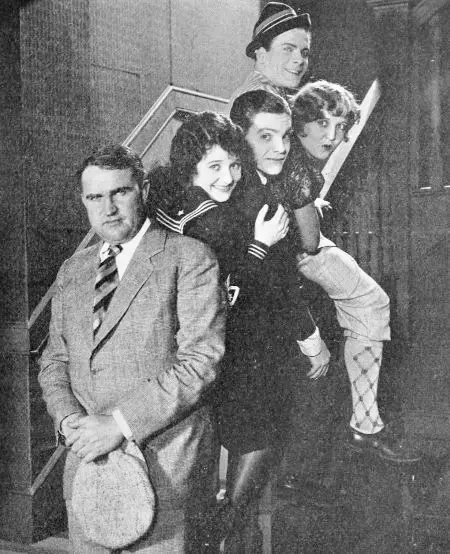
Cinematography, while basic, effectively conveys the rural setting. The village scenes evoke a sense of quaint simplicity, a world apart from the 'big city' Ruth hails from. The lighting is functional, designed to illuminate rather than to create mood or atmosphere. There’s a charm in its unpretentiousness, a raw honesty that speaks to the early days of filmmaking, before complex lighting rigs and elaborate sets became commonplace.
Pacing is another significant factor. The film unfolds at a leisurely, almost languid, pace. Scenes are allowed to breathe, sometimes to the point of dragging. This deliberate rhythm was common in early films, allowing audiences to absorb the narrative without the rapid-fire cuts and information overload of today. However, for a modern viewer, this can translate into a feeling of slowness, especially during moments where the plot progression is minimal.
The tone is consistently gentle, even when dealing with unrequited love. There’s a certain innocence to the proceedings, a lack of cynicism that is refreshing but also limits the dramatic impact. It’s a film that coasts rather than surges, a quiet stream rather than a roaring river. This contrasts sharply with the often more adventurous and morally complex narratives found in films like The Isle of Lost Ships from a similar period, which embraced grander spectacle.
One might observe that the film’s visual simplicity inadvertently highlights the performances. With fewer distractions, the focus remains squarely on the actors' faces and gestures, demanding a certain theatricality that defined much of early screen acting. It’s a directorial choice, whether intentional or born of necessity, that forces the audience to engage with the human element above all else.
‘Puppy Lovetime’, beneath its unassuming surface, touches upon several enduring themes. The most prominent is, of course, unrequited love. Alice’s journey is a poignant exploration of loving someone who simply doesn’t see you in the same way. Her silent suffering is relatable, a universal experience that transcends the film’s vintage.
Another key theme is choice and compromise. Alice is ultimately ‘forced to transfer her affections’ to Eddie. This phrasing itself is telling. It suggests a lack of agency, a pragmatic decision rather than a passionate one. Her acceptance of Eddie feels less like a blossoming romance and more like a quiet resignation to what is available, what is safe. This is a surprisingly mature, if slightly melancholic, take on romance for a film titled ‘Puppy Lovetime.’
This film, perhaps unintentionally, offers a glimpse into the societal expectations placed upon young women in that era. The idea that a woman must eventually ‘settle’ for a suitable, available partner, even if he wasn’t her first choice, resonates with historical realities. Alice's decision could be seen as a reflection of limited options and the pressure to conform to domestic norms.
The contrast between the village and the city is also subtly explored. Ruth, the 'blonde vamp from the big city,' represents an exciting, perhaps dangerous, allure that the simple village life cannot offer. Danny’s attraction to her signifies a yearning for something beyond the familiar, a common trope in stories of the period. This dichotomy is not deeply explored, but it adds a layer of social commentary.
My unconventional observation is that the film inadvertently champions a form of pragmatic affection over passionate love, a stance that feels both dated and strangely modern in its realism. It suggests that sometimes, the 'right' choice isn't the most exciting one, a sentiment rarely seen in pure romantic comedies today. It works. But it’s flawed in its messaging if viewed through a purely romantic lens.
Yes, ‘Puppy Lovetime’ is worth watching for specific audiences. It’s an important piece of cinematic history.
It offers a unique perspective on early romantic storytelling. The film’s simplicity is both a strength and a weakness.
Viewers interested in the evolution of film will find value here. It showcases the foundational elements of narrative cinema.
Alice Day’s performance alone justifies a viewing. Her emotional honesty is compelling.
However, be prepared for a slower pace. Modern audiences may find it challenging. It is a product of its time.
‘Puppy Lovetime’ is more than just a quaint relic; it’s a quiet testament to the enduring power of simple human emotions on screen. While it undoubtedly shows its age in terms of pacing, character depth, and narrative sophistication, it offers a compelling look at the foundational elements of romantic storytelling. Alice Day’s performance alone makes it a worthwhile watch for those willing to engage with its historical context. It’s not a film that will set your world alight, nor will it redefine the genre, but it holds a certain understated charm.
It’s a film that asks for patience and rewards curiosity. If you approach it not as a modern rom-com, but as a window into a bygone era of filmmaking and social norms, there’s genuine value to be found. It’s a gentle reminder that love, in all its messy, complicated, and sometimes compromised forms, has always been a central pillar of human experience, reflected through the lens of early cinema. It’s a modest success, a charming whisper from the past, deserving of its place in the cinematic archives, if not a prime spot on your weekend watch list unless you’re a dedicated classicist. Don't expect the grandiosity of The Woman in His House or the comedic punch of Feet of Mud, but rather a gentle, introspective journey into the heart of early 20th-century romance. In the end, it’s a film that resonates not with fireworks, but with a quiet, lingering sigh.
IMDb —
1924
Community
Log in to comment.