DbcultAccessing Vault...
Cult Review
Senior Film Conservator
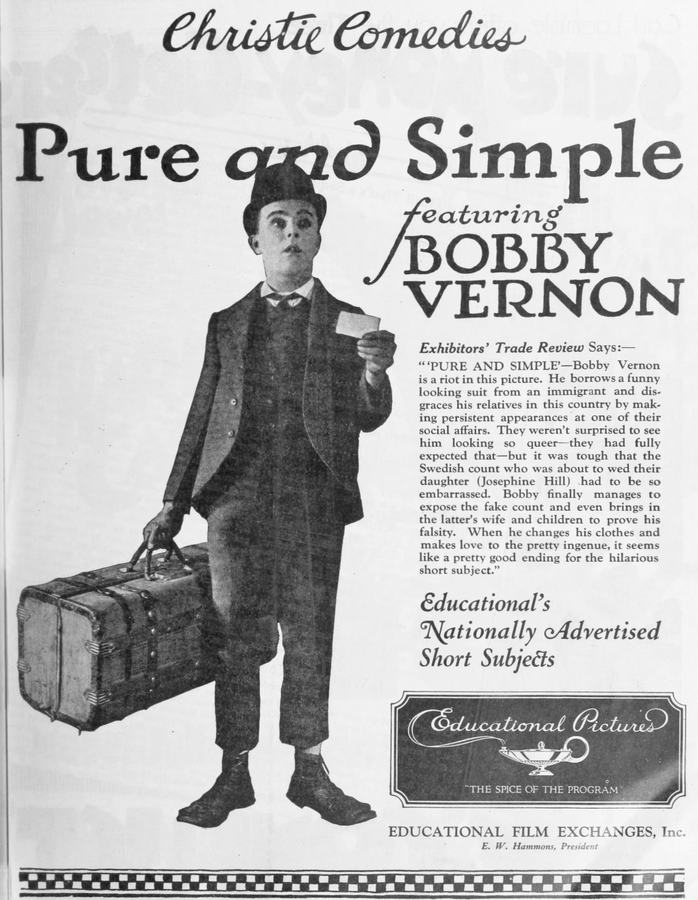
Imagine, if you will, a tuxedo that looks as though it were tailored during a thunderstorm by drunken origami cranes—every seam a nervous breakdown, every button a cry for help. Now imagine Josephine Hill’s patrician nostrils flaring at the mere approach of said garment, the way a thoroughbred snorts at the scent of singed glue. That image alone is the whole silent-era thesis of Pure and Simple: America’s old money meets new mischief, and the encounter is corseted in farce so tight it leaves bruises on both parties.
Frank Roland Conklin’s script—really a lit fuse disguised as intertitles—knows that in 1923 the country is drunk on titles: countesses, viscounts, any stray bit of heraldry that can be imported alongside Scandinavian furniture. Bobby Vernon, rubber-boned and pop-eyed, weaponizes that hunger. His borrowed suit is not comic garnish; it is a social suicide vest, stitched by an immigrant whose name history forgot but whose vengeance cinema remembers. Each time Bobby swivels his hips, the coat vents flap like black flags announcing the collapse of someone’s stock portfolio.
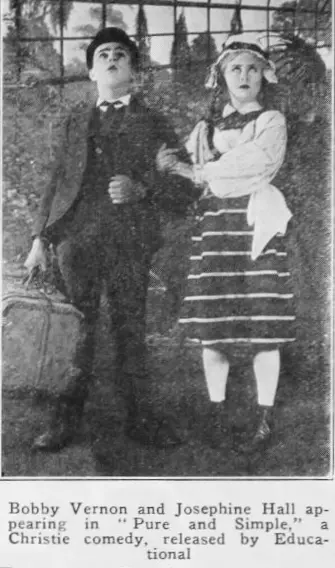
The film’s first movement plays like a pastoral before the plague: white-gloved ushers, champagne coupes catching chandelier shards, Virginia Ware’s ingenue drifting through marble corridors as though she were a living cameo. Enter Bobby, and the air immediately sours into champagne vinegar. He does not walk; he detonates. Vernon’s genius lies in refusing to wink at the audience—he believes in the dignity of this absurd outfit, which makes every pratfall feel like a breach in reality’s hull.
Contrast this with Victor Rodman’s false count: a man carved from Nordic marble, cheekbones sharp enough to slice pâté, voice (in the intertitles) a perfumed whisper promising fjords and bearer bonds. He is the fantasy that Gatsby chased but never quite caught, now packaged for marriageable consumption. The camera lingers on his white-gloved hand lifting a teacup with surgical precision—then smash-cuts to Bobby’s gloved hand lifting a canapé that promptly disintegrates into a crime scene of crab shrapnel. The montage is blunt yet surgical: two economies of gesture, two futures battling for the same parlour.
There is a moment—blink and you’ll miss it—when the immigrant tailor, framed in a doorway half-shadow, watches Bobby wreck the dance floor. A smile flickers, not pride but prophecy: the old world laughing at the new world pretending to be older still. It lasts maybe twelve frames, yet it electrifies the whole picture, reminding us that every stitch in that suit is a whispered riot.
Then comes the pivot, engineered with the elegance of a bank heist. Bobby, having catalogued every micro-flinch of the counterfeit noble, vanishes. In his absence the ballroom regains its equilibrium—strings swell, fans flutter, the engagement seems sealed. When he re-enters, the suit is gone, replaced by the monochrome majesty of properly mortgaged tailoring. The transformation is so stark it feels like a death and resurrection compressed into a single splice. But the coup de grâce is familial: the Countess-in-hiding and two children who share their father’s glacier-blond genes storm the salon like Norse spirits barging through a society mural. Suddenly the impostor’s accent slips, his shoulders crumple, and the aristocratic mirage evaporates into the mundane cruelty of a bigamist exposed.
Why does this sting a century later? Because Conklin is not satirizing a man but an interface—how pedigree is just another brand, how the rich will barter their daughters for a coat of arms no sturdier than cellophane. The film’s title becomes a taunt: purity and simplicity are revealed as the most baroque fictions of all.
Josephine Hill, often dismissed as merely ‘the girl,’ conducts her own insurgency. Watch her eyes during the unmasking: a tremor of vindication, yes, but also sorrow—for the shattered illusion, for the complicity of her own silences. It is a micro-performance that graduates the picture from slapstick pamphlet to social novel.
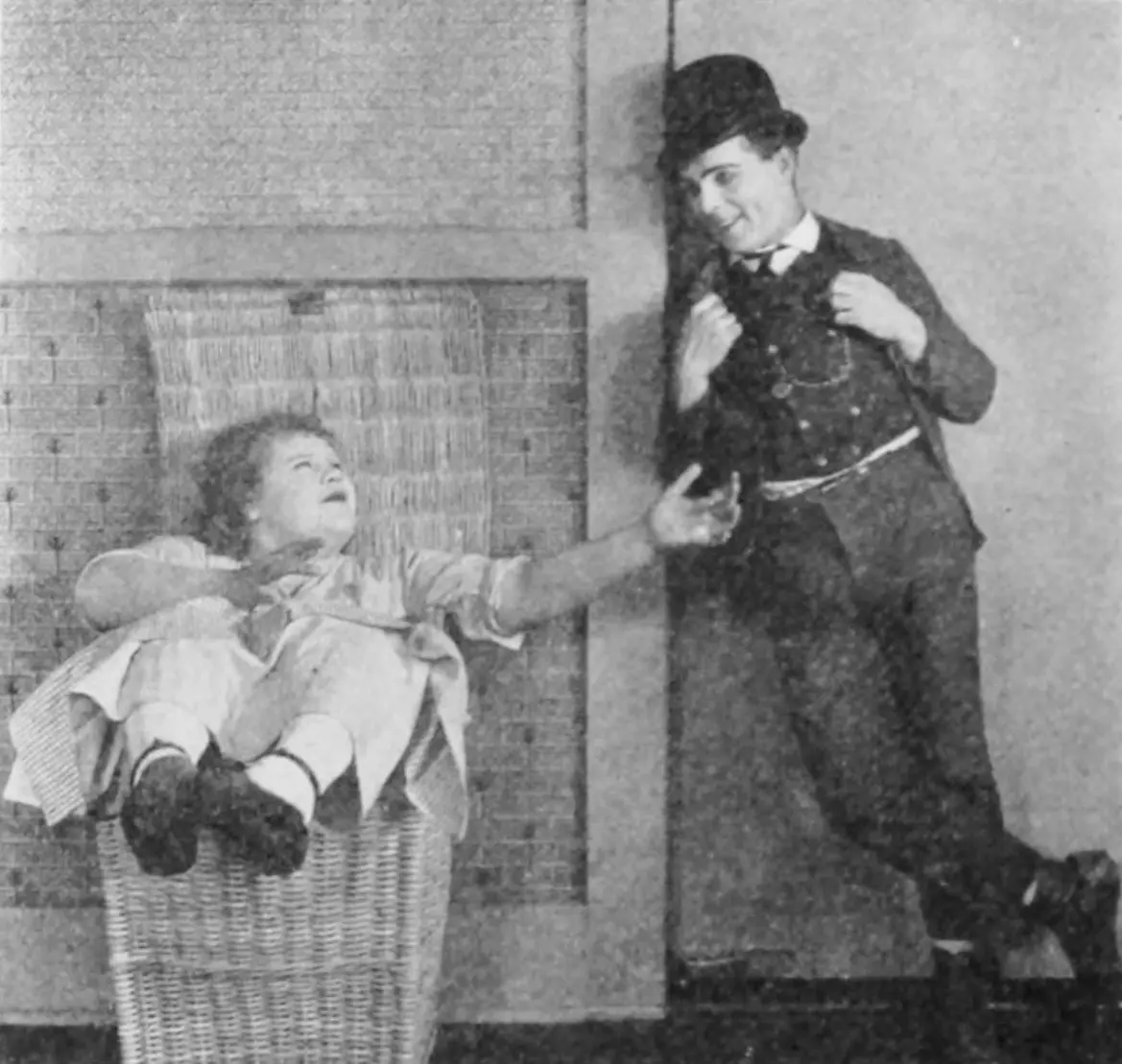
Visually, the cinematographer (uncredited, as was too common) alternates between cavernous long shots—humans poised like chessmen on parquet oceans—and savage close-ups that transform cufflinks into constellations of dread. The palette, though bound by silver nitrate, feels paradoxically iridescent; whites glow with the menace of klieg lights, blacks sink into velvet abysses. When Bobby’s rogue suit finally flops to the floor like a shed exoskeleton, the moment is framed like a crucifixion viewed from the choir loft.
Comparative detour: if you’ve seen the Swedish comedy Telefondamen you’ll recognize a similar delight in toppling urbane façades, though it lacks the American self-loathing that fuels Pure and Simple. Likewise, A Manhattan Knight toys with counterfeit identity, but its hero seeks acceptance; Bobby Vernon seeks combustion.
The final clinch between Bobby and Ware’s ingenue is shot from a balcony, their silhouettes dissolving into a iris-out heart. It should feel tacked-on, yet it lands as radical consent: two people choosing each other after the artifices of class have been shredded like last week’s stock reports. The closing intertitle, pure in its simplicity, reads: “Love, like laughter, needs no translation.” In 1923 that was a quiet revolution; in 2024 it remains a dare.
So, is the film a masterpiece? Let us not genuflect. Pacing lurches in act two, and a reel presumed lost leaves a scar that no archive has grafted shut. Yet its afterburn is undeniable. Each viewing re-enacts the primal pleasure of watching wallpaper peel under a blowtorch. It satirizes whiteness, wealth, and wannabe Europeans with a glee that predates the talkies’ censorious hiss. And it reminds us that the most lethal weapon against pretense is not the critique but the custard pie hurled with perfect, anarchic timing.
Criterion-worthy? Absolutely—provided the restoration team retains the faint chemical vinegar smell that seems baked into the negative, a ghost of the ballroom’s dying grandeur. Until then, seek it in the crevices of archive.org, in 16mm church-basement retrospectives, in the whispered lore of cinephile forums. Let its radioactive charm seep into your assumptions about old, harmless silents. And remember: every time a tuxedo today fits a little too well, somewhere the ghost of Bobby Vernon is snickering through time, urging the fabric to unravel at the precise moment pedigree takes itself for granted.
IMDb —
1920
Community
Log in to comment.