DbcultAccessing Vault...
5.6/10
Senior Film Conservator
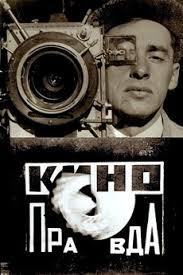
A definitive 5.6/10 rating for a film that redefined the boundaries of cult cinema. Kino-pravda no. 6 remains a cornerstone of transgressive art.
Imagine a film that refuses to behave like one: no matinee idols, no three-act sedative, only the staccato heartbeat of a city learning to breathe again after civil war’s iron lung. Kino-pravda no. 6 is that anarchic bulletin—twenty electric minutes hurled at the audience like a Molotov cocktail made of newsprint and photons. Vertov’s credo was simple yet heretical: the camera sees more truth than the human retina, so let it spy, sprint, somersault. The result is a cinematic riot whose shrapnel still rattles every iPhone-wielding documentarian today.
Start with texture: nitrate curls exhale vinegar ghosts, each scratch a scar of revolution. Vertov’s team treats every frame like a crime scene—interrogate, magnify, cross-examine. A loaf of bread becomes Exhibit A in the trial of scarcity; a tram ticket punched forty-three times per minute mutates into a metronome of urban survival. The montage is not decorative but diagnostic: cut, cut, cut, until reality coughs up its marrow.
Contrast this with the languid melancholy of His Brother’s Keeper, where grief is framed like museum portraiture, or the baroque fatalism of Genuine: The Tragedy of a Vampire, dripping Gothic lace. Vertov will have none of that decadent languor; he slices through sentiment with the same glee a butcher reserves for gristle.
Elizaveta Svilova, the phantom co-author, wields her editing bench like a guillotine for linear time. She overlaps shots of coal miners and ballet auditions, forcing proletarian soot to waltz with tulle. The collision is erotic and political: muscles that dig iron now lift sylphs. In one blistering sequence, she intercuts a woman giving birth with a locomotive piston, suggesting that both engine and womb are Soviet machines producing the future’s raw material. Feminist scholars still hyperventilate over that splice.
Silent by birth, the reel nonetheless vibrates with sonic after-images. You can almost hear the clatter of the agit-prop train, the hiss of kerosene lamps in a workers’ canteen, the syncopated gossip of typewriter keys. Vertov’s later Enthusiasm would graft actual sound onto image, but here the absence is acutely orchestral; the viewer becomes a co-conductor, humming a soundtrack of historical tinnitus.
Compare that aural ghost to the opulent symphonies cushioning The Heart of Romance, or the violin-soaked fatalism of Fesseln. Vertov denies us the narcotic comfort of strings; he wants us sober, alert, itchy.
What survives of no. 6 is a bruised print, water-logged in a Leningrad cellar during the siege, then baked by summer humidity. The emulsion bruises bloom like cyan flowers, turning bureaucrats into aliens, children into angels of static. Restoration artists begged to scrub the blemishes; true cinephiles threatened mutiny. The scars stay—history’s tattoos.
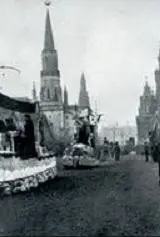
Every cut is an equation: (Image A + Image B) = new ideological molecule. A priest’s beard dissolves into a wheat field, implying religion will feed the people only when transmuted into grain. The equation is ruthless, but Vertov isn’t Stalin’s lapdog; he’s the ecstatic scientist who believes cinema can split the atom of class consciousness. Compare that to the capitalist arithmetic in The Dollar and the Law, where dollars equal morality, or the fatal calculus of El que a hierro mata—violence repaid with compound interest.
Notice the camera’s velocity: it chases fire brigades, hitches onto motorcycle sidecars, belly-crawls through wheat. The lens is not observer but prey, hunted by its own appetite. In 1922 this kinetic neurosis was revolutionary; a century later GoPro daredevils merely plagiarize the vertigo. Yet none match the ideological afterburn: every dash is toward a horizon where the state has withered, money deodorized, and images circulate like oxygen.
Look closer at the women shelling peas in a communal kitchen: one glances up, her eyes skewering the lens, refusing to be reduced to Soviet allegory. That micro-rebellion is cinema’s true democracy—viewers gifted the liberty to interpret. Meanwhile, bourgeois melodramas like Her Tender Feet flatten characters into moral emojis; Vertov lets them squirm out of frame.
Werner Herzog famously championed the “ecstatic truth,” yet Vertov got there first, without Bavarian romanticism. The ecstatic pulse in no. 6 is data-driven: the number of tractors, literacy rates, cholera casualties. The euphoria emerges when dry numbers combust into visual music. Herzog needed grizzlies and boiling volcanoes; Vertov only needed a statistical bulletin and a Steenbeck.
Moscow critics of ’22 complained the film lacked “star power,” preferring the bourgeois hangovers of Luck in Pawn. Abroad, surrealists championed Vertov as the prophet of anti-narrative. Today, TikTok historians cite no. 6 as the first vlog: jump-cuts, on-screen stats, snarky captions, all compressed into a vertical frame of celluloid. The algorithm would ban him for excess truth.
Forget 4K. Stream a 720p rip on a cracked phone at 3 a.m. while commuting on a night bus. Let the screen glare mingle with neon streaks outside; only then does the century-old urgency fuse with your cortisol. Take notes on a sticky pad; the film will erase your short-term memory like a black-market NEP card-sharper. Afterward, walk home avoiding algorithms—no Spotify, no push alerts—just the echo of your own footsteps duplicating Kaufman’s phantom camera.
The last frame—a spinning reel—slows to stroboscopic death, each sprocket hole a porthole into blackout. You’re left clutching not meaning but momentum, the giddy realization that history itself is an editor with twitchy fingers. Vertov doesn’t conclude; he ejects. The afterimage burns white-hot against your retinas, a souvenir from 1922 that refuses to stay dead. And that, comrade, is the purest definition of revolution: a film that finishes by forcing you to rewind yourself.
IMDb 7.1
1933
Community
Log in to comment.