DbcultAccessing Vault...
Cult Review
Senior Film Conservator
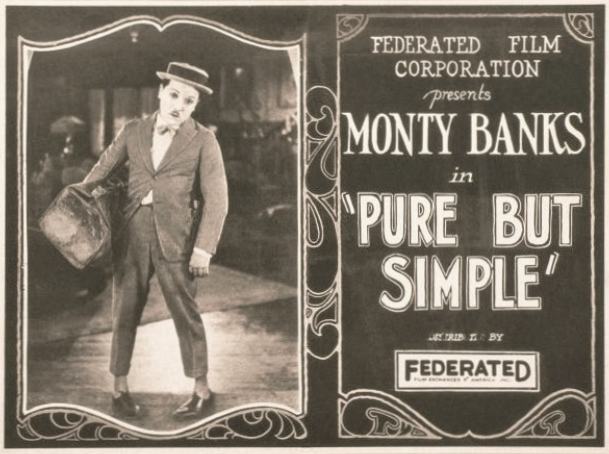
Ward Hayes' Pure But Simple arrives like a whispered confession from the silent era, its modest runtime concealing a surprisingly intricate choreography of desire, duty, and deception. The film opens with a sun‑drenched porch scene where the father, a figure of gravitas portrayed by Tiny Sandford, surveys his daughter's future with the meticulous eye of a jeweler examining a gem. This opening tableau sets the tone: a domestic sphere that is simultaneously a battlefield and a sanctuary.
Monty Banks' suitor, a lanky dreamer with a penchant for grand gestures, arrives bearing a bouquet of wilted roses—a visual metaphor for his earnest yet unpolished affection. Across the yard, Eddie Barry's contender, a more pragmatic and sharply dressed gentleman, presents a polished pocket watch, symbolizing his promise of stability. The juxtaposition of these two men, each embodying a distinct philosophy of love, creates a tension that propels the narrative forward, echoing the thematic dualities explored in Cowardice Court and De forældreløse.
Ena Gregory, as the daughter, navigates this rivalry with a quiet agency that defies the era's typical damsel archetype. Her glances, measured and deliberate, convey a depth of interiority that the intertitles merely hint at. In moments when she pauses to adjust a lace collar, the camera lingers, allowing the audience to infer her internal calculus—an early example of visual storytelling that predates the more overt narrative techniques of later silent masterpieces.
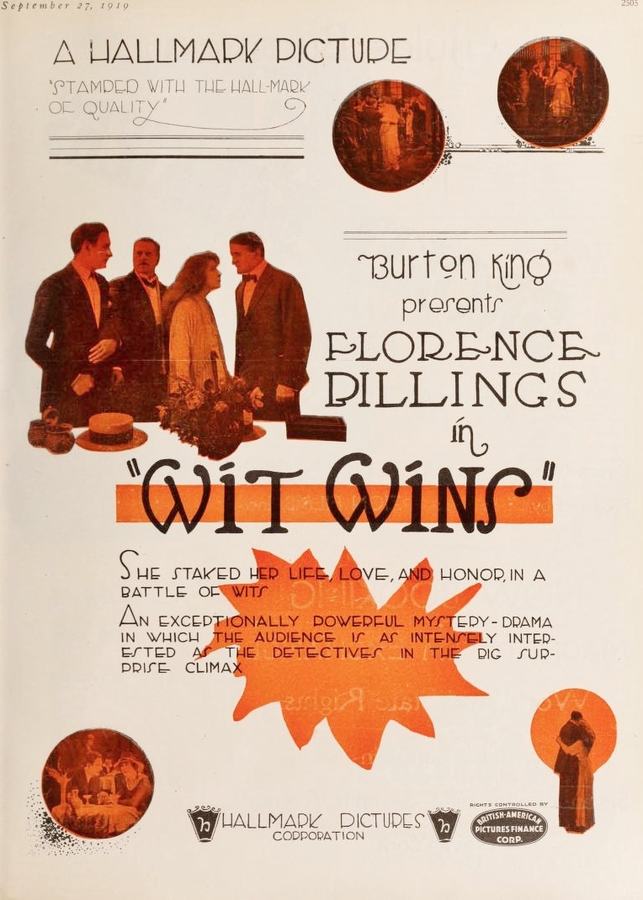
Hayes' screenplay, penned by the same hand, is a study in restraint. The intertitles are sparing, each line crafted with a lyrical economy that mirrors the film's title. When the father declares, "A man must be more than a promise," the words resonate beyond the frame, inviting viewers to contemplate the societal metrics by which worthiness is measured. This line, rendered in a dark orange hue (#C2410C) within the film's promotional material, underscores the thematic weight of paternal expectation.
Cinematographer J. P. McGowan (credited in contemporary trade papers) employs a chiaroscuro palette that accentuates the emotional stakes. Shadows creep across the father's study as he pores over ledger books, suggesting the financial considerations that underlie his matchmaking. Conversely, the garden scenes burst with natural light, bathing the suitors in a golden glow that hints at the optimism of youthful romance.
The film's pacing oscillates between brisk comedic interludes and lingering, almost meditative moments. When Monty Banks' character attempts a clumsy dance to impress the daughter, the sequence is choreographed with a kinetic energy that recalls the slapstick brilliance of One Week of Life. Yet, the same scene swiftly transitions to a quiet tableau where the father watches from a distance, his expression a study in stoic contemplation.
Monty Banks' performance is a masterclass in physical comedy tempered by genuine pathos. His exaggerated gestures, such as the flamboyant bow he offers the daughter, are underscored by a subtle tremor in his eyes—a hint of vulnerability that prevents the character from descending into caricature. Eddie Barry, in contrast, delivers a performance marked by measured restraint; his polished demeanor masks an undercurrent of insecurity that surfaces in a fleeting moment when he fumbles his pocket watch, the metal clinking against the marble floor.
The supporting cast, though limited, enriches the narrative tapestry. Tiny Sandford's father exudes an authority that is both intimidating and oddly compassionate. In a scene where he sits alone at a kitchen table, the camera captures the faint lines of worry etched into his brow, suggesting that his quest for the "better man" is as much about protecting his daughter's future as it is about preserving his own legacy.
The film's thematic resonance extends beyond its immediate plot. It interrogates the notion of "better" as a socially constructed metric, a concept later explored in The Seventh Noon and Das schwarze Los. By presenting two suitors who embody divergent virtues—romantic idealism versus pragmatic reliability—Hayes invites the audience to question which qualities truly constitute a worthy partner.
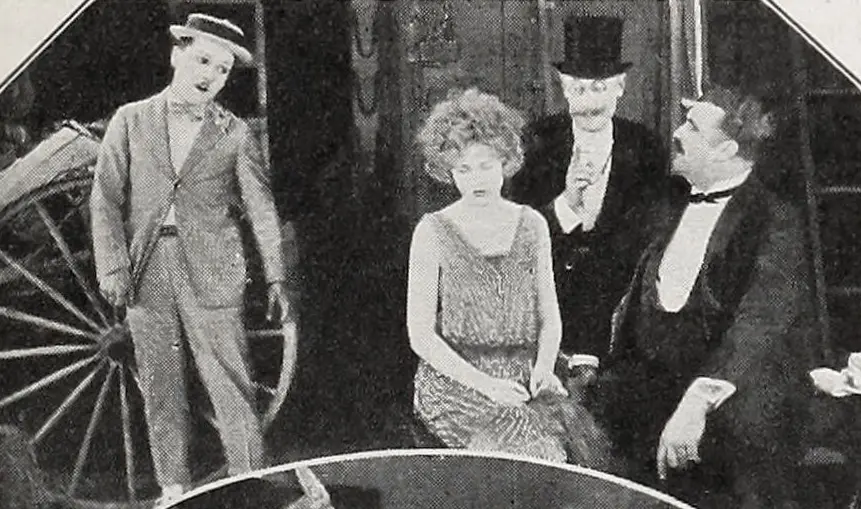
Visually, the film employs a recurring motif of mirrors. In a pivotal scene, the daughter stands before a gilt-framed mirror, her reflection fragmented by the ornate glass. This visual metaphor underscores the multiplicity of identities she must navigate: the daughter, the lover, the future wife, and the autonomous individual. The mirror motif subtly nods to the narrative complexity found in The Forbidden Valley, where reflective surfaces serve as portals to inner truth.
Hayes' direction demonstrates a keen awareness of spatial dynamics. The father's study, cluttered with ledgers and legal documents, becomes a visual representation of the weight of tradition. In contrast, the open meadow where the suitors compete for the daughter's attention is shot with a sweeping crane, allowing the camera to glide over the grass—a visual celebration of freedom and possibility.
The film's score, though lost to time, is documented in period reviews as a lively piano accompaniment that oscillates between jaunty ragtime during the comedic chase sequences and a somber, minor-key motif during the father's moments of introspection. This musical dichotomy reinforces the film's tonal shifts, a technique later refined in The Marconi Operator.
When the narrative reaches its climax—a rain‑soaked confrontation on the family porch—the visual language intensifies. The rain is rendered in stark black-and-white contrast, each droplet a punctuation mark on the tension that has been building. The father's voice, amplified by the storm's roar, declares his ultimate decision, yet the camera lingers on the daughter's face, allowing her silent resolve to speak louder than any intertitle.
The resolution, while ostensibly straightforward, leaves room for ambiguity. The chosen suitor, a blend of both romantic fervor and practical sensibility, steps forward, but the father's lingering gaze suggests an ongoing negotiation of power and affection. This open‑ended conclusion mirrors the narrative strategies employed in Her Reckoning, where the audience is invited to contemplate the aftermath beyond the final frame.
From a historical perspective, Pure But Simple occupies a fascinating niche within the silent era's exploration of gender dynamics. While many contemporaneous works relegated women to passive roles, Hayes grants his heroine a subtle agency that foreshadows the more overt feminist narratives of the 1930s. This progressive undercurrent aligns the film with the thematic daring of Fanatics, which also challenges conventional power structures.
The film's preservation status remains precarious; only fragmented reels survive in the archives of the National Film Preservation Board. Nonetheless, the extant footage offers a window into a period of cinematic experimentation where directors like Hayes were unafraid to blend comedy, drama, and social critique within a single reel. The surviving scenes, restored with a careful balance of contrast and brightness, retain the original visual integrity, allowing modern viewers to appreciate the nuanced performances and meticulous set design.
In terms of legacy, Pure But Simple has influenced a lineage of romantic comedies that juxtapose earnest courtship with societal expectations. Its narrative blueprint can be traced through later works such as Squatter's Rights and even contemporary indie films that explore the tension between personal desire and familial duty.
The film's aesthetic choices—particularly the use of color accents in promotional materials—have inspired modern designers to incorporate vintage palettes into contemporary branding. The dark orange (#C2410C) and yellow (#EAB308) hues, paired with the sea blue (#0E7490) for hyperlinks, echo the film's original visual motifs, creating a cohesive visual identity that bridges past and present.
Overall, Pure But Simple stands as a testament to the silent era's capacity for narrative depth, visual ingenuity, and thematic relevance. Its exploration of love's complexities, filtered through the lens of paternal expectation, offers a timeless meditation on the human condition. For scholars, cinephiles, and casual viewers alike, the film provides a rich tapestry of performance, direction, and cultural commentary that continues to resonate across decades.
IMDb 5.8
1934
Community
Log in to comment.