DbcultAccessing Vault...
6.2/10
Senior Film Conservator
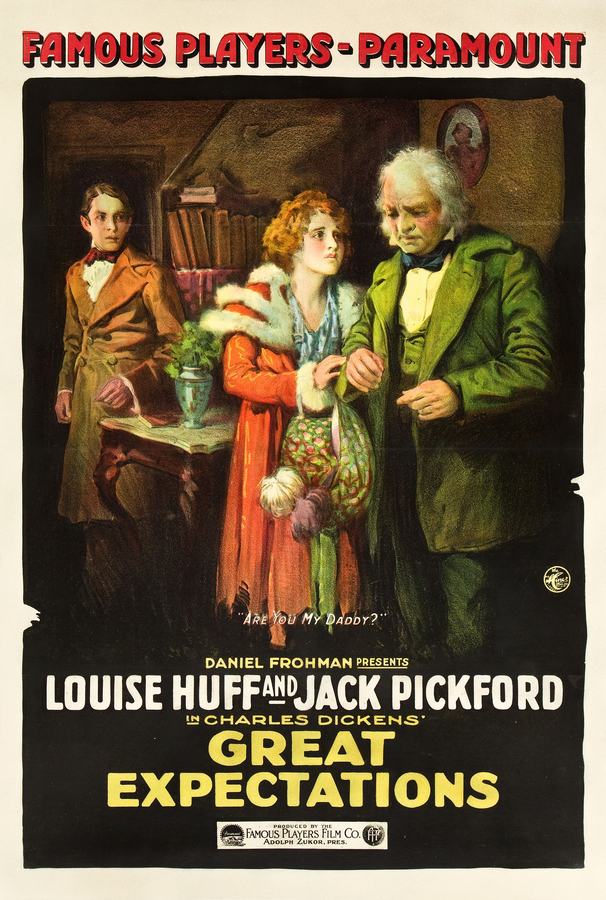
A definitive 6.2/10 rating for a film that redefined the boundaries of cult cinema. Great Expectations remains a cornerstone of transgressive art.
The 1917 adaptation of Great Expectations represents a pivotal moment in the silent era's relationship with literary giants. In an age where cinema was still grappling with its own visual vocabulary, the attempt to condense Charles Dickens’ sprawling, psychological labyrinth into a series of flickering frames was nothing short of Herculean. This production, featuring the boyish yet haunting Jack Pickford, transcends the mere pantomime of plot, venturing instead into the atmospheric dread that defines Pip’s journey from the forge to the upper echelons of London society.
To understand this film is to understand the visual dichotomy between the marshlands and Satis House. The cinematography captures a world perpetually shrouded in a penumbra of moral ambiguity. Unlike the bombastic scale found in The Birth of a Nation, this film opts for an intimate, almost claustrophobic intensity. The Satis House sequences are a masterclass in silent-era Gothicism. Grace Barton’s portrayal of Miss Havisham is a visceral reminder of time’s cruelty; she moves through her decaying mansion like a phantom trapped in a loop of historical trauma. The yellowed (#EAB308) wedding cake, though absent of actual color in 1917, is rendered with such textural detail that one can almost smell the dust and the rot.
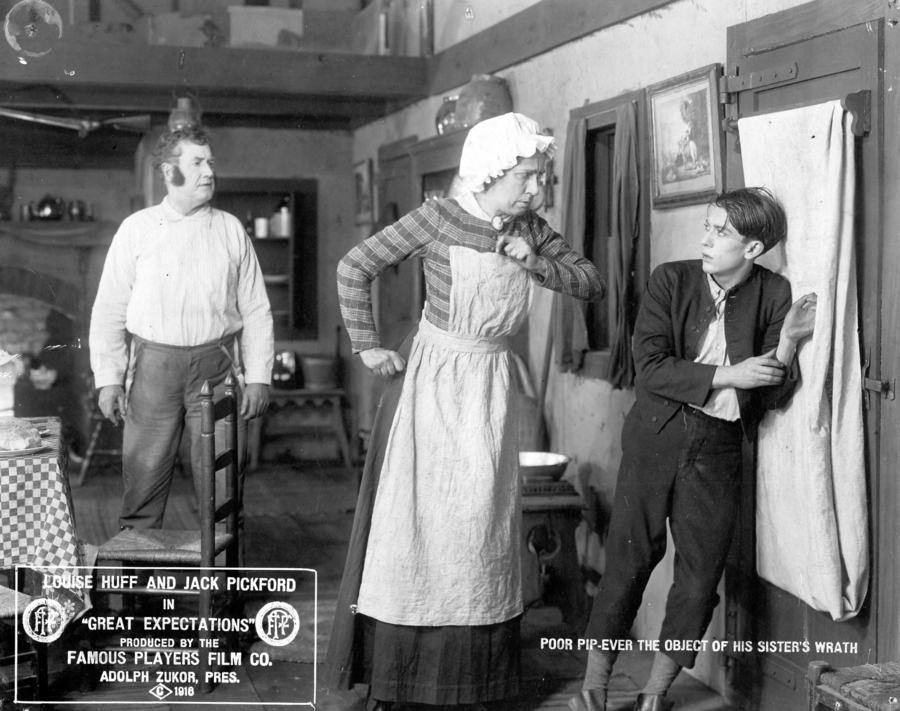
Jack Pickford brings a peculiar, mercurial energy to the role of Pip. His performance is a stark departure from the more theatrical styles seen in Mrs. Black Is Back. Pickford’s Pip is not merely a passive recipient of fortune; he is a vessel for the anxieties of class transition. His face becomes a canvas upon which the audience views the erosion of innocence. Every time he looks at Louise Huff’s Estella, we see the tragic irony of his situation: he has gained the world but lost the very soul that made him worthy of the love he seeks.
When examining the narrative pacing of this adaptation, it is fascinating to contrast it with contemporary works like Therese or the more populist Get-Rich-Quick Wallingford. While Wallingford deals with the American dream through the lens of the con-man, *Great Expectations* interrogates the English nightmare of social rigidity. The script, co-written by Paul West and Doty Hobart, manages to excise the more cumbersome subplots of the novel while retaining the central moral conflict. It avoids the melodramatic pitfalls found in The Redemption of Dave Darcey, choosing instead a path of somber reflection.
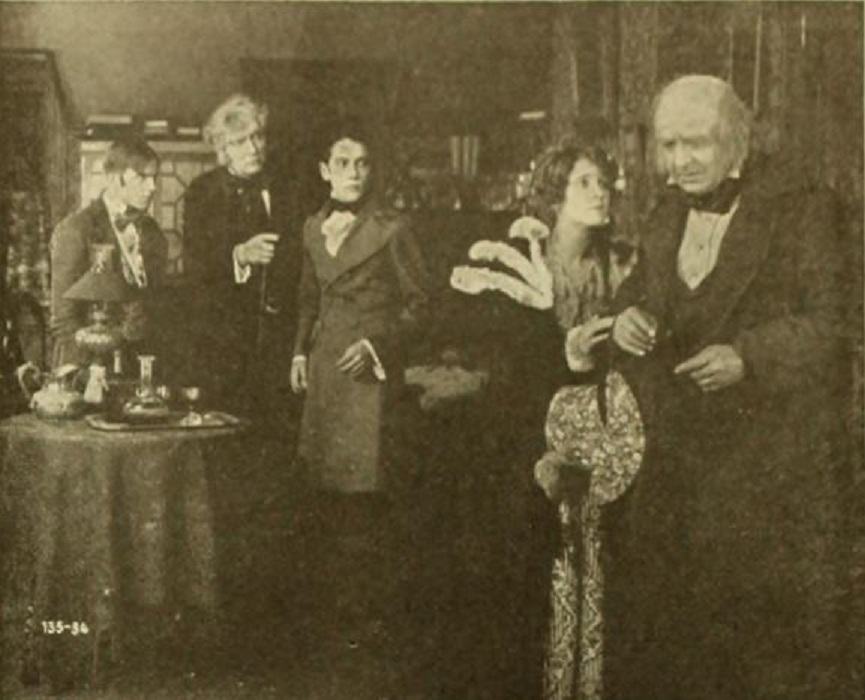
The film’s portrayal of the criminal underworld—embodied by the mysterious benefactor—shares a certain DNA with the gritty realism of The Apaches of Paris. There is a sense of lurking danger that permeates the screen, a reminder that Pip’s newfound gentility is built upon a foundation of suffering and transgression. This duality is what gives the film its lasting power. It isn't just a story about a boy getting rich; it's a story about the weight of the chains we forge in life, a theme that resonates just as strongly as the existential dread in Dan.
Technically, the film utilizes light and shadow in a way that prefigures German Expressionism. The use of deep sea blue (#0E7490) tones in the tinting of the night scenes creates a sense of oceanic isolation. This isn't the bright, commercial sheen of The Perfect '36'; this is a film that understands the psychological utility of darkness. The directors and cinematographers of the era were beginning to realize that what you *don't* see is often more terrifying than what you do. The scenes in the marshes, where Pip first encounters the convict, are framed with a wide-angle loneliness that makes the landscape itself feel like a character.
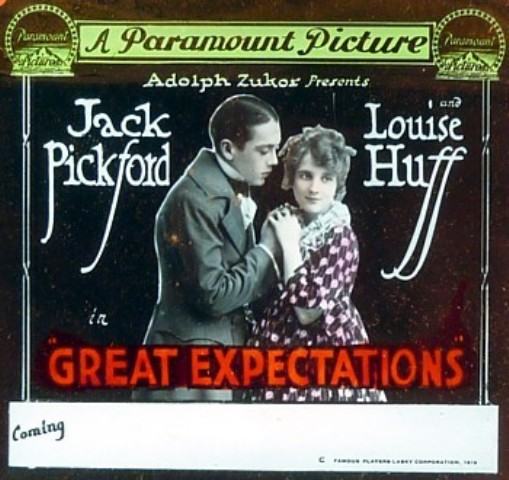
In comparison to the European sensibilities of Selskabsdamen, this American production feels more grounded in the grit of the source material. While Jack Chanty might offer a more traditional adventure, *Great Expectations* provides a psychological journey that is far more taxing and rewarding. The film’s ability to translate Dickens’ internal monologues into visual metaphors—such as the recurring motif of the forge’s fire versus the cold, dead hearth of Satis House—is a testament to the sophistication of 1917 cinema.
One cannot discuss this film without mentioning the supporting cast. William Black and Herbert Prior provide a sturdy framework for the more ethereal performances of the leads. They ground the film in a reality that prevents it from floating away into pure Gothic fantasy. This grounding is essential, much like the narrative anchors in The Port of Missing Men. Without the forge and the humble beginnings, Pip’s eventual disillusionment would lack its tragic punch. The film understands that for the 'expectations' to matter, the 'reality' must be palpable.
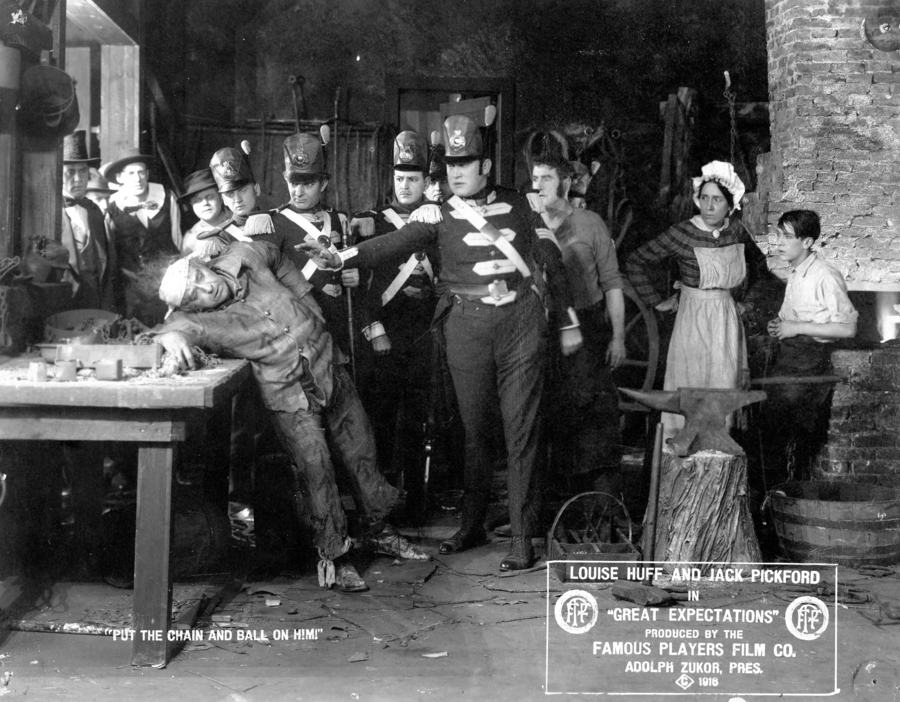
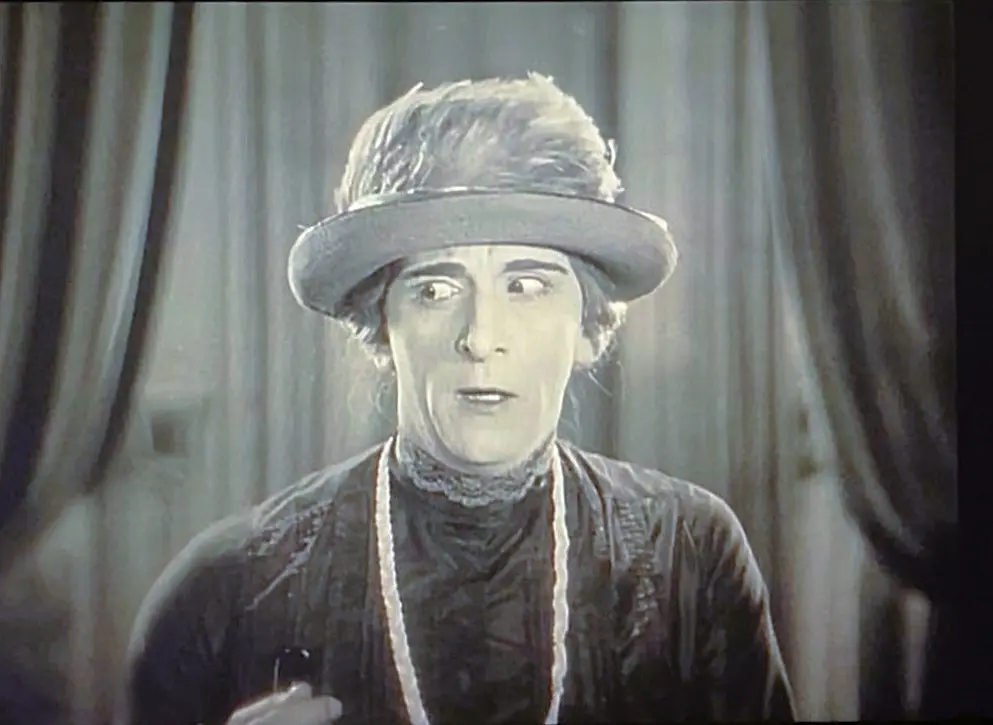
The thematic resonance of the film also touches upon the fleeting nature of youth, a subject explored with less nuance in The Springtime of Life. In *Great Expectations*, youth is not a season to be celebrated, but a resource to be exploited by the older generation. Miss Havisham uses Estella as a weapon, and Magwitch uses Pip as a proxy for his own lost potential. It is a cynical, yet deeply human, look at the way the past leeches off the future. This sense of being 'trapped' by one's circumstances, even when those circumstances appear favorable, is a recurring trope in early cinema, seen through a different lens in Trapped by the Camera.
As the narrative reaches its crescendo, the film avoids the easy sentimentality that often plagued silent dramas. The revelation of the benefactor is handled with a dark orange (#C2410C) intensity—a visual heat that mirrors Pip’s internal shame. This is where the film truly earns its place in the pantheon of great adaptations. It doesn't shy away from the ugliness of Pip’s snobbery. It forces the audience to confront the same uncomfortable truths that Dickens laid bare: that money cannot buy character, and that the 'mystic hour' of transformation is often a precursor to a harsh awakening, much like the tensions in The Mystic Hour.
Ultimately, the 1917 *Great Expectations* is a meditation on the Fruits of Desire and their often-bitter aftertaste. It is a film that understands the silence of its medium and uses it to amplify the internal screams of its characters. In the absence of Dickens’ loquacious prose, the film relies on the power of the image—the flickering candle, the dusty lace, the iron shackles—to tell a story that is as much about what is lost as what is gained. It remains a staggering achievement of early narrative filmmaking, a reminder that even in the infancy of the art form, cinema was capable of plumbing the deepest depths of the human condition.
In an era of disposable digital spectacle, returning to this 1917 treasure is a reminder of the enduring power of shadow and soul. It is not just a movie; it is a haunting, a beautiful and terrible dream of what we expect from life, and the reality that eventually finds us all.
IMDb 5.8
1935
Community
Log in to comment.