DbcultAccessing Vault...
5.8/10
Senior Film Conservator
A definitive 5.8/10 rating for a film that redefined the boundaries of cult cinema. Purity remains a cornerstone of transgressive art.
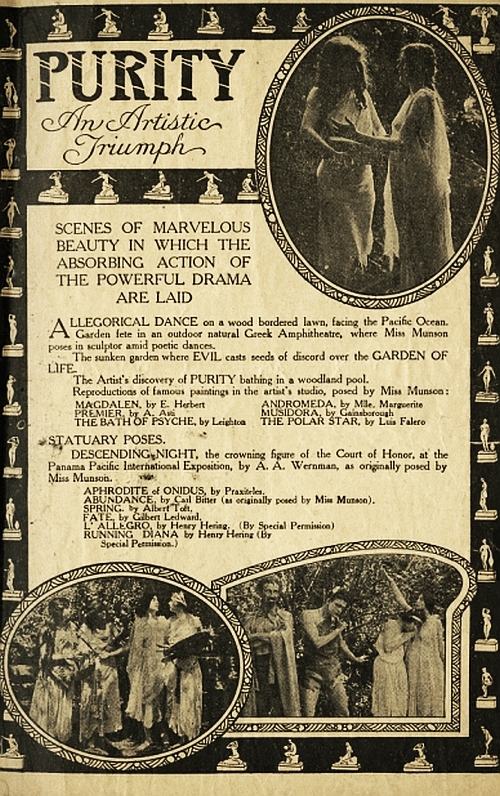
To witness the 1916 production of Purity is to engage with a cinematic artifact that transcends the mere boundaries of narrative storytelling, venturing instead into the realm of the living tableau. At the heart of this luminous celluloid dream stands Audrey Munson, the 'American Venus' whose physical proportions graced nearly every major public monument in New York City before she ever stepped before a motion picture camera. In Purity, Munson does not merely act; she inhabits an ontological space between the marble of classical sculpture and the flickering light of the early projector. The film, directed by Rae Johnston (though often attributed to the broader Mutual Film aesthetic), serves as a quintessential example of the 'art film' genre of the mid-1910s, a period where the industry sought legitimacy through the appropriation of high-culture motifs.
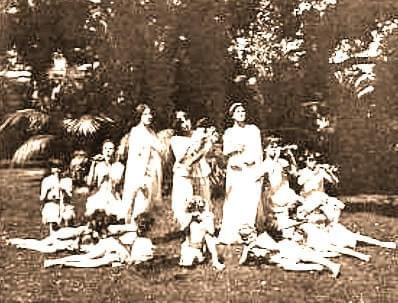
The premise is deceptively simple, yet layered with the anxieties of a pre-war society grappling with the definition of morality in art. Thornton Darcy, played with a feverish, almost ascetic intensity by Wallace MacDonald, is the quintessential starving artist. His devotion to his poem 'Virtue' is not merely professional; it is a religious vocation. When he encounters Purity Worth (Munson) by a stream, the film utilizes a soft-focus, pictorialist cinematography that evokes the pastoral idylls of the Pre-Raphaelites. This initial sequence is a masterclass in visual storytelling, where the natural world is framed not as a backdrop, but as an extension of the characters' internal purity.
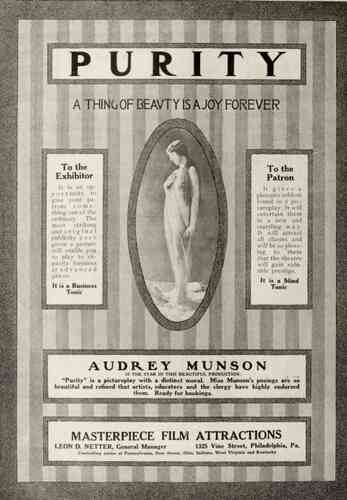
The conflict of Purity arises from the collision between Darcy’s etherealized vision of womanhood and the transactional reality of the art world. Claude Lamarque, the painter portrayed by Nigel De Brulier with a sophisticated yet predatory charm, represents the commodification of beauty. When Lamarque spies Purity bathing, the film navigates the precarious line between voyeurism and aesthetic appreciation. It is a tension that mirrors the contemporary reception of the film itself, which faced significant scrutiny from local censorship boards due to Munson’s nudity.
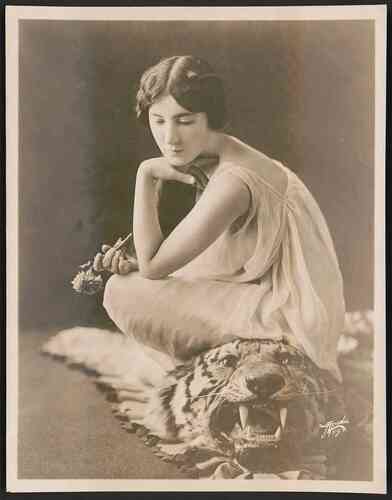
However, to dismiss the film as mere titillation is to ignore its radical subversion of the 'muse' archetype. Unlike the protagonists in Sapho or Cora, who are often victims of their own past indiscretions, Purity Worth is an agent of her own sacrifice. She chooses to pose for Lamarque—and subsequently for the fashionably decadent Judith Lure (Eugenie Forde)—not out of vanity or greed, but as a pragmatic act of devotion to Darcy’s genius. This creates a fascinating moral paradox: she 'defiles' the physical ideal of virtue to ensure the spiritual survival of 'Virtue' the poem. It is a narrative maneuver that elevates the film above the standard melodramas of the era, such as Her Great Match.
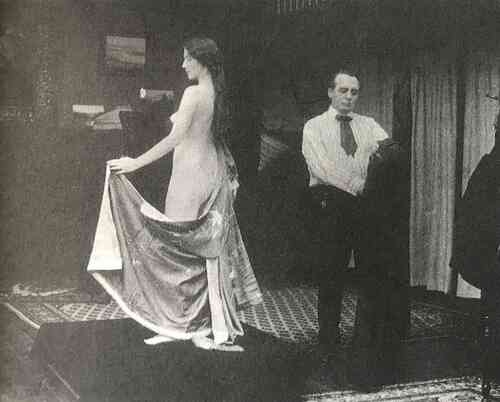
When placing Purity alongside its contemporaries, one observes a striking divergence in visual language. While films like Les amours de la reine Élisabeth relied heavily on theatrical staging and the star power of Sarah Bernhardt, Purity embraces the unique capabilities of the camera. The use of outdoor locations—the dappled sunlight filtering through the trees, the ripple of the water—creates an atmospheric depth that was rare for 1916. The film shares a certain spiritual kinship with the Russian production Pesn torzhestvuyushchey lyubvi, particularly in its obsession with the transformative power of the artist’s obsession.
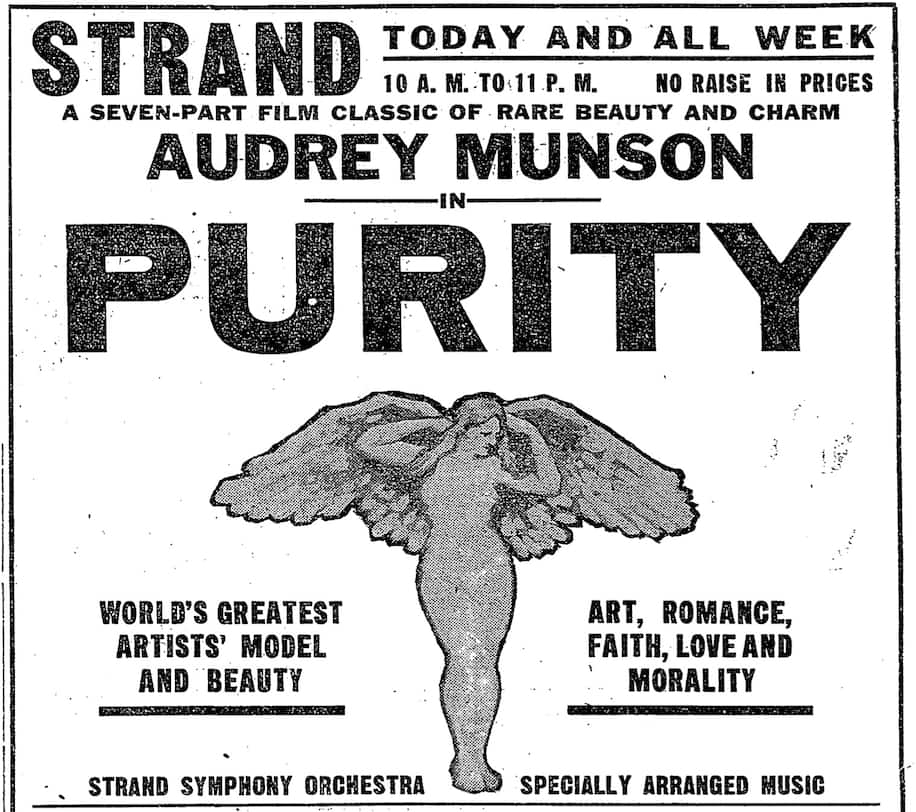
Furthermore, the social commentary embedded in the sub-plot involving Luston Black (Alfred Hollingsworth) serves as a scathing critique of the 'staged' morality of the upper class. Black’s assumption that a model is inherently 'loose' is a direct reflection of the Victorian prejudices that the film seeks to dismantle. In this regard, the film functions as a precursor to the more explicit social critiques found in A Little Brother of the Rich, though Purity maintains a more allegorical, less naturalistic tone.
The technical aspects of the film merit a rigorous examination. The transition from Darcy’s dream state to the reality of Purity gathering flowers is handled with a seamlessness that suggests a high level of directorial sophistication. The editing rhythm, while slower than the rapid-fire montage that would emerge in the 1920s, allows the viewer to linger on the compositions, much like a visitor in a gallery. This 'slow cinema' approach is essential to the film's success; it forces the audience to look past the flesh and see the form, mirroring the journey Darcy must eventually take.
The climax in the studio is particularly noteworthy for its use of space and blocking. When Darcy thrashes Black, the physical violence is framed against the backdrop of the unfinished canvas—a visual reminder that the poet's rage is a defense of an image, not just a person. The subsequent rejection of Purity by Darcy is a heartbreaking moment of dramatic irony. The audience knows that the very 'shame' he decries is the source of his current fame. This dramatic tension is far more nuanced than the straightforward heroism found in Sam Davis, the Hero of Tennessee or the action-oriented pacing of How We Beat the Emden.
The eventual reconciliation of the lovers, sparked by Darcy’s encounter with Lamarque’s finished masterpiece, is not merely a 'happy ending' necessitated by the conventions of 1916. It is a philosophical resolution. Darcy’s realization that the painting is 'Virtue' incarnate represents the triumph of the aesthetic over the dogmatic. He learns that the sacred can exist within the profane, and that the body is not an obstacle to the soul, but its most eloquent expression. This theme of enlightenment through art is also explored, albeit in a more whimsical fashion, in The Secretary of Frivolous Affairs, but never with the same gravitas found here.
In the broader context of silent cinema, Purity stands as a bold experiment in merging the high-minded ideals of the 19th century with the burgeoning visual language of the 20th. It avoids the simplistic moralizing of Are They Born or Made? and the visceral grit of The Joe Gans-Battling Nelson Fight. Instead, it offers a meditation on the cost of creation and the fragility of reputation. For the modern viewer, the film is also a bittersweet reminder of Audrey Munson’s own tragic life—a woman who was immortalized in stone and silver, yet forgotten by the very society that worshipped her image.
IMDb —
1936
Community
Log in to comment.