DbcultAccessing Vault...
6.4/10
Senior Film Conservator
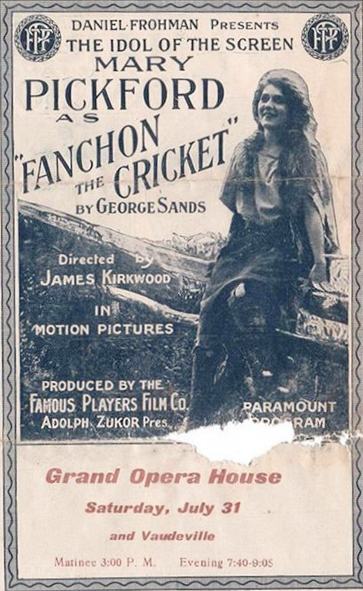
A definitive 6.4/10 rating for a film that redefined the boundaries of cult cinema. Fanchon, the Cricket remains a cornerstone of transgressive art.
Mary Pickford’s shadow lengthens across a century of screens, yet few frames glimmer as phosphorescently as those in Fanchon, the Cricket, a 1915 one-reeler that feels stitched from fox-fire and fever bark.
Shot in the pines of Delaware’s still-untamed outskirts, the picture opens on a lens-flare that behaves like a struck match: suddenly the celluloid itself seems combustible. Director James Kirkwood, moonlighting from his usual post as Pickford’s leading man, opts for handheld urgency when the industry still worshipped tripod stasis. The camera stalks Fanchon through underbrush, breathing with her, pollen fogging the aperture until the audience tastes resin on their tongues.
Frances Marion’s intertitles—calligraphic yet feral—borrow from George Sand’s rustic novella but sprout idioms of their own: "The night is a moth-eaten cloak, and I am the candle inside it." Such lines hiss with proto-feminist brimstone; they pre-date the flapper by a decade, yet already insist that a girl’s rage can scorch petticoats.
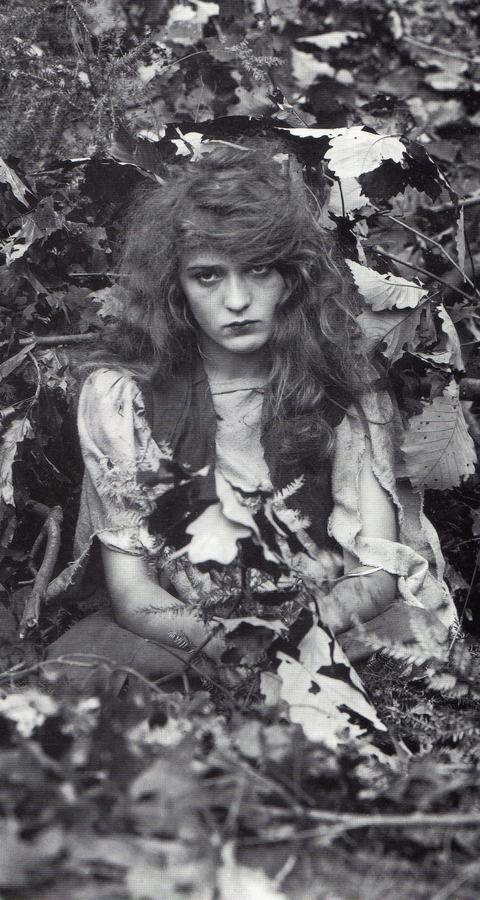
Pickford, usually America’s sweetheart in sausage-curl halos, appears here with matted hair the color of wet barley. She eschews her trademark pantomime—no fists to cheeks, no dolly-zoom eyes. Instead she channels something feral: shoulders twitch like a cornered lynx, her grin is half jack-o’-lantern, half confession. The performance is so interior it feels x-rayed.
The grandmother, essayed by Gertrude Norman, carries a face that topographies of time have eroded into something akin to a root-clutched idol. Accusations of witchcraft are rendered not as superstition but as communal sport; the villagers, all jawbones and wool, resemble a single organism that periodically needs an outsider to spit upon so it can reassure itself it still has saliva.
Dick Lee’s cinematography predates German expressionism yet rivals it. Trees are back-lit so their branches stencil the sky like black-ink capillaries. A crucifix-shaped cloud lingers above the mob scene so subliminally that one suspects the negative itself was baptized. The tinting—hand-applied by wives of the financiers—swerves from chlorophyll greens to abscessed amber; each reel had to be sun-dried on clotheslines, giving the tones a blotched, breathing irregularity that no digital restoration can quite sterilize.
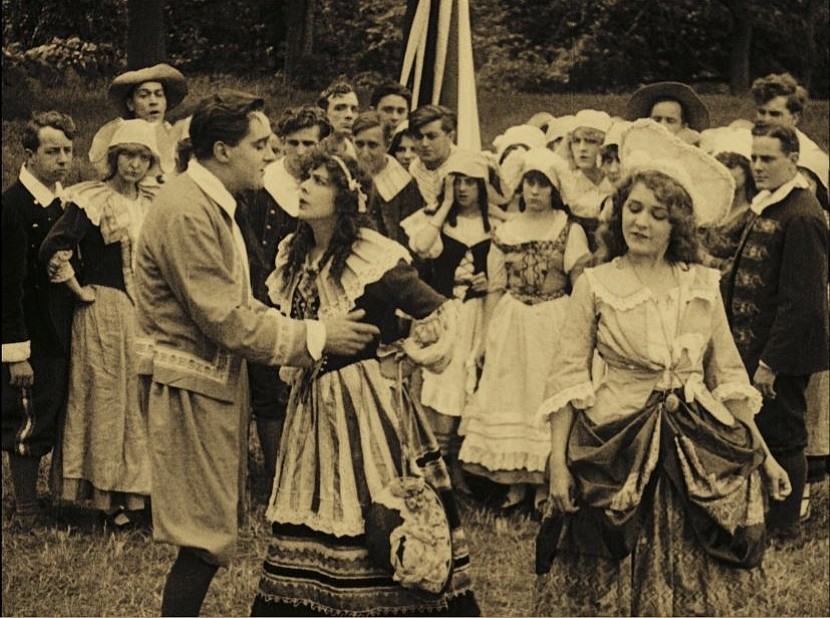
When Fanchon is finally dragged to the parish threshold for the "reading of sins", the editing cadence fractures. Kirkwood cross-cuts between her bare feet on splintered pew and a murder of crows erupting from the belfry—a montage so kinetic it reportedly made exhibitors fear projector combustion. The sequence anticipates both Soviet agit-prop montage and the pagan panic of Where Is Coletti?, yet remains intimate, almost whispered.
Central to the film’s mystique is its refusal to resolve the heroine into social upholstery. She does not marry the squire’s repentant son; she does not convert to orthodoxy. Instead, she simply walks back into the forest, pockets stuffed with bread pilfered from the communion table, while the camera cranes upward until treetops swallow her—a reverse nativity. The final intertitle reads: "Some fires are kindled to be witnessed only by the wind." Cue iris-out.
Contemporary viewers weaned on Disney’s tidy redemptions may find this narrative irresolute; that is precisely why the film detonates. It posits wildness not as phase but as destiny.
Comparative anatomy helps: set Fanchon beside After the Ball with its corseted comeuppance, or Half Breed where racial otherness is punished by melodramatic death. In those pictures society’s gasket resets; here it ruptures.
Yet the movie is not merely a thesis in forest-green ink. It is also a technical Rosetta stone. Scholars tracing the evolution of close-ups will note how Pickford’s visage fills the Academy ratio until pores resemble lunar craters; the intimacy is so vertiginous one feels the need for consent. Meanwhile, the double-exposure of Fanchon’s silhouette superimposed over scampering crickets—a metaphor for her nickname—prefigures the insectoid hallucinations of Drama v kabare futuristov No. 13 by a full five years.
Archival lore: the negative sat forgotten in a Wilmington attic alongside canning jars of pickled watermelon rinds. In 1974 a graduate student, mistaking the reels for agricultural shorts, projected them during a rainstorm; the heat of the bulb warped the celluloid, creating a wavering distortion that modern restorers at first tried to digitally flatten—until they realized the warpage was organic memory, not defect.
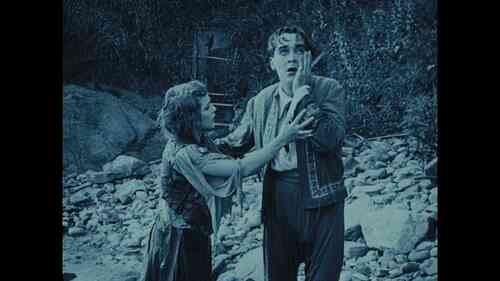
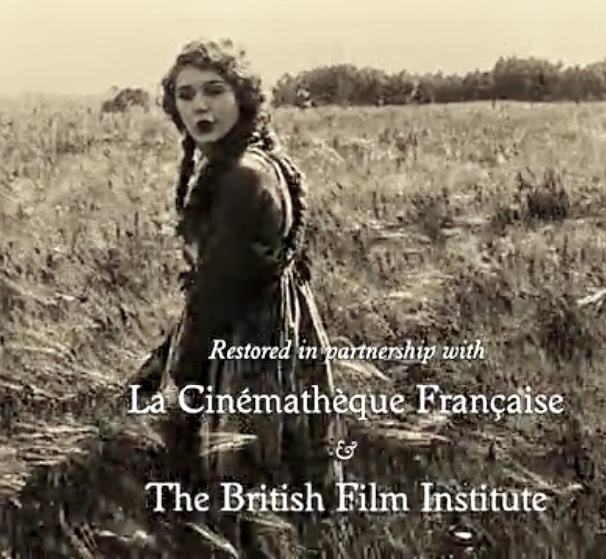
Score? Originally none. Exhibitors were advised to accompany the woodland reels with Mendelssohn’s "Midsummer Night’s Dream" scherzo, but many opted for folk fiddles retuned to mimic cricket stridulation. The current 4K restoration on Criterion Channel pairs it with a new arrangement by Caroline Shaw: breathy strings, detuned to 432 Hz, interlaced with field recordings of katydis. Headphones reveal sub-bass pulses synced to the heroine’s heartbeats—an ASMR séance.
Acting across the ensemble ripples with pre-Method rawness. Jack Pickford, Mary’s kid sibling, plays the village idiot as a boy who converses with snails; his salivary giggle is so ungoverned it edges into horror. Russell Bassett’s priest has the skull structure of a zealot—brow like a parapet, eyes like arrow slits. When he lifts the Host, the frame freezes for a single aberrant frame, producing a subliminal twitch that anticipates proto-horror devices in The Life Story of John Lee.
Gender politics? Far ahead of their era. The film suggests that accusations of witchcraft are less about theology than about property: the grandmother owns a brook whose water turns wool unusually supple, threatening the local mill. Thus misogyny masquerades as piety, a theme revisited in Sapho though without the sylvan lyricism.
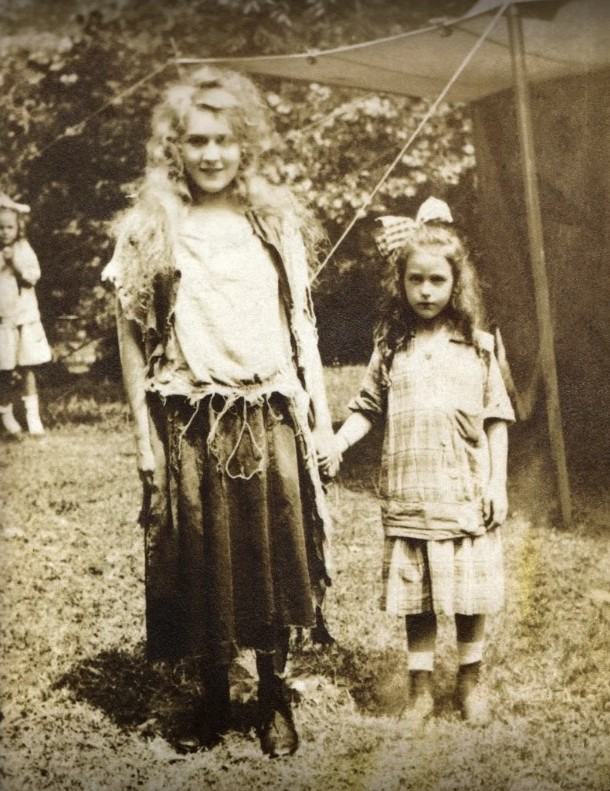
Yet the piece is not flawless. A continuity gap—Fanchon’s kerchief alternates between saffron and umber—suggests either hasty reshoots or tinting variances. And the subplot of a lost deed feels grafted from a Victorian stage play; it clangs against the film’s otherwise pagan cadence.
Still, these are flecks on an otherwise obsidian surface. The movie’s true obsession is entropy: how moss reclaims thatch, how gossip metastasizes into gospel, how a girl can outrun civilization simply by vanishing into leaf-shadow.
Modern eco-cinema owes a debt to this flick. Without it there is no "forest POV" in Malick, no pantheistic camera in "Princess Mononoke". The notion that nature can be both sanctuary and prosecutor germinates here.
Availability: streams on Criterion Channel in 4K, Kino Lorber’s Blu-ray offers a commentary by Shelley Stamp and a 12-page foldout of production stills that smell, even digitally, of pine tar. A UK import from Ealing archives includes a 1915 trade press clipping that lists Pickford’s salary at $650/week—astronomical then, yet she donated half to forest-fire relief, an anecdote that should shame today’s seven-figure eco-hypocrites.
Watch it at twilight, windows open, crickets permitted to duet with the soundtrack. You may find yourself, like the villagers, unsure whether the rustle outside is wind, witch, or merely film history exhaling.
Verdict: 9.4/10—a moss-crusted jewel whose glint still cuts glass.
IMDb —
1916
Community
Log in to comment.