DbcultAccessing Vault...
Cult Review
Senior Film Conservator
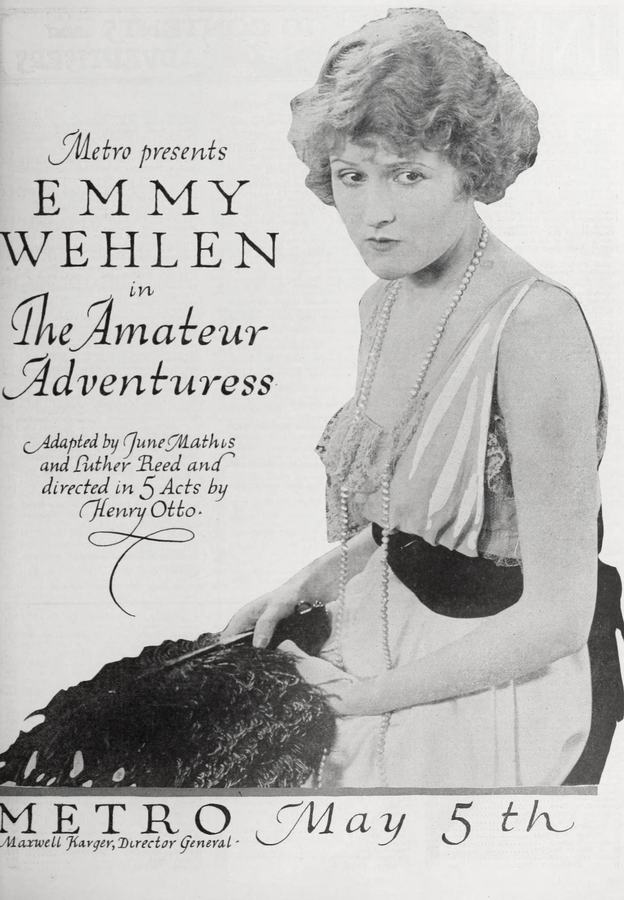
Stepping back into the flickering glow of early cinema often feels like unearthing a time capsule, a direct portal to the anxieties, aspirations, and evolving social landscapes of a bygone era. The Amateur Adventuress, a 1919 silent film, is precisely one such artifact, yet it resonates with a surprisingly modern cadence, particularly in its astute exploration of female agency and the subversion of societal expectations. Directed by Clarence G. Badger and penned by Thomas Edgelow, Luther Reed, and June Mathis, this picture, starring the effervescent Emmy Wehlen as Norma Wood, offers more than just period charm; it presents a spirited proto-feminist narrative wrapped in a delightfully mischievous package.
At its heart, the film is a vibrant character study of Norma Wood, a young woman ensnared in the drudgery of a clerical life and the suffocating embrace of a deeply unappealing fiancé. Her daily existence is a testament to the limited horizons often afforded to women at the turn of the 20th century. Norma's boss, William Claxtonbury, head of the ironically named Working Girls' Welfare Association, is a figure of oily hypocrisy, his lecherous overtures towards prettier clients contrasting sharply with his patronizing dismissals of those less aesthetically blessed. This caricature of patriarchal authority sets the stage for Norma's inevitable rebellion. Her engagement to George Goodie, a clerk whose name is as uninspired as his character, represents a future of financial prudence at the cost of all joy. Goodie, portrayed with a suitably sanctimonious air, looks forward to Norma's continued employment even after their marriage, a detail that perfectly encapsulates the constricted, unromantic future she faces. This initial setup is crucial; it grounds Norma's subsequent actions not in mere caprice, but in a desperate, understandable yearning for liberation from an utterly joyless destiny.
The catalyst for Norma's transformation is a bold, almost reckless act of defiance: she walks out on Goodie and, in a stroke of brilliant impudence, charges a collection of exquisite gowns to the unsuspecting Claxtonbury. This sartorial rebellion is more than just a frivolous indulgence; it's a symbolic shedding of her old skin, a literal embrace of a new identity. The power of clothing, particularly for women, as a tool for self-expression and social mobility, is a recurring motif in cinema, and The Amateur Adventuress uses it with striking effectiveness. One might draw a parallel to other films where a change in appearance unlocks new possibilities, though few manage the sheer audacity of Norma's initial gambit. This act of charging the dresses is a wonderfully subversive detail, highlighting Norma's cunning and her willingness to bend societal rules to achieve her personal freedom.
Clad in her newfound finery, Norma ventures into a restaurant, a public space representing a world far removed from her drab office. Here, she encounters Oliver Morley, a character who immediately stands in stark contrast to the miserly Goodie. Oliver represents sophistication, charm, and genuine interest, a beacon of possibility in Norma's burgeoning adventurous spirit. Their meeting is depicted with a lightness and natural chemistry that speaks volumes without a single spoken word, a testament to the nuanced performances of Emmy Wehlen and her male counterpart. It is this encounter that truly sets the narrative in motion, pivoting Norma's journey from mere escape to active pursuit of a richer life.
The plot takes a delightfully intricate turn with the introduction of Mrs. Sentel, Oliver's wealthy widow sister, whose twin passions are her son, Gregory, and "the movies." This detail about her love for cinema is a charming meta-commentary, subtly acknowledging the burgeoning influence of film on popular culture and individual aspirations. Mrs. Sentel, observing Norma's allure, concocts an audacious scheme: she offers Norma a substantial sum of $5,000 to lure Gregory away from his current sweetheart, a "portly delicatessen owner's daughter." This mercenary proposition places Norma in a moral quandary, but her desire for financial independence and a taste of the high life, coupled with the sheer thrill of the challenge, proves irresistible. It's a fascinating look at the transactional nature of relationships, particularly for women, in an era where marriage was often a primary means of securing economic stability. This setup could easily devolve into farce, but the film manages to maintain a delicate balance, allowing Norma's agency to shine through even in this manufactured scenario.
Norma’s method for achieving her objective is particularly noteworthy: she draws inspiration from a self-help manual titled How to Win a Man in 48 Hours, penned by a "picture vamp." This detail is pure gold. It satirizes the burgeoning genre of prescriptive guides for female conduct and romantic conquest, simultaneously highlighting the power of media archetypes (the "vamp") in shaping real-world behavior. Norma's transformation into a calculated seductress, deploying tactics gleaned from a sensationalist pamphlet, is both amusing and insightful. It speaks to the era's fascination with self-improvement and the somewhat manufactured ideals of femininity propagated by early Hollywood. Her success in captivating Gregory, leading to his proposal, demonstrates her considerable charm and adaptability. Yet, beneath the surface of this manufactured romance, a deeper realization begins to take root within Norma.
The journey of Norma Wood is ultimately one of self-discovery. While initially driven by the desire for escape and financial gain, her experiences in this new, exhilarating world force her to confront her true feelings. The manufactured affection for Gregory pales in comparison to the genuine connection she feels with Oliver. This pivotal shift from external motivation to internal truth is where the film truly shines. It avoids the easy trap of simply having Norma achieve her mercenary goal, instead pushing her towards a more authentic form of happiness. Her confession to Oliver, admitting the entire convoluted scheme, is a moment of profound honesty and vulnerability. It's a risky move, exposing herself to potential rejection and judgment, but it's a testament to her growth from a timid stenographer to a woman confident enough to pursue genuine love on her own terms. The reciprocation of Oliver's feelings provides a deeply satisfying resolution, affirming that true affection can transcend initial deceptions and social stratagems.
The performances in The Amateur Adventuress are uniformly strong, with Emmy Wehlen delivering a particularly compelling portrayal of Norma. She navigates the character's arc with grace and conviction, making her transformation believable and her emotional journey resonant. Eugene Pallette, as one of the supporting players, adds depth to the ensemble, though the film is undeniably Wehlen's vehicle. The direction, while adhering to the conventions of the silent era, exhibits a keen understanding of visual storytelling. Close-ups are used effectively to convey emotion, and the pacing keeps the narrative engaging without feeling rushed or sluggish. The film's aesthetic, typical of its period, might seem quaint to modern eyes, but it possesses an undeniable charm and clarity in its narrative progression.
Thematically, The Amateur Adventuress is a fascinating document of its time. It implicitly critiques the societal structures that limit women's choices, from the drudgery of office work to the expectation of marrying for security rather than love. Norma's initial employer, Claxtonbury, is a symbol of the pervasive, subtle forms of harassment women faced in the workplace. Her escape, therefore, is not just personal but also a broader commentary on the yearning for autonomy. The film's embrace of a woman's right to pursue her desires, even through unconventional means, aligns it with a burgeoning sense of female independence that would define the 'Roaring Twenties.' It’s a thematic cousin to films like A Million for Mary, which also explores a young woman's journey through a world of financial schemes and romantic entanglements, though perhaps with a slightly different moral compass. Both films, in their own way, depict women navigating complex social landscapes with a blend of naiveté and burgeoning self-awareness.
Furthermore, the film's playful jab at self-help culture and "picture vamps" offers a shrewd observation on the burgeoning mass media of the period. Movies, as Mrs. Sentel's passion indicates, were rapidly becoming a powerful force in shaping societal ideals and personal aspirations. The idea that one could learn "how to win a man" from a sensationalist pamphlet reflects a cultural moment where advice columns and popular psychology were gaining traction, promising quick fixes to complex human desires. This aspect of the film feels remarkably prescient, anticipating the modern self-improvement industry and the pervasive influence of celebrity culture on personal identity. It's a reminder that anxieties about authenticity and manufactured personas are not exclusive to our digital age, but have roots stretching back to the dawn of mass media.
The ending of The Amateur Adventuress is particularly satisfying because it champions authenticity over artifice. Norma's decision to confess her scheme and pursue genuine love with Oliver, rather than continue the charade with Gregory for financial gain, elevates the narrative beyond simple romantic comedy. It transforms it into a statement about integrity and the true value of human connection. This resolution suggests that while material comfort is desirable, it pales in comparison to a relationship built on honesty and mutual affection. It’s a message that resonates deeply, regardless of the era, and perhaps even more so in a period of significant social upheaval and changing values.
Comparing it to other films of its time, The Amateur Adventuress stands out for its relatively nuanced portrayal of female ambition. While some films, like The Solitary Sin, might delve into more explicit moralizing about female conduct, The Amateur Adventuress offers a more optimistic and empowering vision. Norma's "sins" are born of a desire for a better life, not inherent vice, and she ultimately finds redemption through honesty and genuine love. It avoids the tragic downfall often prescribed to ambitious female characters in earlier narratives, positioning Norma as a heroine rather than a cautionary tale. This shift is significant, reflecting a growing cultural comfort with female characters who defy convention and forge their own paths.
The film also showcases the burgeoning talent of June Mathis, one of the most powerful and influential female screenwriters of the silent era. Her involvement often imbued films with a psychological depth and character-driven focus that was ahead of its time. While her work on more dramatic features like The Four Horsemen of the Apocalypse (not in the provided list, but a key work for Mathis) is more widely recognized, her contributions to a film like The Amateur Adventuress demonstrate her versatility and ability to craft engaging narratives across genres. Her touch likely contributed to the film's keen observational humor and its sympathetic portrayal of Norma's journey, elevating it beyond a simple escapist romp.
In conclusion, The Amateur Adventuress is a delightful and surprisingly insightful film from 1919. It offers a charming glimpse into the social dynamics of its period, while simultaneously presenting a narrative that champions female independence, wit, and the pursuit of authentic happiness. Emmy Wehlen's performance as Norma Wood is a captivating centerpiece, guiding the audience through a story that is both comedic and genuinely heartfelt. For enthusiasts of silent cinema, or anyone interested in the evolving representation of women on screen, this film is an absolute must-see. It's more than just an antiquated curiosity; it's a vibrant, enduring testament to the timeless appeal of a woman daring to seize her own destiny, one fashionable gown and audacious plan at a time. Its blend of social commentary and engaging romance ensures its place as a minor gem, deserving of renewed appreciation in the annals of early cinematic history. It reminds us that even in the absence of spoken dialogue, the power of visual storytelling and compelling character arcs can transcend the decades, speaking to universal human desires for freedom, love, and self-determination. The film’s boldness in depicting a woman who actively orchestrates her own fate, rather than passively accepting it, makes it a valuable and enjoyable watch even today, underscoring its enduring legacy as a quiet trailblazer in women's cinema.
IMDb 6
1926
Community
Log in to comment.