DbcultAccessing Vault...
Cult Review
Senior Film Conservator
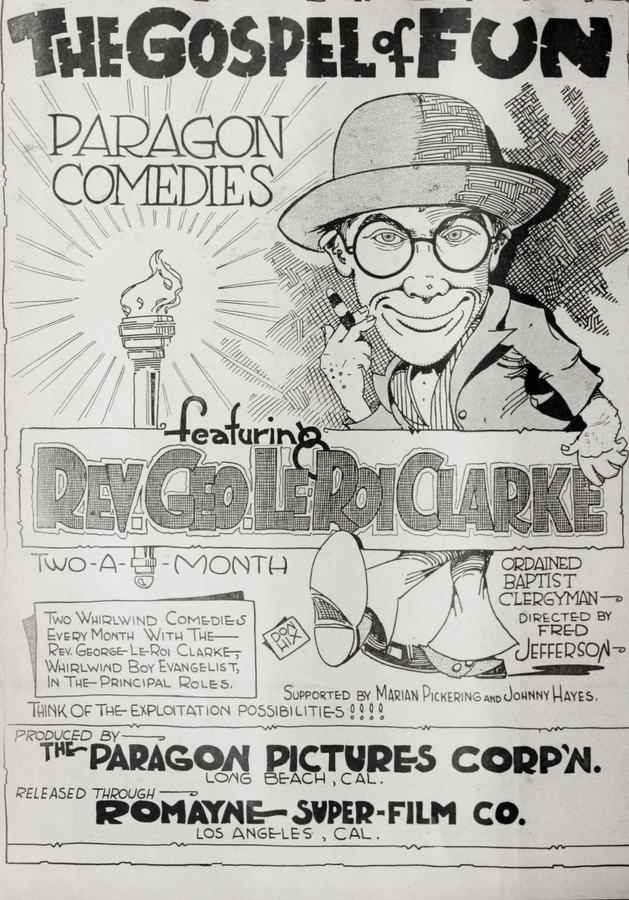
A city that eats clothes and spits out riddles
Imagine the nickelodeon’s flicker as a stroboscopic mouth: each frame a tooth gnawing at George’s dignity. The film’s first act is a masterclass in textile humiliation—tailored serge evaporates, leaving behind a pallid anatomy of urban anxiety. Costume here is character; its absence, a thesis. The stolen suit is never recovered, a deliberate void that forces the spectator to confront the social skin we rent daily.
Director Wilson S. Wilson (yes, the redundancy is intentional) lenses the theft in a single dolly shot that glides past fire escapes dripping laundry like half-mast flags. The effect is both farce and funeral: Chaplin’s trousers下滑 via conveyor belt, crossed with the chill of a Buñuel razor.
George’s trajectory from clothed reader to pantless sleuth embodies the modern subject’s perpetual strip-search under capital. The detective manual—its garish cover screaming "Ten Lessons in Ten Chapters"—becomes a McGuffin scripture. He clutches it to groin like Augustine’s stolen pears, except shame has already been digested by the metropolis.
Refuge arrives via a stage-door ajar, exhaling greasepaint and gin. Inside, a diva—credited only as "The Pneumatic Venus"—is rouging knees for the cabaret’s third show. Wilson cuts from George’s shivering shins to her statuesque calves, a match-cut that queers the gaze: voyeurism inverted, the male body as consumable spectacle.
The woman’s room is a diorama of artifice: ostrich feathers oscillate like jellyfish, powder hangs in the air like early-morning coal fog. Here the film pirouettes into gendered espionage. George dons a discarded negligee—not for titillation but for camouflage—turning the fabric into a Trojan horse. The corset compresses; the mind expands. In this elastic space, undergarments are passports, stockings are Morse code, and every garter is a potential grappling hook.
The kidnapping plot surfaces like a half-remembered nightmare. We never see the actual snatch; Wilson understands that in the 1920s, imagination outruns censorship. Instead, we witness the aftermath: a ransom note assembled from cigarette-card typography, a champagne magnate pacing inside a velvet-lined cell where mirrors reflect only his wallet. The daughter—nameless, blonde, commodified—spends most of the reel inside a wooden crate labeled "Fragile: Parts of Parts." She is literal goods-in-transit, her value fluctuating with every stock-ticker clatter.
Compare this to the damsel-webs in The Girl in the Web, where captivity is aestheticized into tableaux vivants. Wilson refuses such fetish; the crate is scuffed, nail heads protrude like acne, and when the lid finally pries open, the heiress emerges with splinters in her palms—pain as proof of personhood.
Clarke, a vaudeville hoofer moonlighting as matinee idol, possesses the elasticity of Harold Lloyd minus the hubris. His face—a constellation of freckles and foreboding—registers panic in micro-flinches. Watch his eyes in the interrogation sequence: they dart toward a fly-specked calendar picturing a flapper smoking a kazoo, then back to the cop’s badge, calculating whether art or authority offers quicker escape.
Because dialogue is absent, the body must orate. Clarke’s knees conjugate verbs; his shoulder blades stutter adjectives. When he finally confronts the kidnappers—stock villains with waxed mustaches thick as paintbrushes—he does so by pretending to be their own reflection, a pantomime that folds identity into mise en abyme. The gag is old, yet Clarke’s trembling lower lip sells it as ontological terror.
Cinematographer Otto Ottensen (Danish immigrant, alcoholic, genius) shoots the city as if it were a zoetrope built by Piranesi. Rooftops tilt at impossible gradients; shadows pool like spilled molasses. Intertitles appear sparingly, sometimes backwards, suggesting the film itself is a palimpsest the projectionist mis-threaded.
Wilson edits like a caffeinated ragtime pianist. Chase sequences accelerate from 18 fps to 26 fps, making footfalls resemble hail on tin. Conversely, the moment George cradles the freed heiress is under-cranked to 12 fps; their embrace smears into a ghostly freeze, as if time itself has eczema.
Sound, though absent, is implied. Intertitles grow onomatopoeic: "SKREE," "THWUMP," "SILENCE LIKE A FAT SPIDER." When the cops slap George’s wrists, the intertitle simply reads "HANDCUFFS THAT CLANG OF MOTHER’S DISAPPOINTMENT"—a line so poetically bonkers it vibrates in the viewer’s skull long after the house lights rise.
Cross-dressing here is not a punchline but a socioeconomic survival kit. George’s adoption of feminine attire momentarily loans him the invisibility that wealth purchases. The chorus girls, initially objects of titillation, morph into a proletarian battalion—pin money and bobby pins become currency for espionage. One maiden distracts a guard by performing the can-can atop a packing crate; her knickers, glimpsed for two frames, are patched with newspaper headlines announcing market crashes. The body as satire, lingerie as ledger.
Contrast this with the heiress’s silken cocoon: privilege immobilizes as effectively as rope. When she finally stands, her satin gown is shredded; she is reborn into the democracy of tatters, equal now with George’s underpants—garments that, for all their humility, at least permit locomotion.
The father, played by corpulent character actor Silas T. Dour, spends the film’s duration in a mahogany-lined study, clutching a brandy snifter that reflects his own bloated face. Wilson frames him through a fisheye lens distorts the study into a whale’s belly. He offers rewards in a monotone so flat it could level mountain ranges, yet never moves to search himself. His immobility critiques the idle rich who commodify crisis into anecdote for the club menu.
This anticipates the dynastic malaise of The Legacy of Happiness, though Pussyfoot refuses redemptive charity. When the heiress returns, the father pours a second glass—still no embrace. The camera lingers on the liquid’s trembling meniscus, a metaphor for affect sloshing but never spilling.
Released months after the dissolution of the Ottoman Empire yet before the discovery of insulin, Pussyfoot vibrates with interwar vertigo. Bootleg liquor steams in coffee cups; flapper sequins catch the glare of a stock-market bubble soon to hemorrhage. The film’s obsession with crates, boxes, and packing tape prefigures the Great Depression’s Hoovervilles—bodies stacked in cardboard like sardines.
Contemporary viewers may detect proto-noir DNA, yet the tone is too mercurial for nihilism. Instead, it belongs to that fleeting genre scholars call "slapstick-surrealism," cousins to Perils of Paprika or the Soviet agit-boat odyssey Krasnaia Zvezda. All share the conviction that social critique is most lethal when sugar-coated in custard pie.
The surviving print, housed in the Cinematheque of Perpetual Twilight, runs 47 minutes—at least nine minutes shorter than the original. Censor boards from Pennsylvania to Pasadena snipped anything hinting at "improper undergarment exposure." Hence, the famous ladder sequence—where George scales a fire escape using bloomers as rope—exists only in stills. One surviving frame shows Clarke mid-swing, his face a rictus of triumph and testicular anxiety. It’s the sort of lacuna that fuels PhD dissertations and fever dreams in equal measure.
Critics trampled Pussyfoot on release, labeling it "a guttersnipe’s hallucination." Yet its DNA replicates in unexpected petri dishes. Jacques Tati cribbed the interrogation mirror gag for Monsieur Hulot; the Marx Brothers looted the dressing-room anarchy. Even Hitchcock, ever the magpie, echoed the crate motif in Sabotage. Most pertinently, every postmodern detective who solves crime while culturally disrobed—think Inspector Clouseau or Dirk Gently—owes Clarke’s skivvied sleuth a royalty check.
Pussyfoot argues that identity is a book you can’t finish reading because someone steals your trousers before the last chapter. In an era when personal data is pickpocketed by algorithms, the film’s centennial punch still bruises. Watch it for the pratfalls, rewatch it for the panic. Let its shadow teach you how to survive the next time the city decides to undress you—whether in a boardroom, a bedroom, or the fluorescent glare of a midnight subway platform.
Verdict: A kaleidoscope of exposed nerves and exposed shins—hilarious, horrifying, and mandatory viewing for anyone who has ever felt the draft of vulnerability.
IMDb —
1926
Community
Log in to comment.