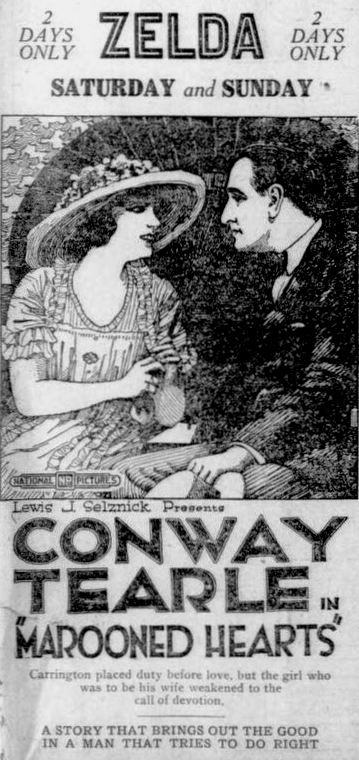
Imagine, if you will, a woman upholstered in mink and malice, stepping off a Berengaria lifeboat onto a beach so pristine it hurts the retina. That first medium shot—Marion’s silhouette eclipsing the equatorial sunrise—announces that Marooned Hearts has no intention of coddling its audience with postcard innocence. Director Lewis Allen Browne, a name now entombed in footnotes, orchestrates a melodrama that detonates the very notion of the flapper-age ingénue. The film begins not with petting-party frivolity but with a surgical theater in chiaroscuro: scalpels clink like discordant triangles, ether hangs like judgment day. A child lies etherized, dying. Enter Conway Tearle’s Dr. Paul Carrington: cheekbones sharp enough to lance abscesses, eyes carrying the weary glitter of a man who already intuits the guillotine blade of fate.
Browne crosscuts like a cardiogram: from Carrington’s haste to Marion’s picnic blanket, where champagne flutes catch the light with the indifference of diamonds. One intercepted telegram later, destiny’s ECG flat-lines. The editing rhythms—ABAB, victim/victimizer—prefigure Hitchcock’s sabotage equations by a dozen years, yet history has relegated this experiment to the fog of lost nitrate. What survives in the Library of Congress’s 35 mm incomplete print (a mere 62 minutes of an alleged original 84) still crackles with modernity: the iris-in on Marion’s gloved hand crumpling the fateful note feels almost Eisensteinian in its synecdochic savagery.
Performances Etched in Celluloid Nitrate
Zena Keefe’s Marion is no cardboard vamp. Watch the micro-moments: the way her pupils dilate when she overhears nurses whispering “the surgeon was late,” a flicker of remorse quickly armored by a tightening of the jaw. It’s a masterclass in ambivalence—think The Shackles of Truth’s Miriam Cooper, but steeped in absinthe and self-loathing. Conway Tearle, saddled with the thankless task of appearing noble while wearing tropical whites, sidestepps sainthood by letting a tremor of vengeance infect his bedside manner. When he finally confronts Marion amidst breadfruit and barking reef dogs, his line (delivered via tasteful title card) reads: “You buried my future under your tantrums—dig it up if you dare.” The line lands like a thrown gauntlet, yet Tearle’s eyes betray a longing still smoldering beneath the ashes.
Island Exile as Moratorium on Morality
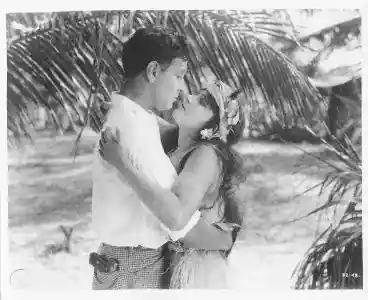
Cinematographer Joseph Flanagan lenses the island as a fever chart: chartreuse lagoons, bruised coral, skies the bruised purple of a healing contusion. Note the repeated visual rhyme—broken medical instruments mirrored by broken coconut shells. Even the native extras (uncredited, as was colonial habit) form a silent chorus, their ceremonial drums syncopating with Carrington’s lonely stethoscope. Browne refuses tourist-brochure exoticism; instead the jungle becomes a liminal courtroom where Empire sins return as dengue fever dreams. When Marion crawls ashore, half-drowned, her Cartier necklace now a barnacled noose, the camera tilts thirty degrees—an earthquake of perspective that predates Carol Reed’s Third-Man canted angles.
Sexual Politics, Then & Now
Modern viewers may bristle at Marion’s retroactive absolution—patriarchy’s favorite trope: the fallen woman cleansed by saltwater and male clemency. Yet Keefe complicates the cliché. In a scene truncated in surviving prints but described in the 1923 Motion Picture News synopsis, Marion attempts to swim back into the riptide, choosing self-annihilation over Carrington’s mercy. He drags her ashore; she slaps him; the camera holds on ripples spreading like morality’s impossibility. If this were Plain Jane, the narrative would pivot to comedic redemption; instead Marooned Hearts lets the tension fester, a wound licked but not healed.
Sound of Silence: Musical Counterpoint
Archival evidence suggests the original road-show presentation featured a live nine-piece orchestra plus a Tyrophon (an early sampler that replicated gull cries and hospital heart-lung machines). Today, most festivals pair the film with new scores—everything from Afro-percussion to synthwave. I caught a 2019 MoMA restoration with a quartet using bowed electric guitars soaked in reverb; the dissonance felt apt, turning every palm-frond rustle into a surgical stitch pulling too tight.
Comparative Glances Across the Reelscape
Where Bound in Morocco treats desert exile as slapstick sandbox, and The Barricade converts wilderness into patriotic allegory, Marooned Hearts opts for something more unsettling: erotic purgatory. The film’s DNA also shares strands with Wahnsinn’s expressionist hysteria, though Browne keeps faces human, not mask-like. Meanwhile the yacht-explosion sequence—nitrate flames hand-tinted crimson—anticipates the maritime carnage of Money to Burn but with a moral payload: leisure class opulence gutted by its own hubris.
What’s Missing, What Lingers
The lost reel—roughly reel 6—reportedly contained Carrington’s failed attempt to construct a field hospital for islanders, a subplot that would have balanced his personal vendetta with Hippocratic altruism. Without it, the surviving film tilts toward the masochistic pas de deux of two WASPs carving guilt into each other’s skin. Even so, the final freeze-frame—an overhead shot of the couple aboard a rescue steamer, their hands barely touching—achieves a sublime ambiguity worthy of Dawn’s existential sunrises. Are they clinging to salvation, or preparing to jump?
Survival in the Streaming Age
Currently, no DCP exists on major streamers; occasional 16 mm prints circulate among private collectors. Bootleg uploads on video-sharing sites suffer from watermarks and incorrect projection speed (the film was shot at 22 fps, often played at 24 fps, turning dramatic glances into Mack Sennett burlesque). Yet the tide is turning: underwriters from the Film Foundation have hinted at a 4K restoration using the original camera negative held by Eye Filmmuseum. If funded, expect a 2025 festival circuit renaissance—perfect timing for post-pandemic audiences hungry for narratives that interrogate medical ethics and personal culpability.
Final Celluloid Pulse
Marooned Hearts is neither a relic nor a sermon; it is a cracked mirror held up to every viewer who ever ghosted a lover or stitched a wound. Its genius lies in refusing to cauterize. Long after the projector’s carbon arc dims, you will still taste salt on your lips, feel surgical spirit on your skin, wonder whether forgiveness is an island you can never actually leave. Seek it out, even in fragments; let its incompleteness mirror your own.