DbcultAccessing Vault...
Cult Review
Senior Film Conservator

Stepping into the world of The Brief Debut of Tildy is akin to opening a forgotten diary, its pages brittle with age but its ink still vibrant with human emotion. This silent film, a delicate cinematic adaptation of O. Henry’s poignant short story, offers a microcosm of life’s most profound ironies, delivered with an understated grace that only the masters of early cinema could truly achieve. It’s a narrative that, despite its brevity, resonates deeply, exploring themes of invisibility, the intoxicating power of perceived affection, and the crushing weight of disillusionment. For anyone with an appreciation for the subtle art of storytelling and the enduring power of human vulnerability, this film is an essential, albeit bittersweet, viewing experience.
The film introduces us to a setting both mundane and infinitely relatable: a bustling, unpretentious restaurant, a stage for countless daily dramas unseen by most. Here, we encounter two waitresses, their lives a study in stark contrast. Aileen, portrayed with an effortless charm that captures the eye, is the recipient of a constant stream of male attention, a veritable magnet for flirtation and admiring glances. Her world, though perhaps equally demanding, is softened by the validation of being seen, of being desired. Then there is Tildy, the heart and soul of this picture, embodied with a heartbreaking sincerity by Alice Rodier. Tildy exists in a perpetual state of quiet anonymity. Her movements are efficient, her demeanor unassuming, her presence almost spectral. Male customers, their gazes flitting past her as if she were merely an extension of the furniture, never once acknowledge her, never offer a smile, a compliment, or even a fleeting moment of recognition. This profound lack of external validation has, over time, sculpted Tildy’s inner world, rendering her almost invisible to herself, a ghost in her own life. It’s a portrayal that immediately elicits empathy, a silent scream for recognition that many can understand.
The narrative pivot arrives with the entrance of a customer, played by William Shea, whose performance beautifully encapsulates the dual nature of despair and accidental kindness. This man, recently shorn of his livelihood and having sought solace in the numbing embrace of alcohol, is adrift. In a moment of unguarded emotion, perhaps mistaking Tildy for a figment of his drunken sorrow or simply seeking human connection, he embraces and kisses her. It’s a gesture born of desperation, not genuine affection, yet its impact on Tildy is nothing short of cataclysmic. For her, it is not merely a kiss; it is an affirmation, a sudden, blinding flash of light in a life shrouded in shadow. This unsolicited, accidental act of tenderness shatters the edifice of her self-perceived invisibility, transforming her from a forgotten fixture into a woman who has been seen, touched, and, she believes, desired. Rodier’s portrayal of this awakening is masterful, conveying a whirlwind of emotions through subtle shifts in posture, the widening of her eyes, and a newfound, hesitant glow that radiates from within.
The aftermath of this 'brief debut' is where the film truly shines, delving into the intoxicating power of hope and the human capacity for self-delusion, however beautiful. Tildy, now imbued with a radiant sense of self-worth, cannot contain her secret. The world, once a dull canvas, now bursts with vibrant hues. She begins to take meticulous steps to beautify herself, investing in new ribbons, perfumes, and perhaps a more fashionable hat – small luxuries that, to her, signify a profound personal transformation. These aren't merely cosmetic changes; they are outward manifestations of an inner metamorphosis. Her mind, once confined to the monotonous rhythm of her daily chores, now soars with vivid visions of future happiness, romantic encounters, and a life finally lived in the spotlight of affection. The film uses dream sequences or heightened visual language to convey these soaring aspirations, allowing the audience to witness the full, glorious extent of Tildy’s newfound joy. It’s a testament to the film’s emotional intelligence that we root for her, even as a creeping sense of dread begins to settle in, the audience acutely aware of the precarious foundation upon which her happiness rests.
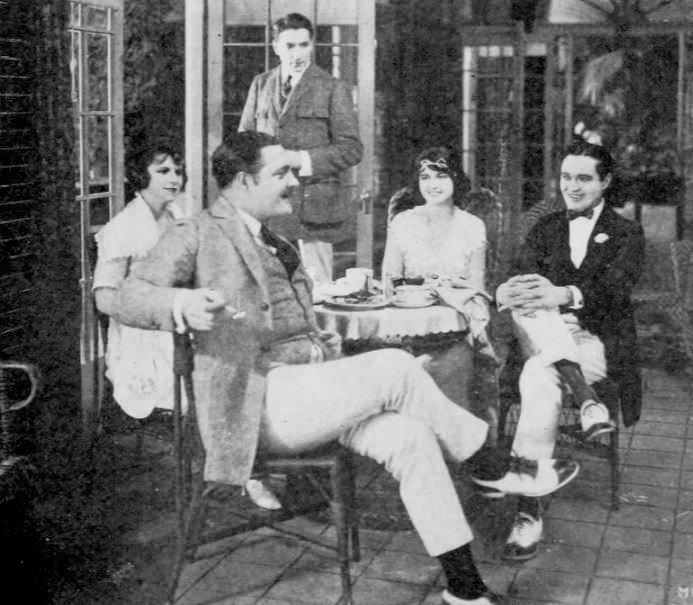
The silent film era, particularly works like this, often excelled at conveying complex internal states without dialogue, relying instead on the nuanced performances of its actors and the evocative power of its visual storytelling. The Brief Debut of Tildy is a prime example of this artistry. The performances are universally strong. Alice Rodier, as Tildy, carries the emotional weight of the film with remarkable grace. Her transformation from a downtrodden, almost meek figure to one radiating a fragile, nascent confidence is utterly believable and profoundly moving. William Shea, as the unwitting catalyst, manages to convey both the pathos of his character’s situation and the accidental cruelty of his actions. Even the supporting cast, including Betty Blythe, Bernard Siegel, and Alice Terry, contribute to the film’s rich tapestry, each adding a layer of authenticity to the restaurant’s bustling atmosphere. The direction, likely by a master of the form given the era's proficiency, ensures that every gesture, every facial expression, every subtle shift in light or shadow, contributes to the overarching emotional arc. It's a masterclass in visual communication.
The screenplay, adapted by A. Van Buren Powell from O. Henry’s original story, retains the author’s signature blend of sentimentality and sharp, often bittersweet, observation of human nature. O. Henry was a master of the twist ending, and while this film might not feature a dramatic reversal in the conventional sense, it certainly builds towards an inevitable, heartbreaking resolution that is characteristic of his work. The script understands the delicate balance between hope and despair, allowing Tildy's joy to blossom fully before the inevitable frost descends. This narrative structure, allowing the audience to invest deeply in Tildy’s burgeoning happiness, only amplifies the eventual emotional impact. It’s a narrative strategy that ensures the audience feels the full weight of her eventual sorrow, making her journey all the more resonant.
Comparing The Brief Debut of Tildy to other films of its period helps to contextualize its unique strengths. While not as overtly dramatic as some contemporary melodramas, its quiet power rivals films that explore similar themes of social class and unrequited longing. For instance, one might find thematic echoes in films like The Girl in the Checkered Coat, which also delves into the lives of working-class women and their romantic aspirations, though perhaps with a different narrative trajectory. Similarly, the poignant portrayal of a woman’s internal life, often overlooked by society, connects it to the silent era’s burgeoning interest in psychological depth, a precursor to more complex character studies. The film’s focus on the 'little people,' the uncelebrated members of society, is a hallmark of O. Henry's work and a theme that resonated deeply with audiences then, and continues to do so today. It reminds us that every individual, no matter how seemingly insignificant, carries within them a universe of hopes and dreams, often unseen by the wider world. This empathetic lens is precisely what makes the film so enduringly powerful.
The film's most devastating moment arrives with the reappearance of the customer. After a lapse of a few days, during which Tildy has lived in a blissful, self-constructed reverie, he returns. His memory of the incident is hazy, shrouded in the fog of alcohol and the passage of time. He sees Tildy not as the woman he briefly, accidentally, made to feel special, but as just another waitress, perhaps a little too eager. With a perfunctory air, he apologizes for his 'disgraceful conduct,' a phrase that slices through Tildy’s heart like a cold blade. He departs, leaving behind not just a restaurant but a woman utterly shattered, her vibrant visions of future happiness crumbling into dust. Rodier's performance in this scene is absolutely gut-wrenching, her face a canvas of rapidly shifting emotions: confusion, dawning horror, and finally, profound, soul-crushing heartbreak. The brief, almost clinical nature of his apology, delivered without recognition of the profound impact his actions had, underscores the vast chasm between Tildy’s internal world and the indifferent reality around her. It’s a brutal reminder of how easily one person’s fleeting moment of carelessness can become another’s lifelong wound.
The Brief Debut of Tildy is more than just a silent film; it is a timeless exploration of the human condition. It speaks to the universal yearning for recognition, for love, for a moment to truly shine, however brief. It’s a narrative that forces us to confront the fragility of hope and the often-unseen suffering of those around us. The film’s emotional depth lies in its ability to make us feel Tildy’s joy as intensely as her sorrow, making her eventual heartbreak all the more poignant. It serves as a powerful reminder that sometimes, the greatest tragedies are not those of grand, dramatic scale, but those of quiet, personal devastation, unfolding in the unseen corners of everyday life. This film, though a product of its time, transcends its era through its profound empathy and its keen understanding of the human heart. It is a cinematic gem that deserves to be rediscovered and cherished for its enduring relevance and its exquisite, heart-rending portrayal of a life touched, however briefly, by the illusion of love. It lingers in the mind long after the final frame, a testament to the power of a story well told and a performance deeply felt.
The beauty of silent cinema, particularly in a piece like this, lies in its reliance on visual storytelling and the expressive power of its actors. There are no words to distract from the raw emotion conveyed through gesture, expression, and the subtle cues of the environment. This makes films like The Brief Debut of Tildy incredibly immersive, demanding a different kind of engagement from the viewer. We become acutely attuned to every nuance, every flicker of emotion across Alice Rodier’s face, every hesitant movement that speaks volumes more than any dialogue ever could. It’s a masterclass in non-verbal communication, a skill that modern cinema, with its often verbose scripts, sometimes forgets. The film’s ability to evoke such profound empathy and understanding without uttering a single word is a testament to its artistic merit and the timeless genius of its creators. It’s a stark reminder that the most powerful stories often don’t need sound to resonate; they just need a soul.
Moreover, the film, through its simple yet profound narrative, touches upon societal themes that remain relevant even today. The disparity between how Tildy and Aileen are treated highlights issues of beauty standards, social hierarchy, and the often-unseen struggles of those on the margins. Tildy's desperation for recognition is not just a personal failing; it's a reflection of a society that often overlooks those who don't fit conventional molds of attractiveness or social standing. Her brief moment of elation, followed by such devastating heartbreak, serves as a poignant commentary on the human desire for connection and the crushing reality when that connection proves to be a mirage. It's a subtle critique, perhaps, of a world that values superficiality over genuine human worth, a world where a simple, accidental gesture can ignite a universe of hope in one person while being utterly forgotten by another. This social commentary, woven subtly into the fabric of the personal narrative, elevates the film beyond a simple love story into something far more profound and universally applicable.
In conclusion, The Brief Debut of Tildy is a remarkable piece of cinematic history that continues to captivate and move audiences with its tender portrayal of human vulnerability and the bittersweet nature of dreams. It stands as a testament to the enduring power of O. Henry’s storytelling and the evocative artistry of early silent film. For those who appreciate narratives that delve into the quiet corners of the human heart, this film offers a profoundly affecting experience. It’s a film that reminds us to look closer, to see the unseen, and to understand the profound impact of even the smallest gestures on the lives of others. A true gem, deserving of its place in the annals of poignant cinema, and a film that will undoubtedly leave an indelible mark on your soul. Its themes are universal, its performances timeless, and its emotional resonance, utterly unforgettable. Seek it out, and allow yourself to be transported to a time when silence spoke volumes, and a brief debut could mean everything and nothing at all.
IMDb —
1927
Community
Log in to comment.