DbcultAccessing Vault...
Cult Review
Senior Film Conservator
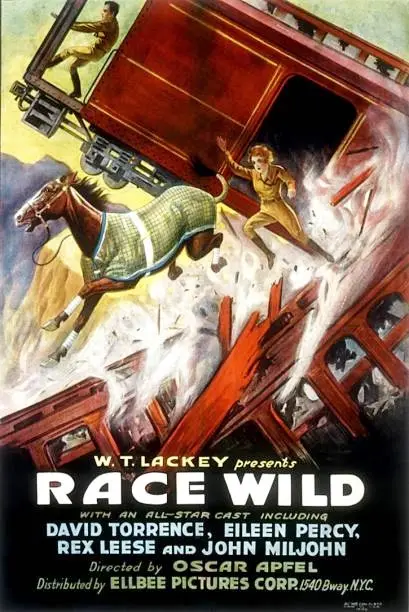
Is Race Wild worth watching today? Short answer: yes, but with significant caveats. This 1924 silent film, a thrilling ride through the cutthroat world of horse racing, offers a fascinating glimpse into early cinematic storytelling, brimming with melodrama and genuine suspense.
It is absolutely for devotees of silent cinema, those who appreciate the raw, expressive power of acting without dialogue, and anyone intrigued by the foundational narratives that shaped Hollywood. Conversely, it is decidedly not for viewers seeking modern pacing, complex character studies, or a purely realistic portrayal of its subject matter.
This film works because its core narrative is universally compelling: an underdog story, familial stakes, and clear-cut villains. The silent format, far from being a hindrance, forces a reliance on visual storytelling and heightened emotion that, when executed well, can be incredibly effective.
This film fails because its melodramatic excesses occasionally tip into unintentional comedy for contemporary audiences, and the characterizations, while effective for the era, lack the nuanced depth we now expect. Some plot conveniences also strain credulity.
You should watch it if you have an appreciation for cinema history, enjoy a straightforward, high-stakes narrative, and are willing to engage with the unique artistic language of the silent era. It’s a foundational piece of a genre that would dominate for decades.
The allure of Race Wild isn't in its subtlety, but in its unapologetic embrace of classic narrative tropes. Here we have the noble, if financially strapped, Kentucky colonel, a man whose honor is inextricably linked to his ancestral home. His fate, and that of his family, rests on the slender legs of a horse named Racewild. It’s a setup so inherently dramatic, so steeped in the romanticism of the American South, that it almost writes itself.
This is storytelling at its most fundamental: good versus evil, tradition versus avarice, hope against overwhelming odds. The film understands these primal forces and leverages them with a directness that modern cinema often shies away from. It works. But it’s flawed.
The plot of Race Wild is a rollercoaster of escalating stakes and villainous machinations. The schemer, coveting the colonel's homestead, isn't content with mere competition; he resorts to outright sabotage. The uncoupling of Racewild's train car is a moment of pure, unadulterated silent film villainy, designed to elicit gasps and a surge of protective sympathy for our heroes.
This dramatic turn sets the stage for a desperate cross-country dash. The colonel's daughter and the jockey become unlikely partners, their shared mission to get Racewild to Churchill Downs forming the narrative backbone. The pacing, while occasionally deliberate in its setup, accelerates beautifully as the Derby looms closer, building a palpable sense of urgency.
The film doesn't waste time on moral ambiguities. The villain is bad, the heroes are good, and the horse is magnificent. This straightforward approach allows the film to maintain a brisk pace, focusing on action and reaction rather than introspection. It’s a refreshing change from the often-convoluted narratives of today, but it also means character depth takes a backseat.
The subsequent drugging of the jockey is another peak of melodramatic tension, forcing the daughter into an extraordinary act of courage. It's a plot device that serves its purpose, even if it feels a tad convenient. This willingness to lean into contrivance for the sake of heightened drama is a hallmark of the era, and Race Wild executes it with conviction.
In silent cinema, acting is a physical language, and the cast of Race Wild speaks it fluently. David Torrence, as the beleaguered colonel, embodies Southern pride and quiet despair, his facial expressions conveying the weight of his predicament without a single spoken word. It’s a performance rooted in dignity, even as his world crumbles.
Eileen Percy, as the colonel's daughter, is the film's beating heart. Her portrayal is a captivating blend of vulnerability and steely determination. From the initial shock of the sabotage to her audacious decision to ride Racewild herself, Percy carries the emotional weight of the film with grace and conviction. Her transformation from worried daughter to disguised jockey is one of the film's most memorable elements, a testament to her expressive capabilities.
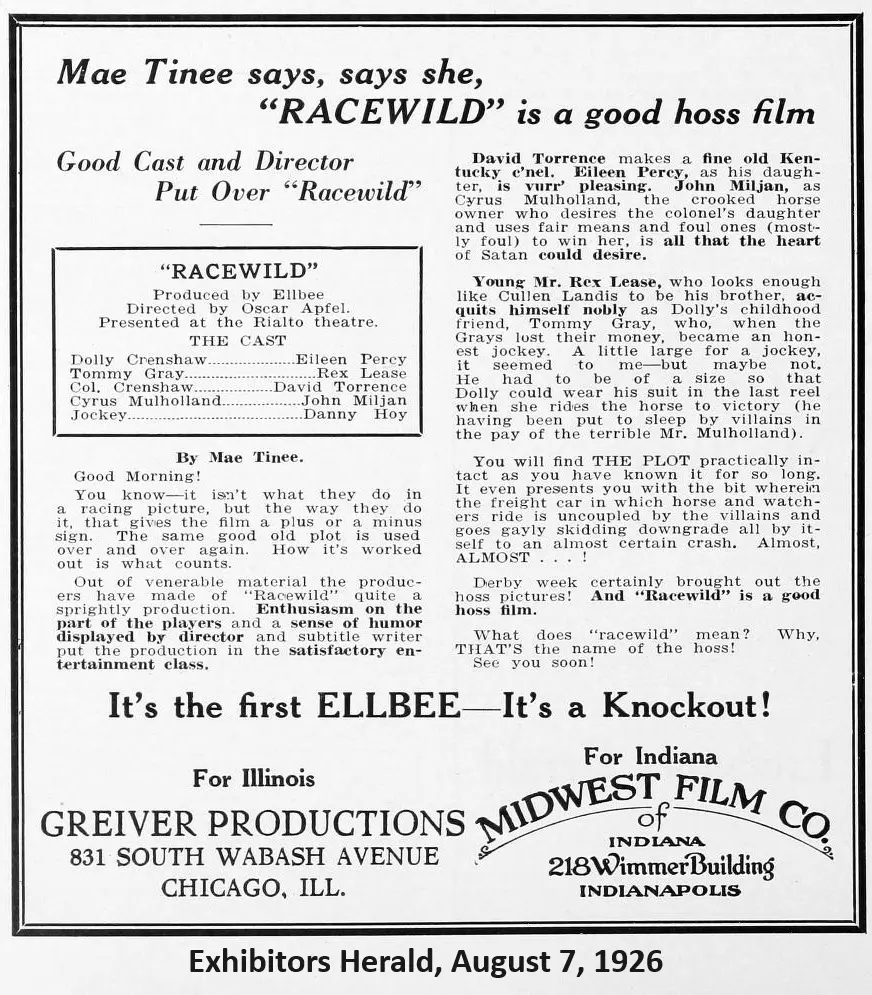
Danny Hoy, as the jockey, delivers a performance that, while brief in its prominence, establishes a clear sense of loyalty and skill. His sudden incapacitation due to the villain's plot serves its narrative purpose, but one can't help but feel a missed opportunity for a more extended portrayal of his character's bond with Racewild.
John Miljan and Rex Lease, likely playing the villain and his accomplice, embrace the broad strokes required of silent antagonists. Their sneers and conniving glances are perfectly legible, leaving no doubt as to their nefarious intentions. While their characters lack complexity, their effectiveness in driving the plot forward is undeniable. Miljan, in particular, often excelled at playing these types of roles, making him a reliable choice for silent-era villainy. It’s almost a shame he wasn’t given more screen time to chew scenery.
The direction of Race Wild, while not attributed in the provided context, demonstrates a clear understanding of silent film mechanics. The use of intertitles is judicious, providing necessary exposition without bogging down the visual flow. The camera work, though constrained by the technology of the era, effectively captures the scale of the horse farm and the dynamism of the race itself.
There are moments of genuine visual flair, particularly during the sequence where Racewild is uncoupled. The frantic action, the stark contrast between the moving train and the isolated car, creates a dramatic tableau. Similarly, the final race sequence is expertly staged, using various angles and cuts to convey speed and excitement, a challenge for any filmmaker, let alone one working in the 1920s.
The film’s cinematography, while lacking the polished sheen of later eras, possesses a raw authenticity. The natural light, the detailed sets (or locations, more accurately), and the focus on expressive close-ups all contribute to an immersive experience. It might not have the avant-garde experimentation of a film like Les Vampires, but it tells its story with straightforward competence.
Beyond the surface-level thrills, Race Wild subtly explores themes of class, tradition, and gender roles. The colonel represents a fading aristocracy, clinging to a way of life threatened by modern ambition. His fight is not just for property, but for an identity, a legacy.
The daughter's role, especially her climactic ride, is surprisingly progressive for its time. While framed within the necessity of the moment, her disguise and subsequent victory challenge conventional notions of female agency. She steps into a traditionally male domain and succeeds, not as a gimmick, but as the only viable solution. This element, often overlooked, makes the film more than just a simple horse-racing tale; it’s a quiet commentary on strength in unexpected places.
It’s a powerful, if accidental, statement. The film, in its desire for a dramatic climax, stumbled upon a character arc that resonates even today, long before female empowerment became a common cinematic theme. This isn't just about winning a race; it's about a woman proving her worth in a world designed to keep her on the sidelines.
Yes, Race Wild is absolutely worth watching for specific audiences. If you are a student of film history, a silent movie enthusiast, or simply curious about the roots of cinematic storytelling, this film offers significant value. It presents a clear example of how early cinema captivated audiences with compelling narratives and powerful visual performances.
However, if your preference is for contemporary films with intricate plots, nuanced characters, and fast-paced editing, Race Wild might feel slow or overtly melodramatic. It requires a willingness to engage with a different cinematic language.
For those who embrace its era, it's a rewarding experience. The stakes are clear. The ending is predictable. But the journey there is genuinely engaging, full of heart and old-fashioned thrills. It’s a testament to the enduring power of a simple, well-told story, even without dialogue.
Race Wild is more than just a relic; it's a vibrant piece of cinematic history that still holds considerable charm. It’s a testament to the power of simple, heartfelt storytelling, delivered with the unique expressive artistry of the silent era. While its melodrama might elicit a chuckle or two from contemporary audiences, it's precisely this earnestness that gives the film its enduring appeal.
It may not possess the sprawling ambition of a Greed, but its focused narrative and committed performances make it a surprisingly compelling watch. It reminds us that sometimes, all you need is a good horse, a determined hero, and a clear villain to create a truly engaging story.
For those willing to adjust their viewing expectations, Race Wild offers a delightful gallop through the early days of Hollywood, proving that a thrilling race, even without sound, can still stir the soul. It's a film that deserves to be rediscovered, not just as a historical curiosity, but as a genuinely entertaining piece of cinema.
IMDb 5.5
1934
Community
Log in to comment.