DbcultAccessing Vault...
8.2/10
Senior Film Conservator
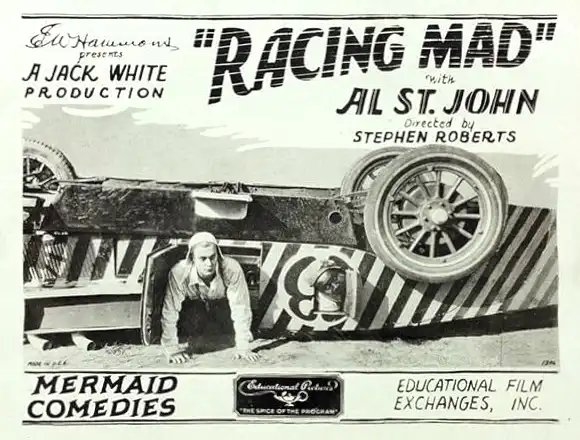
A definitive 8.2/10 rating for a film that redefined the boundaries of cult cinema. Racing Mad remains a cornerstone of transgressive art.
Alright, so Racing Mad. Is it worth tracking down today? Look, if you’re a silent film enthusiast, especially one who loves physical comedy and a good old-fashioned, slightly ridiculous car chase, then absolutely, give it a shot. It’s got that specific kind of charm. But if you’re coming in expecting anything remotely modern in pacing or storytelling, you’ll probably just be confused and a little bored. This one is for the niche crowd, really. The rest might find it a bit much.
From the moment Al St. John bursts onto the screen, all flailing limbs and wide-eyed panic, you know what you’re in for. His character is just a bundle of nerves and accidental genius, and it’s kinda infectious. He moves like a cartoon character, very bendy. There’s a scene early on where he tries to fix a sputtering engine and just ends up covered in grease, looking utterly bewildered. It’s a classic bit, done well.
The whole premise, naturally, revolves around a race. A big one, for some vague prize. And a girl, of course, because it’s the 1920s. Estelle Bradley plays the love interest, and honestly, she does a lot with just a few expressions. Her big eyes can convey exasperation and amusement all at once. She’s not just a pretty face for the boys to fight over, which is a nice touch, even for a film this old.
Spencer Bell, who plays Al St. John’s sidekick, or maybe just his long-suffering friend, is fantastic. His reactions are gold. There’s a moment when St. John accidentally kicks a tire off their car, and Bell just stares at the rolling tire, then back at St. John, then at the tire again, with this perfect blend of disbelief and resignation. It’s subtle, for silent film anyway, but really lands. You see his character just constantly thinking, “Oh, not again.”
The actual race itself is pretty wild. The cars are these clunky contraptions, sputtering and kicking up dust. They don’t move super fast, at least not by modern standards, but the editing makes it feel frantic. Or tries to. There’s a sequence where St. John’s car loses a wheel, and he still manages to steer it on three wheels for a surprisingly long time. It’s less realistic and more like, “how far can we push this visual gag?” And they push it pretty far. The stunt work, for the era, is pretty impressive. You can almost feel the bumps.
Some of the gags feel a little dated, of course. The villain, played by Phil Dunham, is exactly what you’d expect: twirly mustache, sneering, always trying to cheat. He’s basically a walking stereotype. But even then, there’s a certain charm to his over-the-top villainy. His attempts to sabotage St. John’s car are hilariously inept. One bit involves him trying to loosen a bolt, but he just ends up getting his hand stuck in the engine. Very silly stuff. 😂
What really sticks with me are the little moments. Like, when St. John is trying to signal to Bell, and he does this series of increasingly exaggerated hand gestures that just get more and more confusing. Or the flickering quality of the film print itself, which adds this almost dreamlike, historical feel to the whole thing. You’re definitely watching something from a different time. The crowd scenes at the race track are also kinda cool, you see all these people dressed up, waving their hats. It feels like a real event.
It’s not a masterpiece, by any stretch. It’s more of a fun, energetic romp. It’s the kind of film that reminds you how much raw energy and inventiveness went into early cinema, even with simple stories. Sometimes, all you need is a guy in a funny hat, a rickety car, and a reason to go fast. And maybe a banana peel. Always a banana peel. 🍌
It’s definitely got more laughs than say, The Last Straw, which takes itself way too seriously. This one knows what it is, and it just leans into the silliness. If you’re ever curious about what made people laugh a hundred years ago, this is a pretty good example.
IMDb 7
1928
Community
Log in to comment.