DbcultAccessing Vault...
Cult Review
Senior Film Conservator
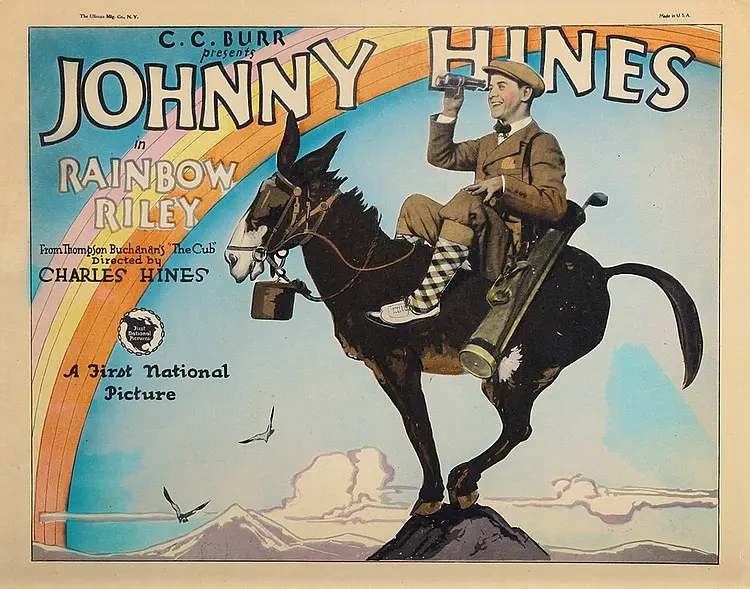
Is "Rainbow Riley" worth watching today? Short answer: yes, but with significant caveats. This silent era romp, featuring the acrobatic Johnny Hines, offers a peculiar blend of slapstick, romance, and a bizarre take on mountain feuds that is as fascinating as it is flawed. It's a film for silent film enthusiasts, comedy historians, and those curious about the raw, experimental energy of early genre blending. It is decidedly NOT for viewers seeking modern pacing, sophisticated humor, or a historically accurate portrayal of Appalachian life. If you expect a seamless narrative or politically correct humor, you will be sorely disappointed.
Thompson Buchanan, Anthony Paul Kelly, and John W. Krafft’s screenplay for "Rainbow Riley" throws its protagonist, a cub reporter named Riley, into a ludicrous scenario with little regard for realism. This film works because of its sheer audacity in combining slapstick, romance, and a pseudo-western feud narrative. Johnny Hines' physical comedy is genuinely impressive, a whirlwind of expressive gestures and agile stunts that anchors the film's otherwise chaotic energy. This film fails because its narrative often feels disjointed, relying heavily on contrivance, and its cultural depictions are undeniably dated and problematic, reflecting a regrettable insensitivity common in its era. You should watch it if you appreciate the raw, experimental energy of early cinema and can overlook its period-specific shortcomings for a glimpse into a bygone comedic style.
The film’s central conceit—a city reporter armed with sports equipment navigating a violent mountain feud—is inherently absurd, and the film leans into this with gusto. It's a testament to the era's willingness to embrace broad strokes and exaggerated scenarios for comedic effect. While modern audiences might balk at the stereotypes, there's an undeniable charm in observing how such narratives were constructed and consumed a century ago.
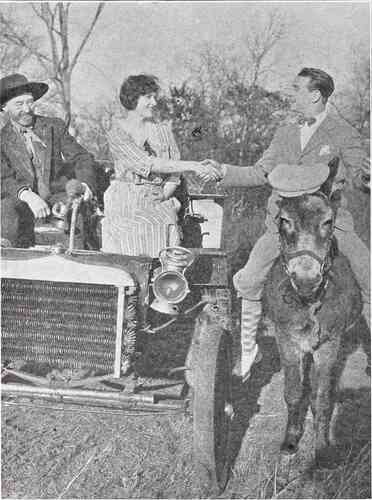
The narrative of "Rainbow Riley" is a relentless cascade of events, often feeling more like a series of loosely connected vignettes than a tightly woven plot. Riley, played with boundless energy by Johnny Hines, is dispatched to the Kentucky mountains to cover a feud between the Ripper and White clans. What begins as a seemingly straightforward assignment quickly spirals into a fight for survival, complicated by his romantic entanglement with Alice Ripper and his unwitting offense of Becky White.
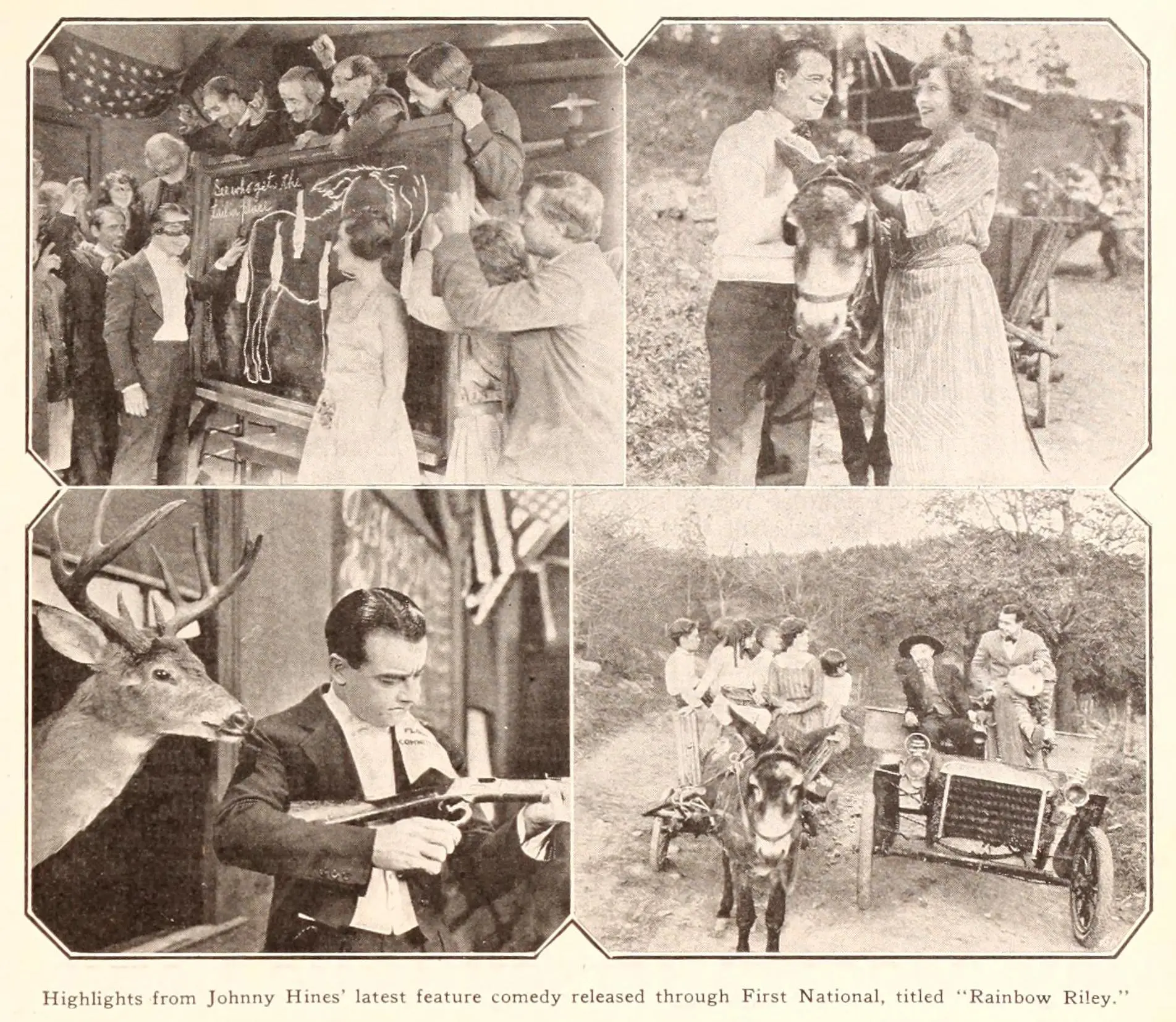
The pacing is frantic, almost breathlessly so, a characteristic often found in silent comedies that relied on visual gags and rapid-fire action to keep audiences engaged. There’s little time for character development beyond broad archetypes; the audience is simply swept along by the sheer momentum of Riley's escalating predicaments. From a precarious cable swing across a ravine to a desperate defense involving golf balls and tennis rackets, the film continually escalates the stakes, albeit with a comedic, rather than genuinely suspenseful, intent.
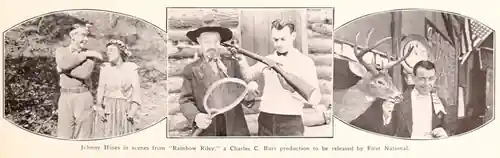
One particular sequence, where Riley uses a boomerang to disarm a hostile mountaineer, exemplifies the film’s commitment to its unique brand of humor. It’s an outlandish moment that perfectly encapsulates the film’s disregard for logic in favor of a good laugh. While this frenetic energy can be exhilarating, it also means that some plot points feel underdeveloped or resolved too conveniently. The climax, involving a misinterpreted telegram summoning the military, is a prime example of a deus ex machina that feels both absurd and entirely in keeping with the film's tone.
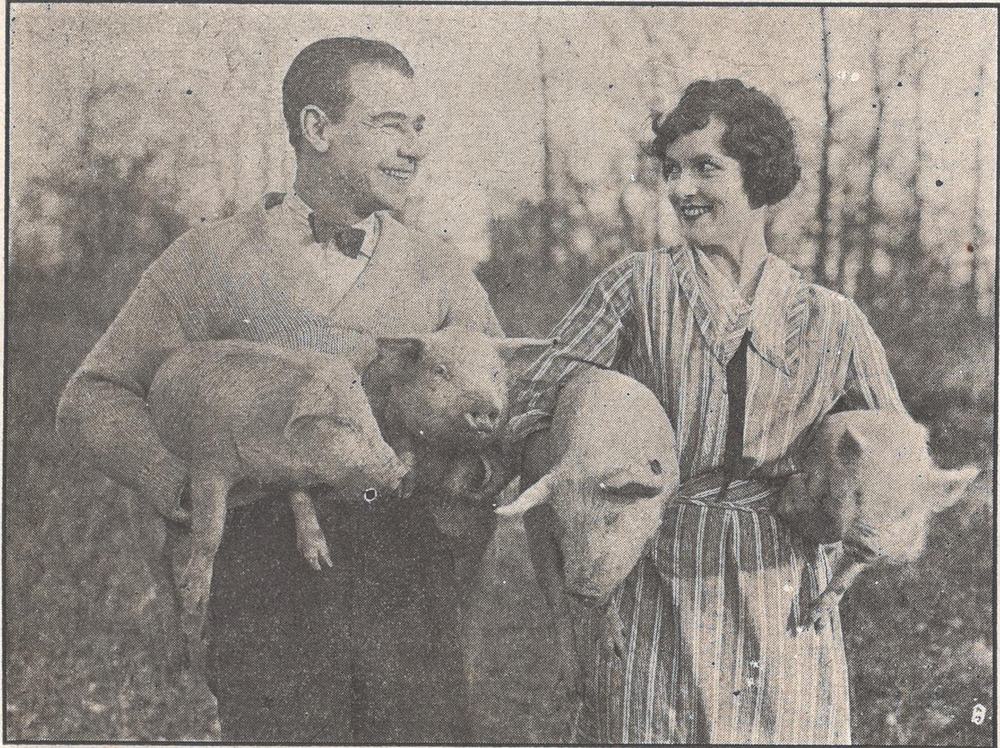
The film's pacing is less a controlled tempo and more a runaway train, a thrilling, if occasionally dizzying, ride through early cinematic comedy.
Johnny Hines, as "Rainbow" Riley, is undoubtedly the film's driving force. His performance is a masterclass in silent film physical comedy, characterized by an elastic expressiveness and an almost balletic agility. Hines’ ability to convey fear, exasperation, and misplaced confidence through exaggerated gestures and facial expressions is truly remarkable. He’s constantly in motion, a whirlwind of flailing limbs and wide-eyed reactions that makes him endlessly watchable.
Consider the scene where Riley attempts to use his athletic equipment as weapons against the armed feudists. Hines' shift from a confident, almost arrogant posture to one of frantic, desperate improvisation is executed with comedic precision. It’s a performance that doesn’t just tell a story but actively performs it, demanding attention with every movement.
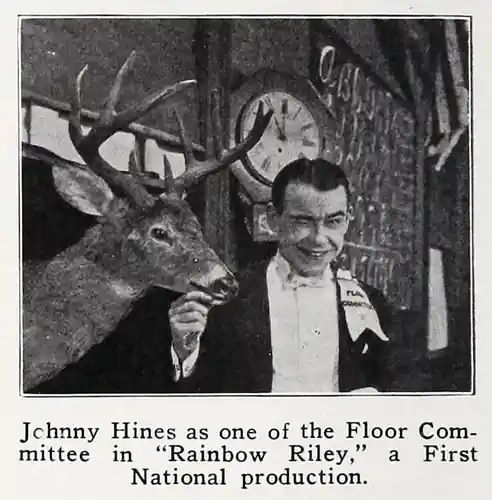
The supporting cast, while less central, fulfills their roles with the necessary broad strokes. Bradley Barker as Tilden McFields, the "killer" of the Ripper clan, projects a menacing, if somewhat cartoonish, villainy. Brenda Bond’s Alice Ripper is the archetypal damsel in distress, beautiful and perpetually in need of rescue, while Lillian Ardell’s Becky White embodies the spurned lover, her affections turning to enmity with predictable swiftness. These performances are not nuanced; they are archetypal, designed to serve the plot's comedic and dramatic needs without dwelling on psychological depth. In this regard, they succeed admirably. The dynamic between Hines and Barker, in particular, provides some of the film's most engaging cat-and-mouse sequences.
The direction, likely overseen by Johnny Hines himself (he directed many of his films), focuses heavily on clarity of action and visual impact. Given the lack of dialogue, every frame had to communicate effectively, and the film largely achieves this. The cinematography, while not groundbreaking, is functional and often quite effective in capturing the rugged landscape of the "Kentucky mountains" (likely a studio backlot or local California hills). The use of long shots during chase sequences emphasizes the physical prowess of Hines and the scale of the conflict, even if the "mountains" themselves feel somewhat theatrical.
One memorable shot involves Riley's perilous swing across a ravine on a cable wire. The camera positions itself to emphasize the height and danger, creating a moment of genuine tension amidst the comedy. While it lacks the artistic flourishes of a film like The Salvation Hunters, which premiered in the same year, "Rainbow Riley" prioritizes direct, unpretentious storytelling. The editing is brisk, cutting quickly between actions to maintain the high energy, a hallmark of silent era comedies striving to hold audience attention without spoken words. The visual gags are paramount, and the camera is always positioned to best deliver them.
There's an honesty to the visual style, a straightforwardness that avoids unnecessary complexity. It's a film made to entertain, and its visual language serves that singular purpose without pretension. The use of intertitles is sparse, allowing the visual action to carry the bulk of the narrative, a sign of confident visual direction.
The tone of "Rainbow Riley" is unapologetically lighthearted, even when dealing with themes of violence and danger. The feud itself is treated more as a backdrop for comedic antics than a serious conflict. This comedic lens, however, is a double-edged sword. While it allows for boundless physical comedy and absurdity, it also renders the film's portrayal of mountain folk as broad, almost caricatural, figures. This is perhaps the film's most glaring flaw from a contemporary perspective.
The humor is primarily slapstick, relying on pratfalls, chases, and the incongruity of Riley's athletic skills in a violent setting. The scene where Riley fends off an entire mob with a fusillade of golf, tennis, and base-balls is a prime example of this. It’s a moment that defies logic but elicits a chuckle through sheer absurdity and Hines’ committed performance. The film doesn’t aim for subtle wit or intricate dialogue-based jokes; it's all about visual gags and physical exaggeration.
The romantic elements are similarly played for laughs, with Riley's pursuit of Alice and his predicament with Becky adding layers of comedic complication rather than genuine emotional depth. It's a film that demands a suspension of disbelief and a willingness to embrace its particular brand of early 20th-century humor. It works. But it’s flawed. The film's charm lies in its unpretentious commitment to making its audience laugh, even if the methods feel a little rough around the edges today.
For those with an appreciation for silent cinema, "Rainbow Riley" is absolutely worth seeing. It offers a valuable glimpse into the comedic styles and narrative conventions of the 1920s. Johnny Hines’ performance alone makes it a compelling watch, showcasing a talent for physical comedy that rivals many of his more famous contemporaries. It's an energetic, if uneven, ride.
However, it’s crucial to approach the film with a historical lens. Its depictions of rural America and its inhabitants are products of their time, and viewers should be prepared for portrayals that are simplistic, stereotypical, and potentially offensive by modern standards. This isn't a film that holds up perfectly under contemporary scrutiny, but its historical significance and the sheer comedic force of Hines are undeniable.
If you're looking for a meticulously crafted plot or deep character studies, you'll be disappointed. But if you're curious about the evolution of film comedy, or simply want to witness a performer at the peak of his physical prowess, then "Rainbow Riley" offers a unique and often entertaining experience. It's a testament to the raw, untamed spirit of early filmmaking.
"Rainbow Riley" is a boisterous, often bewildering, relic from the silent era that undeniably earns its place in film history for its sheer audacity and Johnny Hines’ electrifying performance. It's a film that revels in its own absurdity, throwing its protagonist into one outlandish predicament after another with joyous abandon. While its narrative cohesion is questionable and its cultural depictions are undeniably dated, the film’s relentless energy and Hines’ comedic genius make it a fascinating watch.
It's not a masterpiece in the traditional sense, nor is it a film that will resonate deeply with every viewer. But for those willing to engage with its historical context and appreciate the raw, unpolished charm of early cinema, "Rainbow Riley" offers a unique and often hilarious experience. It’s a testament to a time when filmmaking was still experimenting, still finding its footing, and still unafraid to be utterly, gloriously silly. See it for Hines, see it for the history, but temper your expectations for modern sensibilities.
IMDb 6.8
1915
Community
Log in to comment.