DbcultAccessing Vault...
Cult Review
Senior Film Conservator
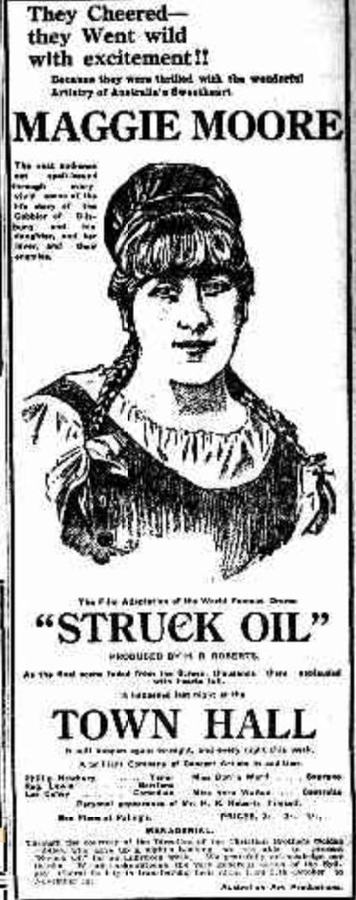
Stepping back into the nascent days of cinema, one occasionally unearths a relic that, despite its age and the technical limitations of its era, resonates with a profound, almost unsettling prescience. Such is the case with the 1914 silent drama, Struck Oil. Far from a mere historical curiosity, this film, penned by the collaborative minds of Clay Green, Sam Smith, and J.C. Williamson, offers a searing, if stark, commentary on the human cost of conflict, the insidious nature of greed, and the fragility of the human mind when confronted with overwhelming trauma. It’s a narrative that, even stripped of spoken dialogue, speaks volumes about the enduring struggles of humanity, proving that some tales are truly timeless.
At its core, Struck Oil is predicated on an act of noble, almost quixotic, self-sacrifice. John Stofel, portrayed with compelling earnestness by Boyd Irwin, volunteers to fight in the Civil War, not out of unbridled patriotism alone, but as a substitute for a local deacon. This isn't just a simple exchange; it's a moral transaction, where the deacon, ostensibly a man of God, offers Stofel the deed to a farm as recompense for taking his place on the battlefield. On the surface, it appears a benevolent gesture, a way for the deacon to uphold his community standing without facing the horrors of combat, and for Stofel to secure a future. Yet, even in this initial premise, the discerning viewer can detect the faint, acrid scent of expediency, a foreshadowing of the moral compromises to come. The film subtly critiques the very fabric of a society that allows such bartering of human lives, especially when cloaked in the guise of charity or religious duty. This foundational act, seemingly a solution, is in fact the genesis of John’s profound undoing.
The Civil War, a conflict that tore the American nation asunder, serves as more than just a backdrop; it is a character in itself, an unseen force that mutilates not just bodies, but minds. John Stofel's return is not triumphant. He is not the same man who left. The war, in its brutal efficacy, has stripped him of his sanity, leaving him a wounded, shell-shocked husk. Boyd Irwin's portrayal of this mental anguish, conveyed through the expressive pantomime characteristic of the silent era, must have been particularly harrowing for contemporary audiences, many of whom would have intimately understood the ravages of war, even decades after its conclusion. His madness is not a mere plot device; it is a profound commentary on the invisible wounds of combat, a theme that, even today, resonates with painful clarity. This exploration of psychological trauma, though perhaps rudimentary by modern cinematic standards, was remarkably bold for its time, predating more explicit cinematic depictions of post-traumatic stress by decades. Films like The Ghosts of Yesterday, if they delved into the lingering psychological specters of past events, might offer a thematic parallel, but Struck Oil grounds its trauma in the stark reality of military conflict.
Just as John Stofel’s personal tragedy reaches its nadir, fate, or perhaps a crueler hand, intervenes with a twist of profound irony: oil is discovered on his farm. This isn't just a fortunate turn; it's a seismic shift, transforming a humble plot of land, once a meager reward for a soldier's sacrifice, into a veritable fortune. The black gold, a potent symbol of wealth, power, and the burgeoning industrial age, becomes the ultimate test of character for those around Stofel. It highlights the stark contrast between intrinsic human value and extrinsic material worth. The very ground that once promised a quiet existence now screams of immense riches, and with that scream, the moral compasses of many begin to spin wildly, none more so than that of the deacon.
David Edelsten’s portrayal of the deacon is a masterclass in silent-era villainy. Initially presented as a pillar of the community, his true character, festering with avarice, is laid bare by the discovery of oil. The farm, once a convenient means to secure his own safety, now represents an unimaginable fortune he believes is rightfully his. His subsequent attempts to reclaim the land, exploiting Stofel’s precarious mental state, are nothing short of monstrous. This isn't just about land; it's about a fundamental betrayal of trust, a desecration of the very concept of sacrifice, and a chilling demonstration of how easily moral integrity can be bought and sold. The deacon’s actions are a scathing critique of hypocrisy, especially when cloaked in religious garb, and a stark reminder that true evil often wears a respectable facade. It’s a narrative thread that could find echoes in films like The Years of the Locust or even Aziade if those narratives explored the corrosive effects of ambition and moral compromise on individuals in positions of power or influence.
One must appreciate the craft of early filmmakers in conveying such complex emotions and dramatic tension without the aid of spoken dialogue. The performances in Struck Oil rely heavily on exaggerated gestures, facial expressions, and, crucially, the use of intertitles to drive the narrative forward and elucidate character motivations. Boyd Irwin’s challenge was immense: to portray a man’s descent into insanity in a way that was both understandable and empathetic to an audience. His physical performance, likely involving erratic movements, vacant stares, and moments of agitated confusion, would have been key to conveying John’s fractured mind. Similarly, David Edelsten’s deacon would have had to transition from a seemingly benevolent figure to a predatory villain through subtle shifts in demeanor and increasingly overt displays of greed. The visual storytelling, often employing close-ups to emphasize emotional states and wide shots to establish the setting and scale of the conflict, would have been paramount in engaging the audience emotionally.
The writers, Clay Green, Sam Smith, and J.C. Williamson, crafted a narrative that, despite its potential for melodrama, taps into universal anxieties. They understood the power of contrasting the sacred (sacrifice, duty) with the profane (greed, betrayal). Their script, though translated into visual cues, demonstrates a keen understanding of dramatic structure, building suspense around John’s vulnerability and the deacon’s escalating machinations. The discovery of oil acts as a perfect plot device, a sudden infusion of high stakes that amplifies the moral conflict, pushing the characters to their extremes. This narrative economy, delivering a powerful story with concise visual language, is a testament to their storytelling prowess in a nascent medium. It’s a testament that even without the intricate psychological layering of later films, the core human drama remains compelling.
The thematic richness of Struck Oil is perhaps its most compelling aspect. Firstly, it offers a stark, if indirect, critique of the lingering effects of war. John Stofel is not merely physically wounded; his mind is irrevocably altered, a victim of a conflict whose scars run deeper than any bullet wound. This focus on mental health, particularly post-war trauma, was a theme that would slowly gain more prominence in cinema, but Struck Oil touches upon it with a raw honesty. It forces the audience to confront the uncomfortable truth that heroes are often broken, and their sacrifices can lead to profound personal devastation, often overlooked by a society eager to move on. One might even draw a thematic, if not direct, line to films like Hedda Gabler, which, though dealing with a different form of psychological torment, explores the internal unraveling of a character under immense pressure, albeit social rather than martial.
Secondly, the film is a blistering indictment of unchecked greed. The deacon's transformation from a seemingly respectable figure to a rapacious villain driven solely by the prospect of wealth is a timeless cautionary tale. The oil, a symbol of immense fortune, becomes a corrupting force, revealing the true, ugly nature of those around John. It demonstrates how easily moral principles can be abandoned in the pursuit of material gain. This theme of avarice and its destructive power is a recurring motif in human storytelling, from ancient myths to modern blockbusters, and Struck Oil handles it with a directness that leaves little room for ambiguity. The film, in its own way, is a precursor to later narratives that would dissect the dark side of the American dream, where the pursuit of wealth overshadows ethics and humanity.
Finally, the film highlights the vulnerability of the mentally infirm and the ease with which they can be exploited. John Stofel, in his madness, is utterly defenseless against the deacon's machinations. His legal claim to the land is clear, yet his incapacity renders him powerless, making him a tragic figure caught in a system that offers little protection to those deemed 'insane.' This aspect of the narrative is particularly poignant, serving as a reminder of societal responsibilities towards its most vulnerable members. It’s a theme that, even today, continues to be relevant, as legal and ethical debates surrounding mental competency and exploitation persist. The film's ability to weave these complex social commentaries into a relatively simple plot speaks volumes about its enduring power and the foresight of its creators.
Watching Struck Oil today is an exercise in both historical appreciation and contemporary reflection. It's easy to dismiss silent films as quaint or overly theatrical, but to do so would be to miss the profound emotional core and the sharp social commentary that many of them, like this one, possess. The sheer audacity of the premise—a soldier's sanity exchanged for a farm, only for that farm to become a battleground for greed—is striking. It makes you wonder about the audiences of 1914. How did they react to John Stofel's plight? Did they see echoes of their own returning veterans, perhaps struggling with unseen demons? Did the deacon's avarice stir a familiar resentment against the powerful and the hypocritical? I suspect it did. The film taps into archetypal fears and moral dilemmas that transcend the specific historical context of the Civil War or the early oil boom.
The character of Maggie Moore, though her role's specifics aren't detailed in the plot summary, likely provided a crucial emotional anchor, perhaps a figure of compassion or a voice for justice amidst the unfolding tragedy. Such roles were often vital in silent dramas, offering a counterpoint to the darker impulses. Even Percy Walshe and Harry Roberts, as part of the supporting cast, would have contributed to the overall atmosphere, either as agents of the deacon's schemes or as sympathetic observers of John's suffering. The ensemble, even in a silent film, plays a critical role in building the world and the emotional stakes.
In an age saturated with special effects and intricate dialogue, there’s a raw power in the simplicity of Struck Oil. It’s a reminder that compelling storytelling doesn't require technological wizardry; it requires a deep understanding of human nature, its triumphs, and its devastating flaws. The film, through its stark narrative, forces us to confront uncomfortable truths about sacrifice, sanity, and the relentless pursuit of wealth. It's a cinematic time capsule that still delivers a punch, proving that some stories, like the black gold itself, hold an enduring, sometimes dangerous, allure.
Ultimately, Struck Oil stands as a testament to the early capabilities of cinema to not only entertain but also to provoke thought and stimulate social critique. While we might not have the full context of its original reception, its plot alone suggests a narrative that would have resonated deeply with audiences grappling with the aftermath of war, the rapid industrial expansion, and the shifting moral landscape of the early 20th century. It explores themes of betrayal and exploitation that are, regrettably, evergreen. The deacon's avarice, the vulnerability of the traumatized John, and the corrupting power of sudden wealth—these are not mere historical footnotes; they are fundamental aspects of the human condition that continue to manifest in various forms today.
This film, like many of its contemporaries, laid the groundwork for the more sophisticated narratives that would follow. It demonstrated that cinema could be a powerful medium for moral allegory, for exploring the darker facets of human nature, and for shedding light on the injustices that often accompany progress and prosperity. It’s a film that demands our attention, not just as a historical artifact, but as a potent reminder of the enduring struggles that define our shared human experience. Its lessons about the true cost of war, the perils of unbridled greed, and the imperative to protect the vulnerable remain as relevant now as they were over a century ago. If you ever have the chance to unearth this cinematic gem, approach it not as a quaint relic, but as a powerful, resonant piece of storytelling that speaks directly to the heart of what it means to be human in a world often swayed by the lure of black gold and the shadow of conflict.
IMDb —
1921
Community
Log in to comment.