DbcultAccessing Vault...
6.7/10
Senior Film Conservator
A definitive 6.7/10 rating for a film that redefined the boundaries of cult cinema. Rama, the Cannibal Girl remains a cornerstone of transgressive art.
Alright, if you’re thinking about diving into Rama, the Cannibal Girl today, well, you should know what you’re getting into. This isn’t exactly a casual Friday night watch. For folks deep into silent film history or those who like to study how early cinema handled — often clumsily — ideas of ‘exoticism’ and ‘the other,’ there’s certainly something here. For pretty much anyone else? Probably best to just appreciate its existence from a distance. 😬
That title, “The Cannibal Girl,” it’s quite a hook, isn't it? Very dramatic. But let’s be clear upfront: **no actual cannibalism happens here.** It's pure, unadulterated sensationalism, probably slapped on to grab eyeballs back in 1922. The film itself is something else entirely, a quieter, often frustratingly passive story about a man trying to escape his life.

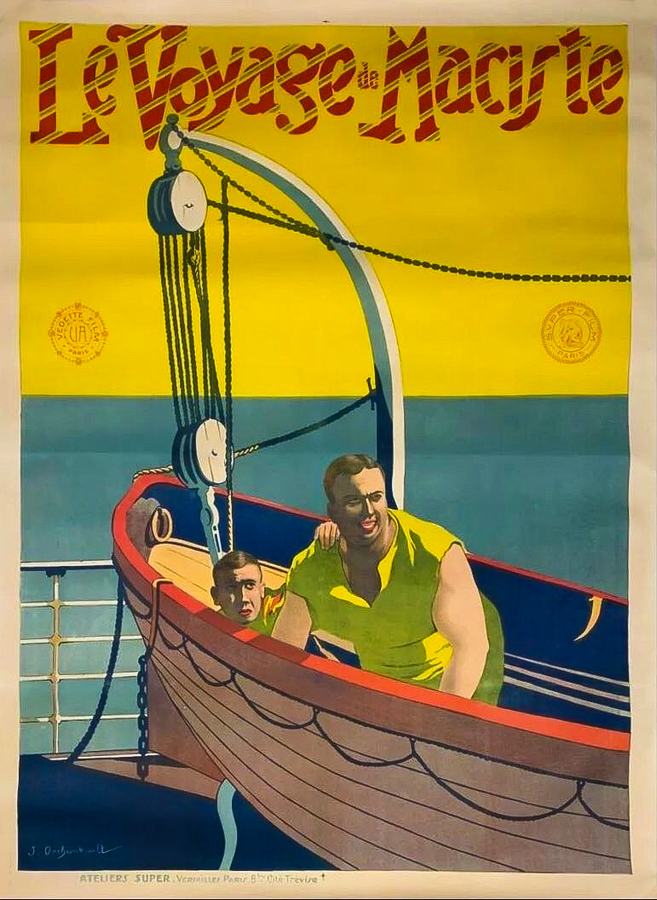
Our main character is a stoker. Think sweaty, grimy, back-breaking work in the belly of a ship. The opening scenes really nail that feeling of exhaustion. You can almost smell the coal dust and feel the heat radiating off the screen. He’s just done with it. Absolutely done. His face, even in those wide shots, carries this heavy, world-weary look. It's a nice bit of silent acting, really.
So, he just… bails. Jumps ship. Finds himself on this seemingly untouched island. It’s a bold move, maybe a bit naive, but you get his desperation. The transition from the dark, clanking ship to the bright, open island feels like a big sigh of relief for him.

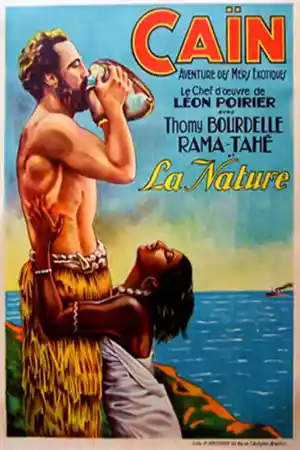
And then there’s Rama, played by Rama-Tahé. The film introduces her as this elemental figure, totally at home in nature. She wears minimal clothing, often adorned with flowers. It’s all very much the *noble savage* trope, romanticized and, let's be honest, pretty objectifying. Her movements are often graceful, but there's this underlying sense that she's always being *observed* rather than just living her life.
Their life together is the bulk of the film's middle section. It’s slow. Very slow. We see them fishing, gathering food, just existing. The director, Léon Poirier, really lingers on the landscapes. There are some genuinely beautiful shots of the ocean and the lush island foliage. Sometimes, these moments feel meditative; other times, the silence stretches a bit thin, and you find yourself checking the intertitles, hoping for some movement in the plot.

The relationship between the stoker and Rama is… peculiar. It’s less about a passionate connection and more about companionship, a shared existence. He finds peace, a kind of freedom he never had on the ship. But Rama's role feels largely passive. She’s there for him, a part of his new island fantasy, but her own feelings or desires aren't really explored. She's a backdrop, almost.
There’s this one sequence where they’re just sitting by the water, and the stoker seems truly content. It’s a genuine moment, probably the most authentic the film gets. But then, it cuts to Rama, looking off into the distance, and you just wonder what she's thinking. The movie doesn't bother to tell us.

Of course, this idyllic (and problematic) bubble can’t last forever. A steamer appears on the horizon, a stark reminder of the world he left behind. It’s like a bell tolling, shattering the quiet. The sudden appearance of that ship, a small speck at first, then growing, it’s actually quite effective. You can *feel* the inevitable.
The stoker faces a choice. Stay on the island, or go back to civilization. The film treats this decision with a certain gravity, but it doesn't give us much insight into his internal struggle. He makes his choice, and it feels a bit abrupt, almost perfunctory. You want to see the *weight* of it, but it's just presented, then done.
He leaves. And Rama is left behind. The final images of her alone on the beach are melancholic, but again, the film doesn't quite land the emotional impact it seems to be aiming for. You're left with a sense of unease, wondering what happens next for her, but the film has already moved on, back to the stoker's journey.
Honestly, the biggest takeaway from Rama, the Cannibal Girl isn't its story, which is pretty thin, but what it says about the era it was made. That title, the portrayal of Rama, the 'simple' island life as an escape from industrial society – it's all fascinating from a historical perspective. It's a window into early 20th-century sensibilities, even the less palatable ones. It’s a film that definitely shows its age, and not always in a charming way. 🤷♀️
So, should you watch it? For a deep dive into film studies, absolutely. It's a valuable piece of the puzzle. For entertainment? Probably not. It's slow, it’s culturally insensitive by today's standards, and it leaves a lot of threads untied

IMDb —
1929
Community
Log in to comment.