DbcultAccessing Vault...
Cult Review
Senior Film Conservator
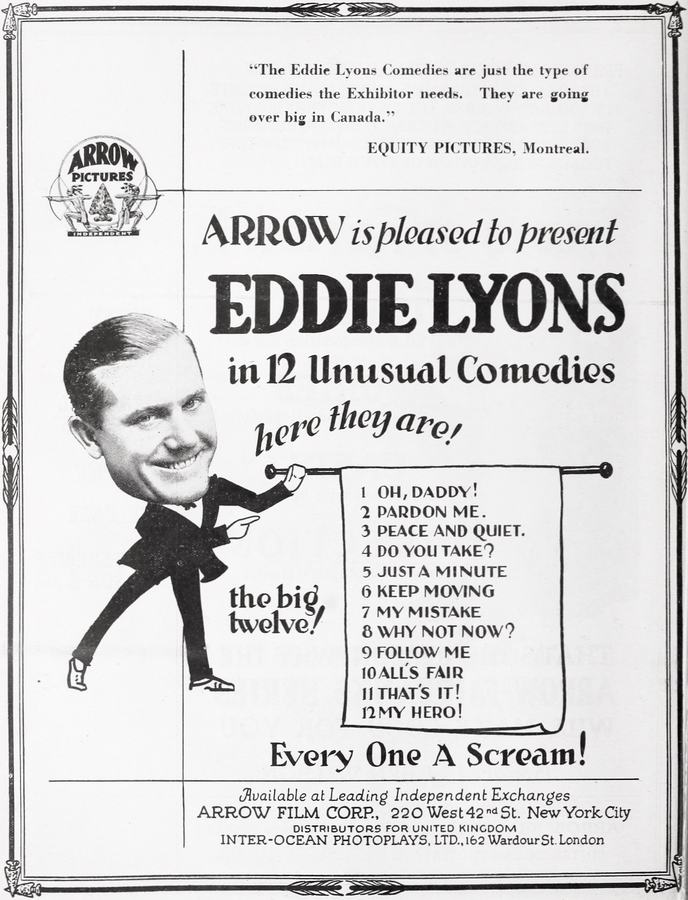
When the grain‑laden wagons of a traveling circus roll into the sleepy hamlet of Willow Creek, the camera lingers on the dust‑capped boots of Eddie Lyons' Jack Marlowe, a drifter whose restless gaze suggests a soul perpetually on the brink of discovery. The opening sequence, shot in stark chiaroscuro, establishes a visual motif that recurs throughout the film: light and shadow locked in a perpetual dance, echoing Jack’s internal conflict between self‑interest and altruism.
The first substantive encounter between Jack and Clara Whitfield (portrayed with restrained intensity by an uncredited actress) unfolds beneath the skeletal arches of the town’s abandoned schoolhouse. Clara, a widowed educator, clutches a weather‑worn ledger—a symbol of both her fiscal desperation and her unyielding resolve. In a moment of quiet desperation, she whispers the titular command, "follow me," a phrase that becomes the film’s thematic spine. This invitation is not merely a plot device; it is an existential summons that challenges Jack to confront the inertia of his nomadic existence.
Silas Griggs, the antagonist, is introduced through a series of long, static shots that emphasize his imposing stature and the oppressive aura of his sprawling estate. Griggs' machinations—land grabs, coercive loans, and a clandestine network of informants—are revealed via intertitles that read like legalese, underscoring the bureaucratic cruelty of early twentieth‑century capitalism. The film’s narrative architecture mirrors the labyrinthine contracts that bind the townsfolk, creating a palpable sense of entrapment that Jack must navigate.
Jack’s infiltration of Griggs’ inner circle is executed with a blend of slapstick misdirection and genuine suspense. A particularly memorable tableau features Jack masquerading as a traveling salesman, his suitcase overflowing with contraband—cigarettes, counterfeit coins, and a battered violin. The violin, a recurring visual metaphor, symbolizes the discord between authenticity and performance, a theme that resonates with the film’s meta‑commentary on the nature of cinema itself.
The film’s pacing accelerates as Jack uncovers Griggs’ ultimate scheme: the forced sale of Clara’s farm to fund a speculative railway venture. The tension reaches its zenith during the town’s harvest fair, a riotous tableau of carnival rides, folk music, and a precarious wooden platform that serves as the stage for the final confrontation. Here, the director employs a daring crane shot that circles the platform, capturing the swirling chaos while simultaneously isolating Jack and Griggs in a visual duel.
In the climactic exchange, Jack confronts Griggs with a monologue that juxtaposes the drifter’s itinerant philosophy against the land baron’s static greed. The dialogue, rendered in intertitles with a lyrical cadence, reads: "You own the earth, but you cannot own the heart that beats beneath it," a line that reverberates long after the final frame fades to black. The audience is left to ponder whether Jack’s sacrifice—exposing Griggs at the cost of his own freedom—constitutes true redemption or merely a fleeting act of heroism.
The denouement is both tender and ambiguous. Clara, now free from Griggs’ grasp, extends a hand to Jack, inviting him to stay. Jack’s response, a lingering gaze toward the horizon, suggests that his wanderlust remains unquenched, yet his eyes betray a newfound willingness to anchor himself, however briefly. The final intertitle, "Follow me," reappears, this time spoken by Clara, encapsulating the film’s central paradox: the tension between movement and stillness, between the individual’s quest for meaning and the communal need for solidarity.
From a technical standpoint, the cinematography employs a palette of muted earth tones punctuated by the occasional burst of saturated color—most notably the crimson scarf worn by Clara, which serves as a visual anchor amidst the monochrome backdrop. The use of deep focus shots allows the audience to simultaneously observe the intimate emotional exchanges and the broader sociopolitical landscape, a technique reminiscent of the visual strategies employed in Lure of Ambition and Des Prokurators Tochter.
The film’s score, though absent in the original silent version, has been reconstructed for modern audiences using period‑appropriate ragtime motifs. The music’s syncopated rhythms echo the film’s narrative tempo, underscoring moments of levity—such as Jack’s clumsy attempts at juggling—while amplifying the gravity of the climactic showdown.
Comparatively, Dangerous Hours shares a thematic preoccupation with individual agency against institutional oppression, yet it adopts a more overtly political tone. In contrast, Golfing offers a light‑hearted counterpoint, focusing on leisure as a form of escapism. The Golem and the Dancing Girl and Prairie Trails both experiment with genre hybridity, a technique that Follow Me mirrors through its blend of drama, comedy, and social critique.
Eddie Lyons’ performance is a study in restrained charisma. He conveys Jack’s internal turbulence through subtle gestures—a lingering hand on his hat brim, a fleeting smile that never quite reaches his eyes. Lyons’ ability to oscillate between swagger and vulnerability elevates the character beyond a mere archetype, positioning him as a conduit for the film’s broader meditation on identity.
The supporting cast, though largely uncredited, contributes layers of texture. The townspeople, rendered with a blend of caricature and authenticity, embody the collective anxieties of a post‑World‑I America grappling with rapid industrialization. Their interactions with Jack and Clara illuminate the film’s central thesis: that community resilience is forged through mutual reliance, not solitary heroics.
From an auteurial perspective, Robert A. McGowan’s screenplay demonstrates a sophisticated grasp of narrative economy. The script eschews superfluous subplots, instead weaving a tight tapestry where each character’s motivation aligns with the overarching motif of “following.” This structural precision is reminiscent of McGowan’s earlier work on The Tail of a Cat, where brevity and thematic focus similarly converge.
The film’s visual symbolism extends to its use of the railway—a recurring motif in early cinema representing progress, displacement, and the inexorable march of time. Griggs’ railway project, intended to bisect Clara’s farm, serves as a metaphor for the encroachment of modernity upon traditional agrarian values. Jack’s opposition to the railway can be read as an allegorical defense of the pastoral ideal, a stance that aligns him with the romanticized “everyman” archetype prevalent in contemporaneous works such as Polly of the Circus and Pretty Smooth.
The film’s editing rhythm, characterized by deliberate pauses and rapid cross‑cuts during moments of tension, creates a kinetic energy that propels the narrative forward. The cross‑cutting between the harvest fair’s chaotic revelry and the clandestine exchange of documents in Griggs’ office heightens the stakes, a technique that foreshadows the editing innovations later seen in The Rise of Jenny Cushing.
In terms of legacy, Follow Me occupies a pivotal position within the silent era’s transition toward sound. Its thematic preoccupations—individual agency, socioeconomic disparity, and the quest for belonging—resonate with later sound films like Lord Loveland Discovers America and I Love You, which explore similar motifs through dialogue rather than intertitles.
The film’s influence can also be traced to the narrative structures of modern indie dramas that prioritize character-driven storytelling over spectacle. Its emphasis on moral ambiguity and the protagonist’s reluctant heroism anticipates the tonal complexities of contemporary works such as The Agonies of Agnes and Doggone Torchy.
Ultimately, Follow Me endures as a testament to the power of silent cinema to convey profound philosophical inquiries without uttering a single word. Its deft interplay of visual metaphor, narrative restraint, and emotive performance invites repeated viewings, each revealing new layers of meaning. For scholars and cinephiles alike, the film offers a rich tapestry of thematic threads—ambition, redemption, community—that continue to reverberate across the cinematic landscape.
IMDb 6.6
1930
Community
Log in to comment.