DbcultAccessing Vault...
Cult Review
Senior Film Conservator
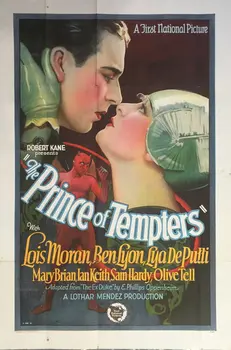
Is The Prince of Tempters worth watching today? Short answer: yes, but with a significant caveat. This 1926 silent-era drama, a product of its time, offers a fascinating, if sometimes frustrating, window into early cinematic storytelling and societal mores. It's a film for those with a deep appreciation for the silent era's unique expressive power and a tolerance for melodrama, but it will likely test the patience of viewers accustomed to modern narrative conventions.
Before delving into the intricate web of deception and desire that defines The Prince of Tempters, let's address the elephant in the room: its relevance in the 21st century. This 1926 production, directed by Paul Bern, is undeniably a relic. Its narrative pacing, its acting conventions, and its thematic preoccupations are all distinctly pre-sound. Yet, within its period confines, it possesses a certain undeniable charm and a surprisingly potent exploration of human frailty. It works. But it’s flawed.
This film works because it commits fully to its melodramatic premise, offering a rich tapestry of moral dilemmas and character transformations that, for the patient viewer, can be quite engaging. The central performance, though stylized, manages to convey genuine internal conflict, grounding the more outlandish plot points. It also provides a valuable historical document of early Hollywood's attempt to adapt complex literary works for the screen.
This film fails because its narrative can feel overly convoluted, stretching credulity even for a silent film, and its resolution, while dramatic, feels somewhat rushed and less earned than the preceding buildup suggests. The reliance on visual exposition without the nuanced dialogue of later eras sometimes leaves character motivations feeling underdeveloped or stereotypical, particularly for supporting characters beyond the central trio.

You should watch it if you are a film historian, a silent film enthusiast, or someone intrigued by the moral complexities and social commentary prevalent in early 20th-century storytelling. It offers a unique lens through which to view the evolution of cinematic drama and the societal anxieties of the Jazz Age. However, if you seek fast-paced action, subtle character development, or a narrative that strictly adheres to modern realism, this film is decidedly not for you. It demands a specific kind of engagement, a willingness to meet it on its own historical terms.
The plot of The Prince of Tempters, adapted from E. Phillips Oppenheim's novel, is a veritable Gordian knot of aristocratic lineage, spiritual vows, and cynical manipulation. We begin with Francis, a young man blissfully unaware of his ducal birthright, living a life of pious contemplation within the serene walls of a monastery. This initial setup immediately establishes a powerful thematic contrast: the sacred versus the secular, innocence against experience.
His abrupt propulsion into the glittering, morally ambiguous world of London society is the film's central dramatic engine. Stripped of his monastic garb and elevated to a dukedom, Francis is a fish out of water, a naive observer in a shark tank. This transition is handled with a broad stroke, typical of the era, relying on visual cues and intertitles to convey his bewilderment and the stark differences between his former and current lives. The film doesn't linger on his internal struggle with his discarded vows as much as it perhaps should, preferring to rush him into the social fray.
The introduction of Mario, a penniless novice masquerading as Baron Giordano, immediately escalates the stakes. Mario is a wonderfully transparent villain, a caricature of the opportunistic cad whose schemes are so brazen they border on the theatrical. His desire to marry Francis's cousin, Monica, sets in motion the film's most elaborate deception: the hiring of Dolores, Mario's ex-mistress, to ensnare the newly minted Duke. This is where the 'temptation' truly begins, and it’s a fascinating, if predictable, turn.
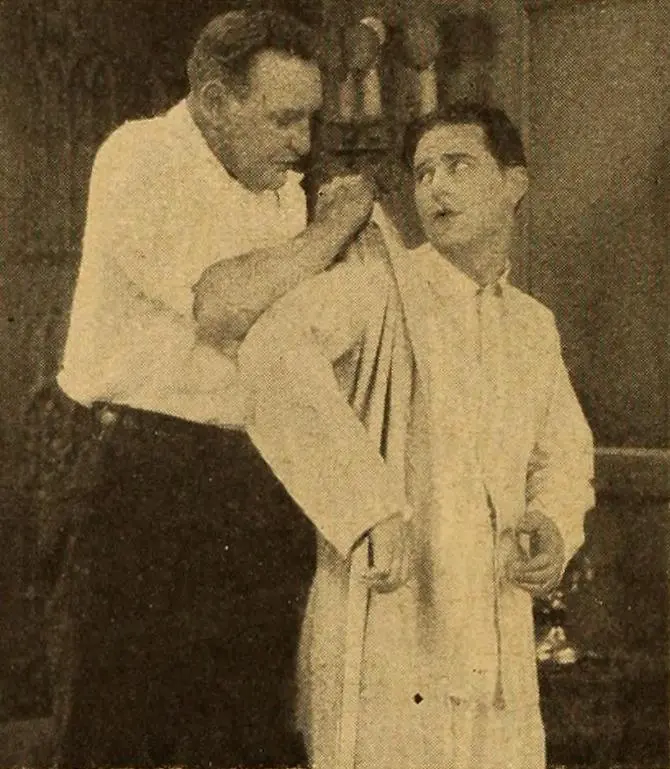
Dolores, portrayed with captivating intensity by Lya De Putti, is arguably the most compelling character in the entire narrative. She isn't merely a villainess; she's a woman caught in a web of her own making, coerced and manipulated, yet possessing a dangerous agency. Her role as the titular 'tempter' is fraught with internal conflict, making her eventual, tragic redemption all the more impactful. Her initial seduction of Francis is less about genuine affection and more about a desperate game of survival, which lends a surprising depth to her character that many of her contemporaries lacked.
Francis’s subsequent entanglement with Monica, his cousin, introduces a more 'pure' romantic element, contrasting sharply with Dolores’s allure. The back-and-forth between these two relationships forms the backbone of the film's emotional drama. The plot, however, sometimes strains credulity, particularly in the rapid shifts of affection and the almost cartoonish simplicity of some of the betrayals. Monica's swift decision to break off the engagement based on a single discovery, only to be reconciled later, feels less like a character arc and more like a narrative device to keep the melodrama churning. It’s a flaw in an otherwise ambitious plot.
At its heart, The Prince of Tempters is a morality play, exploring the corrupting influence of wealth and societal expectations on an innocent soul. Francis's journey is one of disillusionment, as he grapples with the chasm between the spiritual ideals of his youth and the cynical realities of his inherited world. The film doesn't shy away from depicting the hypocrisy of high society, where appearances are everything and genuine affection can be sacrificed on the altar of status and convenience.
The resolution, with Dolores's self-sacrifice and Mario's exposure, provides the necessary catharsis for the era. It’s a dramatic, almost operatic conclusion that, while satisfying in its finality, doesn't quite fully resolve the deeper questions about Francis’s identity and his place in a world he never chose. One could argue that his return to the monastery, however brief, hints at a lasting spiritual wound, suggesting that the 'prince' was ultimately better suited to a life of quiet contemplation than worldly power.

In silent cinema, the burden of conveying emotion rests almost entirely on the actors' physicality and facial expressions. The Prince of Tempters is no exception, and its lead performers rise to the challenge with varying degrees of success. John Kolb, as Francis, carries the film’s significant emotional weight. His large, expressive eyes and often subtle shifts in posture are tasked with communicating a world of internal struggle – from monastic piety to worldly confusion, and finally to embittered disillusionment. While his performance can sometimes feel a touch stiff by modern standards, Kolb effectively portrays the character's journey from naiveté to experience, particularly in scenes where he grapples with his conflicting desires.
Mary Brian, as the virtuous Monica, provides a necessary counterpoint to the film's darker elements. Her portrayal is one of innocence and vulnerability, a classic ingenue archetype. While her role is arguably less dynamic than Francis’s or Dolores’s, Brian imbues Monica with a quiet grace that makes her a believable object of Francis’s affection. Her heartbreak, when she discovers Francis's entanglement with Dolores, is conveyed with a genuine pathos that resonates despite the exaggerated gestures typical of the period.
However, it is Lya De Putti as Dolores who truly shines, stealing every scene she inhabits. Known for her exotic allure and intense screen presence, De Putti embodies the 'temptress' with a captivating blend of sensuality, manipulation, and underlying despair. Her performance is magnetic, a whirlwind of emotion that elevates the character beyond a simple villainess. Watch her in the scenes where she first ensnares Francis; the way her eyes gleam with a mixture of triumph and self-loathing is a masterclass in silent film acting. Her tragic arc, culminating in a desperate act of truth-telling, is the emotional anchor of the film, proving that even in a story about 'temptation,' the 'tempter' can be the most sympathetic figure. Her work here is far more compelling than much of what was seen in similar roles in films like The Pretenders or even Indiscreet Corinne, which often relied on more one-dimensional portrayals.
The supporting cast, including J. Barney Sherry as Francis's uncle and Sam Hardy as the conniving Mario, fulfills their roles adequately. Hardy, in particular, leans into the theatrical villainy, his exaggerated expressions and gestures leaving no doubt as to his nefarious intentions. While not groundbreaking, the collective performances successfully articulate the narrative's emotional landscape without the aid of spoken dialogue.
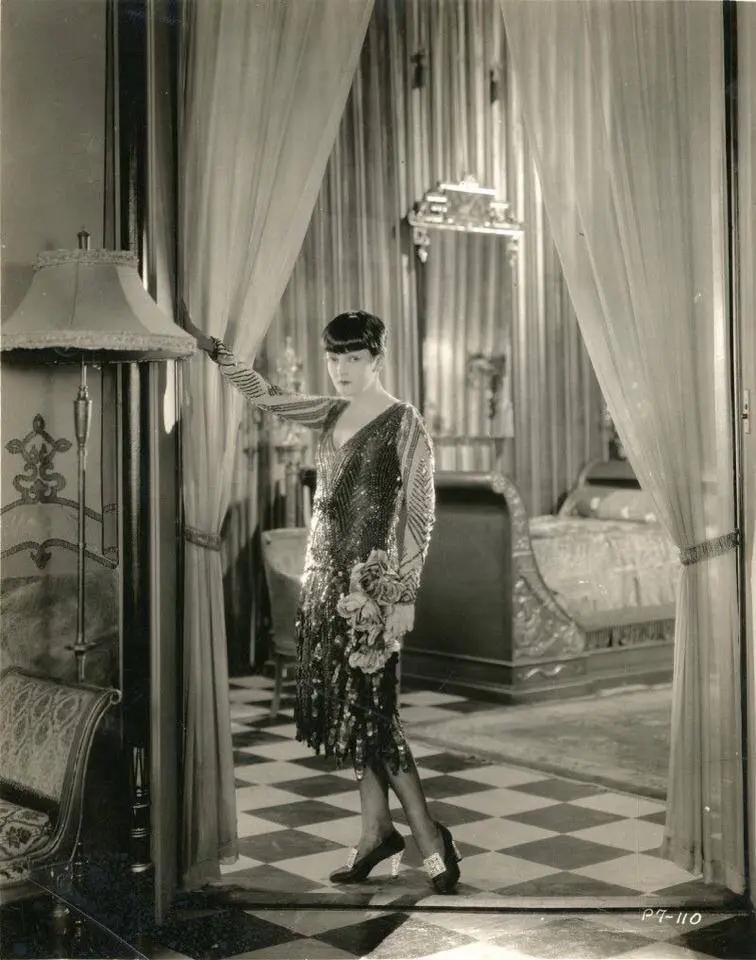
Paul Bern, a director perhaps better known for his later personal tragedies than his directorial output, navigates this complex narrative with a steady, if not revolutionary, hand. His direction of The Prince of Tempters adheres largely to the conventions of silent cinema of the mid-1920s, prioritizing clear storytelling and effective emotional communication over avant-garde experimentation. The film's visual language is functional, serving the melodrama without distracting from it.
The cinematography, while not groundbreaking compared to the more experimental works of German Expressionism or Soviet montage of the same period, effectively establishes mood and setting. There's a stark contrast between the austere, almost ethereal beauty of the monastery scenes, bathed in soft, reverent light, and the opulent, often shadowy, London ballrooms and residences. These visual distinctions are crucial in highlighting Francis's journey from spiritual sanctuary to worldly snare. For instance, the early scenes in the monastery use high-key lighting to emphasize purity, while later scenes involving Dolores often employ chiaroscuro effects to heighten tension and moral ambiguity.
Bern utilizes close-ups effectively, particularly during moments of heightened emotional intensity, allowing the audience to intimately connect with the characters' unspoken thoughts. The editing is generally straightforward, facilitating the narrative flow, though some sequences feel a bit protracted, a common characteristic of silent films that had to rely on visual exposition where dialogue would later accelerate pacing.
Set design and costumes also play a vital role in grounding the story. The lavish London interiors and the elegant period attire not only establish the aristocratic milieu but also serve as a visual shorthand for the temptations and societal pressures Francis faces. The film's production values are solid for its time, demonstrating a commitment to creating an immersive, if somewhat idealized, world. While it may not reach the visual poetry of a Murnau or a Griffith, Bern’s direction is competent and effectively supports the film’s ambitious narrative.
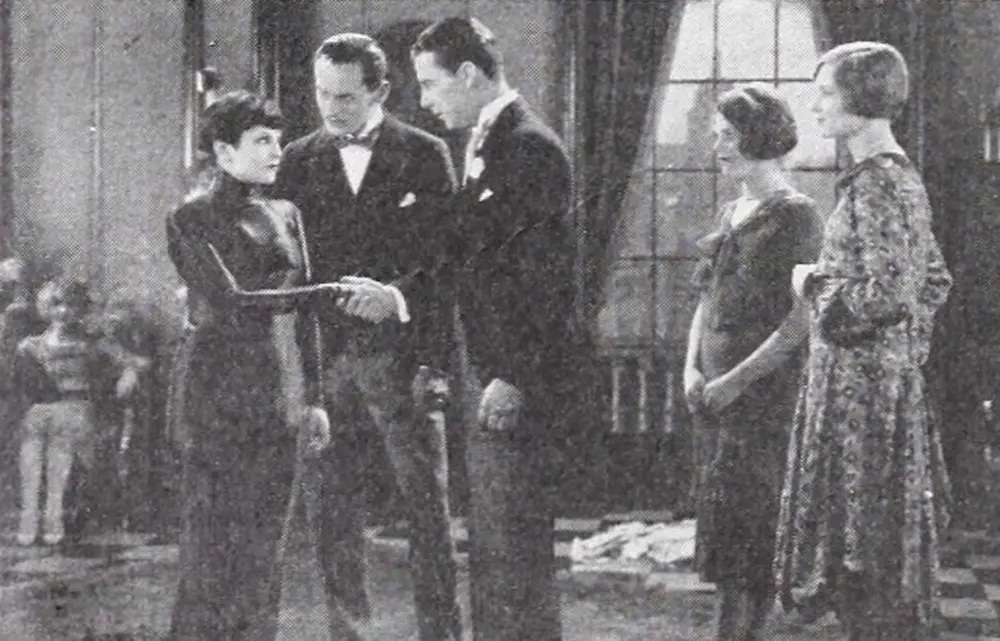
The pacing of The Prince of Tempters will undoubtedly feel languid to modern audiences accustomed to rapid-fire editing and constant narrative propulsion. Silent films, by their very nature, operate on a different temporal rhythm, allowing scenes to unfold with a deliberate, almost theatrical slowness. Yet, it is precisely this unhurried unfolding that allows certain emotional beats to resonate, provided one adjusts to the rhythm. The film takes its time to establish character and conflict, building towards its dramatic climaxes with a methodical precision that can be both rewarding and, at times, testing.
The tone is unashamedly melodramatic, a quality that is both its greatest asset and its most significant hurdle. This isn't a film that shies away from grand gestures, heightened emotions, or stark moral distinctions. Characters are often archetypes – the innocent, the villain, the temptress – and their struggles are presented in a way that aims for maximum emotional impact. For viewers who embrace this style, the film offers a rich, immersive experience, a journey into a world where emotions are writ large across the screen. For others, it might feel overwrought, a relic of a less subtle cinematic era.
There's a curious innocence to the film's depiction of 'temptation' that, by today's standards, feels almost quaint. The 'wiles' of Dolores, while effective within the narrative, are often presented through suggestive glances and lingering touches rather than overt sensuality. This underscores a deeper, timeless anxiety about moral corruption and the fragility of virtue, making the film's themes resonate beyond its period-specific presentation. It's a fascinating look at what society considered scandalous in the 1920s, a stark contrast to contemporary cinema's explorations of similar themes.
The film’s score (if viewed with a modern accompaniment) is crucial in guiding the audience through these tonal shifts, amplifying the drama, suspense, and romance. Without it, the silent experience can feel incomplete, but with a well-crafted score, the melodramatic cadence becomes a powerful tool for storytelling, allowing the audience to fully immerse themselves in the emotional ebb and flow of Francis’s tumultuous journey.
Is The Prince of Tempters a hidden gem? Not exactly. It's more of a valuable artifact. It offers insight into the early film industry's narrative ambitions and its approach to complex moral themes. It's not a film that will appeal to everyone, nor should it be expected to. Its specific charms are reserved for a particular audience.
Should you prioritize it over other silent films? Only if you are specifically interested in silent cinema that delves into dramatic character studies and moral dilemmas. It stands as a solid example of mainstream silent drama, rather than a groundbreaking masterpiece. If you're new to silent films, there are more accessible entry points.
What makes it stand out? Its unwavering commitment to character-driven melodrama and Lya De Putti's magnetic, tragic performance as Dolores. Her portrayal alone is worth the price of admission for silent film enthusiasts. The film's exploration of identity and temptation, while dated in execution, remains universally relevant.
IMDb 7
1916
Community
Log in to comment.