DbcultAccessing Vault...
7.3/10
Senior Film Conservator
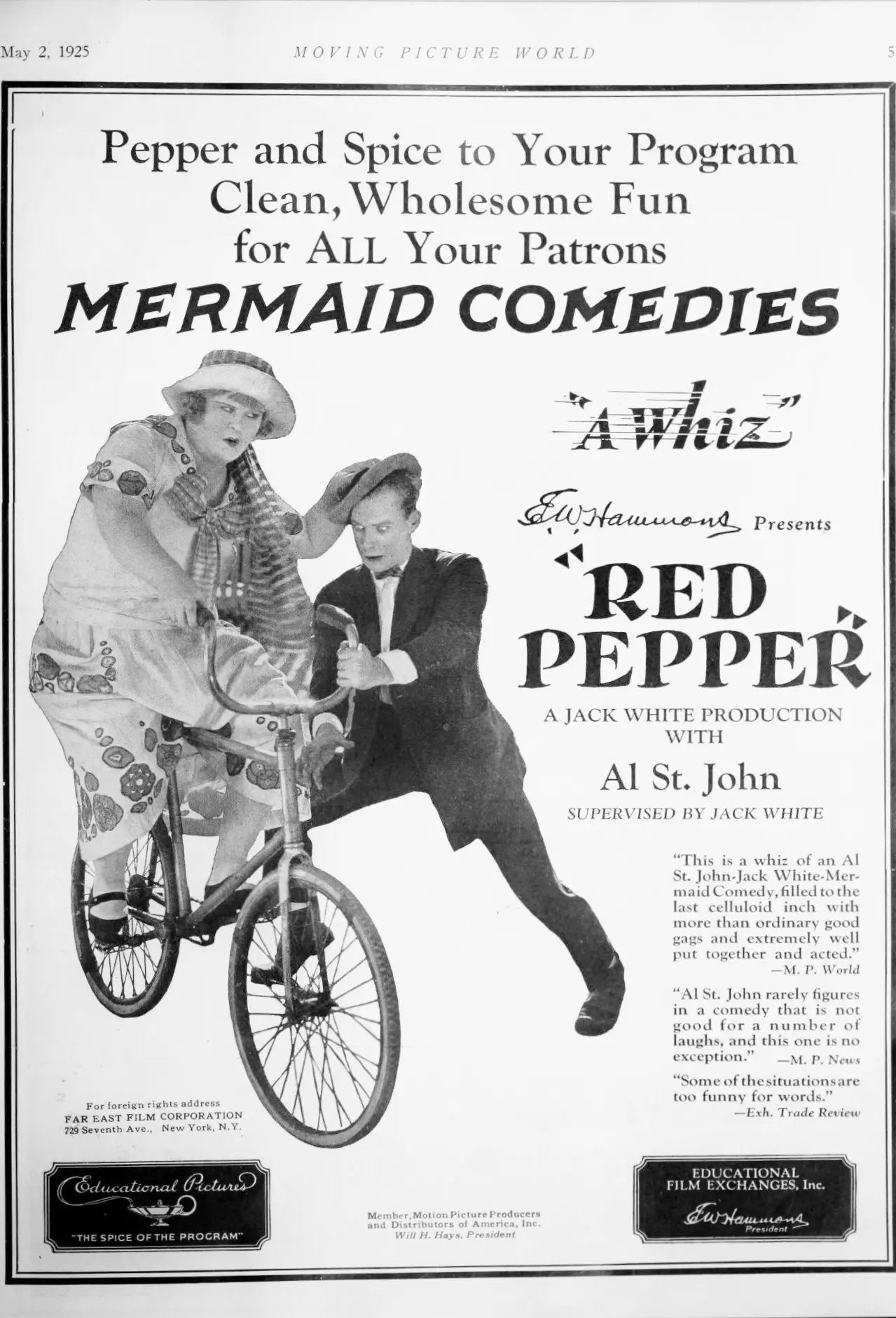
A definitive 7.3/10 rating for a film that redefined the boundaries of cult cinema. Red Pepper remains a cornerstone of transgressive art.
Is 'Red Pepper' worth watching today? Short answer: yes, absolutely, but with a significant caveat. This film is a delightful, if fleeting, dive into the kinetic energy of early silent comedy, perfectly suited for enthusiasts of the era or those curious about the roots of physical humor.
However, it is decidedly not for viewers expecting modern narrative depth, sophisticated character arcs, or high-fidelity restoration. It's a niche pleasure, but a potent one.
The narrative of Red Pepper is less a carefully constructed story and more a series of escalating comedic set pieces stitched together by the thread of a single, eventful day. We follow Tom Katt, a drugstore assistant, whose life is a vibrant defiance of the mundane. From the moment he mounts his bicycle, the film signals its intent: this will be a journey of physical spectacle.
His ride to work is not a simple commute; it's a display of acrobatic prowess, a ballet of near-misses and improbable recoveries that instantly establishes Tom's character as an agile, almost rubber-boned individual. This introduction alone sets a high bar for the physical comedy to follow, promising a protagonist who interacts with the world not through dialogue, but through dynamic, often gravity-defying movement.
Once at the drugstore, Tom's approach to his job is equally unconventional. He doesn't just dispense medicine; he performs. His interactions with customers are infused with a fanciful, almost improvisational energy, turning routine transactions into mini-performances. This subversion of expectation is where much of the film's charm lies, as Tom consistently finds ways to inject humor and absurdity into every task.
The stakes are raised when Tom discovers his employer's financial woes. Instead of offering a sympathetic ear or conventional advice, Tom devises an 'ingenious subterfuge.' The film doesn't dwell on the moral implications, instead focusing on the comedic execution of his plan. This sequence highlights his resourcefulness, albeit in a morally grey area, painting him as a loyal, if misguided, hero.
Naturally, such a scheme attracts unwanted attention. The ensuing chase sequence, with Tom pursued by the police, is the film's climax. It's a masterclass in silent era slapstick, a symphony of rapid cuts, physical gags, and escalating chaos. Tom’s escape is not just swift; it's a testament to his unparalleled agility and quick thinking, as he navigates obstacles with a grace that belies the desperate situation. The plot, therefore, serves less as a narrative backbone and more as a scaffold for John Rand's remarkable physical comedy.
The undeniable star of Red Pepper is John Rand, playing Tom Katt. His performance is a tour de force of physical comedy, a testament to the silent era's reliance on expressive bodies and faces. Rand isn't just acting; he's orchestrating a symphony of movement, making every gesture, every fall, every near-miss count.
His initial bike ride is a perfect example. We see him contorting his body, narrowly avoiding pedestrians, and even performing tricks that seem to defy the laws of physics. It's not just about speed; it's about the fluid, almost dance-like quality of his movements, a precursor to the intricate choreographies seen in later action films. This opening sequence immediately captivates, establishing Rand as a performer with exceptional control over his physicality.
Inside the drugstore, Rand's comedic timing shines through his interactions. Whether he's fumbling with bottles, awkwardly assisting a customer, or attempting to hide his illicit activities, his facial expressions are as crucial as his body language. There's a mischievous glint in his eye, a subtle shrug, or an exaggerated gasp that communicates volumes without a single spoken word. This ability to convey complex emotions and intentions purely through physical means is the hallmark of a true silent film performer.
The chase scene, however, is where Rand truly unleashes his full potential. He doesn't just run; he tumbles, leaps, slides, and dodges with a seemingly endless supply of energy. One particular moment, where he uses an unexpected object to catapult himself over a barrier, stands out as a brilliant blend of ingenuity and raw athleticism. It's a performance that doesn't just entertain; it inspires awe at the sheer dedication and skill required. Rand's Tom Katt is not a deep character, but he is an unforgettable presence, a whirlwind of comedic energy that anchors the entire film.
The supporting cast, including Babe London and Judy King, provide competent reactions and add to the chaotic atmosphere, but this is unequivocally Rand’s show. Their roles are primarily to facilitate his gags, to be the straight men or the obstacles in his comedic path. They do their jobs well, creating a believable, if exaggerated, world for Tom to bounce through.
The direction in Red Pepper, while uncredited, demonstrates a clear understanding of silent slapstick principles. The pacing is relentlessly swift, mirroring Tom Katt's own frenetic energy. There's little room for exposition or lingering shots; the film moves from one gag to the next with an almost breathless urgency, ensuring that the audience's attention never wavers.
The use of editing is particularly effective in enhancing the comedic impact. Quick cuts are employed during the chase sequences to heighten the sense of speed and confusion, while longer takes allow Rand’s physical feats to play out in full, unadulterated glory. This balance between rapid-fire action and sustained comedic performance is crucial for the genre, and Red Pepper executes it with commendable skill.
Cinematography, typical of the era, is functional yet effective. The camera is largely static, serving as a neutral observer, allowing the performers to fill the frame with their movements. However, there are instances where the camera placement cleverly emphasizes the scale of Tom's stunts, or the narrowness of his escapes, adding to the visual humor. For instance, a shot from a slightly elevated angle during the bicycle ride emphasizes the precariousness of Tom’s balance amidst bustling street life.
The tone is consistently light and farcical. Even when Tom is pursued by the law, there's no real sense of dread; the mood remains playful, a cat-and-mouse game rather than a genuine threat. This consistent comedic tone is a testament to the director’s ability to maintain a specific atmosphere throughout the film’s brief run time. The film is a masterclass in controlled chaos, where every element, from the set design to the blocking of extras, seems designed to amplify the central comedic performance.
Absolutely, Red Pepper is worth watching today, especially for those with an appreciation for the historical roots of physical comedy. It offers a fascinating glimpse into the early days of silent cinema, showcasing the pure, unadulterated joy of slapstick.
This film is best for: Silent film enthusiasts, students of physical comedy, and anyone curious about the evolution of cinematic humor. It serves as an excellent example of how storytelling through movement alone can be incredibly effective and entertaining.
This film is not for: Viewers seeking complex narratives, deep character development, or high-definition visual spectacle. Its brevity and focus on gags over plot might disappoint those accustomed to modern filmmaking conventions.
It’s a short, sharp burst of energy that leaves a lasting impression, not for its story, but for its sheer, kinetic force. The raw talent of John Rand is undeniable, and his performance alone justifies seeking out this piece of cinematic history. It works. But it’s fleeting.
While many laud the narrative sophistication of later silent features, Red Pepper reminds us that pure, unadulterated kinetic joy can be just as, if not more, impactful than intricate plotlines. It strips away dialogue and complex motivation, leaving only the universal language of physical action and reaction.
This film, like many of its contemporaries, leverages the inherent visual nature of cinema to its fullest. There’s a certain purity to the gags, a reliance on visual wit that transcends language barriers. It’s a style of comedy that demands engagement from the viewer, asking them to interpret the exaggerated movements and expressions to understand the humor.
Perhaps the greatest tragedy of silent cinema is not its lost films, but the lost appreciation for its unique comedic language, of which Red Pepper is a prime dialect. We often view silent films through a lens of historical curiosity, rather than appreciating them as fully formed artistic expressions in their own right. This film challenges that perception, proving that even a simple premise can yield profound entertainment.
The film, in its chaotic embrace of an 'ordinary day,' inadvertently offers a subtle critique of societal expectations, suggesting that true living lies in the vibrant defiance of routine. Tom Katt is not just a comedic character; he's an emblem of the individual spirit refusing to conform.
Its influence, while perhaps not directly traceable to blockbuster hits, resonates in the physical comedy of later eras, from cartoons to Jackie Chan. The art of the perfectly timed pratfall, the ingenious use of props, and the relentless pursuit of a gag – these elements are all present and expertly executed in Red Pepper.
It's a reminder that sometimes, the most sophisticated comedy is found in the simplest, most direct physical expression. The film's brevity, rather than being a weakness, becomes a strength, ensuring that every moment is packed with action and humor, leaving no room for filler. It's an efficient, effective piece of entertainment that delivers exactly what it promises: a good laugh.
Red Pepper is a delightful, albeit brief, explosion of silent era slapstick. It doesn't aim for profundity or intricate storytelling; its sole purpose is to entertain through the sheer force of physical comedy, and in that, it succeeds spectacularly. John Rand's performance as Tom Katt is nothing short of captivating, a testament to the power of non-verbal communication and athletic prowess.
While its narrative simplicity and fleeting nature might not appeal to every modern viewer, for those willing to immerse themselves in the kinetic charm of early cinema, Red Pepper offers a potent, spicy kick. It’s a vibrant, often hilarious, reminder of the foundational artistry that shaped an entire genre. Seek it out if you're ready for a short, sharp dose of pure, unadulterated comedic energy. It’s a testament to the fact that sometimes, all you need is a man, a bike, and a mischievous spirit to create cinematic magic.
IMDb —
1920
Community
Log in to comment.