DbcultAccessing Vault...
Cult Review
Senior Film Conservator
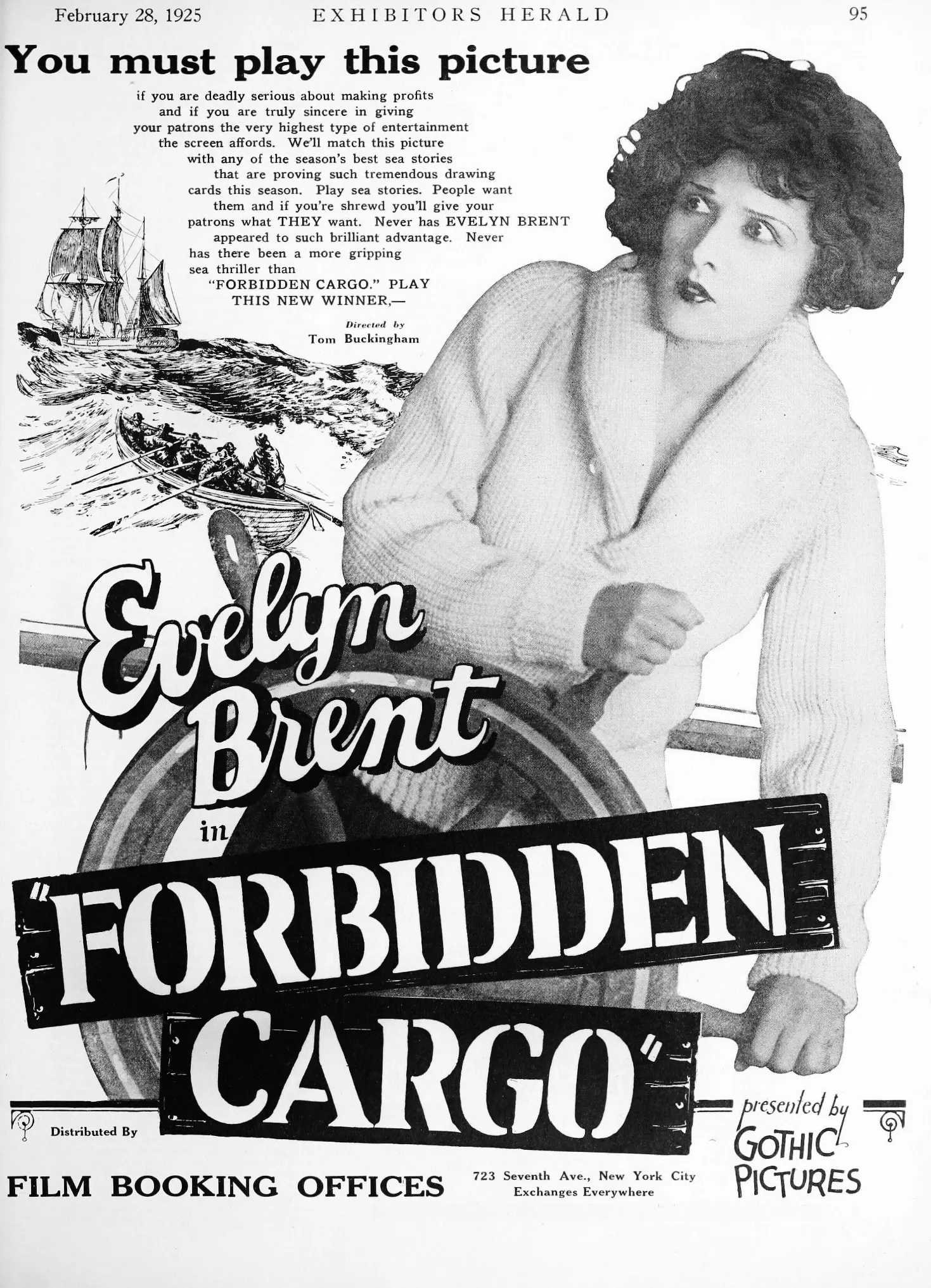
In the sepia-toned archives of 1920s cinema, few artifacts capture the precarious intersection of lawlessness and romanticism quite like Forbidden Cargo.
Directed with a keen eye for atmospheric tension, this 1923 silent gem serves as a poignant reminder of the era's fascination with the 'noble outlaw.' While contemporary audiences might associate the bootlegging genre with the smoke-filled speakeasies of Chicago, Forbidden Cargo takes the conflict to the high seas, trading the asphalt of the city for the unpredictable swells of the Atlantic. It is a film that breathes salt air and gunpowder, anchored by a performance from Evelyn Brent that defies the traditional 'damsel' tropes of its time.
At the heart of the narrative is Peggy O’Day, known to the maritime underworld as Captain Joe. Brent’s portrayal is nothing short of revolutionary for the period. She embodies a 'vivacious' energy that is tempered by the hard-earned wisdom of a smuggler. In an era where female characters were often relegated to domesticity or decorative roles, as seen in the more traditional domestic dramas like John Heriot's Wife, Brent’s Captain Joe is a woman of agency. She commands men, navigates treacherous routes, and operates within a moral gray area that challenges the viewer's allegiances.
The duality of her character—the rugged sea captain versus the vulnerable woman falling for an agent of the state—creates a psychological friction that drives the film’s momentum. This isn't just a story about rum-running; it is a story about the masks we wear to survive. Her chemistry with Jerry Burke (played with a steady, if somewhat conventional, heroism by Robert Ellis) provides the necessary emotional stakes. Burke is not merely a foil; he represents the 'ordered' world that Peggy has been forced to abandon. Their romance is a collision of two disparate realities, much like the thematic clashes found in Bella Donna, where desire and duty are perpetually at odds.
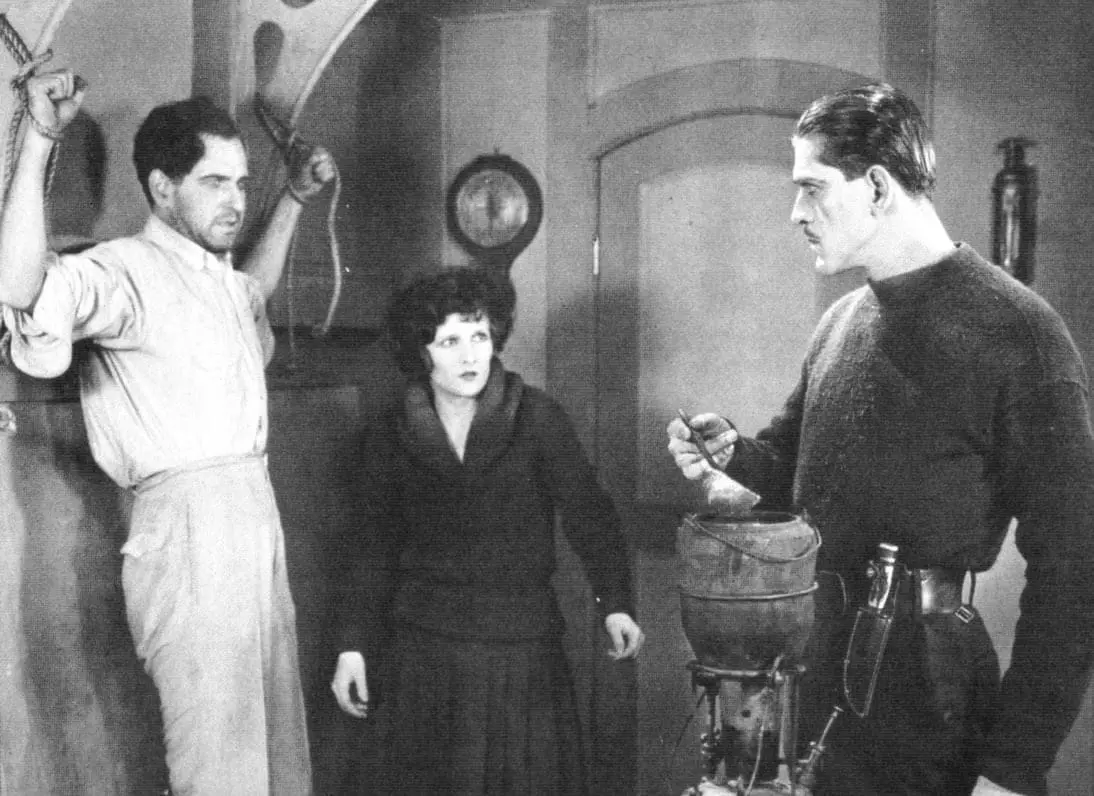
For modern cinephiles, perhaps the most arresting aspect of Forbidden Cargo is the presence of a young Boris Karloff. Long before he would become the definitive face of Gothic horror, Karloff was honing his craft as a character actor, often playing villains or 'ethnics' with a simmering intensity. As Pietro, the jealous first mate, Karloff provides a masterclass in silent-screen villainy. His performance is visceral, utilizing his striking features to convey a sense of impending doom.
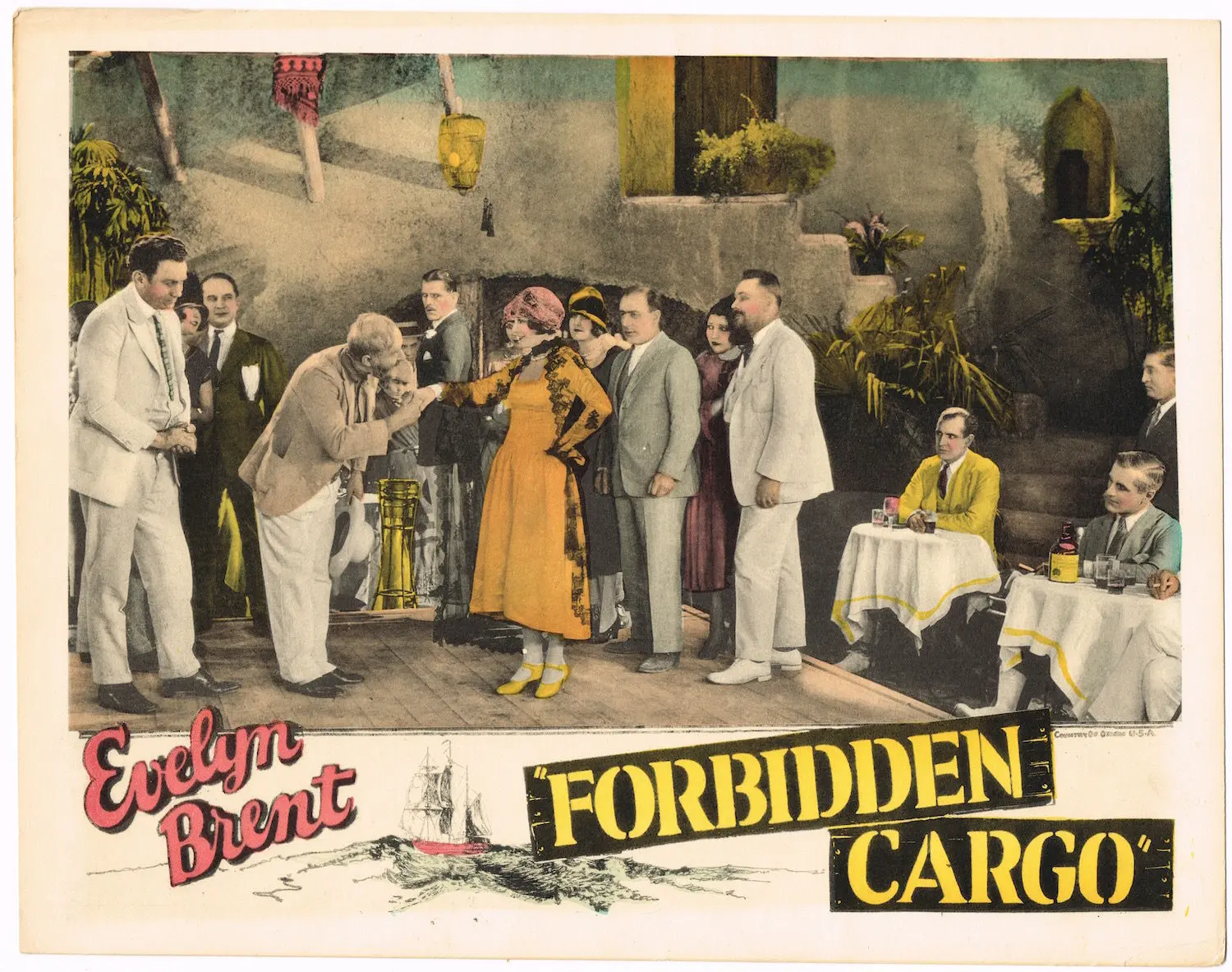
Pietro is more than a simple antagonist; he is the personification of the chaos that inherent in the criminal life. His jealousy isn't just romantic; it's existential. He represents the old guard of the sea—brutal, uncompromising, and inherently suspicious of the 'civilized' world that Jerry Burke represents. When Karloff’s Pietro discovers Jerry’s true identity, the film shifts from a romantic drama into a high-octane thriller. The sequences involving the kidnapping and the subsequent hijacking of the rum-runner possess a kinetic energy that rivals the slapstick-adjacent action of Look Out Below!, yet with a much darker, more consequential tone.
The backdrop of the Bahamas and the clandestine trade routes provides a lush, almost exotic texture to the film. Writer Fred Myton utilizes the historical context of Prohibition not just as a plot device, but as a character in itself. The 'forbidden' nature of the cargo mirrors the 'forbidden' nature of the love between Peggy and Jerry. In the 1920s, the public’s relationship with the Volstead Act was deeply ambivalent, and Forbidden Cargo taps into this zeitgeist. It portrays the rum-runners not as irredeemable criminals, but as rugged individualists operating on the fringes of a society that had, perhaps, overreached its moral authority.
This nuance is what separates the film from more didactic moral tales like Everyman's Price. Here, the law is represented by the Navy and the Secret Service, but the heart of the film remains with the outlaws. The redemption of Peggy’s father, a cashiered naval officer, serves as the ultimate thematic bridge. It suggests that the 'stain' of disgrace can be washed away through acts of bravery, effectively reconciling the outlaw spirit with the requirements of the state. It is a narrative arc that echoes the redemption themes in Singer Jim McKee, where the rugged frontier hero must navigate the complexities of social standing.
Visually, Forbidden Cargo is a testament to the sophistication of early 1920s cinematography. The maritime sequences are particularly impressive, capturing the isolation of the sea and the claustrophobia of life aboard a small vessel. The use of natural light during the island sequences creates a stark contrast with the shadowy, tension-filled scenes on the boat. There is a raw, unvarnished quality to the filming that reminds me of the rugged landscapes in Wild, where the environment serves as an antagonist in its own right.
The climax of the film—the SOS signal, the arrival of the warship, and the eventual destruction of the boat—is a sequence of escalating tension. The use of dynamite as a plot resolution was a common trope of the era, but here it feels earned. It is the literal and metaphorical 'blowing up' of the past. As the boat disintegrates, so too does the life Peggy O'Day once knew. The survival of Peggy and Jerry is not just a physical triumph, but a symbolic rebirth. They emerge from the water cleansed of their previous identities, ready to enter a more conventional, albeit less 'vivacious,' existence.
When placed alongside other films of the period, Forbidden Cargo stands out for its pacing and its refusal to lean too heavily on melodrama. While films like Willy Reilly and His Colleen Bawn rely on historical romanticism, Forbidden Cargo feels decidedly modern. It anticipates the noir sensibilities that would dominate cinema a decade later. The character of Pietro, in particular, feels like a precursor to the obsessive, doomed antagonists of the 1940s.
Furthermore, the film’s treatment of 'the other'—whether it be the criminals or the foreign elements often associated with the trade—is handled with a surprising amount of nuance. Unlike the caricatures sometimes found in Eine weisse unter Kannibalen or the exoticism of Minaret Smerti, the characters in Forbidden Cargo are driven by universally recognizable motivations: greed, love, and a desire for respect. Even the subplot involving the 'cashiered naval officer' adds a layer of class-based drama that enriches the overall narrative, providing a depth that is often missing from purely action-oriented silents like Up and Going.
In conclusion, Forbidden Cargo (1923) is a remarkable achievement that deserves a more prominent place in the conversation about silent cinema. It is a film that successfully balances high-stakes action with genuine character development. Evelyn Brent delivers a powerhouse performance that should be studied by anyone interested in the evolution of the female lead in film. Her ability to pivot from the commanding 'Captain Joe' to the vulnerable Peggy O'Day is a testament to her range and screen presence.
The film also serves as a crucial milestone in the career of Boris Karloff, showcasing the early glimmers of the magnetism that would eventually make him a legend. While some of the plot resolutions—such as the convenient clearing of the father's name—might feel a bit tidy by modern standards, they are perfectly in line with the narrative conventions of the time. Much like the intricate storytelling in Builders of Castles or the whimsical charm of Der verlorene Schuh, Forbidden Cargo understands the power of a satisfying ending. It is a thrilling, romantic, and visually arresting journey that captures the spirit of an era defined by its contradictions. If you have the opportunity to view this maritime relic, do not let it pass you by; it is a cargo well worth the risk.
IMDb —
1915
Community
Log in to comment.