DbcultAccessing Vault...
6.5/10
Senior Film Conservator
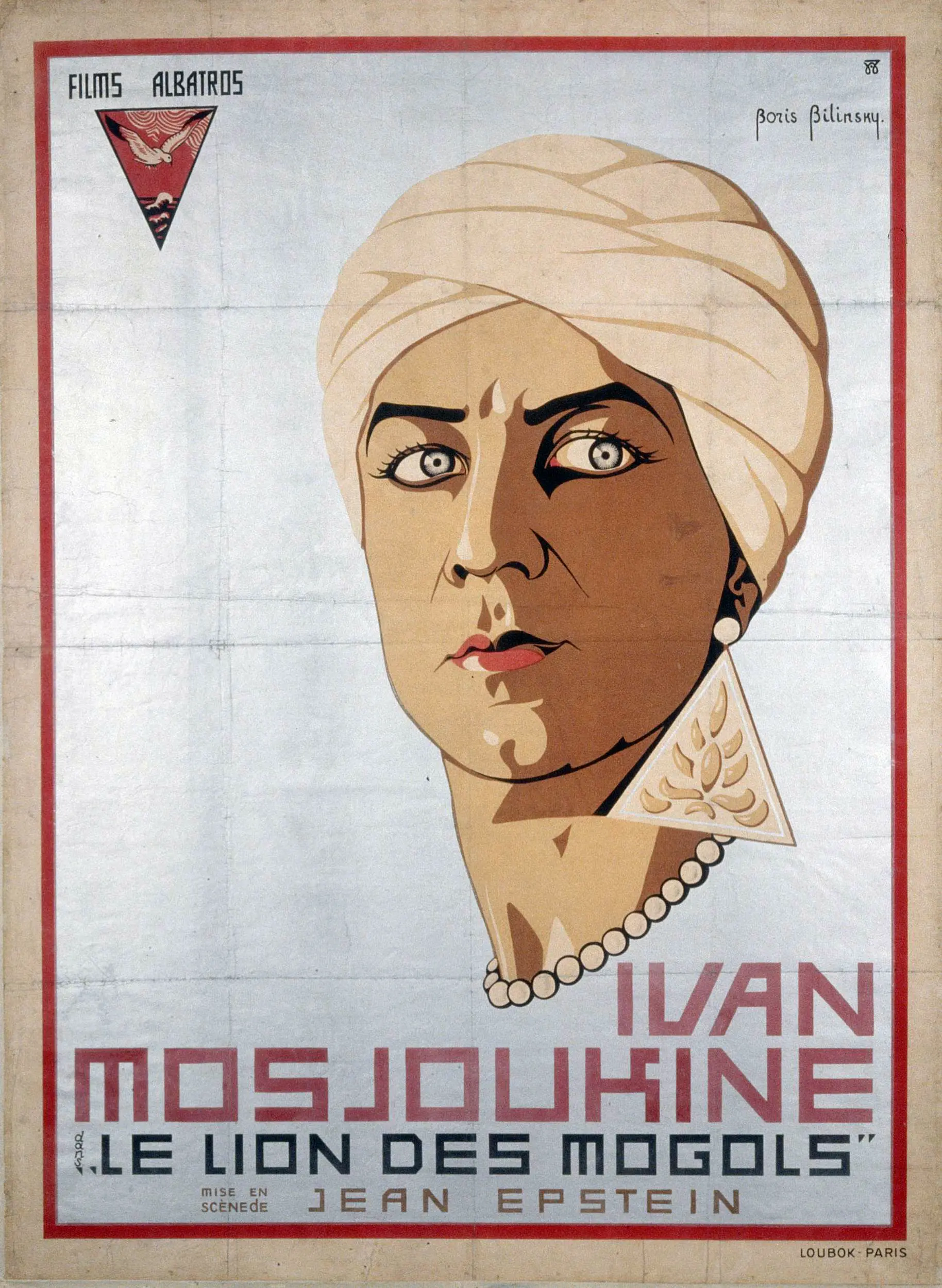
A definitive 6.5/10 rating for a film that redefined the boundaries of cult cinema. Le lion des Mogols remains a cornerstone of transgressive art.
The 1920s in Paris represented a seismic shift in the tectonic plates of cinematic grammar, and few artifacts embody this upheaval as vividly as Le lion des Mogols. Directed by the visionary Jean Epstein and written by its mercurial star, Ivan Mozzhukhin, the film is a fascinating hybrid—a bridge between the theatrical melodrama of the early century and the rhythmic, impressionistic avant-garde that would soon define French cinema. It is not merely a narrative of a displaced prince; it is a profound meditation on the nature of the image, the elasticity of identity, and the burgeoning power of the 'star' as a modern deity.
To understand Le lion des Mogols, one must recognize the influence of Films Albatros, the production company formed by Russian émigrés fleeing the Bolshevik Revolution. This cultural displacement is etched into every frame. Much like the protagonist, the creators were men without a country, reinventing themselves in the salons and studios of Montreuil. This film serves as a meta-textual commentary on that very experience. When we watch Mozzhukhin’s Prince Roudghito-Sing navigate the alien streets of Paris, we are witnessing the collective trauma and resilience of the Russian diaspora. It carries a weight far heavier than the typical melodrama found in The Guilty Man, opting instead for a psychological complexity that borders on the hallucinogenic.
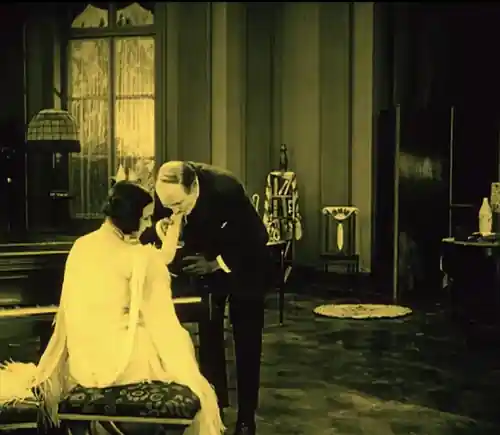
Jean Epstein was a theorist as much as a filmmaker, obsessed with the concept of photogénie—the idea that the camera reveals a hidden, spiritual dimension of reality that the naked eye cannot perceive. In Le lion des Mogols, this philosophy manifests through a restless, inquisitive camera. The prologue, set in a stylized, almost operatic 'East,' utilizes lighting that feels both ancient and futuristic. The transition to the Parisian nightlife is a masterclass in rhythmic montage. Unlike the more static compositions seen in The Phantom, Epstein’s work here is fluid, almost liquid, mirroring the Prince’s own sense of vertigo as he is thrust into the modern world.
The use of slow motion and double exposures creates a dream-state that elevates the plot above its pulp origins. When the Prince enters the film studio within the film, Epstein heightens the artifice. We see the lights, the cameras, the painted backdrops—a deconstruction of the cinematic illusion that feels decades ahead of its time. This reflexive nature invites comparison to works like Il film rivelatore, yet Epstein maintains a visceral emotional core that prevents the film from becoming a mere intellectual exercise.
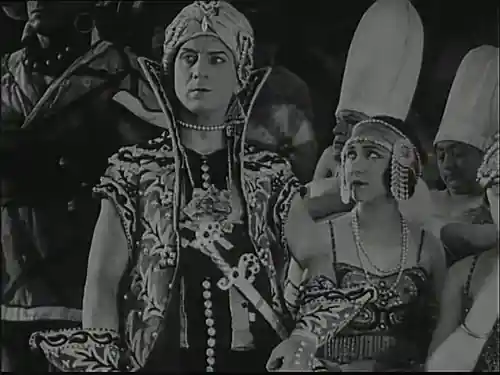
At the heart of this storm is Ivan Mozzhukhin. His performance is a revelation of intensity, a physical manifestation of the 'Kuleshov effect' where his face becomes a canvas for the viewer’s own anxieties. He possesses a feline grace—hence the 'Lion' of the title—that contrasts sharply with the stiff, bourgeois affectations of the French bankers and producers. His eyes, often captured in extreme close-up, convey a depth of sorrow and defiance that anchors the film's more fantastical elements. While Hearts of the World relied on broad emotional strokes, Mozzhukhin offers a nuanced, almost modern sensibility, shifting from the regal dignity of a prince to the desperate hunger of an artist with effortless fluidity.
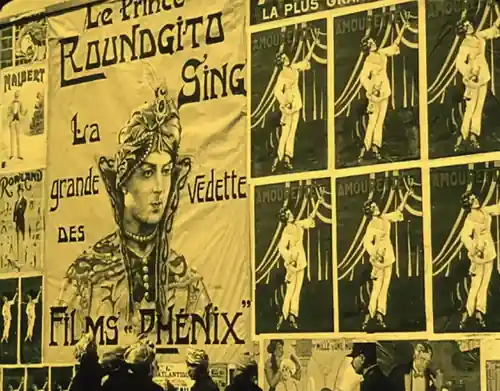
The narrative pivot—the Prince becoming a film star—is a stroke of genius that allows Epstein to satirize the very industry he inhabited. The character of Morel, the banker-producer played with oily menace by Camille Bardou, represents the commodification of beauty. To Morel, both Anna and the Prince are assets to be managed, their passions merely fuel for the box office. This tension between the 'atavistic' honor of the Prince and the 'civilized' greed of the West provides the film's most potent dramatic friction. It echoes the thematic concerns of Solid Concrete, where the individual is crushed by the structures of society, yet here the struggle is aesthetic and romantic rather than purely structural.
The arrival of Anna, portrayed by the luminous Nathalie Lissenko, complicates this dynamic. Her attraction to the Prince is not merely romantic; it is an attraction to authenticity. In a world of fake sets and scripted lines, the Prince is 'real,' even when he is playing a part. Their chemistry is palpable, framed by Epstein in intimate, soft-focus shots that contrast with the harsh, angular shadows of the city’s jazz clubs and back alleys. This interplay of light and shadow is reminiscent of the atmospheric depth in The Mysterious Stranger, but with a specifically French flair for the poetic.
Technically, the film is an embarrassment of riches. The set design for the Mogul palace is a triumph of Orientalist fantasy, dripping with silks and intricate stonework that seems to vibrate under Epstein’s lens. When the action shifts to Paris, the cinematography adopts a more jagged, expressionistic tone. The sequence in the cabaret, featuring a cameo by the legendary Kiki of Montparnasse, is a whirlwind of motion, capturing the frantic hedonism of the Roaring Twenties. It is here that the film’s sea-blue and dark-orange hues—though we see them in the mind's eye through the tinting of the era—really come alive. The rhythmic editing during the dance sequences predates the music video by sixty years, creating a sensory overload that must have been overwhelming for 1924 audiences.
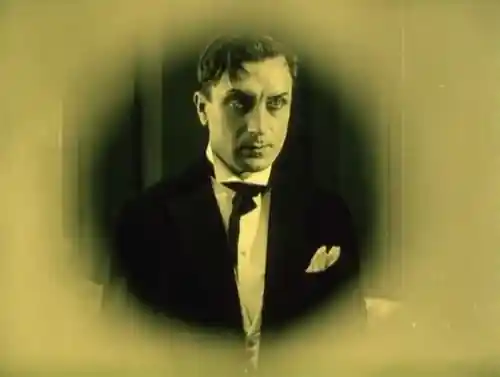
Comparing this to Congestion or Hot Dog highlights just how sophisticated Epstein’s pacing was. While other films of the period were still grappling with basic continuity, Le lion des Mogols was experimenting with subjective camera angles and internal monologues expressed through visual metaphor. It is a film that demands to be seen not just as a story, but as a symphony of images.
As the film reaches its climax, the boundaries between the 'real' world of Paris and the 'fictional' world of the film production dissolve. The Prince’s final confrontation with his past and his present is handled with a restraint that avoids the bathos found in Forget Me Not. Instead, we are left with a sense of profound melancholy. The Lion is caged, not by the Grand Khan, but by the expectations of a society that views him as an exotic curiosity rather than a man. The final shots are haunting, lingering on the Prince’s face as he realizes the true cost of his freedom.
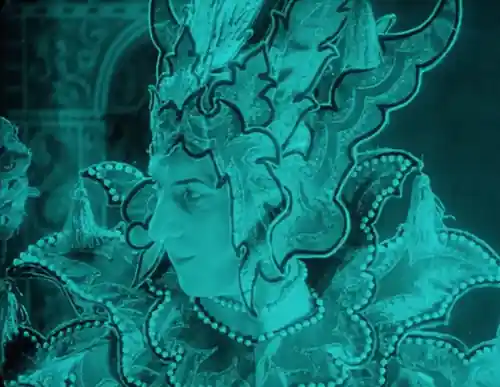
In the broader context of silent cinema, Le lion des Mogols stands alongside La montée vers l'Acropole as a testament to the medium's ability to transcend language. It is a work of immense ambition that succeeded in merging the popular appeal of the adventure film with the rigorous demands of the avant-garde. For the modern viewer, it offers a window into a moment when cinema was young, reckless, and infinitely brave. It lacks the cynicism of Good Riddance, opting instead for a grand, sweeping romanticism that is as infectious as it is tragic.
Ultimately, the film is a triumph of collaboration. Mozzhukhin’s screenplay provided the perfect vehicle for his own idiosyncratic talents, while Epstein’s direction pushed the boundaries of what the camera could achieve. It is a cornerstone of the Albatros era and a vital piece of the puzzle in the history of world cinema. Whether you are drawn to it for its historical significance, its technical brilliance, or the magnetic pull of its lead actor, Le lion des Mogols remains a roaring success, a cinematic beast that refuses to be tamed by time.
IMDb 2.1
1919
Community
Log in to comment.