DbcultAccessing Vault...
6.9/10
Senior Film Conservator
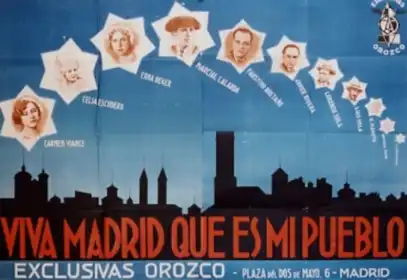
A definitive 6.9/10 rating for a film that redefined the boundaries of cult cinema. ¡Viva Madrid, que es mi pueblo! remains a cornerstone of transgressive art.
¡Viva Madrid, que es mi pueblo! is not a film for everyone, let's just get that out of the way. If you're not already predisposed to silent cinema, or if the very idea of a bullfighting melodrama sounds like a chore, you'll probably bounce off this pretty hard. But for those of us who find a strange beauty in these old reels, or if you're curious about a very specific slice of Spanish cultural history, there's a certain raw energy here that can be quite compelling. It's rough around the edges, sure, but it feels alive in moments, particularly when the actual bulls are involved.
The story itself is... well, it's a silent film story. Luis, a student, ditches his books for the bullring, falls for a woman who can't quite make up her mind, and finds himself in a rivalry with another matador. It's all very dramatic, as you'd expect. Celia Escudero as the "inconstant woman" does a lot of hand-wringing and wide-eyed emoting, which sometimes works for the period, sometimes just feels like she’s trying to summon a strong breeze. You can almost feel the director, Fernando Delgado, saying "More anguish!" off-screen.
What truly anchors this film, and what makes it more than just a forgotten melodrama, is the presence of Marcial Lalanda. He was a real, famous torero, and when he steps into the arena, the film noticeably shifts gears. It stops being about the sometimes-clunky love triangle and becomes something more immediate. The bullfighting sequences, surprisingly, hold up. You see the real danger, the real skill. There’s a shot where Lalanda is just there, cape poised, and the bull charges, and for a split second, you forget it’s a nearly century-old film. It feels dangerous.
The dramatic scenes outside the ring, though. Oh boy. Alfonso Orozco as Luis often looks like he's trying to remember his lines even though there are no spoken lines. His internal turmoil is communicated mostly through furrowed brows and sudden, sweeping gestures. There’s a scene where he's supposed to be heartbroken, and he just stares into the middle distance for what feels like an eternity. It’s supposed to be poignant, but it veers into slightly uncomfortable territory, like watching someone dramatically monologue to themselves in public.
And the pacing... it's a silent film. You get long holds on faces, then an intertitle, then another long hold. Some of the domestic scenes, particularly those involving the woman's indecision, drag. We get it, she's torn. We don't need another five shots of her looking wistfully out a window, then dramatically turning to look at a photograph. It’s the kind of thing where you start to notice the dust motes on the projection.
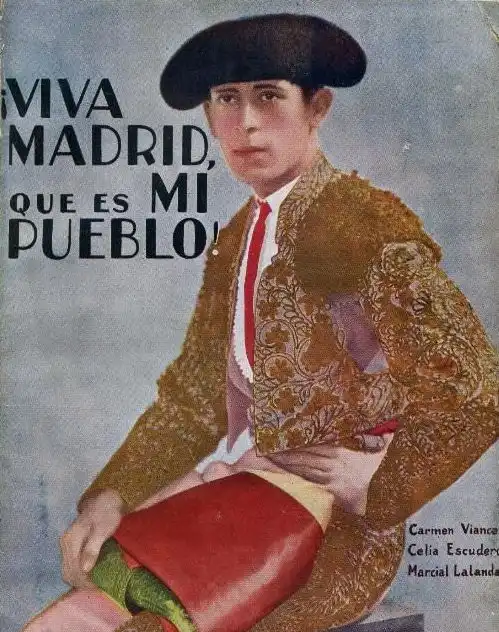
But then, you're back in the arena. The crowd scenes are interesting. They don't feel entirely staged. You get glimpses of actual people reacting, not just extras going through the motions. There's a certain rawness to the footage of the bullfights themselves, almost documentary-like. It’s clear they didn’t have CGI or elaborate safety measures. The danger is palpable. This is where the film finds its pulse.
The rivalry between Luis and Lalanda’s character (who is essentially Lalanda playing a version of himself, a more established matador) is mostly conveyed through intense stares across crowded rooms and then, of course, in the bullring. It’s less about character development and more about archetypes clashing. The young upstart, the seasoned veteran, the woman caught between them. It’s classic stuff, but the film doesn't really delve deep into why these people are like this, it just presents them.
One strange detail: the costumes for the women are quite elaborate, even for casual scenes. Celia Escudero's character always seems to be in a ruffled dress or something equally ornate, even when she's just having a quiet conversation. It feels a bit much, sometimes, like she's constantly ready for a formal portrait.
The shifts in tone are quite abrupt. One minute you're in a highly stylized, almost theatrical melodrama, with characters making grand pronouncements via intertitles, and the next you're watching intense, almost brutal footage of a bull being fought. It’s jarring, but also, in a weird way, makes the bullfighting feel even more real by contrast. The artifice of the love story highlights the stark reality of the arena.
Is it a great film? Probably not in the conventional sense. It’s uneven, often clunky, and its emotional beats are sometimes lost in the silent film acting conventions of the era. But it’s a fascinating artifact. A glimpse into a specific time and place, powered by the genuine article in Marcial Lalanda. You come for the melodrama, you stay for the surprisingly gripping bullfights. It’s a bit like finding an old, slightly damaged postcard – not perfect, but full of character and a story it doesn't quite know how to tell.
Maybe check out The Perfect Flapper if you want another look at 1920s acting, or even Leichte Kavallerie for a different European silent film experience. They have their own quirks, too.
IMDb —
1930
Community
Log in to comment.