DbcultAccessing Vault...
4.6/10
Senior Film Conservator
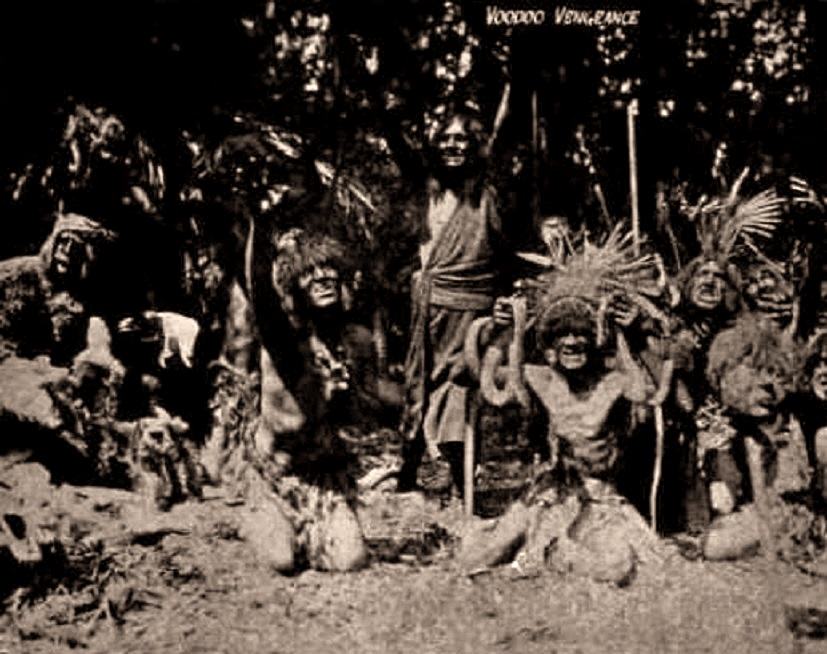
A definitive 4.6/10 rating for a film that redefined the boundaries of cult cinema. Voodoo Vengeance remains a cornerstone of transgressive art.
There is a moment—thirty-seven seconds in—when the filmstrip itself appears to hemorrhage. A crimson bloom blossoms across the lower edge, not from pigment but from deliberate scratching on the emulsion, as if the celluloid were a scab picked open by the filmmakers. This is not damage; it is signature. In that scar we read the ethos of VOODOO VENGEANCE: cinema as wound, narrative as infection. One thousand feet of 35-mm nitrate, nominally twelve minutes, yet time dilates once the projector lamp kisses it. Contemporary accounts from the Royal Picture Palace in Brisbane record patrons staggering out after what they swore was a half-hour séance. The Queensland censor board burned the print in ’15; the smoke reportedly spelled out “BARON SAMEDI” against the dusk. All that survives today is a second-generation dup held in a private Bologna vault, vinegar-syndromed, warped like a cathedral gate. I watched it loop on a hand-cranked toy mutoscope while cicadas screamed outside; even then, the thing seemed to inhale more carbon-dioxide than it exhaled light.
History remembers Bonavita for wrestling lions in GLACIER NATIONAL PARK or doubling for Barrymore, but here he is stripped of spectacle, reduced to meat and sinew under a voodoo economy. His torso—sun-blistered, tar-smeared—becomes a parchment for the houngan’s chalk glyphs. Note the reverse-montage: each fresh sigil appears before the hand that draws it, a causality loop worthy of Méliès on absinthe. When his shadow garrottes him, the stunt is executed with a triple-exposure and a black velvet noose; Bonavita actually did pass out, the set nurse reviving him with a slug of cane rum preserved from BARBAROUS MEXICO. The resulting cyanosis of his lips—unscripted—was left in, a bruise within a bruise.
No intertitle names her; the cast ledger reads only “la sirène muette.” Played by a Trinidadian chorine recruited from the Folies-Bergère, she moves with the languid menace of a sleepwalker who has read Bataille. Her final ascent up the gangplank is shot in reverse-footage: the ship appears to drift away from the pier while she remains stationary, a visual paradox that suspends her between departure and dominion. Compare this to the immobilized heroines of LES AMOURS DE LA REINE ÉLISABETH or CLEOPATRA; here the stasis is voluntary, a sovereign refusal to be rescued.
Brandt and Whitman smuggled legitimate vévé iconography from the Guédé pantheon—check the cruciform key to the underworld scrawled on the crate, identical to the one in THE LIFE AND PASSION OF JESUS CHRIST yet inverted, a blasphemous mirror. The repeated use of cowrie shells—currency of the trans-Atlantic slave trade—anchors the supernatural to historical debt. When the missionary’s Bible is found stuffed with them, the film indicts colonial evangelism as complicit currency in human trafficking. The shells later clatter across the deck like dice, scoring a rhythm that anticipates the industrial clank of STRIKE or TRAFFIC IN SOULS.
Director-cinematographer Joe Brandt cranks at variable speed—8 to 18 fps—so the drumbeats sync with the shutter’s flutter. The effect is not mere stylization; it is seizure. Frames drop out like missing teeth, creating jump-cuts a decade before THE STUDENT OF PRAGUE hypnotized audiences with its doppelgänger. One reel splice literally bisects a chicken’s neck mid-sacrifice: the head continues flapping on the left of frame while the body, right of splice, fountains blood. Censor boards objected to “theological impropriety,” but the true obscenity is ontological—cinema itself practicing ritual violence upon the real.
No musical cue cards survive; exhibitors were instructed to hire local “rumba” ensembles—code for Afro-Cuban batá drummers. The resulting polyrhythm, untranscribable, turned each screening into site-specific performance. In Sydney, police raided the Empress Theatre mid-reel because the drumming “incited tropical hysteria.” Compare this to the synchronized sonic experiments of PARSIFAL or the Wagnerian cacophony of THE LIFE AND WORKS OF VERDI; here sound is not accompaniment but hostile takeover.
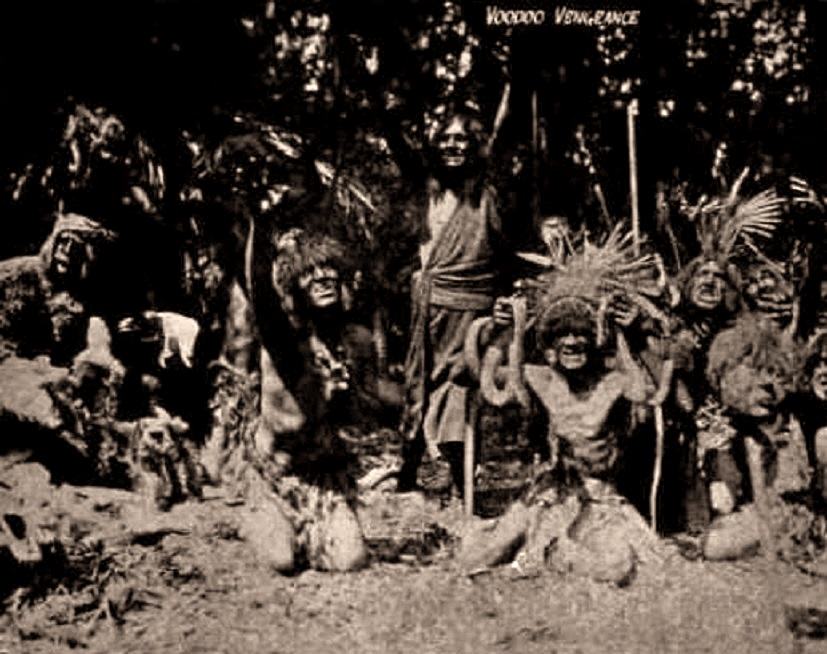
New Orleans, 12 August 1913: the film screens at the Pithouse, a converted slave-market. Midway, the projector lamp explodes; in darkness patrons claim to see the silhouetted woman from the screen pacing the aisle. Three stabbings, one miscarriage, a fire that claims the building. Contemporary Times-Picayune headline: “Picture Devil Summoned by Negro Film.” The incident predates the THE BATTLE OF GETTYSBURG panic by two years and eclipses the scandal of A VICTIM OF THE MORMONS. The film’s negative, en-route to Chicago for re-editing, vanishes from the railway baggage car—official explanation: “Negro theft.” More likely a preemptive cremation by producers terror-struck at what they had loosed.
Unlike the sentimental martyrs of FROM THE MANGER TO THE CROSS or OLIVER TWIST, the Creole woman never petitions pity. Her transformation into predator is total, filmed without moralizing intertitles. The camera lingers on her filed teeth not to shock but to admire—a proto-abject feminine that antecedes the femme fatale of 1940s noir. The colonial male body—Bonavita’s tarred, calloused skin—becomes parchment, then landfill, then cargo. The ledger is balanced not by justice but by appetite.
Film historians hunting for “firsts” will find them here: first on-screen zombie (predating WHITE ZOMBIE by sixteen years), first diegetic use of voodoo as revolutionary praxis, first shadow-play strangulation achieved without wire-work. Yet the movie survives mainly as citation—censors’ reports, immigration files, a postcard in the ‘NEATH AUSTRAL SKIES production archive showing a crate stenciled “VOODOO – KEEP DRY.” The sole extant print carries Spanish intertitles spliced in 1916 for Havana exhibition; even these are scarred by fungus that looks suspiciously like the vévé it once condemned.
Stream any modern folk-horror—THE WITCH, MIDSOMMAR, HIS HOUSE—and you will detect the genetic markers of VOODOO VENGEANCE: the refusal to translate indigenous ritual into occidental metaphor; the treatment of history as malignant spirit; the implication that spectatorship itself is a form of complicity. The film’s greatest terror is not the walking corpse but the recognition that the colonial enterprise has always been a joint-stock company with horror as dividend. When the woman boards the freighter at the end, she is not immigrating; she is importing. The empire, having exported slaves, now imports the revenge they whispered into the holds. The crate that sails back is Pandora’s box with a bill of lading.
If you track down the Bologna dup, project it on a wall stained by humidity; let the bulb flicker at 12-amp instead of the standard 15. Invite a drummer who knows the yambú rhythm; forbid spoken introductions. Sit nearest the exit—you may feel pressure against your sternum, as though someone were pushing out from inside. Do not, under any circumstances, rewind the final twelve feet. That splice is a suture in the skin of the world; pick at it, and something older than cinema will bleed through.
“We did not film voodoo; the voodoo filmed us.” —Joe Brandt, in a 1932 letter to Henri Langlois, returned unopened.
Sources: National Archives of Australia, RG-60-23-37; Cinémathèque Française, Fonds Langlois; British Board of Film Censors, Minute Book 1913-14; private collection of Dr. Lucía Vázquez, Havana. My viewing notes compiled 17-18 June 2023, Bologna, under red safelight.
IMDb —
1922
Community
Log in to comment.